
Goat cheese is the cheese people either love or avoid, and the reason is almost always the tang. A good goat cheese tastes bright, clean and faintly lemony, with a soft, creamy texture that spreads like thick yoghurt. The difference is the age of the cheese, the milk behind it, and how it was stored, and this guide explains how to pick goat cheese that isn’t too tangy in 2026, from the fresh log at the deli counter to the aged wheel worth grating over pasta.
The first thing to understand is that tang is not a flaw in goat cheese, it is the point, and the skill is choosing how much of it you want. Fresh chèvre is mild, soft and milky, with only a gentle citrus note. Aged goat cheese is firmer, drier and far more assertive, with a flavour that can stand up to honey, herbs and strong wine. Between them sits a whole range of styles, and the label tells you where on that range a cheese falls if you know what to read.
Key Takeaways
- Fresh chèvre is the mildest goat cheese: soft, creamy and gently lemony, while aged goat cheese is firmer and far tangier.
- Taste before you buy when you can, and ask for the youngest log if you want the least tang.
- Let goat cheese warm to room temperature before serving, so the flavour opens up and the texture softens.
- Crumble goat cheese cold, straight from the fridge, so it holds its shape instead of smearing.
- Pair goat cheese with something sweet or earthy, like honey, beetroot or roasted vegetables, to balance the tang.
Fresh Chèvre vs Aged: The Two Ends of Goat Cheese
Fresh chèvre is where most people should start. It is made from goat’s milk that is cultured, drained and packed within days, so the cheese is soft, white and spreadable, with a clean, mild flavour and a gentle lemon tang. It comes as a log, a round or a tub, and it is the goat cheese of salads, toasts and spreads: easy to crumble, easy to spread, and mild enough for people who think they do not like goat cheese. Look for a log that is evenly white, smooth on the cut face, and free of cracks or yellowing, and check the date, because fresh chèvre is at its best in the first week or two after it is made.
Aged goat cheese is a different cheese altogether. As the log ages, it loses moisture, firms up, and develops a rind, sometimes white and bloomy like brie, sometimes grey and ashy, sometimes washed and wrinkled. The flavour deepens and sharpens: the lemon note turns to a proper tang, the texture turns from creamy to dense and crumbly, and the smell turns earthy and goaty.
Between the two sit the semi-aged logs, usually a few weeks old, with a thin rind and a paste that is creamy near the rind and firmer in the middle. These are the most versatile goat cheeses: sliceable for a board, crumbly enough for a salad, and tangy enough to be interesting without overwhelming the dish. Our comparison of the best and worst cheeses of 2026 makes the same point for cheese in general: match the cheese to the job, and a soft cheese earns its place by being soft.
Taming the Tang: What Makes Goat Cheese Sharp
The tang in goat cheese comes from the milk itself. Goat’s milk contains short-chain fatty acids that cow’s milk has in much smaller amounts, and those acids give the cheese its characteristic bright, slightly peppery flavour. Fresh cheese keeps those acids gentle, because the cheese has not had time to develop, while aged cheese concentrates them as moisture leaves, which is why an old log tastes so much sharper than a young one.
If you find goat cheese too tangy, the fix is usually the age, not the brand. Buy the youngest log on the shelf, and eat it within a few days of opening, because the tang grows as the cheese ages in your fridge too. Temperature matters as well: goat cheese served ice-cold tastes sharper and chalkier than the same cheese at room temperature, where the fat softens and the flavour rounds out. Take the log out of the fridge thirty minutes before serving, and you will taste the difference immediately.
Pairing is the other half of taming the tang. Sweet and earthy flavours balance the acidity: honey drizzled over a warm round of goat cheese, roasted beetroot crumbled with it in a salad, or caramelised onion spread under it on toast. Fat helps too, which is why goat cheese works so well with olive oil, nuts and avocado.
Crumbling, Slicing and Spreading: Getting the Texture Right
Goat cheese changes texture with temperature, and the trick is to work with it cold and serve it warm. Straight from the fridge, a fresh log is firm enough to slice cleanly with a sharp, thin knife, and to crumble into neat pieces with your fingers. The best way to crumble it is to chill the log well, then break it apart with clean hands over the salad bowl, letting the pieces fall where they will. A warm log smears instead of crumbling, sticks to the knife, and turns a salad into a mess, so keep it cold until the moment you need it.
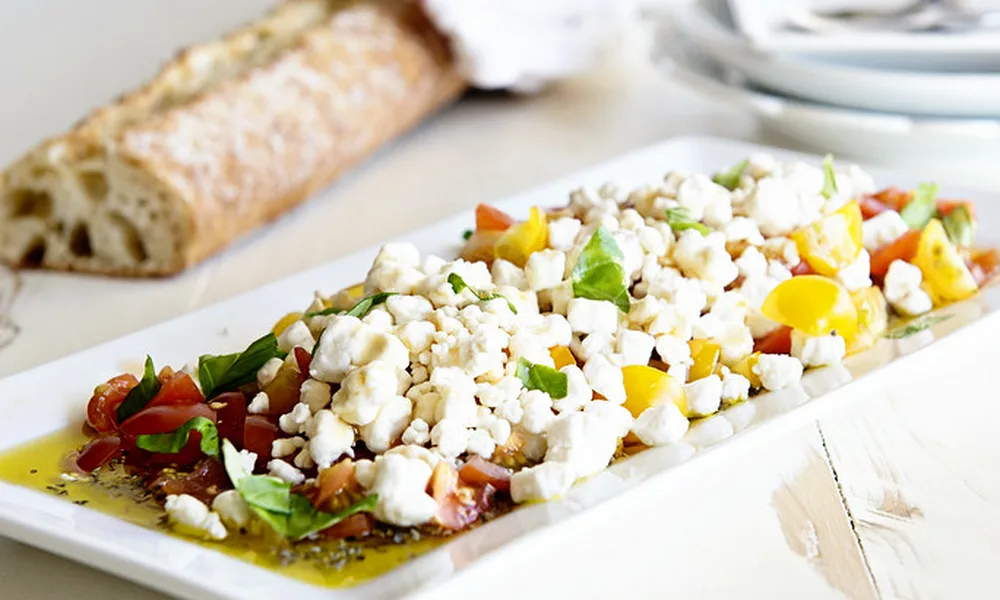
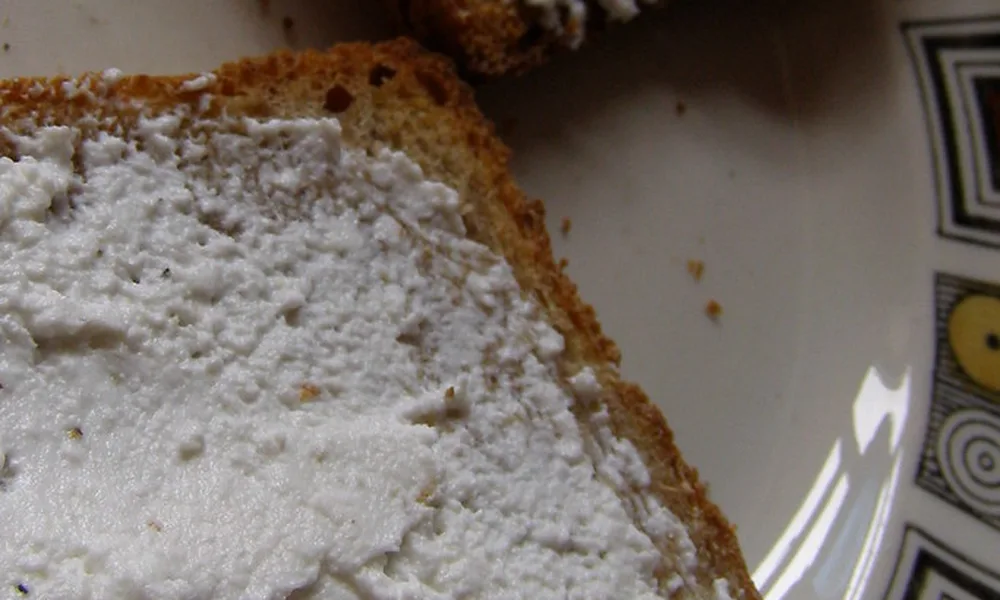
For spreading, the opposite is true. Let the log warm up for twenty minutes, then it spreads smoothly over toast and crackers without tearing the bread. A drizzle of olive oil loosens it further, and a pinch of salt and a crack of pepper turn a plain log into a spread worth serving on its own.
Slicing an aged log takes a different tool: a wire cheese cutter or a very sharp knife wiped clean between cuts, because the dense paste sticks and drags. Cut the slices thin, about half a centimetre, and let them come to room temperature before serving, so the flavour has a chance to open.
| Style | Texture | Tang | Best for |
|---|---|---|---|
| Fresh chèvre log | Soft, creamy, spreadable | Mild, gently lemony | Salads, spreads, toast |
| Herbed or ash-ripened log | Soft, sliceable | Mild to medium | Cheese boards, starters |
| Semi-aged log | Firm outside, creamy inside | Medium, bright | Boards, salads, baking |
| Aged wheel (Sainte-Maure) | Dense, crumbly | Strong, goaty | Eating plain, with wine |
| Goat feta style | Crumbly, brined | Salty, tangy | Salads, pasta, baking |
Salads and Spreads: Where Goat Cheese Earns Its Keep
The salad is where goat cheese does its best work, and the beetroot salad is the classic for a reason. Roasted beetroot is sweet and earthy, and crumbled goat cheese against it is bright and salty, with walnuts for crunch and a little sherry vinegar in the dressing to tie it together.
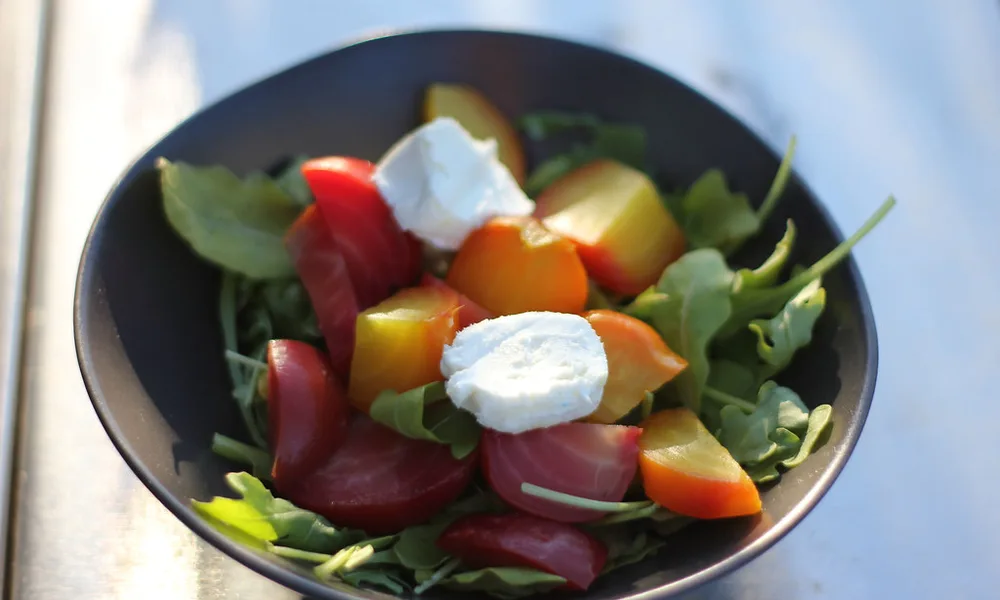
Warm goat cheese salads work just as well, and they are the better choice in colder months. Slice a log into rounds, coat them lightly in breadcrumbs, and bake or fry them until the outside is crisp and the centre is soft, then set them on dressed leaves with something sweet alongside, like roasted squash or caramelised pear.
Spreads are the everyday use, and they are where a mild log earns its place in the fridge. Spread goat cheese thickly on toast, top it with honey and thyme, or with roasted tomatoes and basil, or with smoked salmon and dill, and you have a lunch that takes five minutes and tastes like far more effort. It works on crackers too, and a plain water cracker is the best partner, because it lets the cheese speak: our guide to the best crackers for cheese boards and snacking covers the crisp, plain styles that suit it.
Goat Cheese vs Cheddar: A Different Kind of Sharp
People who find goat cheese too tangy often reach for cheddar instead, and the comparison is worth making, because the two cheeses are sharp in different ways. Cheddar’s sharpness comes from age and from the breakdown of proteins into savoury, nutty compounds, so it tastes deep and rounded, like a stock cube. Goat cheese’s tang comes from the milk’s own fatty acids, so it tastes bright and high, like lemon zest.
The practical difference is in the kitchen. Cheddar is the cheese for cooking: it melts smoothly, grates easily, and holds up in a hot pan, as our guide to cheddar that melts like the good kind explains. Goat cheese is the cheese for finishing: it softens rather than melts, so it is better crumbled over a finished dish or spread on bread than cooked into a sauce, where it can turn grainy.
Storing Goat Cheese So It Stays Mild
Goat cheese keeps best the same way brie does: wrapped in waxed paper or cheese paper, in a sealed container in the fridge, never sealed tight in plastic, which makes it sweat and taste of the packet. A fresh log keeps for a week to ten days once opened, and it will grow tangier each day, so eat the mildest cheese first and save the older pieces for cooking. An aged log keeps longer, two to three weeks, because the rind protects it, but cut faces dry out quickly, so rewrap the cut end tightly after each use.
Freezing goat cheese is a poor trade for eating, though it works for cooking. The texture turns crumbly and dry when thawed, and the delicate milky flavour flattens, so frozen goat cheese belongs in pasta bakes and sauces rather than on a board.
Goat Cheese Buying Checklist
- Buy the youngest log for the mildest flavour, and check the date before you pay.
- Look for an evenly white log with a smooth cut face, no cracks and no yellowing.
- Taste before you buy when the counter allows it, and ask how old the log is.
- Crumble it cold, straight from the fridge, so it holds its shape.
- Serve it at room temperature, out of the fridge for thirty minutes before eating.
- Store leftovers wrapped in waxed paper in the fridge, and eat fresh logs within a week.
Frequently Asked Questions
Why does goat cheese taste tangy?
Goat’s milk contains short-chain fatty acids that cow’s milk has in much smaller amounts, and those acids give the cheese its bright, lemony tang. The tang grows as the cheese ages and loses moisture, so fresh chèvre is mild and an aged log is sharp.
Is goat cheese good for people who cannot drink cow’s milk?
Many people who struggle with cow’s milk find goat cheese easier to digest, because its fat globules are smaller and its proteins break down differently.
Can you melt goat cheese?
It softens rather than melts, so it is better crumbled over a finished dish or baked briefly on toast than cooked into a sauce.
How long does goat cheese last in the fridge?
A fresh log keeps for a week to ten days once opened, and an aged log for two to three weeks.
What is the white rind on aged goat cheese?
It is a bloomy mould rind, like the rind on brie, and it is edible. It protects the cheese as it ages and adds an earthy flavour.
What goes best with goat cheese?
Sweet and earthy things: honey, beetroot, roasted squash, walnuts and caramelised onion.
The Bottom Line
The best goat cheese in 2026 is the one that matches your taste for tang: a fresh chèvre log for mild, creamy eating, a semi-aged log for the board and the salad, and an aged wheel for the days you want the full, goaty flavour. Buy it young, taste it before you commit, crumble it cold, serve it at room temperature, and pair it with something sweet or earthy to balance the brightness.


