
Why the Right Hot Chocolate Makes Winter Better in 2026
Hot chocolate is the drink winter was made for, yet most mugs of it are a disappointment. Too often it arrives thin and grey, tasting faintly of sugar, or so sweet the chocolate disappears. The difference is rarely money. It is a handful of small choices: the cocoa, the milk, the heat, and whether you stop before the toppings bury the drink. Get those right and hot chocolate becomes the best part of a cold evening.
This guide covers those choices in order: cocoa powder versus drinking chocolate versus instant mix, milk versus dark, mixes versus bars, toppings, and serving. No special equipment needed — a saucepan, a whisk and a decent mug will do.
Key Takeaways
- Drinking chocolate is melted chocolate in milk; cocoa powder is ground bean — very different drinks.
- Milk chocolate is soft and sweet; dark gives depth and bite; the best everyday mug sits between the two.
- A bar usually beats a packet mix, but a good mix made with hot milk can come surprisingly close.
- Heat milk gently and never boil it; scorched milk ruins an otherwise good hot chocolate.
- One or two toppings are enough; a mug buried under cream and sprinkles stops tasting of chocolate.
Cocoa, Drinking Chocolate and Hot Chocolate Mix: What Is Actually in the Mug?
First, the vocabulary: the three products on the shelf are not the same thing and do not make the same drink. Cocoa powder is pure ground cocoa bean, most of the cocoa butter pressed out. With no sugar and no milk, it tastes of actual chocolate: dark, a little bitter and intense, so a mug made from it can taste properly chocolatey without much sugar. Our guide to cocoa powder explains natural versus Dutch-processed powders, and which suits a mug best.
Drinking chocolate is different again. It is real chocolate, grated or in flakes or buttons, melted directly into hot milk. Because it keeps the cocoa butter, the drink is richer, silkier and fuller than anything made from powder alone. European drinking chocolate is often very thick, almost spoonable; lighter cafe versions are closer to a normal drink. If you have ever had a hot chocolate that coated the spoon and tasted like a melted bar, that was drinking chocolate.
Instant hot chocolate mix is the third option, and it is a convenience product first and a chocolate product second. A typical mix is mostly sugar and milk powder with a little cocoa, plus flavourings and anti-caking agents — which is why so many packet mugs taste sweet but oddly empty. The best mixes flip that ratio, listing cocoa or chocolate first and sugar further down. They cost more per mug, but the difference is immediate.
None of the three is wrong. Cocoa powder suits people who like control, since you set the sweetness and strength yourself. Drinking chocolate suits a slow evening when richness is the point. A good mix suits a busy morning, when speed matters more than nuance. The mistake is treating them as interchangeable.
Milk or Dark? Picking the Chocolate Base
Milk chocolate makes a gentle, sweet mug. It melts easily, needs little or no added sugar, and suits children and anyone who likes their hot chocolate soft and comforting. The trade-off is that it can taste one-note: sweet and creamy, with the cocoa flavour sitting quietly in the background. In a large mug it can disappear altogether, leaving warm milk with a brown tint.
Dark chocolate gives the opposite result. A mug made with 60 to 70 percent dark chocolate has real depth — dried fruit, spice or roast, depending on the bar — and a clean bitterness that keeps sweetness in check. It suits adults who find most hot chocolate too sweet, and pairs with a pinch of salt or a little chilli. The risk is going too dark: above about 80 percent, the drink turns dry and astringent unless you add more sugar, which defeats the purpose.
For most people, the sweet spot is a blend: half milk and half dark chocolate, or a dark bar around 60 percent with a splash of cream. The blend gives the body and sweetness of milk chocolate with the depth of dark, and it is forgiving — small errors barely show. White chocolate, tasting of cream and vanilla rather than chocolate, is its own thing: lovely made well, but not a substitute for a proper chocolate mug.
Hot Chocolate Compared: Which Style Suits You?
| Style | What it is | Flavour | Effort | Best for |
|---|---|---|---|---|
| Cocoa powder | Pure ground cocoa bean, no sugar | Dark, intense, a little bitter | Low | Everyday mugs, full control |
| Drinking chocolate | Real chocolate melted in milk | Rich, silky, full-bodied | Medium | Slow evenings, a real treat |
| Instant mix | Sugar and milk powder with cocoa | Sweet, mild, sometimes thin | Very low | Busy mornings, children |
| Dark bar, 60 to 70 percent | Chopped dark chocolate in milk | Deep, complex, balanced | Medium | Adults who like real chocolate |
Mixes vs Bars: Convenience Against Flavour
The honest answer is that a bar almost always wins on flavour. Real chocolate brings cocoa butter, and cocoa butter brings the silky texture no powder can fully copy. A mug made by melting a chopped bar into hot milk tastes rounder, lasts longer on the palate, and needs less sugar to feel complete. The extra three minutes are worth it — the closest most of us get to a good cafe’s hot chocolate.
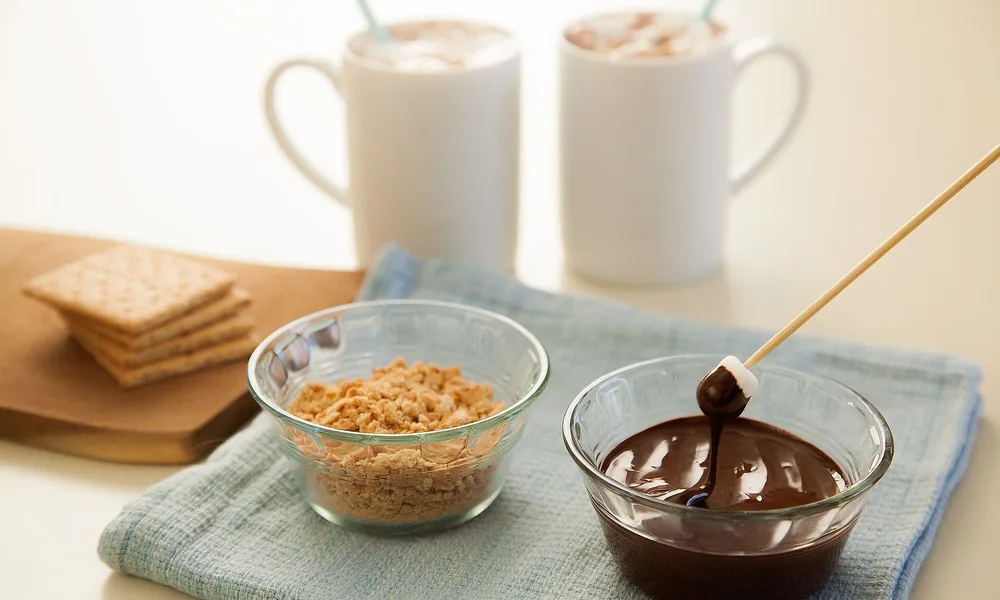
That said, a good mix is not a bad drink — and the gap between a good mix and a bar is smaller than the gap to a cheap one. The trick is reading the packet: cocoa or chocolate first, a short ingredient list, and a cocoa content on the label. Avoid mixes where sugar is first and cocoa appears near the end.
The other trick is the liquid. Almost every mix improves dramatically when made with hot milk instead of hot water — the single easiest upgrade in this guide. Water gives a thin drink that tastes of the packet; milk gives body, sweetness and proper chocolate flavour. The same applies to cocoa powder. Keep a good mix for weekdays and a bar or two for weekends, when there is time to do it properly.
Toppings That Earn Their Place
Toppings are where hot chocolate most often goes wrong, because it is easy to keep adding until the drink underneath disappears. A good topping should work with the chocolate, not compete with it. Whipped cream is the classic: a soft spoonful melts slowly in, adding richness without changing the flavour. A few mini marshmallows do the same job differently, dissolving into sweetness as you drink. Either is enough on its own; both together are already plenty.

A dusting of cocoa, cinnamon or nutmeg is the quietest topping and often the best: aroma before the first sip, bitterness to balance the sweetness. A pinch of flaky salt does the same, sharpening the chocolate flavour in a way that surprises first-timers. Chilli flakes or vanilla extract belong in the same category — small additions that make the chocolate taste more like itself.
Skip anything that turns the mug into a dessert. Chocolate sauce on a chocolate drink adds sweetness without flavour. Sprinkles add colour and crunch but no taste worth having. Crushed biscuits and toffee pieces make the mug harder to drink and the chocolate harder to taste. For children, one exception: a marshmallow, a candy cane to stir with, or a biscuit beside the mug can make it feel special. If you cannot taste the chocolate any more, something has to go.
Serving It Properly: Heat, Milk and the Mug
The most common serving mistake is heat. Milk scorches easily, and scorched milk tastes of burnt toast no matter how good the chocolate is. Heat it gently in a small saucepan over medium-low heat, stirring now and then, and take it off just before it simmers. You want it hot enough to melt chocolate, around 65 to 70 degrees, not boiling. If a skin forms or it smells toasted, it has gone too far.

Whole milk is the best default: its fat carries the chocolate flavour and gives the drink body, and it froths better than skimmed. Oat milk is the best dairy-free choice: naturally sweet, heats well and rarely splits. Almond milk works but is thinner, so use a little less or add a spoonful of cream. Whatever you use, heat it gently and never boil it.
The mug matters more than people think. A thick-walled ceramic mug keeps the drink hot longer than a thin one, and 250 to 300 millilitres is the right size: big enough to satisfy, small enough that the drink stays hot to the last sip. Warm the mug first with hot water, tipped out before you pour. Finally, serve promptly — hot chocolate is at its best in the first ten minutes, while the chocolate is fully melted and the cream still soft. Make it when you are ready to sit down, not twenty minutes beforehand.
Your Hot Chocolate Checklist
- Pick your base: cocoa powder for control, a bar for richness, a good mix for speed.
- Use whole or oat milk, heated gently and never boiled.
- Choose dark chocolate at 60 to 70 percent, or blend milk and dark.
- Whisk the cocoa or chocolate in properly so no lumps survive.
- Add one or two toppings only, and make sure the chocolate still leads.
- Serve in a warmed, thick-walled mug and drink it within ten minutes.
Frequently Asked Questions
Is hot chocolate the same as hot cocoa?
Mostly, yes. Hot cocoa usually means a drink made from cocoa powder, while hot chocolate often means one made from melted chocolate. In practice they are used interchangeably; what matters is what is in the mug. Our guide to the best and worst chocolate can help you pick a bar worth melting.
Can I make good hot chocolate with water instead of milk?
You can, and some traditional recipes do, especially with very dark chocolate. But water gives a thinner, sharper drink, and most people prefer milk for body and sweetness. With water, use good dark chocolate and a little less of it, and expect a cleaner, more intense flavour.
Why does my hot chocolate always taste weak?
Usually one of three things: not enough cocoa or chocolate, too much milk for the amount used, or a mix that is mostly sugar. Try another spoonful of cocoa or a few more squares, whisked in fully. If it still tastes weak, the product itself may be the problem.
How do I stop cocoa powder going lumpy?
Make a paste first: mix the cocoa with a spoonful of sugar and a splash of hot milk, whisk smooth, then add the rest of the milk. Cocoa dropped straight into a full mug clumps on the surface. A paste takes ten seconds and solves it.
Is dark hot chocolate healthier than milk hot chocolate?
Dark chocolate has more cocoa and less sugar than milk chocolate, so a mug made with it is usually the lighter option — but hot chocolate is still a treat rather than a health drink. Enjoy it in a reasonable mug, skip the extra sugar, and don’t worry.
What is the best chocolate to melt for hot chocolate?
A plain dark bar between 60 and 70 percent cocoa is the safest choice; a well-made milk bar works for a sweeter mug. Avoid chocolate with fillings, nuts or caramel, which melt unevenly and cloud the flavour. Read more in our guide to choosing chocolate worth the price.
The Bottom Line
The right hot chocolate is not complicated or expensive: cocoa or real chocolate, good milk heated gently, a warm mug, and the restraint to stop before the toppings take over. Make those choices well and winter gets a little better, one mug at a time.


