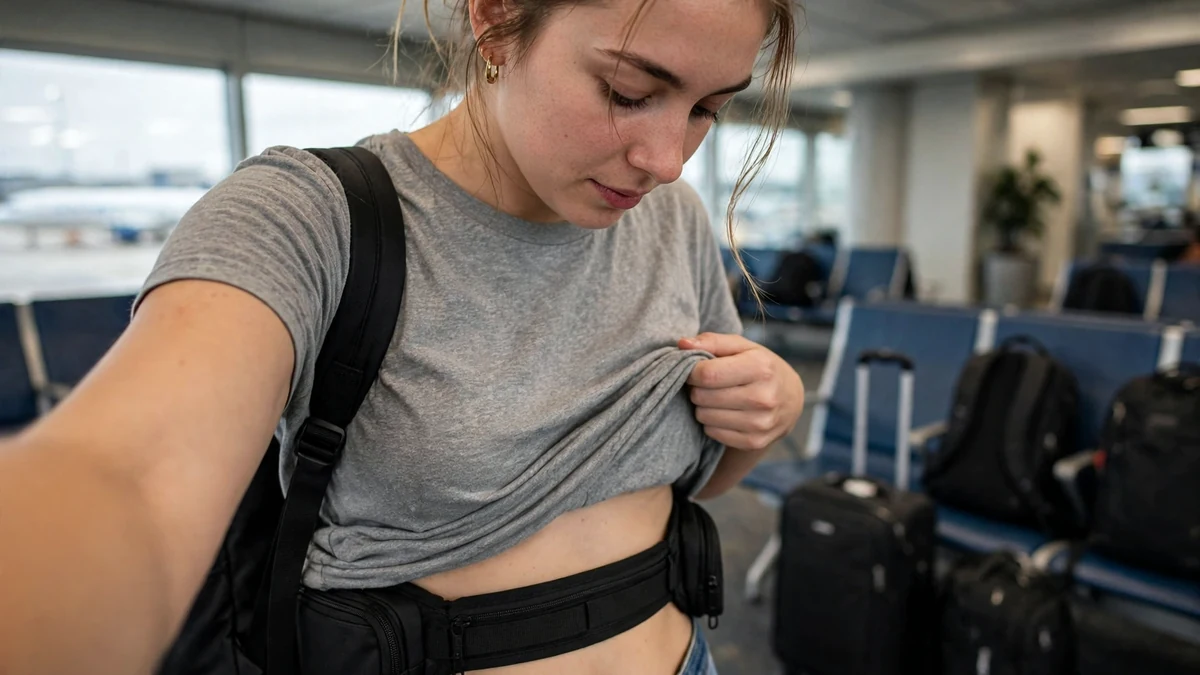
A money belt is a flat pouch that hides under a shirt or a jacket, holding a passport, some cash and a card close to the body where a pickpocket cannot reach them. It is not glamorous, and nobody will ever see it, but for a traveller it is the difference between a ruined holiday and a small annoyance. A good money belt is comfortable enough to wear all day, thin enough to hide under a shirt, and secure enough that it is never noticed.
What Makes a Money Belt Good
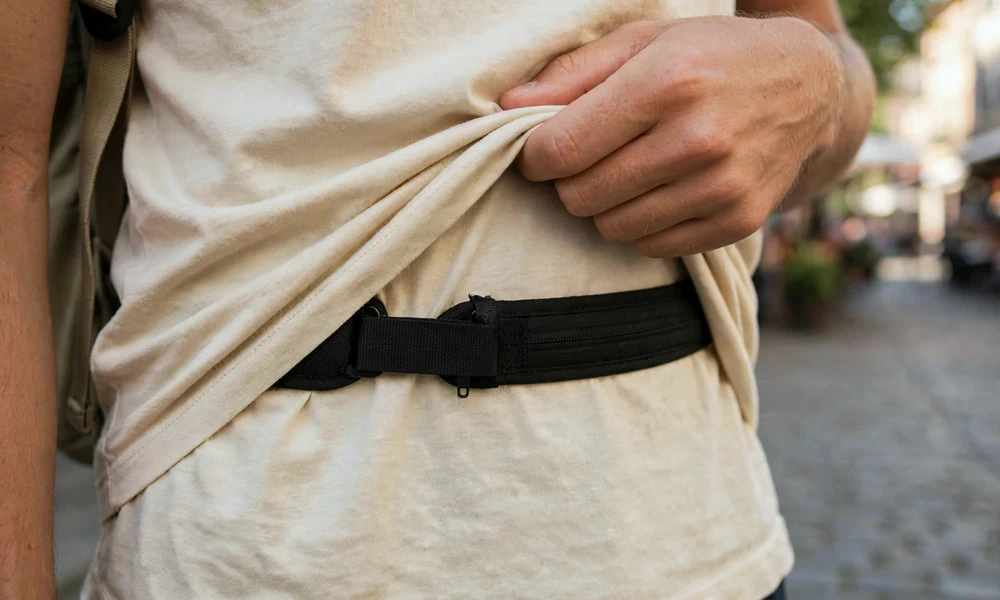
The first thing to judge is the comfort. A money belt is worn against the skin for hours at a time, so a belt that chafes, itches or digs in will be taken off and left in the hotel room, which defeats the whole point. The best money belts are made from a soft, breathable fabric, with a smooth strap that does not rub, and a pouch that sits flat against the body. A belt that is comfortable is a belt that gets worn, and a belt that gets worn is a belt that works.
The second thing is the security. A money belt is only useful if it keeps things safe, and the best ones have a few simple features that make a real difference. A zip that is hard to open from the outside, a strap that cannot be cut easily, and a pouch that is big enough for a passport but small enough to hide, are the things that matter. A belt with a radio-frequency blocking lining will also stop a card from being read without being taken out, which is a small bonus. A money belt does not need to be high-tech; it needs to be hard to steal from.
The Main Types of Money Belt
Waist money belts are the classic choice. They wrap around the waist, they sit under a shirt or a jacket, and they hold a passport, some cash and a card in a flat pouch. They are the best choice for most travellers, because they are comfortable, discreet and easy to reach. The trade-off is the heat: a waist belt in a hot country will get sweaty, so a breathable fabric matters.
Neck money belts are the light option. They hang from the neck on a cord, they sit under a shirt, and they hold a passport and a few notes in a small pouch. They suit a traveller who only needs to carry a passport and a little cash, and they are the best choice for a hot country, because they are lighter and cooler than a waist belt. The downside is the size: a neck belt will not hold much, and a heavy pouch will pull on the neck.
Hidden pocket belts are the clever option. They look like an ordinary belt, but they have a hidden pocket inside that holds a few folded notes or a spare card. They suit a traveller who wants a backup stash, separate from the main money belt, and they are the best choice for an emergency fund. The trade-off is the capacity: a hidden pocket belt will only hold a little, and it is not a replacement for a proper money belt.
Travel wallets with a strap are the flexible option. They are a small wallet with a strap that can be worn around the waist or across the body, they hold a passport, cards and cash, and they are the best choice for a traveller who wants to carry a little more. The downside is the visibility: a travel wallet is harder to hide than a flat money belt, and a visible wallet is a target. For a traveller who wants to carry more, a travel wallet with a strap is the one that works.
Anti-theft money belts are the secure option. They have a cut-proof strap, a locking zip, and a radio-frequency blocking lining, and they are the best choice for a traveller who is going somewhere with a reputation for pickpockets. They cost more than a simple money belt, and they are a little heavier, but the security is worth it. For a trip to a busy city or a crowded market, an anti-theft money belt is the one to buy.

How to Choose the Right Money Belt
Start with the trip, not the belt. A city break needs a belt that holds a passport and a card, while a long backpacking trip needs a belt that holds a passport, cash, cards and a spare key. A hot country needs a breathable fabric, while a cold country needs a belt that fits under layers. A belt that does not match the trip will be left in the hotel, however good it is. Match the belt to the trip, and the belt will be worn every day.
Then check the practical details. Measure the waist before buying, because a belt that is too tight will dig in, while a belt that is too loose will slide around. Check the pouch size: it needs to fit a passport, and a passport is bigger than most people think. Check the strap: it should be adjustable, smooth, and easy to tighten with one hand. And check the zip: it should be smooth, secure, and easy to open when it is needed, but hard to open when it is not. A belt that fails any of these tests will be a daily annoyance.
The Best Money Belts of 2026
The best waist money belt for most travellers this year is a slim, breathable belt with a flat pouch, a smooth adjustable strap, and a radio-frequency blocking lining. It holds a passport, cash and cards, it disappears under a shirt, and it is comfortable enough to wear all day. It is the belt for a city break or a long flight, it is the one that stops a pickpocket, and it is the one that is still comfortable after twelve hours. For most travellers, this is the belt to buy.
The best neck money belt of 2026 is a light, soft pouch on a comfortable cord, big enough for a passport and a few notes, and small enough to hide under a shirt. It suits a hot country and a light traveller, it is cooler than a waist belt, and it is the belt for a traveller who only needs the essentials. It will not hold much, but for a passport and a little cash, it is all that is needed. For a light traveller, this is the belt that works.
The best anti-theft money belt is a belt with a cut-proof strap, a locking zip, and a radio-frequency blocking lining, built to be hard to steal from. It costs more than a simple belt, but the security is worth it. It is the belt for a busy city or a crowded market, it is the one that keeps the passport safe, and it is the one that lets the traveller relax. For a trip to a place with a reputation for pickpockets, this is the belt to buy.
The best budget money belt of 2026 is a simple waist belt with a flat pouch and an adjustable strap, at a price that is less than a meal out. It holds a passport and some cash, it hides under a shirt, and it is genuinely useful. It will not have a radio-frequency blocking lining or a cut-proof strap, but for a first money belt, or for a short trip, it is all that is needed. Cheap does not have to mean useless, and this belt proves it.

What Else You Need
A money belt works best with a little help. A good wallet for everyday spending will keep the money belt for the valuables, and a travel wallet is worth a look for anyone who wants to carry a little more. And a waist bag is a useful extra for a day out, because it holds a phone, a bottle of water and a map, while the money belt stays hidden. The money belt is the safe; the wallet and the waist bag are what get used every day.
Common Mistakes to Avoid
The biggest mistake is buying a money belt that is too small. A pouch that does not fit a passport is useless, and a passport that has to be folded will be damaged. Check the pouch size before buying, and make sure it fits a passport flat. The second mistake is wearing the money belt outside the clothes: a money belt that is visible is a target, and a belt that is worn under a shirt is a belt that is safe. The third mistake is putting everything in the money belt: a belt that holds all the cash, all the cards and the passport is a belt that, if it is lost, leaves the traveller with nothing. Keep a spare card and some cash somewhere else.
Another common mistake is choosing a money belt for its features rather than its comfort. A belt with a dozen pockets that chafes will be left in the hotel, however secure it is. Choose the belt for its comfort first, and let the features follow. And do not forget to practise: a money belt that is fiddly to open will be a daily frustration, so try it at home before the trip, and make sure the passport can be reached quickly when it is needed at the airport.
How Money Belts Fit a Safe Trip
A money belt is the simplest way to keep a trip safe. It holds the passport, the cash and the cards close to the body, where a pickpocket cannot reach them, and it does it without anyone noticing. A traveller with a good money belt is a traveller who can relax in a crowded market, on a busy train, or in a long queue, and a traveller who can relax is a traveller who enjoys the trip. The belt is not glamorous, but it is essential, and a good one is the kind of thing that is only noticed when it is missing.
The habit also pairs naturally with a little routine. A quick check of the belt before leaving the hotel, a spare card kept somewhere else, and a copy of the passport kept separately will keep the trip safe even if something goes wrong. It is a small amount of thought for a large amount of peace of mind, and it is the kind of routine that, once started, is hard to give up.
The Verdict
The best money belt of 2026 is the one that is worn every day. For most travellers that means a slim waist belt with a flat pouch, a smooth strap, and a radio-frequency blocking lining. For a light traveller, a neck belt is the better choice. For a busy city, an anti-theft belt is the one that matters. Whatever the choice, check the pouch size first, wear the belt under the clothes, and keep a spare card somewhere else. A belt chosen this way will not just hold a passport; it will keep the trip safe, the traveller relaxed, and the holiday enjoyable. And that is worth more than any feature on a belt.


