
Why waist bags beat pockets in 2026 is a question you can answer in ten seconds, the next time you sit down with a phone, keys, wallet and earbuds crammed into your trouser pockets. Pockets bulge, dig in when you sit, and let a phone slide out when you bend over. A waist bag takes the same essentials, puts them in one zipped pouch at your waist, and leaves your hands free and your pockets flat.
This guide explains why waist bags beat pockets in 2026, and how to choose one that works. It covers what a waist bag is, the types worth buying, the materials and sizes that suit real days out, and the mistakes that turn a useful bag into an annoying one. It is the smallest bag that does a real job, and for phone, keys, wallet and earbuds, it does that job better than pockets ever will.
Key Takeaways
- A waist bag beats pockets because it holds phone, keys, wallet and earbuds in one zipped place, with no bulging, digging or sliding out.
- A waist bag is worn at the waist, which keeps essentials in reach and in sight in a way pockets cannot.
- Buy a bag sized to your phone first: too small is useless, and too big sags and swings.
- Nylon is best for rain and travel, leather is best for smart days, and canvas is best for everyday value.
- Check the strap, the zip and the back panel first, because they decide whether the bag is comfortable all day.
What a Waist Bag Actually Is
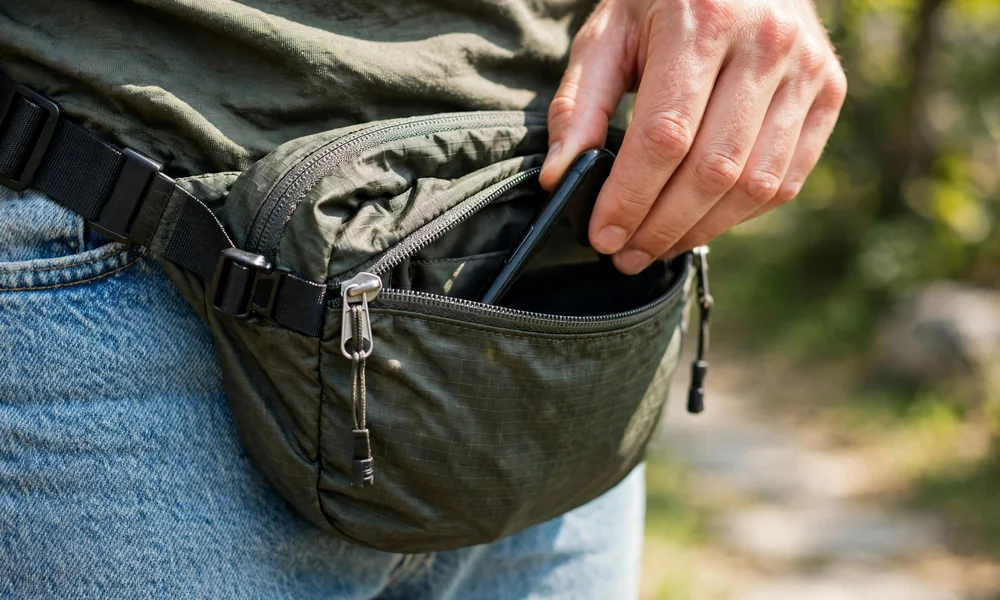
A waist bag is a small, flat pouch with an adjustable strap, worn around the waist so it sits at the front or hip. It is also called a belt bag or a fanny pack: a bag that rides on the waist instead of hanging from the shoulder. It holds the essentials you reach for all day, usually a phone, keys, wallet, earbuds and a travel card, in one or two zipped compartments.
That waist-worn position is what makes it different from the nearest bags. Our guide to crossbody bags covers bags worn on a diagonal strap across the chest, with the pouch hanging at the hip or lower. A crossbody sits lower and suits a larger load; a waist bag sits higher, tighter to the body, and reachable with one hand. A crossbody suits a longer day; a waist bag suits the smallest load and the fastest access.
It is also different from a messenger bag. Our guide to messenger bags covers a much larger bag with a single shoulder strap and room for a laptop, a notebook and a charger. A messenger bag is a work bag; a waist bag is a pocket replacement that never leaves your waist. If you need a laptop, buy a messenger bag. If you need your phone, keys and wallet close and safe, buy a waist bag.
The Main Types of Waist Bag
Five kinds of waist bag cover almost every day. The one you choose decides how much you carry, how it looks, and whether it survives rain and travel.
Slim everyday waist bags
A slim everyday bag is the best starting point. It holds a phone, a card wallet, keys and earbuds in one compartment, with a small front pocket for a travel card. It sits flat under a jacket and does not bounce when you walk. Look for a bag about twenty-five centimetres wide and ten tall, because that fits a large phone without room for clutter.
Travel waist bags
A travel waist bag is built for airports, stations and crowded streets. It adds a second compartment, a hidden pocket for a passport or cash, and water-resistant fabric. The strap is wider, so it sits comfortably over a coat. Worn at the front, it keeps your essentials where you can see them.
Leather waist bags
A leather waist bag is the smart option, suiting a jacket, a smart coat or an evening out. Full-grain leather ages well and holds its shape. It costs more and needs occasional conditioning, but it is the only waist bag that looks at home in a restaurant. Buy black or dark brown first, and check the stitching, because cheap leather fails at the seams.
Sport and running waist bags
A sport waist bag is built to stay put while you move. It is made of light, stretchy fabric, with a wide elastic strap that does not bounce, and it often holds a small water bottle as well as a phone and keys. The pocket is usually split, so a sweaty phone does not sit against your keys.
Large and multi-pocket waist bags
A large waist bag adds a second and third pocket for people who carry more: a power bank, a small camera, sunglasses, or a paperback. It suits a long day out without a backpack. The risk is overfilling it: a stuffed bag sags, pulls at the strap and bounces. If you need to carry that much, a larger bag is the honest answer.
Waist Bags Against Pockets
Pockets have one advantage: they are already there, and they cost nothing. Everything else favours the waist bag. A phone in a pocket presses against your leg when you sit, and slides out when you bend over. Keys scratch a phone screen and poke through thin fabric. A wallet in a back pocket invites a pickpocket and leaves a sore hip. A waist bag solves all of that, because each essential has its own place, zipped shut, at the waist.
Finding things is faster too. In a pocket, you fish by feel and pull out the wrong thing twice. In a waist bag, you unzip one compartment and the phone is there, in the same place every time. That matters at a ticket barrier with a queue behind you. Full pockets also pull at the waistband and make a slim jacket look lumpy, while a waist bag spreads the weight around your waist.
How We Judged
We judged waist bags the way a real owner uses them: on a day out, a commute, and a trip through a busy station. A bag earned marks for a strap that stayed comfortable after hours, zips that opened one-handed, a phone pocket that fit a large phone with its case on, and a shape that stayed flat under a jacket. We also tested sitting and bending, because a bag that is awful sitting down is not one you will keep wearing.
Waist Bags Compared
| Waist bag type | Best for | Capacity | Material | Standout strength |
|---|---|---|---|---|
| Slim everyday | Daily essentials | Phone, keys, wallet | Nylon or canvas | Flat, light, invisible under a jacket |
| Travel | Airports and cities | Phone, passport, cash | Water-resistant nylon | Hidden pocket, safe at the front |
| Leather | Smart days out | Phone, keys, wallet | Full-grain leather | Looks smart, ages well |
| Sport and running | Running and hiking | Phone, keys, flask | Stretch fabric | No bounce, washable |
| Large multi-pocket | Long days out | Phone, power bank, camera | Nylon or canvas | Most room, still hands-free |
A slim bag is the best first buy, a travel bag suits trips, and a leather bag suits smart days. Sport and large bags are specialists rather than everyday answers.

Materials, Straps and Zips
Material decides how a waist bag behaves in rain, how long it lasts, and how it looks. Nylon is the practical choice: light, water-resistant, easy to clean, and quick to dry. Canvas is tough and relaxed, but it soaks up rain. Leather looks better with age and holds its shape, but it is heavy and needs conditioning. For a first bag, nylon is the sensible answer. A slim wallet helps too: our guide to travel wallets covers wallets that hold cards and cash without the bulk of a traditional wallet.
The strap matters more than most buyers realise. A wide strap, at least three centimetres across, spreads the weight and does not dig in after an hour. An adjustable strap that stays where you set it is essential, because one that creeps loose will have the bag swinging at your knees by lunchtime. Zips fail first, so check them: a good zip runs smoothly with one hand, does not snag, and closes fully.
Mistakes to Avoid
The most common mistake is buying a bag too small for your phone. A phone with a case is bigger than you think, and a bag that fits it only if you force the zip shut will split at the seam within months. Measure your phone, case and all, before you buy.
The second mistake is wearing the bag too loose. It should sit snugly at the waist, high enough not to swing, and tight enough not to slide. The third mistake is overfilling it. A waist bag is a pocket replacement, not a backpack. If you are forcing the zip, take something out.
Checklist: Before You Buy a Waist Bag
- Measure your phone with its case on, and check the main compartment fits it easily.
- Check the strap: at least three centimetres wide, smoothly adjustable, with a firm buckle.
- Test the zips one-handed: smooth, snag-free, and closing fully.
- Choose the material for your day: nylon for rain and travel, leather for smart days, canvas for everyday value.
- Check the back panel: soft, breathable fabric that will not chafe.
- Wear it sitting down: it should stay comfortable, flat and reachable.

Frequently Asked Questions
Are waist bags the same as fanny packs?
Yes. Waist bag, belt bag and fanny pack are three names for the same thing: a small pouch worn at the waist. Fanny pack is the older American name, belt bag is the fashion name, and waist bag is the plainest description.
Can you wear a waist bag across your chest?
You can, especially with a slim bag and a short strap. Across the chest it behaves like a very small crossbody bag. At the waist it sits lower and tighter, and stays out of the way under a jacket. Try both, and wear it the way that feels comfortable.
Will a waist bag fit a large phone?
Most slim waist bags fit a large phone with its case on, but not all, so measure first. A compartment about twenty-five centimetres wide and ten tall fits most large phones. If yours is very large, or your case is thick, look for a travel or large waist bag instead.
Are waist bags safe from pickpockets?
A waist bag worn at the front is safer than a pocket, because the pouch is in front of you, zipped shut, and in your line of sight. A bag worn at the back is no safer than a back pocket, so wear it at the front in crowds and on public transport.
Can you wear a waist bag with a jacket or coat?
Yes, and a slim waist bag works best under a jacket, where it lies flat and stays out of sight. A leather bag looks good over a coat, and a nylon travel bag works over a coat too, because the strap adjusts. If it bulges under a slim jacket, it is too full.
How do you clean a waist bag?
Nylon and canvas bags can usually be hand washed in warm soapy water and dried away from direct heat. Sport bags are often machine washable, but check the label first. Leather bags should be wiped with a damp cloth and conditioned occasionally. Always empty the bag and leave the zips open while it dries.
The Bottom Line
Waist bags beat pockets in 2026 because they do the simple job better: phone, keys, wallet and earbuds in one zipped place, at your waist, in reach, with your hands free and your pockets flat. A slim nylon bag is the best first buy, a travel bag suits trips, and a leather bag suits smart days. Measure your phone, check the strap and the zips, wear it snugly at the front, and do not overfill it.


