The mop head does the cleaning, not the handle, and the best replacement mop heads in 2026 are the ones that fit your mop, lift dirt instead of pushing it around, and survive the washing machine. A worn head is the most common reason a mop stops working: the fibres go flat, the strings tangle and shed, or the pad stops gripping. Replacing the head costs a fraction of a new mop, and a fresh head can make an old mop clean like new.
This guide is about the head alone, not the whole mop. It covers how to match a replacement head to the mop you already own, which material suits which floor, how the fixings differ, and when a head is finished. If your mop still works but the floors do not come clean, the head is almost always the problem.
Key Takeaways
- Fit comes first: a head that does not match your mop’s fixing is useless, however good the fibres are.
- Thick microfibre beats thin microfibre every time: dense fibres trap dirt and grease, while flat, smooth fibres just push dirty water around.
- Buy spares on day one: a dirty head spreads dirt from one room to the next, and a spare in the cupboard means the mop is always ready.
- Wash heads in the machine without fabric softener: softener coats the fibres and stops them picking up dirt.
- Replace a head when it stays flat after washing, smells after drying, or sheds fibres on the floor.
Why the Head Matters More Than the Handle
A mop cleans in two ways: the fibres trap dirt, and the wringing leaves the floor damp rather than wet, and both jobs happen in the head. The handle only moves it and the bucket only wets and wrings it. A good head holds plenty of water without dripping, releases the dirt when rinsed, and stays in contact with the floor. A bad head pushes dirty water into corners, leaves streaks, and needs wringing twice as often.
This guide covers replacement heads only, a different question from choosing a whole mop. If you are buying a complete mop, our guide to mops that clean floors without the streaks compares flat, spin and string mops as whole systems, while top spin mops that leave floors streak-free and how to choose the best flat mops cover the two main systems in detail. What follows is for the person who already owns a mop and needs the right head for it.
The Main Types of Replacement Mop Head
Replacement heads split into four kinds, decided by the mop you own, not by preference: a spin mop takes a round head, a flat mop takes a rectangular pad, a string mop takes a bundle of strands, and a sponge mop takes a sponge cartridge. Check the fixing before you check the material.
Round Microfibre Spin Heads
Round spin heads are discs of dense microfibre strands on a plastic plate that clips or screws onto the mop handle. They suit large tiled areas best, because the spinning bucket wrings them nearly dry and the round shape covers ground quickly. A good spin head feels thick and plush, with strands long enough to reach into grout lines, and it clips on and off without a fight. Cheap heads are thin and sparse, and they drag across the floor instead of cleaning it. Check the diameter first: spin heads come in several sizes, and a head a centimetre too wide will not sit in the wringer basket.
Flat Microfibre Pads
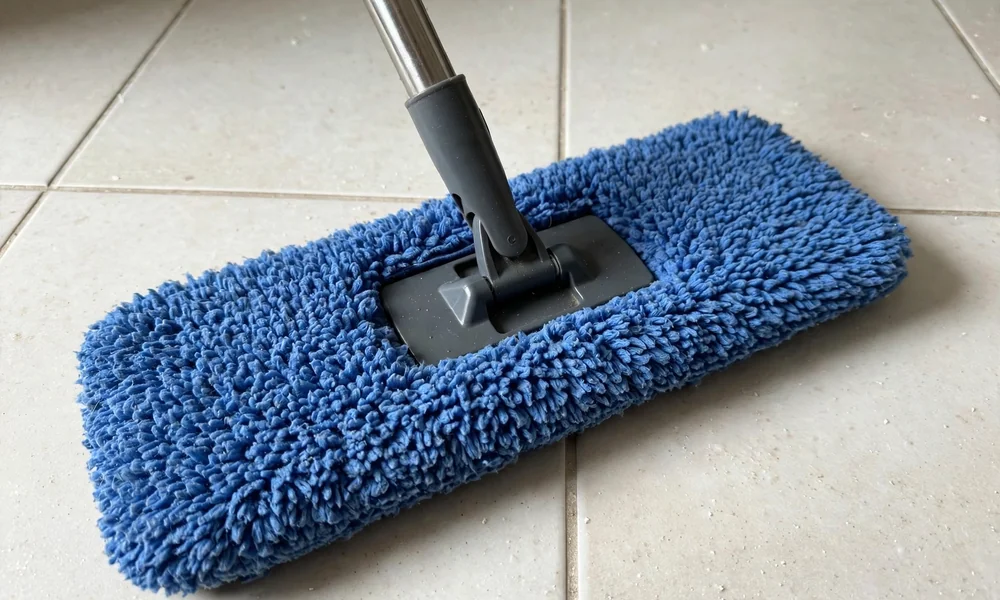
Flat pads are rectangular microfibre cloths that clip, slide or stick onto a flat mop head, usually with Velcro, pockets or clips. They suit mixed hard floors, sealed wood and laminate best, because the whole pad stays flat against the floor and reaches edges and corners a round head misses. Thick chenille-style pads pick up dust and pet hair best, while short, flat-weave pads suit smooth floors and quick daily cleans. Measure the pad and check the fixing: never assume one brand’s pad fits another brand’s head.
Cotton String Heads
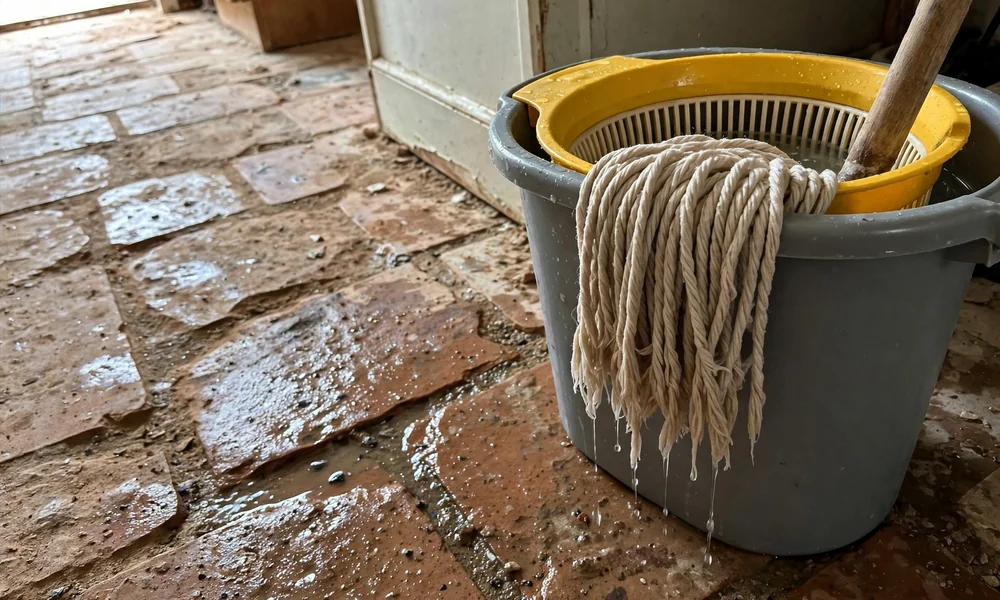
String heads are bundles of cotton or synthetic strands fixed to a socket that screws or clips onto the handle. They hold more water than any other head, which makes them the best choice for rough floors, quarry tiles and heavy spills, where a flat pad would snag or dry out. Cotton absorbs well and rinses clean, but it dries slowly and can smell if stored damp. Synthetic strands dry faster and resist mildew, but hold less water. A string head is hard to wring evenly by hand, so it suits homes with a wringer bucket. Buy the right weight: a head too heavy for the handle is hard to control, and one too light dries out before the floor is done.
Sponge and Scrub Heads
Sponge heads are absorbent cartridges, often with a scrub strip along one edge, that fit sponge mops with a built-in wringer. They pick up spills fast and leave smooth floors almost dry, which makes them good for kitchens and bathrooms. Their weakness is lifespan: sponge cracks and crumbles with age, and a cracked sponge leaves bits on the floor. The scrub strip helps with dried spills, but it wears faster than the sponge itself. If your sponge mop’s head is crumbling, replace the cartridge rather than the whole mop, and check the model number, because sponge cartridges are the least standardised fixing of all.
Replacement Mop Heads Compared at a Glance
| Head type | Fits | Best for | Standout strength |
|---|---|---|---|
| Round microfibre | Spin mops | Large tiled floors | Wring nearly dry, cover ground fast |
| Flat microfibre pad | Flat mops | Mixed hard floors | Full contact, reaches edges and corners |
| Cotton string | String mops | Rough floors, heavy spills | Holds the most water |
| Sponge cartridge | Sponge mops | Kitchens, bathrooms | Soaks up spills, leaves floors nearly dry |
How to Choose the Right Replacement Head
Start with the fixing, not the fibre. Take the old head off and look at how it attaches: a clip, a screw thread, Velcro, pockets, or a slide-in channel. Then check the brand and model of your mop, because most heads are made for one system. Universal heads exist, and some fit well, but a head sold as universal that does not list your mop is a gamble. Measure the old head too: diameter for round heads, length and width for pads, and weight for string heads.
Material is the second decision. Microfibre is the best all-rounder: split fibres trap dust, grease and pet hair, and a good head survives dozens of washes. Cotton is the best absorber and the cheapest, but it dries slowly. Synthetic string dries fast and resists smells, but holds less water. Sponge is best for spills on smooth floors and worst for rough ones, where it tears. For most homes, a thick microfibre head is the right default, with a cotton string head kept for the rough jobs.
Thickness and density are the third test, and they matter more than the brand. Squeeze the head: a good microfibre pad feels thick and springs back, while a thin one feels flat and papery, and a string head should be even, full and untangled. Check the stitching on pads, because edges that fray in the wash will not last. Buy two heads at once: one on the mop and one clean in the cupboard.
Washing, Drying and When to Replace
Machine-wash microfibre heads and pads at 40 degrees with a small amount of detergent and no fabric softener: softener coats the split fibres and stops them picking up dirt, and it is the most common reason a washed head cleans worse than a new one. Wash string heads the same way, inside a laundry bag if the strands are long, and never use bleach on microfibre. Sponge heads are not machine-washable; rinse them well, wring them out, and let them dry fully.
Drying matters as much as washing. A head stored damp goes musty, and a musty head puts the smell back on the floor, so hang heads to dry fully between uses and never put a damp head back on the mop. A head that still smells after a proper wash and a full dry is finished, and so is one that stays flat after washing, sheds fibres, or has stitching coming apart. As a rough guide, a microfibre head washed weekly lasts six to twelve months, a cotton string head three to six months, and a sponge cartridge two to four months.
Mistakes That Waste Money on Mop Heads
The first mistake is buying on price alone: the cheapest heads are thin, sparse and badly stitched, and they need replacing twice as often, so they cost more over a year than one good head. The second mistake is buying the wrong fixing, so check the model before you order. The third mistake is using one head for everything: a head used on a greasy kitchen floor and then on a bathroom floor spreads dirt between rooms.

Mop Head Buying Checklist
- Take the old head off first and note the fixing: clip, screw, Velcro, pockets or slide-in channel.
- Check the brand and model of your mop, and measure the old head before you order.
- Choose thick, dense microfibre for everyday floors, and cotton string for rough floors and heavy spills.
- Buy two heads at once: one on the mop and one clean in the cupboard.
- Check the stitching and the edges: fraying edges mean a short life in the wash.
- Plan to wash without fabric softener and dry fully between uses.
Frequently Asked Questions
How do I know which mop head fits my mop?
Check the brand and model on the handle or bucket, then match the fixing: round heads clip or screw onto spin mops, flat pads use Velcro, pockets or clips, and string heads screw into a socket. Measure the old head as well, because diameters and pad sizes vary even within one brand.
Are microfibre mop heads better than cotton ones?
For everyday hard floors, yes: microfibre traps dust, grease and pet hair, wrings nearly dry and survives dozens of washes. Cotton holds more water and suits rough floors and heavy spills, but it dries slowly and needs full drying between uses.
Can I wash mop heads in the washing machine?
Microfibre heads and pads, and cotton string heads, can be machine-washed at 40 degrees with a small amount of detergent and no fabric softener. Sponge heads cannot go in the machine: rinse them well, wring them out and let them dry fully.
How often should I replace a mop head?
A microfibre head washed weekly lasts six to twelve months, a cotton string head lasts three to six months, and a sponge cartridge lasts two to four months. Replace any head sooner if it stays flat after washing, smells after drying, or sheds fibres on the floor.
Why does my mop head smell even after washing?
It was probably stored damp. Mop heads need to dry fully between uses, and softener can leave a coating that traps smells. Wash again without softener, dry it fully in the air, and if the smell stays, replace the head.
Are universal replacement mop heads worth buying?
Sometimes, but only if the listing names your mop or the fixing matches exactly. A universal head that does not list your model is a gamble, and a head that fits badly cleans worse than the worn head it replaces. When in doubt, buy the head made for your mop.
Bottom Line
The best replacement mop heads are the ones that fit your mop exactly, in thick microfibre for everyday floors or cotton string for rough ones, bought in pairs so a clean head is always ready. A fresh head costs little, washes well if you skip the softener, and makes an old mop clean like new. Replace it the moment it goes flat, sheds or smells, and the floors will show the difference.