Napkin Holders That Keep the Table Neat in 2026
Napkin holders are the quiet workhorses of a tidy table, and the best napkin holders in 2026 do one simple job well: they keep a stack of napkins upright, neat and within reach from the first course to the last. A good holder stops napkins sliding across the table, stops them blowing away outdoors, and stops the familiar mess of a loose pile that slowly spreads every time someone pulls one out.
Key takeaways
- A napkin holder keeps napkins upright and in one place, so the table stays neat through the whole meal.
- Weight matters more than looks: a holder that is too light tips over or slides when you pull a napkin out.
- Stainless steel suits everyday family tables; wood suits warm, relaxed rooms; acrylic suits bright, modern ones.
- Match the holder to your napkins — paper napkins need a snug fit, cloth napkins need a wider, heavier base.
- One holder serves four to six people; a long table or a large gathering needs two.
What a napkin holder actually does
It helps to be clear about the job. A napkin holder is a small stand, usually weighted, that holds a stack of napkins upright in the middle of the table so anyone can take one with one hand. The napkins stay in a neat block instead of fanning out, curling at the edges, or sliding onto the floor.
That is also what makes a holder different from a napkin ring. A ring dresses a single napkin at a single place setting, slipping around one folded napkin to make it look deliberate. A holder serves the whole table, holding the shared stack that everyone reaches for. If you want the dressed-table treatment, our guide to why napkin rings still belong on a dressed table covers the ring side of the story.
Weighted, upright or flat: the three shapes that matter
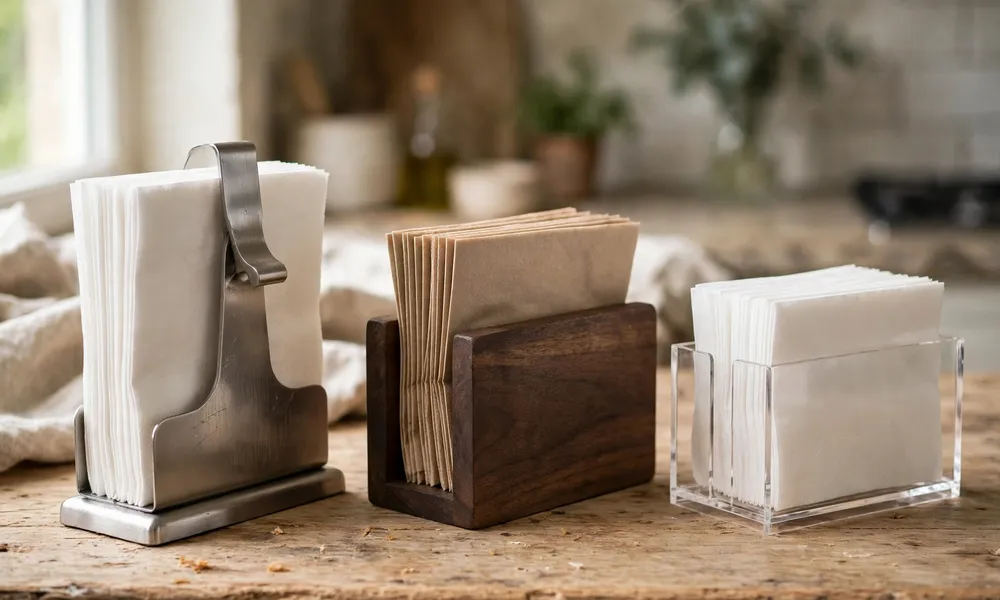
Most napkin holders fall into three shapes, and the shape decides how they behave on a real table. The upright holder is the classic: two upright sides, often with a weighted base, that sandwich a stack of square napkins. It takes up very little room, works with both paper and cloth napkins, and is the easiest shape to use one-handed.
The flat holder, sometimes called a napkin tray, lays the stack flat under a hinged lid or a weighted plate. It is the tidiest option for a buffet or a kitchen counter, because the lid keeps dust off and keeps the top napkin flat.
The third shape is the freestanding dispenser, common in cafes and busy family kitchens, where napkins feed out of a slot one at a time. It is the most practical choice when hands are messy or children are serving themselves, but it only takes the thin paper napkins it was designed for, and it looks out of place on a dressed dinner table.
Choosing a material that fits your table
Material sets the tone, and it also decides how long the holder lasts. Stainless steel is the safest everyday choice: heavy, easy to wipe clean, and happy with damp hands and tomato sauce. Brushed steel looks calm and modern; polished steel shows fingerprints within minutes.
Wood is the warm alternative. Oak, walnut and beech holders feel at home on a wooden table and soften a room full of hard surfaces. Wood needs a little care — wipe it dry and refresh it now and then with a drop of food-safe oil — but it ages well.
Acrylic and ceramic sit at opposite ends of the same question. Acrylic is light and modern, and lets the napkins provide the colour, but it scratches and needs a weighted base. Ceramic is heavy and holds napkins still, but it chips if knocked.
Paper napkins or cloth napkins?
The napkins decide the holder more than most people expect. Paper napkins are thin, light and springy, so they need a holder that grips them snugly. If the slot is too wide, paper napkins slump to one side and the stack looks untidy within minutes.
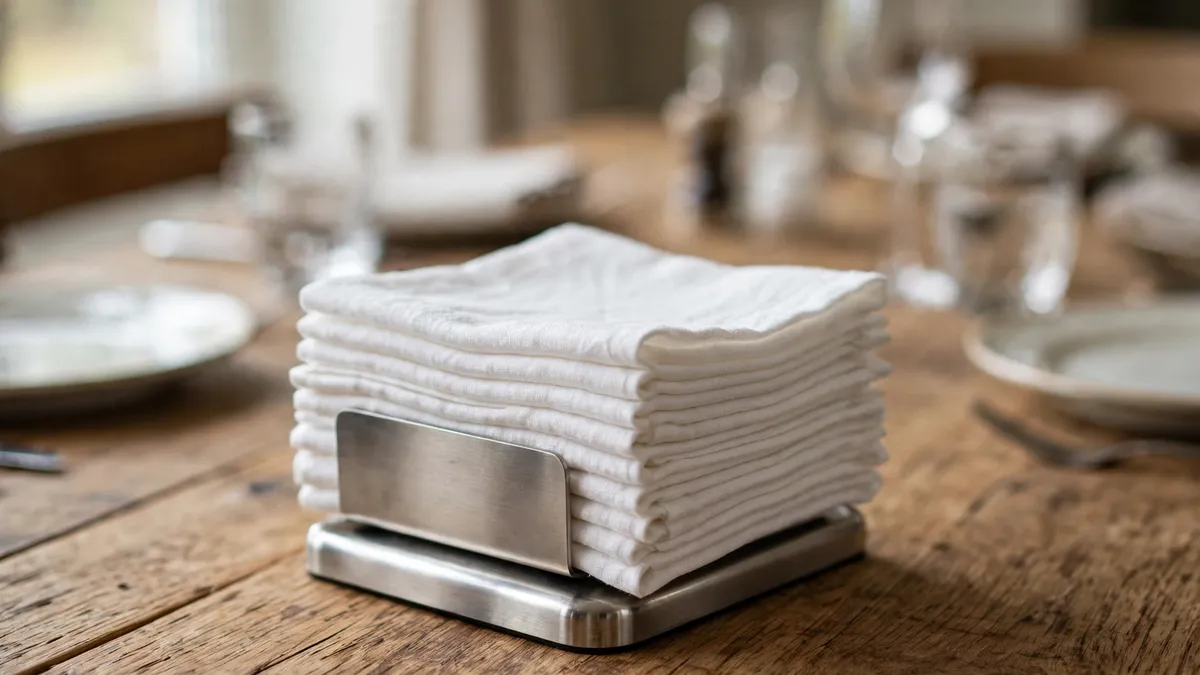
Cloth napkins are thicker, heavier and less forgiving. They need a wider holder with a heavier base, and room to sit without being squeezed flat. A holder that is too tight will crease linen and make it hard to pull one napkin free without dragging three more with it. Before you buy, measure your folded napkins and check the holder against that size, not against the photograph. For a full guide to the napkins themselves, see our roundup of napkins that make everyday meals feel finished.
How many holders does a table need?
One holder serves four to six people comfortably, as long as it sits where everyone can reach it without stretching across the table. On a long table, use two holders, one for each half; a buffet needs one per serving point.
Capacity matters too. A standard upright holder takes thirty to fifty paper napkins, which is enough for a family dinner but not for a party. A holder that is stuffed too full is worse than one that is half empty: the napkins fan out, and pulling one out drags the stack with it.

Comparing napkin holder styles
| Style | Best for | Watch out for | Price |
|---|---|---|---|
| Weighted stainless steel, upright | Everyday family tables, one-handed use | Polished steel shows fingerprints | Mid-range |
| Solid wood, upright | Warm, relaxed dining rooms | Needs wiping dry; can stain | Mid-range |
| Clear acrylic, upright | Bright modern kitchens, colourful napkins | Light; scratches; needs a heavy base | Low to mid |
| Ceramic, weighted | Dressed tables, outdoor tables in wind | Chips if knocked; heavier to move | Mid to high |
| Flat tray with weighted lid | Buffets, kitchen counters, cocktail napkins | Takes up more table space | Mid-range |
| Slot dispenser | Busy kitchens, children, messy hands | Only fits thin paper napkins | Low to mid |
Using a holder outdoors
Outdoors is where a good napkin holder earns its keep, and where a bad one is found out in seconds. Wind is the obvious enemy, and the answer is weight: a holder for the garden needs a base heavy enough that a gust cannot tip it, and a shape that shelters the napkins rather than exposing them. A ceramic holder or a steel holder with a solid base works; a light acrylic one will be on the lawn before the salads arrive.
Keep the holder in the sheltered middle of the table rather than at the windy edge, and fill it generously — a full stack is heavier and less likely to flutter than a nearly empty one. If the evening is genuinely blustery, a flat tray holder with a lid beats an upright holder every time, because the lid does the work the wind would otherwise undo. A holder that works indoors will not always work outdoors, so if you eat outside often, buy for the garden first.
Keeping the table neat around the holder
A holder does its best work when the rest of the table helps it. Place it where hands naturally go — near the centre, not tucked behind a vase — and keep the space around it clear so people can pull a napkin without knocking a glass. Refill it before the meal and straighten the stack: a stack that starts neat stays neat far longer.
The surface underneath matters too. A holder on a bare wooden table can slide; a small felt pad or a rubber foot on the base stops that without anyone noticing. The holder should also match the mood of the table around it — a steel holder on a rustic wooden table looks fine, but a plastic dispenser on a dressed table looks like it wandered in from the kitchen. If the table underneath needs attention, our guide to placemats that protect the table and dress it up covers the pieces that sit beneath and around it.
Cleaning, care and common mistakes
Care is simple, and it is mostly about keeping the holder dry and clean. Steel wipes clean with a damp cloth; wood should never go in the sink — wipe it, dry it, and oil it lightly when it looks pale. Acrylic needs a soft cloth, and ceramic is best hand washed.
The common mistakes are easy to avoid once you know them. The first is buying the lightest holder on the shelf because it looks elegant — a light holder tips, slides and frustrates everyone, and elegance counts for nothing when the napkins are on the floor. The second is buying for the wrong napkin size, so the stack slumps or jams. The third is putting one holder on a long table and expecting the far end to reach it. The fourth is overfilling the holder, which fans the napkins out and defeats the point. And the fifth is hiding the holder behind a centrepiece where nobody can reach it. A holder is a tool first and a decoration second.

Napkin holder checklist
- Pick the holder up first: it should feel heavy enough not to tip when you pull a napkin out.
- Measure your folded napkins and check the holder fits them snugly, not loosely or too tightly.
- Choose steel or wood for everyday use; save acrylic and ceramic for style-led tables.
- Place one holder per four to six people, in the centre where every hand can reach it.
- Fill it before the meal and straighten the stack so it starts neat.
- For outdoor tables, choose the heaviest holder you can, and prefer a lidded tray in real wind.
Frequently asked questions
What is the difference between a napkin holder and a napkin ring?
A napkin holder serves the whole table: a weighted stand holding a shared stack of napkins upright in the middle of the table. A napkin ring dresses one napkin at one place setting, slipping around a single folded napkin. Holders keep the table neat; rings make each place look finished. Many homes use both.
How heavy should a napkin holder be?
Heavy enough that pulling one napkin out with one hand does not move the holder. In practice that means a solid weighted base, usually steel or ceramic, rather than a thin folded sheet of metal or light plastic. If you can lift it with two fingers and it feels like nothing, it will slide.
Do napkin holders work with cloth napkins?
Yes, as long as the holder is wide enough. Cloth napkins are thicker than paper, so they need a wider slot and a heavier base, and they should sit without being squeezed flat. Measure your folded cloth napkins first, and test one in the holder before buying.
What is the best napkin holder for outdoors?
A heavy ceramic or weighted steel holder, placed in the sheltered centre of the table. A flat tray holder with a weighted lid is even better in real wind, because the lid keeps the napkins down. Light acrylic holders are the worst choice outdoors and will tip or blow over.
How many napkins does a holder take?
A standard upright holder takes thirty to fifty paper napkins, or eight to twelve folded cloth napkins. For a party, either buy a larger holder or plan to refill it once during the evening. Stuffing a holder too full makes the napkins fan out and defeats the point.
Where should a napkin holder sit on the table?
In the centre, where everyone can reach it without stretching across the table or knocking a glass. On a long table, use two holders, one for each half. Keep the space around it clear, and do not hide it behind a vase or a centrepiece.
The bottom line
The best napkin holders in 2026 are the ones you stop noticing: heavy enough to stay put, sized to your napkins, and placed where every hand can reach them. A weighted steel holder is the safest everyday buy, wood is the warmest, and a lidded tray is the answer for wind and buffets.