Top Shoe Trees for Keeping Footwear in Shape in 2026
Shoe trees are the simplest way to keep good shoes looking good, and the top shoe trees in 2026 do a job no amount of polishing can replace: they hold a shoe in its proper shape between wears, smooth out the creases that form across the toe, and soak up the moisture that would otherwise break the leather down from the inside. A pair of shoes left empty slowly collapses, and once that shape is lost it is hard to get back.
Key takeaways
- A shoe tree holds a shoe in shape, smooths toe creases, and absorbs moisture after every wear.
- Cedar is the best all-round material: it absorbs moisture, smells fresh, and resists odour naturally.
- Split-toe trees with an adjustable heel fit most shoes; solid trees suit a single, well-fitting pair.
- Put trees in as soon as shoes come off, and leave them in until the next wear.
- Buy the right size: a tree that is too small does nothing, and one that is too big stretches the shoe.
What a shoe tree actually does
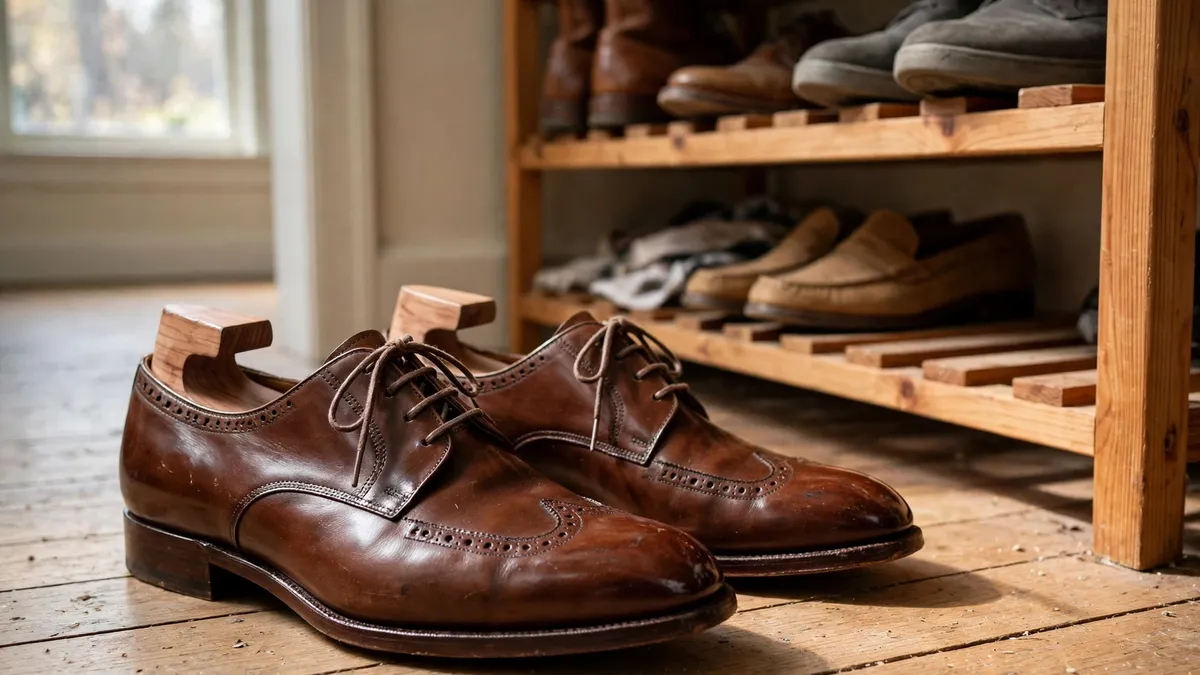
It helps to be clear about the job, because a shoe tree is often confused with a shoe stretcher or a shoe horn. A shoe tree is a foot-shaped form, usually in wood or plastic, that slides into a shoe when it is not being worn. It fills the toe box, supports the vamp — the part of the shoe over the toes — and holds the heel counter upright, so the leather dries in its proper shape rather than curling and collapsing as it cools.
Feet sweat, even in cold weather, and leather absorbs that moisture every time a shoe is worn. Left empty, a damp shoe dries unevenly and creases deepen. A wooden tree, especially cedar, draws moisture out and lets the leather dry slowly and evenly.

Cedar, beech or plastic: choosing a material
Cedar is the classic choice. Aromatic cedar absorbs moisture well, smells fresh without any spray, and naturally resists the bacteria that cause odour. It costs more than plastic, and cheap cedar can split if forced into a tight shoe.
Beech and other hardwoods are harder and heavier than cedar and do the structural job just as well, but they absorb less moisture and have no scent, so they suit shoes that are worn briefly and put away dry.
Plastic trees are the budget option: they hold the shape and are easy to wash, but they absorb no moisture, so the shoe dries slowly and odour builds up. Plastic suits trainers and travel; for leather shoes you want to keep for years, wood is worth the extra cost.
Split-toe, solid or adjustable?
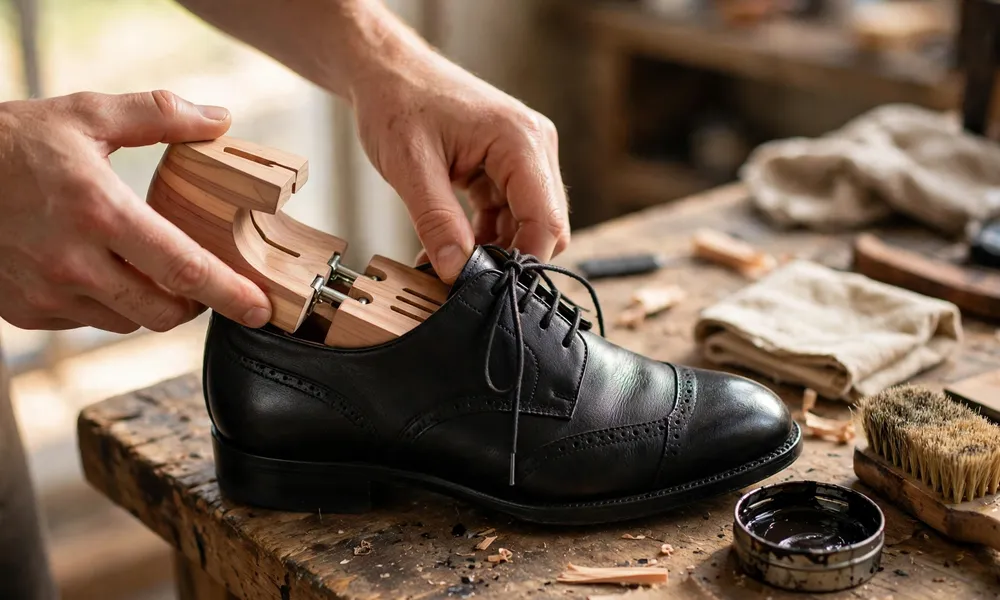
The shape of the tree matters as much as the material. A split-toe tree has a toe section that splits into two parts, usually with a spring, so it expands gently to fill the width of the shoe. It is the most versatile choice for a wardrobe of different shoes.
A solid tree is carved to one exact shape and size. It fits one pair perfectly, but nothing else, and it is the most expensive option — the choice for a favourite pair of dress shoes.
An adjustable tree has a heel piece that slides along a metal rod, so one tree can fit several sizes. The drawback is the mechanism: a cheap one can slip, and the rod can mark the inside of the heel if it is not padded.
Getting the size right
Size is where most shoe-tree purchases go wrong. A tree that is too small does almost nothing: it rattles around in the toe, it does not press the creases out, and it does not support the heel. A tree that is too big is worse, because it stretches the leather, widens the shoe, and can split the stitching at the toe. The right tree fills the shoe snugly, with gentle pressure all round and no force needed to get it in.
Most trees are sold in size ranges, and the range on the box is only a starting point: a wide shoe needs a wider tree than a narrow shoe in the same size. If you are between sizes, buy the smaller one. For dress shoes, check our guide to dress shoes that look sharp without hurting your feet for the fit the tree needs to preserve.
Which shoes need trees, and which do not?
Leather dress shoes need trees most of all: loafers, brogues, Oxfords and Derby shoes all benefit, and boots benefit even more, because a boot that collapses at the ankle is hard to put on.
Trainers need trees less urgently, but a tree still keeps the toe box from collapsing and stops the heel counter folding in. Suede needs a lighter touch: a tree that is too tight will mark it. For everyday trainers, our roundup of the best sneakers in 2026 covers the styles that most often need one.
Some shoes do not need trees at all: sandals, flip-flops and slip-on canvas shoes have no structure to preserve. And a shoe that is already badly misshapen will not be fixed by a tree; a tree preserves shape, it does not restore it.
Comparing shoe tree types
| Type | Best for | Watch out for | Price |
|---|---|---|---|
| Split-toe cedar | Most leather shoes, everyday use | Cheap cedar can split if forced | Mid-range |
| Solid cedar, lasted | A favourite pair of dress shoes | Fits only one pair; most expensive | High |
| Solid beech or hardwood | Dry shoes, well-ventilated racks | Absorbs less moisture; no scent | Mid-range |
| Adjustable, metal rod | Boots, shared trees, several sizes | Mechanism can slip; check heel pad | Mid-range |
| Plastic, spring-loaded | Trainers, travel, casual shoes | Absorbs no moisture; odour builds up | Low |
| Boot trees, tall | Ankle and calf boots | Must match boot height; bulky to store | Mid to high |
How to use a shoe tree properly
Put the tree in as soon as the shoe comes off, while the leather is still warm and slightly damp — that is when it is most flexible and the tree can press the creases out. Waiting until the next morning is too late: by then the leather has set in its collapsed shape.
Insert the tree gently, toe first, and let it slide in rather than forcing it — if you have to push hard, the tree is too big. Leave it in until the next wear, ideally for a full day after a long wear. Rotating shoes helps too: a shoe worn every other day, with a tree in between, will outlast a shoe worn daily.
Boots, loafers and travel
Boots need a different approach, because a standard tree does not reach the ankle. A boot tree is taller, with a shaft that supports the ankle and keeps the boot from folding over. For calf boots a proper boot tree is worth buying.
Loafers need a gentler tree, because they have no laces to hold the shape: a split-toe tree that expands too firmly can stretch a loafer and make it slip at the heel. Our guide to top loafers for everyday style covers the styles most often stretched by the wrong tree.
For travel, plastic trees are the practical choice: light, and they keep shoes from being crushed in a suitcase. Pack shoes with the trees inside and stuff socks into the remaining space.
Care, storage and common mistakes
Cedar trees need almost no care: let them dry between uses and sand them lightly with fine sandpaper once a year to refresh the scent and absorbency. Plastic trees can be washed with warm soapy water.
Knowing when to replace a tree is just as useful as knowing how to use one. A cedar tree that has gone smooth and shiny has lost most of its absorbency, and a light sanding will usually bring it back; if the wood feels soft, cracked or warped, it is time for a new pair. A split-toe spring that no longer pushes the two halves apart is also finished, because the tree will sit loose in the shoe and do nothing. Keep a spare pair for shoes that are worn most often, so a broken tree never leaves a favourite pair empty for a week while you shop for a replacement. Trees are cheap compared with the shoes they protect, and replacing one on time is far cheaper than replacing the shoes it was meant to save.
The common mistakes are buying the wrong size, usually too big; leaving trees out or using them only occasionally; forcing a tree into a shoe that is already wet through; using one tree for every shoe regardless of size; and expecting a tree to fix a shoe that has already lost its shape.

Shoe tree checklist
- Buy cedar split-toe trees first; they suit most leather shoes and absorb moisture as they work.
- Match the tree to the shoe size and width; if between sizes, buy the smaller one.
- Put trees in as soon as shoes come off, while the leather is still warm and damp.
- Leave trees in until the next wear, ideally for a full day after a long wear.
- Use boot trees for boots, and a gentler tree for loafers that have no laces.
- Refresh cedar once a year with fine sandpaper, and replace any tree that has split or warped.
Frequently asked questions
Do shoe trees really make a difference?
Yes, and the difference is visible within weeks. Shoes kept with trees hold their shape and dry evenly, while shoes left empty curl at the toe and wear out faster.
Are cedar shoe trees better than plastic ones?
For leather shoes, yes. Cedar absorbs moisture, resists odour and smells fresh, while plastic only holds the shape and absorbs nothing. Plastic is fine for trainers and for travel, where weight matters, but cedar is the better buy for shoes you want to keep for years.
How long should shoe trees stay in?
Until the next wear, and at least a full day after a long wear, so the leather dries completely. Putting trees in as soon as shoes come off matters most; a tree inserted the next morning is too late to press out the creases that have already set.
Can a shoe tree stretch a shoe?
Yes, if it is too big. A tree that has to be forced in will widen the shoe and can split stitching at the toe. The right tree slides in with gentle pressure and fills the shoe snugly. If you are between sizes, buy the smaller tree.
Do trainers need shoe trees?
They benefit, though less urgently than leather shoes. A tree keeps the toe box from collapsing and stops the heel counter folding in, which makes trainers easier to slip on and keeps them looking newer for longer. Plastic trees are usually enough for trainers.
Do shoe trees fix creases that are already there?
No, not really. A tree smooths shallow, fresh creases and stops them deepening, but it cannot remove deep creases that have set over months. Trees preserve shape; they do not restore it. Start using them while the shoes still hold their shape.
The bottom line
The top shoe trees in 2026 are the ones that fit properly and get used every time: cedar split-toe trees for most leather shoes, solid trees for a favourite pair, and plastic trees for trainers and travel. Buy the right size and put them in the moment the shoes come off.