A neck fan is a small fan that hangs around your neck and blows cool air up toward your face, giving you a personal breeze wherever you go while leaving both hands completely free. On a hot walk or a long day outdoors, it is the difference between feeling sticky and miserable and feeling comfortable. A bad neck fan is heavy, noisy, weak or uncomfortable after ten minutes, while a good one is light, quiet, strong and easy to forget you are wearing. The best neck fans of 2026 are the ones that cool you properly without ever getting in the way.
What Makes a Neck Fan Good
The first thing to judge is the airflow. A neck fan is only useful if it moves enough air to cool your face and neck, and the best fans have vents that push a steady stream upward, with at least three speeds so you can turn the breeze up on a hot afternoon and down in a cooler room. Put the fan on and walk outside on a warm day to see whether your face actually feels cooler.
The second thing is the comfort. A neck fan is worn against your skin for hours, often in heat, so a fan that is heavy, stiff, hot or scratchy will not be worn. The best fans weigh under 300 grams, sit softly on the neck, and stay cool themselves even after an hour of use. Comfort decides whether a gadget is loved or abandoned.
The third thing is the battery. A neck fan that dies halfway through the day is dead weight, and the best fans run for at least eight hours on low speed and three hours on high, recharging over USB-C in about two hours. A fan is most needed on the longest, hottest days, when there is nowhere to plug in, so check the battery and look for a clear charge display.
The Main Types of Neck Fan
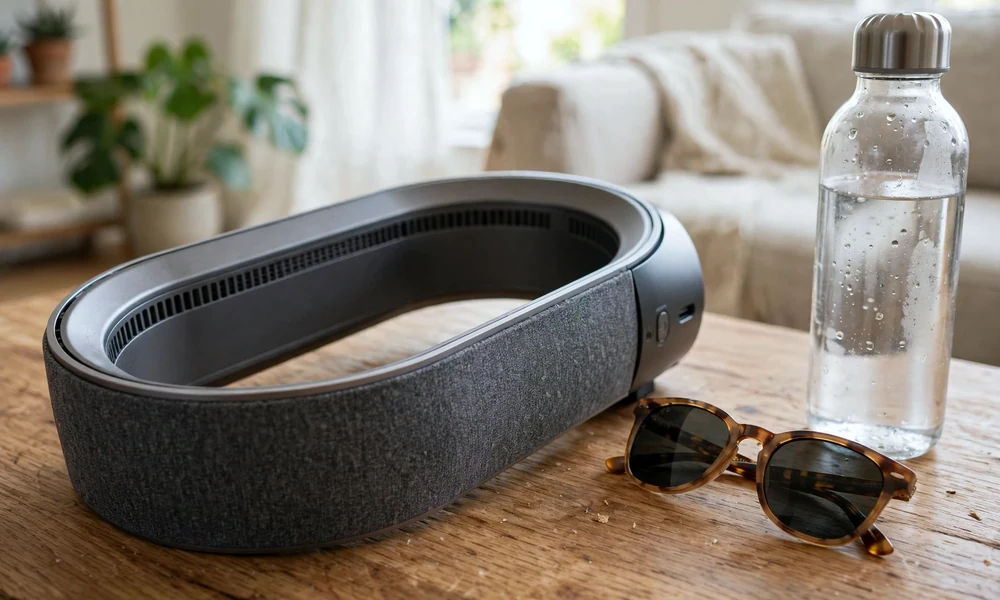
Bladeless neck fans are the most popular choice. They have a smooth U-shaped band with a ring of small vents that push air upward around your face and neck, so there is no hair to catch and no spinning blade near your skin. They are quiet, safe and comfortable, and they suit almost everyone. The trade-off is power: the breeze is gentle rather than fierce, so it suits warm days rather than extreme heat.
Bladed neck fans are the powerful option. They have small exposed fans on each side of the neck, and they move more air than a bladeless model, giving a stronger, more direct breeze. They suit very hot days and outdoor work. The downside is noise and hair risk: the blades are louder, and long hair can get caught if it is not tied back.
Turbo neck fans are the strongest option. They have high-speed brushless motors that produce a focused jet of air, cooling you down in seconds after a hot walk or a crowded platform. They suit festivals, hiking and outdoor work in summer. The downside is the battery: at full power it drains in two or three hours, so it suits short bursts rather than all-day wear.
Lightweight neck fans are the comfortable option. They weigh under 200 grams, use a slim, flexible band, and are easy to forget you are wearing, which makes them best for all-day wear, travel and older users. The trade-off is airflow: the breeze is gentler than a turbo model, so it suits warm weather rather than a heatwave.
Foldable neck fans are the portable option. They fold flat or twist into a compact shape that slips into a bag or pocket, making them best for travellers and commuters. The downside is durability: a folding joint is a weak point, so a foldable fan needs a little more care than a solid one.
The 9 Best Neck Fans in 2026
The nine fans below cover every need, from gentle all-day cooling to a powerful turbo breeze.
1. Best Overall: The Bladeless Everyday Cooler. The bladeless everyday cooler is the best neck fan of 2026 because it does everything well and nothing badly. It gives a smooth, even breeze, runs quietly, weighs around 250 grams, and lasts about ten hours on low speed. If you only buy one neck fan, buy this one.
2. Best Turbo Pick: The High-Speed Jet Cooler. Its brushless motor produces a focused jet that cools you in seconds, and it has four speeds so you can drop back to a gentle breeze once you have cooled down. Battery life is around three hours at full power and eight hours on low.
3. Best Lightweight Pick: The Featherlight Slim Band. The featherlight slim band weighs barely 180 grams, making it the most comfortable fan in this guide. It sits softly on the neck, stays cool against the skin, and runs for around twelve hours on low.
4. Best Budget Pick: The Simple Three-Speed Band. You do not need to spend a lot to stay cool, and the simple three-speed band proves it. It costs a fraction of the premium models yet still delivers three speeds, a strong top setting, and around eight hours of battery life on low.
5. Best Premium Pick: The Long-Battery Pro Cooler. For the best of everything, the long-battery pro cooler pairs a powerful bladeless design with a battery that lasts up to sixteen hours on low. It has a clear battery display and a motor so quiet you can wear it in a library. It costs more, but it is the fan to buy if you wear one every day.
6. Best for Outdoor Work: The Rugged Dust-Resistant Fan. Outdoor work is hard on a fan, because dust, sweat and knocks are part of the day, and the rugged dust-resistant fan is built for exactly that. It has a sealed motor, a tough outer band, and a strong breeze that cuts through still, humid air.
7. Best for Travel: The Folding Packable Fan. The folding packable fan twists flat to the size of a phone, making it the most packable fan in this guide. It slips into a jacket pocket or a daypack, unfolds in seconds, and gives a proper breeze with three speeds and around nine hours of battery life on low.

8. Best Quiet Pick: The Whisper-Soft Library Fan. The whisper-soft library fan runs below 30 decibels on its first two speeds, thanks to a slow motor that moves air efficiently without spinning fast. It is the quietest fan here, and the best choice for shared spaces.
9. Best for Kids and Smaller Necks: The Adjustable Junior Band. The adjustable junior band is sized for smaller necks, with a shorter band and softer ends that stay in place. It has a simple one-button control, a gentle top speed, and a battery that lasts around ten hours on low.
How to Choose the Best Neck Fan
A good neck fan is defined by a handful of choices, and the most important is the fit. A fan that is too loose will slide and lose its breeze, while a fan that is too tight will press on your neck. Look for a band that sits snugly without pressure, with soft ends that rest on your collarbones.
Check the battery and charging next. USB-C charging is the standard to insist on, because one cable then charges your fan, phone and headphones, and a good fan recharges in about two hours. Look for at least eight hours on the lowest speed. Our guide to the best portable fans will help you compare battery life across fan types, and our roundup of the best desk fans shows what to expect when a fan stays plugged in at home.
Noise, safety and hair matter just as much. Brushless motors are quieter and more durable than brushed ones, and a fan below 30 decibels on low will never disturb anyone. Bladeless fans are safest for long hair, because there is nothing to catch, while bladed fans need hair tied back.
Using and Caring for Your Neck Fan
Getting the most from a neck fan starts before you leave home. Charge it fully, test every speed, and carry a short USB-C cable so you can top up from a power bank on a long day. Wear it over a light layer rather than directly on sweaty skin if the band slips, and keep the vents pointing upward toward your face, not outward. For travel days, our guide to the best portable fans for travel shows how a neck fan fits alongside handheld and clip-on fans in a carry-on.
Keeping your fan clean is simple but worth doing. Dust and lint build up quickly in the vents, especially in dry or sandy places, and a dirty fan moves less air and makes more noise. Wipe the band with a dry cloth every few days, and use a soft brush or a cotton bud to clear the vents. Avoid water unless the fan is rated waterproof, and never use a wet wipe on the charging port. Store the fan in a small pouch to protect it in a bag.

Common Mistakes to Avoid
The most common mistake is buying on power alone. A fan with a fierce top speed sounds impressive, but if it is heavy, noisy and dead in two hours, you will stop wearing it. Balance matters more than any single number, and a fan that is comfortable, quiet and long-lasting will cool you more over a whole day than a turbo fan you leave at home. The second mistake is ignoring the fit, because a fan that slides around wastes its breeze. The third is forgetting the battery, because a fan that dies at midday is no help at all.
Frequently Asked Questions
Are neck fans safe to wear for hours? Yes, modern bladeless neck fans are safe for long wear, because they have no exposed blades. Bladed fans are also safe if your hair is tied back. If the band feels hot or tight, take the fan off.
How long do neck fans last on one charge? Most good neck fans run for eight to twelve hours on low and two to four hours on high. Use the top speed in short bursts and drop back to low once you have cooled down.
Do neck fans actually help in a heatwave? Yes, a breeze aimed at your face and neck lowers how hot you feel, even though it does not change the air temperature. In extreme heat, use it alongside shade, water and rest.
Can I wear a neck fan with long hair? Yes, if you choose a bladeless model or tie your hair back. Bladeless fans have no spinning parts to catch hair, so they are the safest choice.
Are neck fans noisy? The best neck fans run below 30 decibels on low, quieter than a normal conversation. Turbo and bladed models are louder at full speed, so check the noise level first.
The Bottom Line
The best neck fans of 2026 are light, quiet and strong enough to change how a hot day feels, and the bladeless everyday cooler is the pick that suits the most people. If you want maximum power, add a turbo model for short bursts, and if you travel light, add a folding fan for your bag. Choose the fan that fits your neck, lasts your whole day, and feels comfortable after an hour, and you will reach for it every time the temperature climbs.