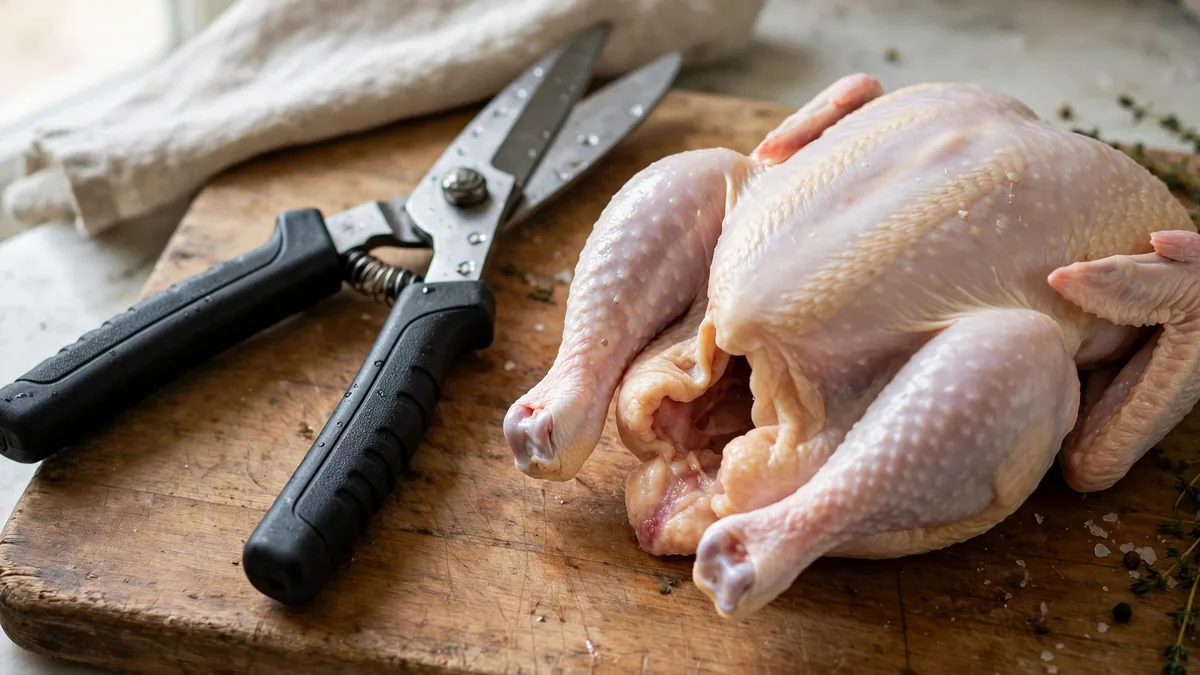
The best onion choppers turn the worst job in the kitchen into a thirty-second one. Peel the onion, steady it with curled fingers, slice, turn, dice, and then spend ten minutes with stinging eyes and onion smell on your hands. A good onion chopper does the dicing in one press, keeps the pieces even, and keeps your fingers and your eyes out of the way. A bad one crushes the onion into wet pulp, jams on the first half, and takes longer to clean than the knife it replaced. This guide covers the onion choppers worth buying in 2026 and how to choose one.
Key Takeaways
- A grid press gives the most even dice; a pull-cord is faster for rough chopping.
- Look for a sharp stainless steel grid and a container that holds at least two cups, so one onion fits in a single press.
- Even pieces matter more than speed: uneven dice cook unevenly, so the smallest pieces burn while the largest stay raw.
- Cleaning decides use: a pop-out grid and dishwasher-safe container earn drawer space.
- Buy for the onions you cut each week, not the biggest batch you might cook once a year.
What an Onion Chopper Actually Is
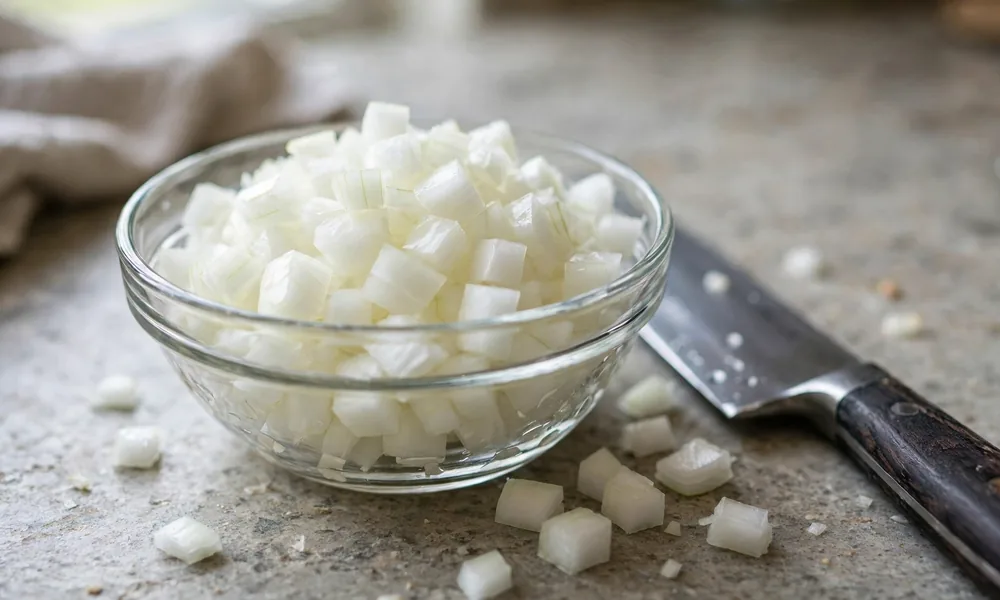
An onion chopper is a manual tool that cuts an onion into small, even pieces without a knife. You place a peeled, halved onion on a grid of sharp blades, press down, and the blades push the onion through into a container below. The result is a pile of neat, even dice, ready for the pan. No motor, no plug, no noise.
The details decide whether the tool works. The grid has to be sharp enough to slice cleanly rather than crush, because a crushed onion releases more juice, turns wet and bitter, and cooks into mush. The press has to deliver even force across the whole grid, or the onion tilts and half of it stays on top. Cheap choppers fail on one or more of these points.
It is worth being clear about what an onion chopper is not. It is not a food processor, and it does not try to be. A food processor handles big batches, dough and pureeing, but needs counter space, power and a wash-up afterwards. An onion chopper handles one or two onions for tonight’s dinner, lives in a drawer, and rinses clean in seconds. If you dice an onion most evenings, the chopper is the tool you will reach for.
The Four Types of Onion Chopper, Compared
Every onion chopper on the market in 2026 falls into one of four families, and the differences are mechanical: they decide how even the dice are, how much force you need, and how long cleaning takes.
| Type | Best for | Dice evenness | Hand force | Price range |
|---|---|---|---|---|
| Grid press chopper | Even dice for cooking | Very even | Moderate | $15 to $35 |
| Pull-cord chopper | Quick rough chopping | Uneven | Low | $12 to $25 |
| Push-down plunger chopper | Small kitchens, one onion | Even | Moderate | $15 to $30 |
| Rotary drum chopper | Big batches, meal prep | Even | Low | $25 to $50 |
The grid press chopper is the classic design and still the best choice for most cooks. A hinged lid carries a flat grid of blades, and you press it down onto the onion. The dice come out uniform because the grid sets the size, and the container underneath catches everything. Halve the onion first: a large, firm onion needs a solid press.
The pull-cord chopper works differently. Blades spin inside a bowl when you pull a cord, and the onion is chopped by repeated passes. It is fast and needs little strength, but the dice are uneven: pieces near the blades get chopped again and again while pieces at the top stay large. Fine for a rough chop, poor when even cooking matters. The plunger is a smaller press for one onion, but its chamber is too small for a large onion in one go. The rotary drum feeds the onion through a turning drum, handles big batches well, but is the bulkiest and priciest.
How to Choose the Right Onion Chopper
Do you dice one onion a night or prep five at the weekend? Neat dice for a sauce, or a rough chop for a stew? Strong hands, or a tool that asks little of them? The answers decide the type, size and price.
Dice Size and the Grid
The grid decides the dice. Most press choppers come with one grid, usually around a quarter of an inch, which is the right size for most cooking: small enough to soften quickly in a pan, large enough to still taste like onion. A second grid suits peppers and potatoes. Check that the grid is stainless steel, not plated metal, because plated grids dull and flake while stainless steel holds an edge and survives the dishwasher.
Capacity and Container
A container that holds two cups takes a whole medium onion in one press, which is what you want on a weeknight. A container that holds one cup means pressing in batches, which defeats the purpose of the tool. Look for a clear container with measurement marks and a lid that seals well enough to store diced onion in the fridge. A non-slip base stops the container sliding while you press.
Cleaning, Grip and Storage
Cleaning is the deciding factor for most buyers. A chopper with a grid that pops out and a container that goes in the dishwasher gets used three times a week. A chopper with a fixed grid that needs a brush and a toothpick gets used twice and then lives in a drawer. A wide handle with a soft grip lets you press with your palm, which is easier on the wrist and gives a more even press.
Best Onion Choppers for Different Kitchens
No single chopper suits every kitchen: it depends on how many onions you cut, your space, and your grip.
For the Weeknight Cook: The Grid Press
If you cook dinner most nights and dice one or two onions each time, the grid press chopper is the answer. It gives the most even dice of any manual design, it is quiet, and it cleans up in under a minute. Choose a two-cup container, a stainless steel grid and a lid that doubles as a storage cover, and halve the onion before pressing.
For Big Batches: The Rotary Drum
If you meal-prep on Sundays and dice five or six onions at once, the rotary drum chopper earns its larger footprint. You feed onion quarters into the top, turn the handle, and even dice fall into a bowl below, with no pressing and no jamming. It costs more and takes more space, but saves the most time for batch cooking.
For Weak Grip or Arthritis: The Pull-Cord
If pressing down hard is painful, the pull-cord chopper is the kindest design. A few gentle pulls spin the blades, and the onion is chopped with almost no hand force at all. The trade-off is evenness: mixed-size dice suit soups and stews, where a rough chop disappears, but not a salsa, where even pieces show.
For Small Kitchens: The Plunger
If drawer space is tight, the plunger chopper is the smallest option that still dices properly. It is roughly the size of a large mug, it chops a single onion cleanly, and it stores upright in a cupboard. The chamber is small, so a large onion needs two or three loads. For a one-person household, that is a fair trade.
Onion Chopper vs Food Processor vs Knife
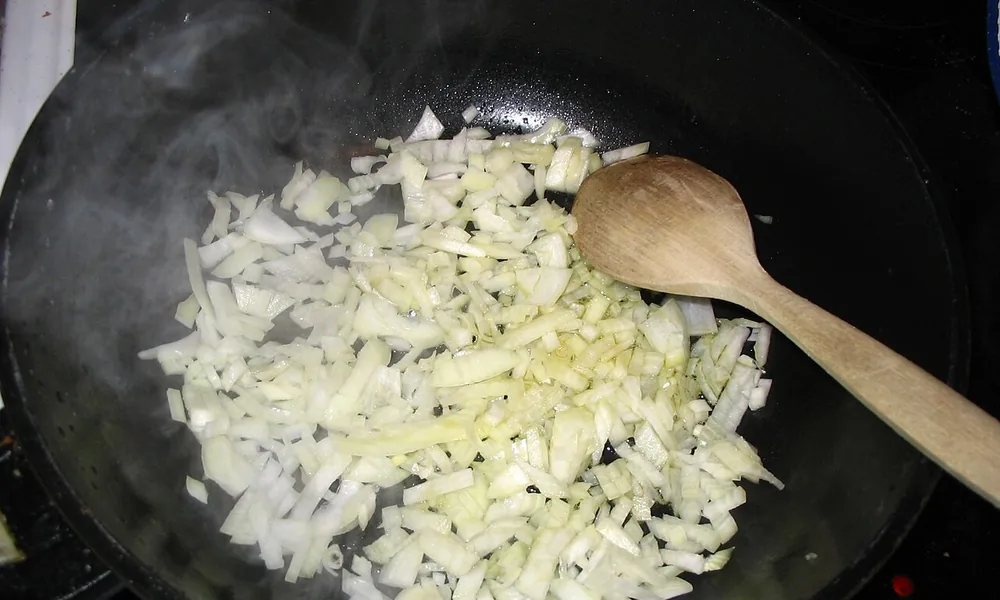
A knife is the most versatile option: it dices, slices and minces, and a skilled cook can dice an onion in under a minute. It is also the option that makes your eyes water, leaves the smell on your hands, and punishes a dull blade with ragged, uneven pieces. A chopper trades versatility for consistency: it does one job, evenly, without tears, and without skill.
A food processor is the heavyweight. It dices, shreds, slices and purees in seconds, and it is the right tool for big batches. It is also loud, bulky, and a chore to wash for a single onion: bowl, lid, blade, pusher and feed tube, all to dice one vegetable for one meal. The same logic applies to a garlic press: not a knife replacement, but it earns its drawer space doing one fiddly job in two seconds flat, just like a good onion chopper.
How to Use an Onion Chopper Well
Peel the onion and cut it in half through the root, so each half has a flat side, then place the half flat-side down on the grid. Press firmly and evenly with your palm, not your fingertips, and do not overload the grid: one half at a time. If the grid jams, lift the lid, clear the stuck pieces with the back of a spoon, and press again, rather than forcing it, which bends the blades. Diced onion keeps sealed in the fridge for two or three days, and freezes well in a flat bag. Keep whole ones fresh too: an onion keeper holds them far longer than a loose bag, so fewer sprouted onions reach the board.
Onion Chopper Buying Checklist
- Grid is stainless steel, sharp, flat, and pops out for cleaning without tools.
- Container holds at least two cups and has a sealing lid for fridge storage.
- Handle is wide and comfortable enough to press with your palm.
- Base is non-slip, so the chopper stays put on a wet counter.
- Dice size suits your cooking, with a second grid included if you want chunkier cuts.
- Every part that touches food is dishwasher-safe, or rinses clean in under a minute.
Frequently Asked Questions
Do onion choppers really stop your eyes watering?
Mostly, yes. A chopper cuts the onion in one quick press inside a container, so far less of the stinging gas reaches your eyes than when you slice an onion open on a board. Chilling the onion in the fridge first helps even more.
Can an onion chopper dice other vegetables?
Yes, within limits. Peppers, cucumbers, mushrooms and cooked potatoes all dice well in a grid press chopper. Hard raw vegetables like carrots can bend a fine grid, so use a coarser grid for those, or cut them by hand.
How do you clean an onion chopper?
Rinse it straight after use, before the onion juice dries. Pop the grid out, rinse it under hot running water, and use a small brush on any stuck pieces. Most parts go in the dishwasher, but a grid dried straight after washing stays sharper longer.
Is a manual chopper better than an electric mini chopper?
For one or two onions, yes. A manual chopper is quieter, needs no power, cleans faster, and gives a more even dice, because the grid sets the size. An electric mini chopper is faster for large batches, but over-chops easily into pulp.
Why does my chopper crush the onion instead of dicing it?
Usually the grid is dull, the onion is overloaded, or the press is uneven. Try half an onion at a time, press with your palm in the centre of the lid, and check the grid for bent or blunt blades. A soft, old onion will also crush more easily than a firm, fresh one.
How long does an onion chopper last?
A well-made stainless steel grid chopper lasts for years. The hinge and the grid wear first, and the grid slowly dulls. If it no longer cuts cleanly after a good wash, replace the grid or the chopper.
Bottom Line
The best onion choppers are the simple ones: a sharp stainless steel grid, a container that holds a whole onion, a handle you can press with your palm, and parts that rinse clean in seconds. Buy the grid press for weeknight dice, the rotary drum for batch prep, or the pull-cord for gentler hands. Dice one onion at a time and clean the grid straight away.