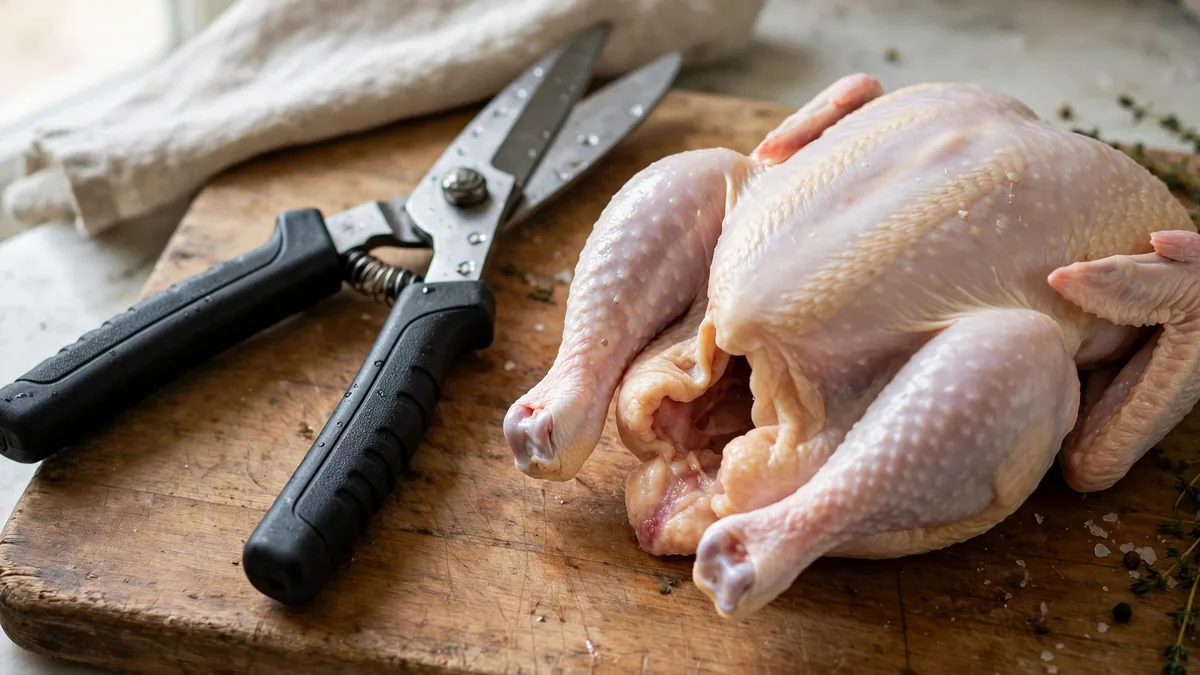
The top poultry shears turn the messiest job in the kitchen into a one-minute one. Spatchcocking a chicken with a knife means sawing through the backbone, slipping on bone, and working with a blade far too long for the job. Good poultry shears cut straight through the backbone in a few squeezes and split a whole bird flat for faster, evener cooking. Bad ones flex on the bone, crush the meat, and go dull within months. This guide covers the poultry shears worth buying in 2026, the designs that cut bone cleanly, and how to choose the right pair for the way you cook.
Key Takeaways
- Poultry shears are built for bone: thicker blades, a stronger pivot and a bone notch that grips the backbone instead of slipping off it.
- Look for full stainless steel blades, a screw pivot you can tighten, and a spring that opens the blades for you between cuts.
- Micro-serrated edges grip slippery raw skin far better than smooth blades, which slide instead of biting.
- Take-apart blades are the single most useful feature: they make proper washing and sharpening possible.
- Buy the shears for the birds you actually cook, not for the biggest turkey you might roast once a year.
What Poultry Shears Actually Are
Poultry shears are heavy-duty kitchen scissors designed for cutting through raw poultry: backbones, joints, cartilage, skin and fat. They look like oversized scissors, but every part is built for a harder job. The blades are thicker than ordinary scissors, usually two to three millimetres of stainless steel, and the pivot is a strong screw rather than a rivet, so it can be tightened as the blades wear. The handles are large, shaped for wet hands, and often spring-loaded, so the blades open by themselves.
The feature that sets them apart is the bone notch: a curved, serrated cut-out near the pivot that grips small bones and holds them still while the blades cut. Without it, a round bone rolls between smooth blades and the cut slips. With it, the backbone stays put and the shears cut through in a few firm squeezes.
It is worth being clear about what poultry shears are not. They are not kitchen scissors, even though the two look alike. Kitchen scissors are a general tool: snipping herbs, opening packets, trimming fat. Their medium blades flex on bone and their pivots loosen under heavy cutting. Do not use poultry shears for delicate work either: their thick blades crush soft herbs, which is why a separate pair of herb scissors belongs in the same drawer.
The Four Types of Poultry Shears, Compared
Every pair of poultry shears on the market in 2026 falls into one of four families, and the differences are mechanical: they decide how cleanly the cut goes, how much hand force you need, and how long the blades stay sharp.
| Type | Best for | Bone cutting | Hand force | Price range |
|---|---|---|---|---|
| Spring-loaded shears | Spatchcocking, everyday use | Very good | Low | $20 to $45 |
| Heavy-duty straight shears | Large birds, turkey | Excellent | High | $25 to $60 |
| Take-apart shears | Easy cleaning, sharpening | Very good | Moderate | $20 to $50 |
| Compact shears | Small birds, small hands | Good | Moderate | $15 to $30 |
Spring-loaded shears are the best choice for most cooks. A spring between the handles pushes the blades open after each squeeze, so your hand only does the cutting half of the work. Without a spring, your hand tires halfway through a backbone and the cut goes ragged.
Heavy-duty straight shears have no spring and no frills: thick blades, a big screw pivot, and long handles for leverage. They cut through turkey backbones that would stop a lighter pair, but they demand a strong grip. Take-apart shears split into two halves at the pivot, which makes them the easiest to wash, sharpen and dry, so they resist rust best. Compact shears are shorter and lighter, suiting small hands and small birds like Cornish hens, but they lack the leverage for a large chicken backbone.
How to Choose the Right Poultry Shears
Do you spatchcock a chicken every week, or break down a turkey once a year? Strong hands, or a spring to do half the work? Hand washing, or the dishwasher? The answers decide the type, size and price.
Blades and the Bone Notch
The blades decide the cut. Look for full stainless steel, two to three millimetres thick, with a micro-serrated lower blade: the fine teeth grip slippery raw skin and hold it while the cut completes. Check the bone notch near the pivot: clearly curved and serrated, deep enough to hold a backbone steady. A pair without a notch will slip on bone, and slipping is what makes the job dangerous.
Pivot, Spring and Handles
The pivot is the heart of the tool. A screw pivot can be tightened as the blades wear, keeping the cut clean for years; a rivet pivot is cheaper, but once it loosens, the blades wobble and the cut goes ragged. A spring is worth having unless you have very strong hands: it opens the blades for you and halves the effort of a long cut. The handles should be large, soft-gripped and shaped for wet hands, with a finger rest that stops your hand sliding onto the blades.
Cleaning and Storage
Raw poultry carries bacteria, so the shears must wash properly after every use, including at the pivot, where food and moisture hide. Take-apart blades are the best answer: split the pair, wash each half, dry them, and click them back together. If the pair does not come apart, look for a spring that holds the blades open for washing, and dry the pivot carefully. A blade cover keeps the edges safe in a drawer, and your fingers safe when you reach in.
Best Poultry Shears for Different Cooks
No single pair suits every cook: it depends on the birds you cook, the strength of your hands, and how much you want to spend.
For the Weekly Roast: Spring-Loaded Shears
If you roast a chicken most weeks and spatchcock it first, spring-loaded shears are the answer. The spring does half the work, the bone notch holds the backbone steady, and the cut stays clean from the first squeeze to the last. Choose a pair with a screw pivot and take-apart blades, and it will last for years of weekly use. On the cheapest pairs the spring weakens over time, so buy from a maker that sells replacements.
For Big Birds: Heavy-Duty Straight Shears
If you cook turkey at Christmas and break down large birds, heavy-duty straight shears earn their keep. Their thick blades and long handles give the leverage a spring-loaded pair cannot match, and they cut through turkey backbones and thigh joints without flexing. They demand a strong grip and are overkill for a weeknight chicken, but for the biggest jobs there is no substitute.
For Easy Cleaning: Take-Apart Shears
If you worry about hygiene, and you should with raw poultry, take-apart shears are the right pick. Splitting the pair lets you wash and dry every surface, including the pivot, where bacteria and rust start on a fixed pair. They also sharpen easily, with each blade lying flat on a whetstone. Check that the halves click together firmly with no wobble.
For Small Hands: Compact Shears
If standard shears feel too big, compact shears are the answer. Shorter blades and smaller handles suit small hands and small birds, and they store easily in a crowded drawer. They lack the leverage for a large chicken backbone, but for Cornish hens, quail and trimming fat, they are the most comfortable option.
Poultry Shears vs Knife vs Kitchen Scissors
A knife can spatchcock a chicken, but it is the slowest and riskiest way. The blade is long, the bone is round, and the cut needs force in exactly the wrong direction. Shears keep both hands clear of the cutting edge, cut with a squeezing motion instead of a sawing one, and finish the job in under a minute.
Kitchen scissors are closer, but they are built for lighter work. Their blades are thinner, their pivots weaker, and they flex on bone instead of cutting through it. Use them on a backbone and they will loosen, dull, and fail at the pivot. Poultry shears are the same idea built for the real load: thicker steel, a stronger pivot, and a notch that grips bone.
How to Spatchcock a Chicken With Shears
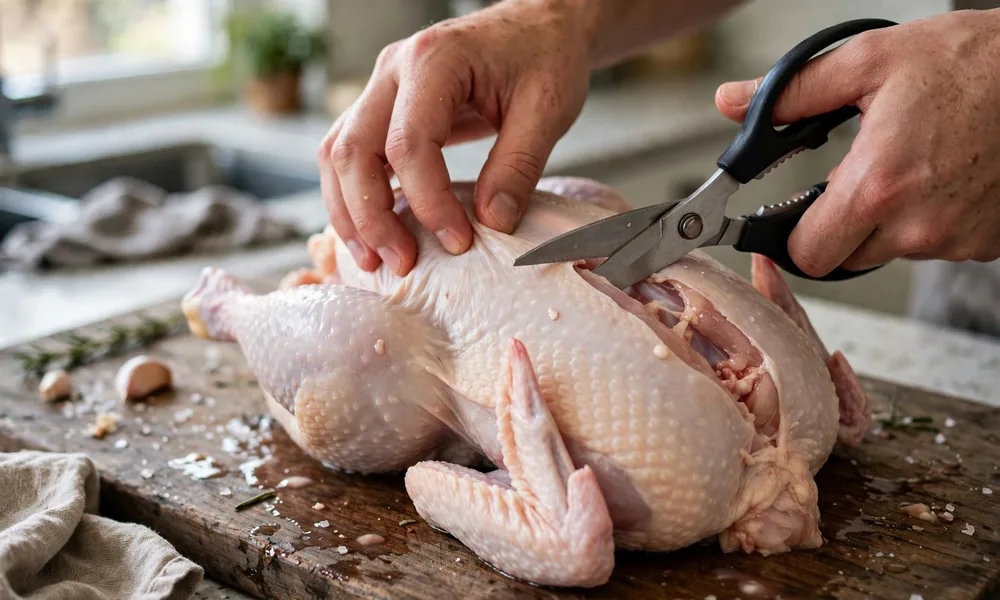
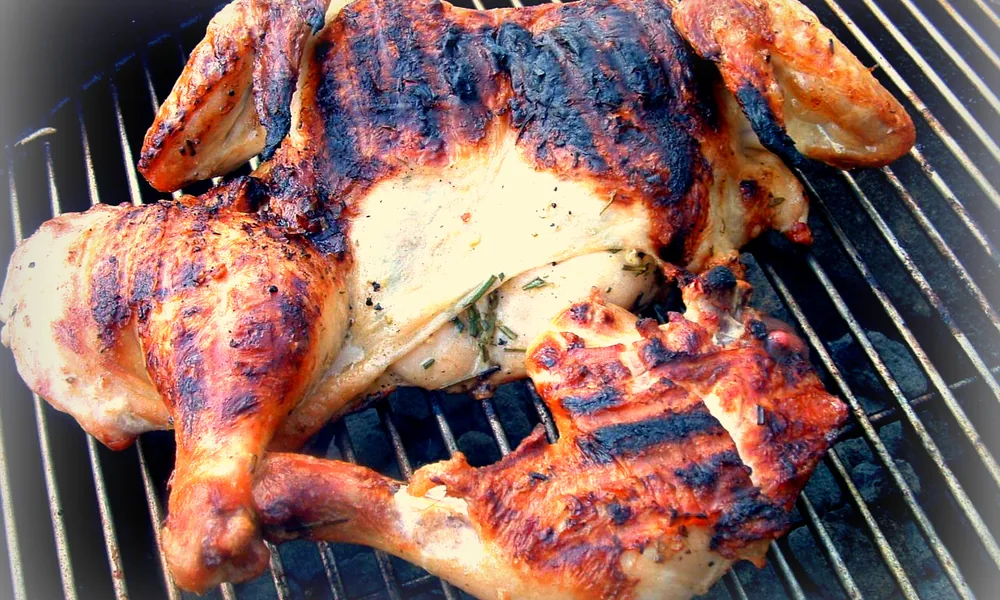
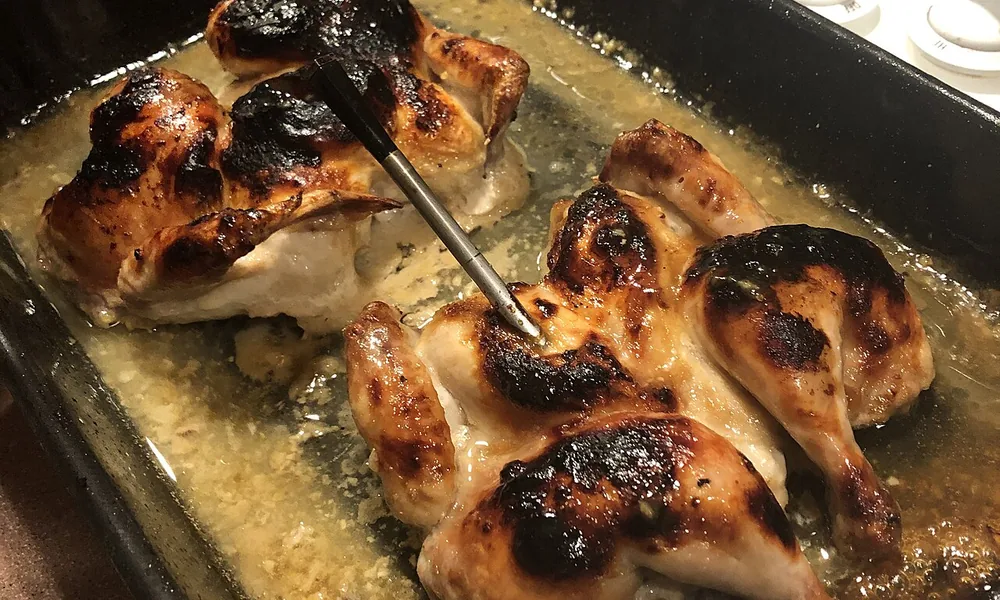
Put the chicken breast-side down on a board, so the backbone faces up. Start at the tail end, grip the backbone in the bone notch, and cut along one side of it, from tail to neck, in firm, steady squeezes. Repeat on the other side, lift the backbone out for stock, then flip the bird over and press down firmly on the breastbone with both palms until it cracks and flattens. The chicken is now spatchcocked: flat and even, ready for the oven or grill, where it cooks faster and browns more evenly than a whole bird. Season it well first: a good poultry seasoning reaches every surface now that the bird lies flat.
Poultry Shears Buying Checklist
- Blades are full stainless steel, two to three millimetres thick, with a micro-serrated lower blade.
- Bone notch near the pivot is curved, serrated, and deep enough to grip a backbone.
- Pivot is a screw you can tighten, not a rivet that loosens for good.
- Spring opens the blades for you, unless you have very strong hands.
- Blades come apart for washing and sharpening, or open wide enough to clean at the pivot.
- Handles are large, soft-gripped, and safe for wet hands, with a blade cover for storage.
Frequently Asked Questions
Can I use poultry shears on a turkey?
Yes, if the pair is heavy-duty: a turkey backbone is thicker and harder than a chicken backbone, so a light pair will flex and struggle. Use heavy-duty straight shears, cut in short, firm squeezes, and let the bone notch do the gripping.
How do I clean poultry shears after raw chicken?
Wash them straight away in hot, soapy water, paying attention to the pivot, where raw juices hide. Split take-apart pairs and wash and dry them separately. Dry the blades fully before storing, and wash your hands and the board afterwards.
Can poultry shears go in the dishwasher?
Most stainless steel pairs can, but hand washing is better: dishwasher heat and detergent dull the edges faster, and the pivot can trap water and rust. If you do use it, dry the shears straight away, especially at the pivot.
How do I sharpen poultry shears?
Take them apart if you can, and sharpen each blade on a whetstone or a ceramic rod, following the existing bevel. If they do not come apart, use a ceramic rod on each blade in turn, with the blades held open, then tighten the screw pivot so the blades meet cleanly.
Are poultry shears the same as kitchen shears?
No. Kitchen shears are a general tool for herbs, packets and trimming, with thinner blades and a weaker pivot. Poultry shears are thicker, stronger, spring-loaded, and built with a bone notch for cutting through backbones and joints. Using kitchen scissors on bone will loosen and dull them.
What else can I use poultry shears for?
Plenty. They trim fat and skin, cut through cartilage when jointing a bird, snip herbs in a pinch, cut pizza, and open tough packaging. Keep them for food only: cutting wire or cardboard dulls the blades fast.
Bottom Line
The top poultry shears are the simple ones: thick stainless steel blades, a micro-serrated edge, a bone notch that grips, a screw pivot you can tighten, and a spring that opens the blades. Buy spring-loaded shears for a weekly roast, heavy-duty straight shears for turkey, or take-apart shears for hygiene. Cut in firm squeezes, wash and dry the pair straight away, and spatchcocking becomes the easiest part of roast night.