The Chef Hats That Keep Cooks Cool, Covered and Comfortable in 2026
A good chef hat does three quiet jobs at once: it keeps hair out of the food, sweat out of your eyes, and you cool enough to think straight through a long, hot service. The best chef hats in 2026 do all three without slipping, sagging, or turning damp by the second hour. The worst ones slide down over your forehead, trap heat, and end up on the pass before the starters are out. This guide explains the types of chef hat, what makes one comfortable for a full shift, and how to pick one that still looks smart after dozens of washes.
Key Takeaways
- A tall pleated toque is the classic, but a low skull cap or beanie is cooler and more practical for most home cooks.
- Fit matters more than height: a hat should sit snugly and stay put when you bend over a pan.
- Breathable fabric and a mesh top keep a chef hat comfortable on a long, hot shift.
- White cotton and cotton blends wash best; cheap thin hats go limp after a few washes.
- Buy two hats, so a clean one is always ready while the other is in the wash.
What a Chef Hat Actually Does
A chef hat has one obvious job and two less obvious ones. The obvious job is hygiene. Hair in food ruins a dish fast, and a hat that covers the hair properly is the simplest guard against it. The headband should sit low enough to catch loose strands, and the crown should be roomy enough to hold longer hair. A hat that only perches on top is not doing this job.
The second job is sweat. A kitchen is hot, and a working cook sweats. A chef hat absorbs sweat at the brow before it runs into the eyes or drips toward the food. That is why the sweatband matters so much. A wide, soft, absorbent band keeps you comfortable for hours; a thin or scratchy one irritates within twenty minutes. Choose a stitched band, not a glued one, which peels away after a few hot washes.
The third job is heat. A tall hat holds a pocket of air above the head that insulates against oven heat. A low hat with a mesh top lets heat escape directly. Either approach works; what fails is thick, airless fabric with no ventilation, which turns into a warm, damp cap within half an hour. A hat also works with the rest of your kit: it covers your head the way the best aprons for 2026 cover your clothes.
The Main Types of Chef Hat
Most chef hats fall into four designs. Start with how and where you cook, then pick the shape that matches.
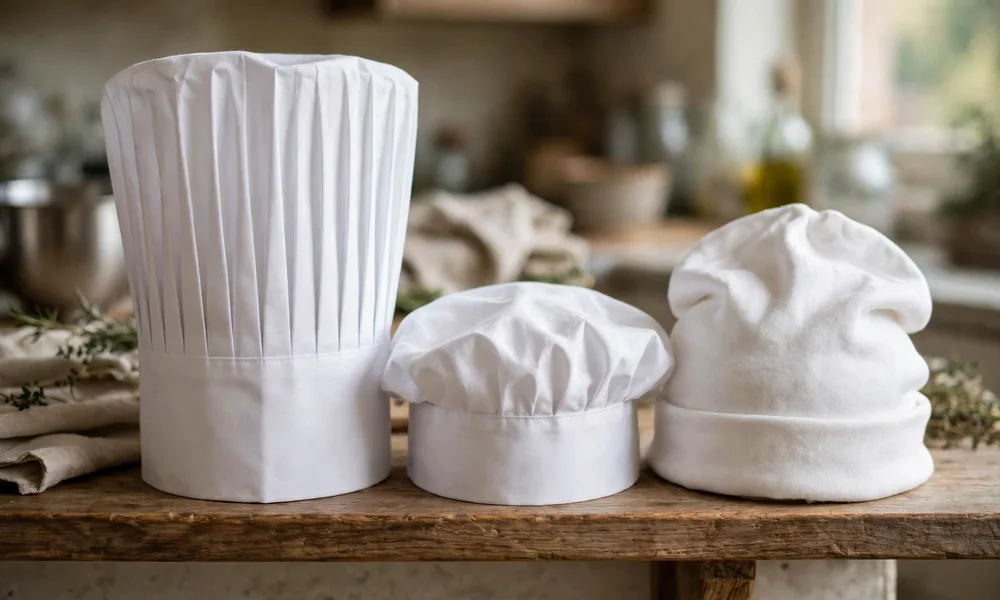
The Tall Pleated Toque
The tall toque is the classic chef hat, standing around nine to twelve inches tall, pleated all the way around, with a stiffened band at the base. It is the formal choice, the hat for a head chef or a fine dining kitchen. Its weakness is practicality. It is hot in a small kitchen, it catches on low shelves, and it needs careful washing and drying to keep its shape. Buy one for a roomy kitchen, not a cramped one with low cupboards.
The Skull Cap
The skull cap is the low, rounded hat that sits close to the head, and it is the best choice for most home cooks. It covers the hair fully, stays put without fuss, and takes up no more room than a beanie. It washes easily and dries quickly. The best skull caps have a mesh panel at the top and an adjustable band at the back, so one size fits most heads. If you only buy one chef hat, buy a skull cap.
The Beanie-Style Chef Hat
The beanie-style hat is a soft, low hat, usually knitted or made from stretchy cotton, with a folded band. It is the most comfortable hat to wear for a long session, because there is nothing stiff in it at all, and it is the easiest to pack away. Check it covers your hairline when you bend over, as a soft beanie can ride up. It is also the least formal of the four, so it suits a home kitchen better than a restaurant pass.
The Mesh-Top Hat
The mesh-top hat is a modern design built for heat. The crown is made from fine mesh, sometimes with a pleated cotton band below, so air moves freely through the top while the band still absorbs sweat. It is the coolest hat you can buy, and the right choice for anyone who cooks over a hot stove for hours or works in a warm climate. It needs gentle washing and will not hold a crisp shape, but for comfort on a long shift nothing else comes close.
The Best Chef Hats of 2026 at a Glance
| Chef Hat | Best For | Height | Why It Stands Out |
|---|---|---|---|
| Tall Pleated Toque | Formal kitchens, head chefs | Tall | Classic look, cool air pocket |
| Skull Cap | Everyday home cooking | Low | Stays put, easy to wash |
| Beanie-Style Hat | Long sessions, baking | Low | Softest and lightest to wear |
| Mesh-Top Hat | Hot kitchens, long shifts | Medium | Coolest hat, air flows through |
| Adjustable Skull Cap | Shared kitchens, gifts | Low | One size fits most |
| Disposable Toque | Events, one-off catering | Tall | Cheap, hygienic, no washing |
How to Choose a Chef Hat That Fits and Breathes
Start with fit, because a hat that does not fit will not be worn. Measure around your head above the eyebrows and ears, and check the maker’s size guide. A hat should feel snug when you first put it on, not tight. It should stay in place when you look down at a chopping board and when you reach up to a high shelf. If it slides when you bend forward it is too loose; a red mark after ten minutes means it is too tight. An adjustable hat is the safest buy if you are between sizes or buying for someone else.
Next, look at the fabric. Cotton is the classic choice: it breathes, absorbs sweat, and takes a hot wash. A cotton and polyester blend holds its shape better, dries faster, and creases less, though it breathes a little less than pure cotton. Avoid hats made from thin, shiny fabric, which trap heat and go limp after a couple of washes. Check the band most of all: it should be lined, soft, and stitched all the way around.
Height is a matter of honesty about your kitchen. A tall toque looks wonderful, but it needs headroom, so measure the gap between your head and your lowest shelf and be honest about how often you reach into it. In a home kitchen, a low hat is the better tool. Choose the hat with the same care as the best chef knives, where the right weight and balance matter more than the brand on the blade.
Best vs Worst: What Separates a Great Chef Hat From a Bad One
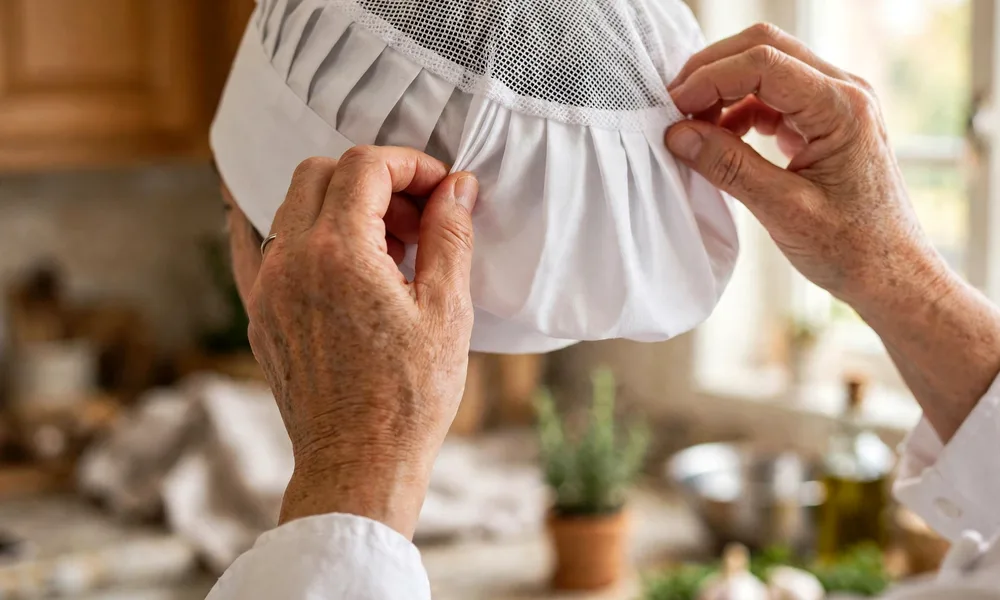
The difference between the best and the worst chef hats shows up within the first hour of wearing them. A great hat disappears: you put it on, cook, and forget it is there until you take it off. A bad hat nags from the start, with a band that digs in, a crown that flops over your eyes, or fabric that turns damp before the main course is on.
Most of that difference comes down to three things: the band, the fabric, and the shape. The worst hats have a thin, unlined band that cuts into the forehead and soaks through in minutes, while a great hat has a wide, soft band that spreads the pressure and stays comfortable for hours. Try a hat on with your arms raised: if the band slips or pulls, it will only get worse when you are hot and moving.
Fabric is the second divide. A good hat uses cotton or a good blend that breathes and holds its shape, with a mesh panel where it counts. A bad hat uses the cheapest fabric the maker could find, which feels fine in the shop and fails in the kitchen: it goes limp, traps heat, and looks grey and tired after a few washes. Shape is the third divide. A good hat is cut to fit a real head, with room in the crown and a level band. A bad hat is too tight at the front and too loose at the back, so it rides up or slides down all evening.
Wearing, Washing and Looking After Your Chef Hat
Put your hat on before you start cooking. Tie hair back first, then cover it, so nothing escapes while you work. The band should sit just above the eyebrows, level all the way around. If you wear glasses, a softer band will not press the arms into your head.
Wash a chef hat after every heavy cooking session, not once a week. Sweat and kitchen grease set into fabric if they sit. Machine wash on a normal cycle, and let it air dry rather than tumble drying, which shrinks cotton and warps the shape. A tall toque keeps its shape best if you let it dry standing up, stuffed lightly with a clean tea towel. Store hats somewhere clean and dry, with room to hold their shape, alongside the rest of your kit, as you would keep a knife roll with your knives. Own more than one: a spare means a clean hat is always ready while the other is in the wash.

Chef Hat Checklist: Six Things to Check Before You Buy
- Measure your head, or buy an adjustable hat with a strap at the back.
- Press the band: it should feel wide, soft and absorbent, never thin or scratchy.
- Look for ventilation, a mesh top or a breathable crown.
- Check the fabric: cotton or a cotton blend that holds its shape.
- Try the height against your kitchen: a tall toque needs headroom.
- Buy two hats, so a clean one is always ready.
Frequently Asked Questions
Do I really need a chef hat for home cooking?
A hat keeps hair out of food, absorbs sweat, and keeps you cooler over a hot stove. If you cook for guests or have long hair, a light skull cap is worth it.
What is the difference between a toque and a skull cap?
A toque is the tall, pleated, formal hat, while a skull cap is low and close-fitting. The toque looks traditional and insulates; the skull cap is cooler, easier to wash, and more practical in a small kitchen.
How do I stop a chef hat slipping down?
A hat that slips is usually too loose or too heavy at the crown. An adjustable band, a snugger size, or a lighter hat usually fixes it, as does tying long hair up flat.
Can I machine wash a chef hat?
Most cotton and cotton-blend hats can be machine washed and air dried. Let a tall toque dry standing up so it keeps its shape, and go easy on mesh panels.
Are mesh-top chef hats cooler?
Yes. A mesh top lets hot air escape directly from the crown, which makes a real difference on a long shift. They are the coolest hats you can buy, though they will not hold a crisp shape.
How many chef hats should I own?
Two at least, so one is in use while the other is in the wash.
Bottom Line
The best chef hat is the one you forget you are wearing: it fits snugly, breathes well, and keeps hair and sweat out of the way. For most cooks that means a well-made skull cap, or a mesh-top hat for a hot kitchen. Whatever shape you choose, buy for fit and fabric first, wash it often, and keep a spare.