
The aprons worth wearing in a busy kitchen in 2026 are the ones you reach for without thinking. A good apron goes on before the chopping starts, stays comfortable through a long cook, and comes off with your clothes underneath still clean. A bad apron announces itself within minutes: the neck strap digs in, the ties come undone, and the fabric soaks through at the first splash. The difference is rarely the price tag. It is the fabric, the cut, and the way the straps carry the weight.

Key Takeaways
- Linen and heavy cotton are the best everyday apron fabrics. They breathe, wash well, and soften with every wash.
- A cross-back apron spreads the weight across your shoulders and never strains your neck. A neck-strap apron needs a wide, adjustable strap.
- Two or three deep pockets beat a dozen shallow ones. A pocket should hold a phone and a thermometer without anything falling out when you bend over.
- Dark colours and patterns hide stains best in a busy kitchen. White aprons look wonderful on a shelf and show every splash within minutes of real cooking.
- Wash an apron after every heavy cooking session, not once a week. Dried-on grease and food stains set permanently if they sit.
What Makes an Apron Worth Wearing
An apron has one job: to stand between your clothes and the mess of cooking. The fabric is the first thing to judge, because it decides whether the apron protects you, how it feels after an hour, and how it survives the washing machine.
Linen is the classic choice. It is strong, it breathes in a hot kitchen, and it softens with washing. A linen apron dries quickly and looks better slightly creased than perfectly pressed. Cotton is the practical alternative: a heavyweight canvas apron is tough, takes a hot wash, and costs far less. Waxed canvas shrugs off splashes that would soak through plain cotton, though it is stiffer and needs occasional re-waxing.
Denim sits between the two. A denim apron is nearly indestructible, hides stains well, and suits cooks who want something that looks as good at the table as at the stove. The leather straps on many denim aprons do not cut into the neck the way a thin cord does. The downside is weight and heat, so save the thickest denim for grilling and roasting rather than summer salad prep.
The Best Aprons of 2026
The strongest aprons of 2026 fall into five clear groups. Start with the style that matches how you cook.
Best overall: a linen cross-back apron
A linen cross-back apron is the best apron for most home cooks. The straps cross behind your shoulders instead of hanging from your neck, so nothing pulls on your neck after an hour of cooking. The linen breathes, the cut hangs straight without billowing into the hob, and the fabric softens with every wash. Look for a knee-length cut with a large front pocket and ties long enough to knot at the front.
Best for heavy cooking: waxed canvas with leather straps
A waxed canvas apron with leather straps is the best choice when the cooking gets messy. The waxed surface repels splashes of oil, stock, and sauce that would soak through plain fabric. It is the apron for frying, grilling, and butchery, though it is stiff when new; break it in over a few weeks and it moulds to you.
Best for baking: a full-length cotton apron
A full-length cotton apron is the best apron for bakers. Flour goes everywhere when you bake, and only a long apron keeps it off your trousers as well as your shirt. Cotton takes a hot wash, which matters when the apron is dusted with flour several times a week. Choose one with a split pocket or two separate pockets, so a bench scraper, a thermometer, and a phone each have their own home.
Best for short sessions: a waist apron
A waist apron is the best apron for quick jobs and for serving. It ties around the waist, covers the lap and thighs, and leaves your shoulders completely free, which makes it the coolest option in a hot kitchen. It is ideal for plating and short prep sessions, but not for frying or anything that splashes upward. Buy one as a second apron, not your only one.
Best for the whole family: a matching set
A matching set of aprons in different sizes is the best way to get children cooking with you. A child-sized apron that actually fits is the difference between a child who joins in and a child who trips over a trailing hem. Keep the children’s aprons machine-washable and dark-coloured, because they will be washed far more often than yours.
| Apron type | Best for | Fabric | Comfort | Care |
|---|---|---|---|---|
| Linen cross-back | Everyday cooking | Linen | Excellent, no neck strain | Machine wash, air dry |
| Waxed canvas | Frying, grilling | Waxed cotton canvas | Very good with leather straps | Wipe clean, re-wax yearly |
| Full-length cotton | Baking | Heavy cotton | Very good | Hot machine wash |
| Waist apron | Serving, quick prep | Cotton or linen | Excellent, shoulders free | Machine wash |
| Denim with leather straps | Heavy daily use | Denim | Good, heavier | Machine wash cold |
Best vs Worst: What Separates a Great Apron From a Bad One
The difference between the best and the worst aprons shows up in the first hour of cooking. A great apron disappears: you forget you are wearing it until you take it off and find your clothes clean. A bad apron nags at you the whole time, with a strap that slips or a pocket that dumps its contents when you bend down. Most of that difference comes down to three things: the straps, the fabric weight, and the pockets.

Straps are the first divide. The worst aprons hang everything from a thin cord around the neck, which digs in within twenty minutes. A cross-back design or a wide, padded, adjustable neck strap spreads the load and stays comfortable for hours. Try an apron on before you buy it, and wear it for a minute with your arms raised: if the strap slips or pulls, it will only get worse. The same thinking applies to the rest of your kitchen kit, and the best oven mitts for 2026 follow the same rule: protection you forget you are wearing beats protection you fight all evening.
Fabric weight is the second divide. A good apron uses fabric heavy enough to stop a splash before it reaches your clothes, but light enough to move with you. The worst aprons are either tissue-thin, so hot oil soaks straight through, or so stiff and heavy that they feel like armour. Hold the fabric up to the light: if you can see clearly through it, it will not protect you.
Pockets are the third divide. A good apron has pockets deep enough to hold a phone and a thermometer securely, stitched strongly enough to carry the weight without sagging. The worst aprons have pockets that are decorative only: too shallow to hold anything, stitched so weakly that the first heavy pocketful tears the seam. Look for a pocket divided into sections, so small tools do not all slide into one corner.
How to Care for an Apron So It Lasts
Even the best apron fails early if it is cared for badly. Wash it after every heavy cooking session, while stains are still fresh: tomato, turmeric, and grease set permanently if they sit overnight. Hang it on its hook to dry between uses, and put it in the wash as soon as the cooking is done.
Most cotton and linen aprons take a normal warm wash, and they come out better for it: linen softens with every wash, and cotton holds its colour if you wash it inside out. Waxed canvas is the exception. Never put a waxed apron in the washing machine or the dryer, because the heat strips the wax. Wipe it clean with a damp cloth, let it air dry, and re-wax it once a year. Denim aprons should be washed cold and hung to dry.
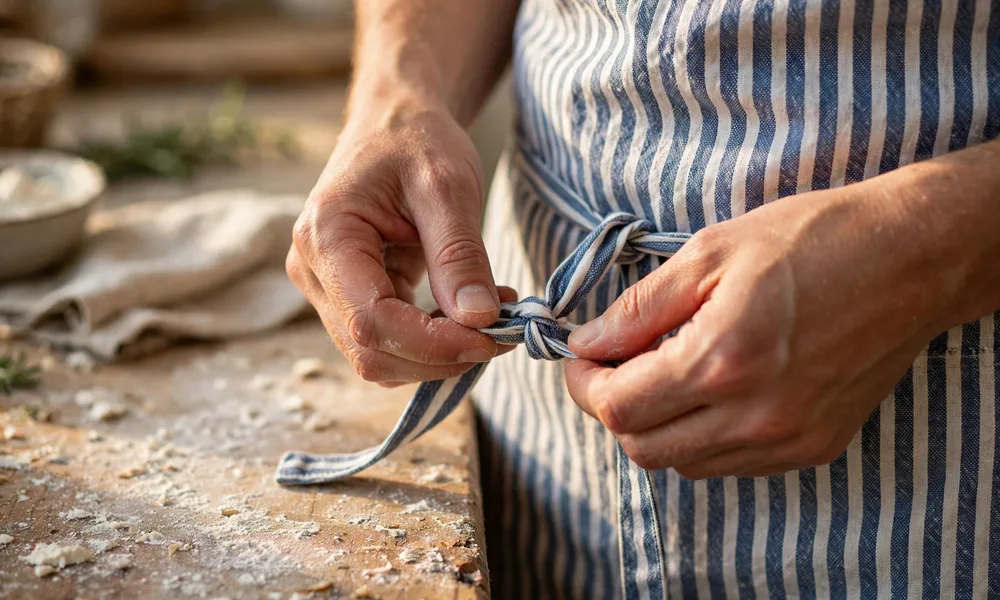
One more habit protects your aprons for years. Keep a dedicated hook for each apron, near the kitchen door or beside the cooker, so it is always within reach and dries properly between uses. An apron that lives on a hook gets worn; an apron folded at the bottom of a drawer gets forgotten. Keep the apron away from the hob when it is hanging: a dangling tie near a gas flame is the one real safety risk an apron carries. The same care applies to the rest of your cooking kit: a good mixing bowl lasts a decade when treated gently, and your apron deserves the same respect.
How to Choose the Right Apron
Choosing well takes five minutes and saves years of neck ache and stained clothes. Work through this checklist before you buy.
- Decide how you cook. Cross-back linen suits long everyday sessions, waxed canvas suits frying and grilling, and full-length cotton suits baking.
- Check the straps first. A cross-back design or a wide adjustable neck strap beats a thin cord, and leather straps are worth paying for.
- Test the pockets. They should be deep enough for a phone and a thermometer, and stitched strongly enough not to sag.
- Choose a fabric you will wash. Linen and cotton go in the machine; waxed canvas needs wiping and yearly re-waxing.
- Pick a colour for real cooking. Dark colours and patterns hide stains, while white aprons show every splash within minutes.
- Measure the length. A good apron covers you from chest to knee, stays clear of the hob, and does not catch on drawer handles.
Frequently Asked Questions
What is the best apron material for a busy kitchen?
Linen and heavy cotton are the best everyday choices. Linen breathes and softens with washing, while heavy cotton is tougher, cheaper, and takes a hot wash. Waxed canvas is best when you fry or grill often, because it repels splashes that would soak through plain fabric.
Are cross-back aprons really more comfortable?
Yes, for long cooking sessions. A cross-back apron spreads the weight across your shoulders instead of hanging it from your neck, so there is no neck strain after an hour. If you prefer a neck strap, choose a wide, padded, adjustable one.
How many pockets should an apron have?
Two or three deep pockets are ideal: one large pocket for a towel and a phone, and one divided pocket for a thermometer and a bench scraper. Shallow pockets are worse than none, because things fall out of them.
How often should I wash my apron?
After every heavy cooking session, and at least once a week for light use. Fresh stains wash out easily, while dried-on grease, tomato, and turmeric set permanently. Always hang an apron to dry between uses.
Can I put a waxed canvas apron in the washing machine?
No. Machine washing and tumble drying strip the wax coating that makes the apron water-resistant. Wipe it clean with a damp cloth, let it air dry, and re-wax it about once a year.
What size apron should I buy?
Choose a knee-length apron that covers you from chest to knee, with ties long enough to wrap around and knot at the front. If you are tall, look for a long or tall size rather than accepting one that ends at mid-thigh.
The Bottom Line
The aprons worth wearing in a busy kitchen in 2026 are the ones that disappear while you cook: a linen cross-back apron for everyday sessions, waxed canvas with leather straps for heavy frying and grilling, and a full-length cotton apron for baking. Judge the straps before the style, the fabric weight before the colour, and the pockets before the price. A good cutting board and a good apron are the two quiet workhorses of any kitchen, and both repay the small effort of choosing well.


