The top chef aprons for professional kitchens in 2026 are the ones that survive a twelve-hour shift, a hot pass and a commercial laundry without falling apart. A chef apron is not a home apron with a different label. It is workwear: longer, tougher, and built to be washed hard and often. The wrong apron announces itself within an hour on the line, with a neck strap that digs in and fabric that soaks through at the first splash. The right one disappears while you work. This guide explains what separates a professional chef apron from a home apron, which fabrics survive real service, and which aprons working chefs actually reach for.
Key Takeaways
- A chef apron is workwear, not homewear: longer length, tougher fabric, and straps built for a full shift, not a single meal.
- Waxed canvas and heavy cotton twill are the best professional fabrics, because they repel splashes, survive hot washes, and take daily abuse.
- A cross-back apron spreads the weight across your shoulders and never strains your neck, which matters most on a twelve-hour shift.
- Two or three deep pockets beat a dozen shallow ones: a pocket should hold a thermometer, a pen and a towel without spilling when you bend.
- Buy two aprons, not one, so a clean apron is always ready while the other is in the wash.
What Makes a Chef Apron Different From a Home Apron
A home apron is worn for an hour while dinner is cooked. A chef apron is worn for a whole shift, often twelve hours, in a hot kitchen, and it is washed far harder and far more often. That changes how it should be built. The fabric must be heavy enough to stop hot oil and boiling stock, but light enough to move with you. The straps must carry the weight for hours without cutting into your neck, and the length must cover you from chest to below the knee.
The other difference is the laundry. A home apron goes through a gentle domestic wash once a week. A chef apron goes through a commercial wash after every shift, sometimes daily, in hot water with strong detergent. Cheap aprons shrink, fade and fray within a month of that treatment. Professional aprons are cut with shrinkage in mind and stitched with bar tacks at the stress points. That is why a good chef apron costs more than a home apron, and why it is still the cheaper buy over a year. Our guide to the best chef hats of 2026 covers the other half of the uniform.

Fabrics That Survive a Professional Kitchen
Fabric is the first thing to judge, because it decides whether the apron protects you, how it feels after an hour, and how it survives the washing machine. Four fabrics dominate professional kitchens, and each suits a different kind of work.
Waxed Canvas
Waxed canvas is the toughest apron fabric there is. The wax coating repels splashes of oil, stock and sauce that would soak straight through plain cotton, and the heavy canvas underneath stops heat before it reaches your clothes. It is the apron for frying, grilling and butchery. The trade-off is care: never machine wash a waxed apron, because heat strips the wax. Wipe it clean, let it air dry, and re-wax it once a year. It is stiff when new, so break it in over a few weeks.
Denim and Cotton Twill
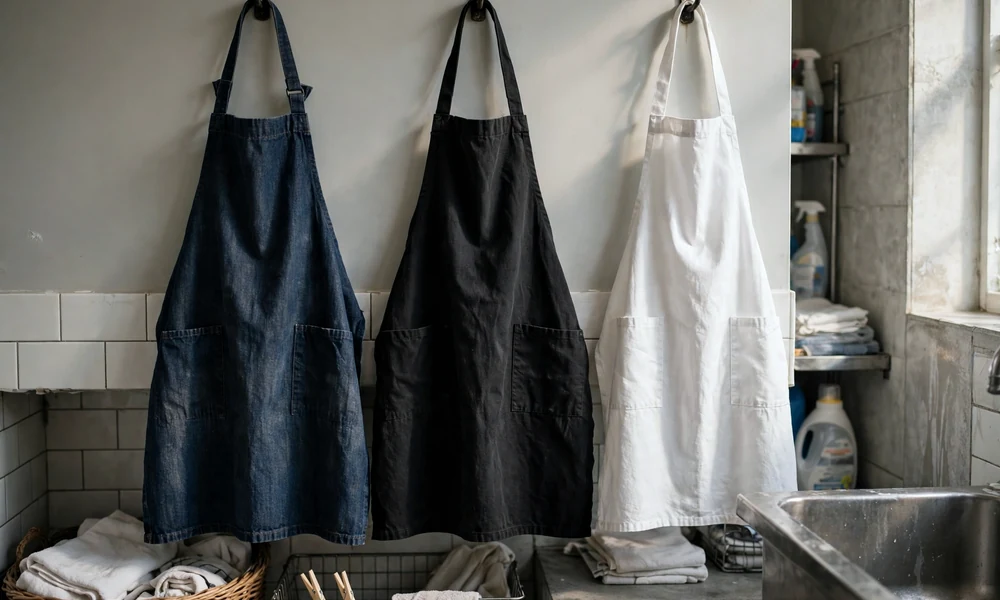
Denim is nearly indestructible, hides stains well, and suits cooks who want an apron that looks as good at the table as at the stove. The downside is weight and heat, so save the thickest denim for grilling and roasting rather than a summer service. Heavy cotton twill is the most versatile professional fabric: tough, breathable, and happy in a hot commercial wash. It is the best choice for most chefs. Linen suits front-of-house work, because it breathes and looks smart, but it is too light for the hottest stations.
The Top Chef Aprons of 2026
We judged every apron on fabric, strap comfort, pocket design, length, durability after repeated washing, and value. The five picks below cover every station.
Best overall: a heavy cotton twill cross-back apron. The best chef apron for most professionals in 2026. The cross-back straps spread the weight across your shoulders instead of hanging it from your neck, so nothing pulls after ten hours on the line. The heavy twill stops splashes, takes a hot commercial wash, and softens with every wash. Look for a knee-length cut with a large divided pocket and ties long enough to knot at the front.
Best waxed canvas: a waxed canvas bib apron with leather straps. The apron for the hottest, messiest stations. The waxed surface repels oil and stock, the leather straps do not cut into the neck the way a thin cord does, and the heavy canvas underneath is nearly indestructible. It is stiff when new and needs wiping rather than washing, but for frying, grilling and butchery it is the best protection money can buy.
Best denim: a selvedge denim apron with a split pocket. The toughest-looking apron here and one of the toughest in practice. Selvedge denim hides stains, takes a cold wash, and lasts for years of daily service. The split pocket keeps a thermometer, a pen and a towel in separate homes, so nothing slides into one corner. It is heavy, so save it for cooler kitchens and shorter services.
Best lightweight: a white cotton apron for front of house. The classic chef white, cut as an apron. Light, breathable and smart enough to wear where guests can see you, it is the pick for chefs who plate, serve and talk to diners. It shows every splash within minutes, so it suits the pass and the dining room better than the fry station, and you will want two of them.
Best waist apron: a short waist apron for service. The best apron for serving and plating. It ties around the waist, covers the lap and thighs, and leaves your shoulders free, which makes it the coolest option in a hot kitchen. Buy one as a second apron, not your only one.
Chef Aprons Compared
| Apron | Best For | Fabric | Comfort | Care |
|---|---|---|---|---|
| Heavy cotton twill cross-back | Overall, long shifts | Cotton twill | Excellent, no neck strain | Hot machine wash |
| Waxed canvas bib | Frying, grilling | Waxed canvas | Very good, leather straps | Wipe clean, re-wax yearly |
| Selvedge denim | Heavy daily use | Denim | Good, heavier | Machine wash cold |
| White cotton | Front of house | Light cotton | Excellent, cool | Hot machine wash |
| Waist apron | Serving, plating | Cotton or linen | Excellent, shoulders free | Machine wash |
Fit, Straps and Pockets for a Long Shift
Straps are the first divide between a great chef apron and a bad one. The worst aprons hang everything from a thin cord around the neck, which digs in within twenty minutes. A cross-back design or a wide, padded, adjustable neck strap spreads the load and stays comfortable for hours. Try an apron on before you buy it, and wear it for a minute with your arms raised: if the strap slips or pulls, it will only get worse. Leather straps are worth paying for, because they do not stretch, fray or cut in.
Pockets are the second divide. A good chef apron has pockets deep enough to hold a thermometer, a pen and a towel securely, stitched strongly enough to carry the weight without sagging. The worst aprons have pockets that are decorative only: too shallow to hold anything, stitched so weakly that the first heavy pocketful tears the seam. Look for a pocket divided into sections, so small tools do not all slide into one corner. Length is the third check: a good chef apron covers you from chest to below the knee and stays clear of the hob. If you are tall, look for a long size rather than accepting one that ends at mid-thigh. Our guide to the best knife rolls of 2026 covers the best way to carry your tools.

Care and Laundering in a Commercial Kitchen
Even the best chef apron fails early if it is cared for badly. Wash it after every shift, while stains are still fresh: tomato, turmeric and grease set permanently if they sit overnight. Most cotton and denim aprons take a normal hot wash, and they come out better for it. Waxed canvas is the exception: never put it in the washing machine or the dryer, because heat strips the wax. Wipe it clean with a damp cloth, let it air dry, and re-wax it once a year. Keep a dedicated hook for each apron near the kitchen door, so it is always within reach and dries properly between uses. The same care applies to the rest of your kit, and our guide to the best oven mitts of 2026 follows the same rule: protection you forget you are wearing beats protection you fight all evening.
Chef Apron Buying Checklist
- Decide how you work: cross-back twill suits long shifts, waxed canvas suits frying and grilling, and a waist apron suits service.
- Check the straps first: a cross-back design or a wide adjustable neck strap beats a thin cord, and leather straps are worth paying for.
- Test the pockets: they should be deep enough for a thermometer and a towel, and stitched strongly enough not to sag.
- Choose a fabric you will wash: cotton and denim go in the machine, while waxed canvas needs wiping and yearly re-waxing.
- Pick a colour for real cooking: dark colours and patterns hide stains, while white aprons show every splash within minutes.
- Measure the length: a good apron covers you from chest to below the knee, stays clear of the hob, and does not catch on drawer handles.
Frequently Asked Questions
What is the best chef apron material for a busy kitchen?
Heavy cotton twill is the best all-round choice, because it is tough, breathable, and takes a hot commercial wash. Waxed canvas is best when you fry or grill often, because it repels splashes that would soak through plain fabric.
Are cross-back aprons really more comfortable?
Yes, for long shifts. A cross-back apron spreads the weight across your shoulders instead of hanging it from your neck, so there is no neck strain after ten hours. If you prefer a neck strap, choose a wide, padded, adjustable one.
How many pockets should a chef apron have?
Two or three deep pockets are ideal: one large pocket for a towel, and one divided pocket for a thermometer and a pen. Shallow pockets are worse than none, because things fall out of them when you bend down.
How often should I wash a chef apron?
After every shift, and always while stains are fresh. Fresh stains wash out easily, while dried-on grease, tomato and turmeric set permanently. Always hang an apron to dry between uses.
Can I put a waxed canvas chef apron in the washing machine?
No. Machine washing and tumble drying strip the wax coating that makes the apron water-resistant. Wipe it clean with a damp cloth, let it air dry, and re-wax it about once a year.
What size chef apron should I buy?
Choose a knee-length apron that covers you from chest to below the knee, with ties long enough to wrap around and knot at the front. If you are tall, look for a long size rather than accepting one that ends at mid-thigh.
The Bottom Line
The top chef aprons for professional kitchens in 2026 are the ones that disappear while you work: a heavy cotton twill cross-back apron for long shifts, waxed canvas with leather straps for frying and grilling, and a white cotton apron for front of house. Judge the straps before the style, the fabric weight before the colour, and the pockets before the price. Buy two, keep one clean, and your apron will be the quietest workhorse in your kitchen.