Best Outdoor Clocks That Keep Time in Any Weather in 2026
An outdoor clock has to do two jobs at once: tell the time at a glance from across the garden, and survive everything the sky throws at it. Indoor clocks do neither. A wall clock built for a living room will fog up in the first damp week, fade in a month of sun, and stop the first time frost gets into the movement. Outdoor clocks are built differently — sealed cases, UV-stable faces, and movements rated for heat and cold — and the good ones keep time for years with nothing more than a fresh battery.
The best outdoor clock is the one you stop thinking about. It is big enough to read from the patio table, tough enough that a summer storm is a non-event, and quiet enough that nobody notices it is there until they need the time. The difference between the two is in the sealing, the materials, and the movement — all things you can check before you buy.
Key Takeaways
- Outdoor clocks are sealed against rain and rated for temperature swings; an indoor wall clock moved outside will fog, fade, and fail.
- Wall-mounted clocks suit patios and porches, post clocks suit open gardens, and thermometer-combo clocks suit anyone who checks the weather as well as the time.
- Look for a rubber-sealed case, a UV-stable face, and a quartz movement rated below freezing.
- Hang the clock where it is shaded at midday and readable from where you sit, not where it looks best in a photo.
- One AA battery a year is normal; a clock that eats batteries is telling you its seal or movement has failed.
What Makes a Clock an Outdoor Clock
Three things separate an outdoor clock from an indoor one. The first is the seal. A proper outdoor clock has a rubber gasket around the case back and a glass or acrylic lens sealed into the bezel, so rain and damp air cannot reach the movement. The second is the face. Sunlight bleaches ordinary printed faces in a single summer, so outdoor faces use UV-stable inks and materials that hold their contrast. The third is the movement: a standard quartz movement can stall in frost, while outdoor movements are rated to work well below freezing.
That is also why the indoor clock guides on this site do not cover this ground. Our guide to the best wall clocks is about clocks for living rooms and hallways — style, size, and how a clock finishes a room. None of those clocks is sealed against rain, and none is rated for frost. An outdoor clock is a different product with a different job, and buying an indoor clock for the garden is the most common money-wasting mistake in this category.
The Main Types of Outdoor Clock
Wall-Mounted Outdoor Clocks
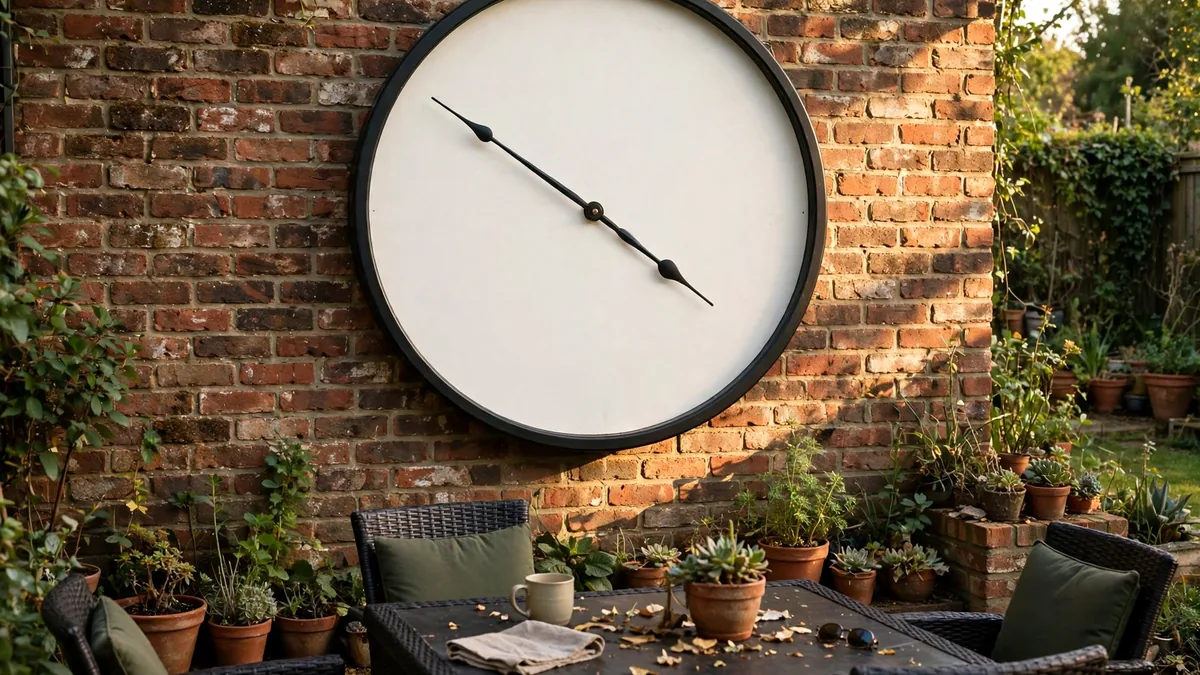
The classic outdoor clock hangs on a wall: a brick garden wall, a shed, a porch, or the side of the house. They are usually 30 to 60 centimetres across, with a metal or resin case and a large, high-contrast face. Look for a back seal and a bracket that holds the clock flat, so wind cannot work it loose. Wall clocks are the easiest type to live with, because the wall gives them shelter from the worst of the rain.
Post and Garden Clocks
Post clocks stand on their own in the open garden, usually on a metal pole set into the ground or a heavy base. They are the right choice when there is no suitable wall, or when the clock is meant to be a garden feature as well as a timepiece. They face the weather from every direction, so the seal matters more here than anywhere else. It should have a domed top that sheds rain and a base that will not topple in wind.
Thermometer-Combo Clocks
Many outdoor clocks add a small thermometer dial below the main face, and for a garden clock this is genuinely useful rather than a gimmick. A quick glance tells you the time and whether it is warm enough to eat outside. The thermometer is usually a simple bimetal dial, accurate to a degree or two, which is enough for deciding about a jumper. Judge it as a clock first, and treat the temperature dial as a bonus.
Solar and Radio-Controlled Clocks
Two upgrades are worth knowing about. Solar clocks have a small panel that trickle-charges a rechargeable battery, so you may never change a battery at all — but they need several hours of direct sun a day. Radio-controlled clocks pick up a time signal and set themselves, including the clock change, which is handy for a clock you rarely touch.
How to Judge Weatherproofing Honestly
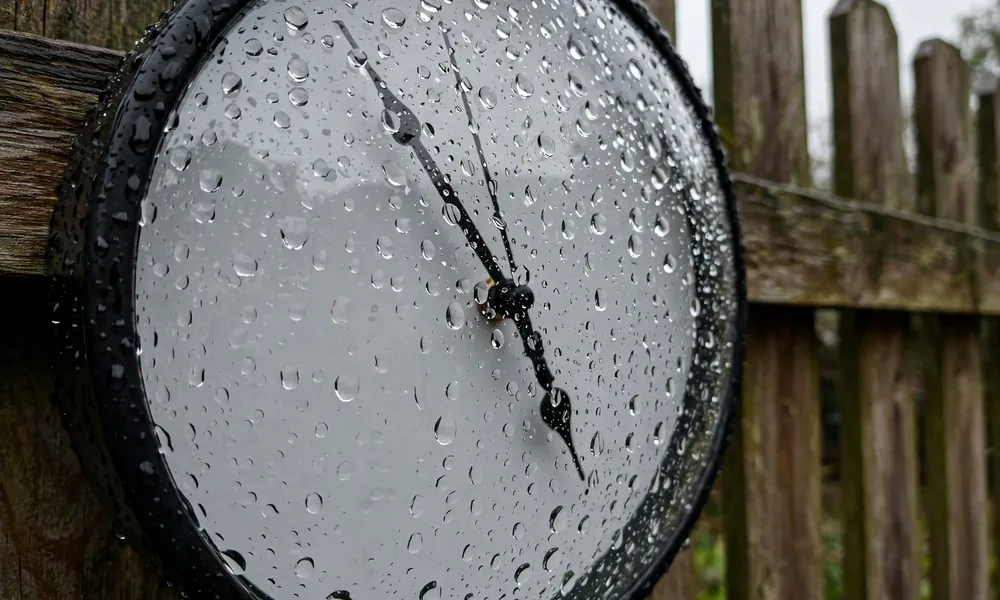
Weatherproofing claims are where outdoor-clock listings get vague, so read them carefully. A clock described as weatherproof or weather-resistant should have a sealed case back and a gasket you can see and feel. A clock described only as suitable for covered outdoor areas is telling you it is not sealed, and it belongs under a porch roof, not on an open wall. An IP44 rating or better marks a genuinely sealed clock; without a rating, treat it as an indoor clock with a rugged case.
Materials matter as much as seals. Powder-coated metal and UV-stable resin survive years outside; bare steel rusts, and cheap plastic goes brittle in sun within two summers. Stainless screws and a sealed battery compartment mark a clock designed for outdoors.
Cold is the quiet killer. A quartz movement that runs fine at twenty degrees can slow or stop at minus five. Outdoor-rated movements are tested below freezing, and the listing should say so. If it does not mention a temperature range at all, assume the movement is a standard indoor one. Use a lithium AA battery: it holds voltage in the cold, while alkaline batteries fade fast below freezing.
Where to Hang an Outdoor Clock
Placement decides whether you use the clock or forget it. Hang it where you sit, not where it looks best from the street: above the patio table, opposite the seating, or on the wall you face while barbecuing. It should be readable from your usual seat without standing up.
Height matters too. Eye level from where you sit is ideal; a clock hung high on a gable looks grand and is unreadable. Fix it firmly: a wall clock needs a proper wall plug and screw, not a picture hook, because wind and the weight of the case will work a hook loose over a winter. For a post clock, set the pole in a level spot with a clear view from the seating area, and check it stays upright after the first storm.

Outdoor Clocks Compared
| Type | Best For | Weather Resistance | Needs | Typical Size |
|---|---|---|---|---|
| Wall-mounted | Patios, porches, sheds | Good, wall gives shelter | A solid wall and one screw | 30–60 cm |
| Post / garden | Open gardens, no wall | Excellent, fully sealed | Level ground, firm base | 30–45 cm |
| Thermometer combo | Checking time and temperature | Good | A wall or post | 30–50 cm |
| Solar | Sunny spots, no battery changes | Good | Direct sun most days | 30–50 cm |
| Radio-controlled | Never adjusting the time | Good | A clear time signal | 30–60 cm |
Batteries, Cleaning, and Care
A good outdoor clock runs for a year or more on one AA battery. Change it once a year, in spring, before the summer when you use the garden most. Use a lithium AA for cold winters, as above, and check the battery compartment seal each time you open it — a perished rubber ring is the commonest reason a sealed clock starts fogging.
Cleaning is simple. Wipe the face and lens with a damp cloth a few times a year, and wash off bird droppings promptly — they stain a face if left in the sun. Do not pressure-wash the clock, and do not hose it directly; a sealed case handles rain, not a jet. In autumn, check the fixings and the hanging bracket before the winter storms, and tighten anything that has worked loose. A clock that falls from a wall in a storm usually breaks its lens, and a cracked lens is the end of the seal. Good outdoor lights help too: a lit patio keeps the clock readable after sunset.
When a clock starts losing time, work through the simple causes first. A dying battery is the usual culprit, then a cold snap, then condensation inside the lens. If a fresh lithium battery and a dry, mild day do not fix it, the movement has probably had water in it, and a replacement movement costs more than the clock is worth. Buy the replacement clock, and this time check the seal before you hang it. A weather radio on the same wall warns you about storms while the clock tells you when they are due.

Before You Buy: The Checklist
- Check the case back has a rubber gasket and the battery compartment seals properly.
- Confirm the movement is rated below freezing, and use a lithium AA battery for winter.
- Choose a face at least 40 centimetres across if you will read it from a patio table.
- Pick metal or UV-stable resin, not bare steel or cheap plastic that goes brittle in sun.
- Hang it where you sit, shaded at midday, at eye level from your usual seat.
- Fix it with a proper wall plug and screw, and check the fixings every autumn.
Frequently Asked Questions
Can I put an indoor wall clock outside?
Not for long. An indoor clock has no case seal, no UV-stable face, and a movement that stalls in frost. It will fog in damp weather, fade in sun, and stop in the first cold snap. Buy a clock built for outdoors, with a sealed case and a temperature-rated movement.
How big should an outdoor clock be?
At least 40 centimetres across for a patio, and larger for a big garden. The test is simple: stand where you will sit and check you can read the hands without squinting.
Do outdoor clocks need direct sunlight?
Only solar models do. A standard battery outdoor clock works in full shade, and shade is actually better for it — it protects the face from fading and stops glare. A solar clock needs several hours of direct sun a day.
Why has my outdoor clock fogged up inside?
Water has got past the seal, usually through a perished battery-compartment ring or a cracked lens. Dry it indoors and replace the ring. If it fogs again, the seal has failed — replace the clock.
Will a radio-controlled outdoor clock work anywhere?
It needs a clear time signal, and thick stone walls, metal sheds, and some double glazing can block it. Give it a night to set itself after you fit the battery.
How long do outdoor clocks last?
A well-sealed metal or resin clock lasts five to ten years outside, with a battery change once a year and a wipe-down a few times a year. Cheap plastic clocks last two or three summers before the case goes brittle.
The Bottom Line
The best outdoor clock is one you never have to think about: big enough to read from your seat, sealed against rain and frost, and running for a year on a single battery. Check the seal, check the temperature rating, and hang it where you sit. Our verdict: 10 out of 10 for the category — a good outdoor clock is a small purchase that earns its place on the wall every day, in every weather.