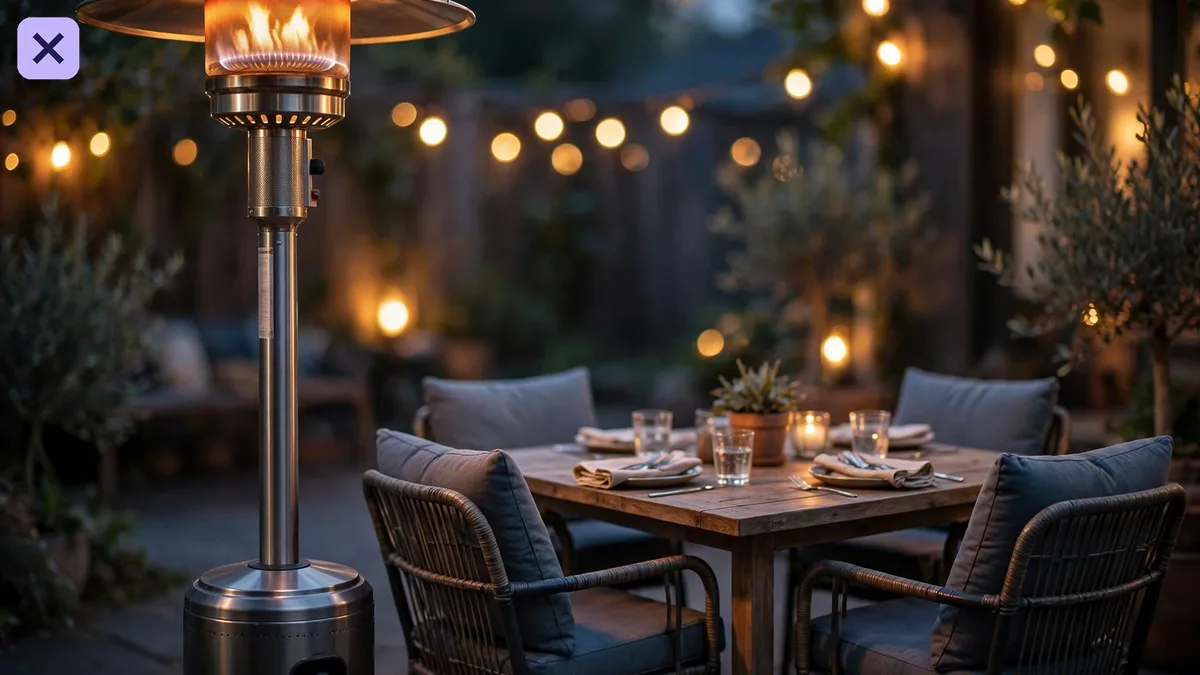
An outdoor heater is the difference between a patio you use for three months a year and one you use for nine. On a cold evening, the right heater turns a chilly garden into the warmest room in the house, while the wrong one leaves you huddled in a coat. Choosing well is not about buying the biggest heater you can afford. It is about matching the type, the heat output and the running cost to the space you actually have.
Outdoor heaters have improved a lot in recent years. Electric infrared models warm people rather than the air, gas patio heaters burn cleaner and light more reliably, and tabletop models bring real warmth to small balconies. Prices range from under fifty pounds for a small electric heater to several hundred for a powerful gas model. This guide compares the main types and explains how much heat you need.
Key Takeaways
- Electric infrared heaters warm people directly and work best in sheltered spots; gas heaters warm a wider area but cost more to run.
- Match the heat output to your space: around 1,500 to 2,000 watts suits a small seating area, while a large open patio needs 40,000 BTU or more.
- A heater is only worth buying if you will use it at least twice a week in the cooler months.
- Keep any gas heater at least one metre from walls, furniture and plants, and never use it in an enclosed space.
- A 13-kilogram gas bottle typically lasts 10 to 12 hours on full power, so check the running cost before you buy.
Why an Outdoor Heater Changes How You Use Your Garden
Most gardens sit empty for half the year, not because people stop enjoying them, but because the temperature drops just enough to make sitting outside uncomfortable. A drop of five or six degrees is all it takes. An outdoor heater closes exactly that gap: it only needs to make a cool evening comfortable, and that takes far less heat than most people expect.
The Main Types of Outdoor Heater Compared
There are four main types, and they work very differently. Gas patio heaters burn propane and throw heat in a wide circle, suiting open patios and large groups. Electric infrared heaters radiate heat directly onto people, which is efficient in sheltered spots but weaker in wind. Fire bowls burn wood, giving real flames but also smoke and ash. Tabletop heaters are small gas or electric models for a single table, suiting balconies.
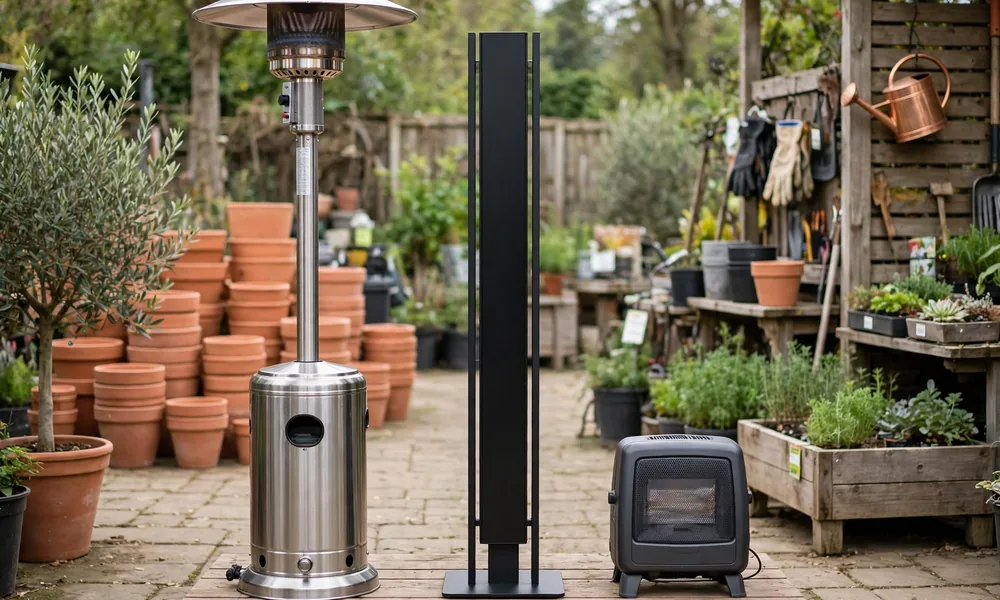
| Heater Type | Heats | Warm-Up Time | Typical Running Cost | Best For |
|---|---|---|---|---|
| Gas patio heater | 15 to 25 square metres | 5 to 10 minutes | £1.50 to £2.50 per hour | Large open patios, big groups |
| Electric infrared | 6 to 12 square metres | Instant to 2 minutes | £0.50 to £0.70 per hour | Sheltered patios, dining areas |
| Tabletop heater | 2 to 4 square metres | 2 to 5 minutes | £0.40 to £1 per hour | Balconies, small tables |
Gas heaters are the most powerful option, and the only type that genuinely warms a large open space. A 13-kilogram propane bottle feeds a 13-kilowatt patio heater for roughly 10 to 12 hours on full power, about £2 per hour. The catch is wind: on an exposed patio you may need full power just to feel the difference.
Electric infrared heaters are the cheapest to run and the fastest to warm up, but they heat in a straight line. Sit in front of one and you feel warm within seconds; sit to the side and you feel almost nothing. That makes them ideal for a dining table against a wall and poor for a circle of chairs, and they need a proper outdoor socket, not an extension lead through a window.
Gas, Electric or Wood: Which Fuel Suits You?
Gas suits big spaces and frequent use, delivering the most heat at the flick of a switch. Electric suits small, sheltered spaces and occasional use, costing almost nothing to run. Wood suits people who enjoy the ritual of a fire. Remember storage too: gas needs a safe spot for a bottle, wood needs dry log storage, electric needs only a socket and a cover.
How Much Heat Do You Actually Need?
Heat output is the number most buyers get wrong, because manufacturers quote it in different units and under ideal conditions. Gas heaters are rated in kilowatts or BTUs, electric heaters in watts, both usually measured in still air at close range. In a real garden, the effective heat is far less than the headline number.
As a rough guide, you need about 1,000 watts of electric heat, or 3,400 BTU of gas heat, for every three to four square metres of seating on a cool evening. A nine-square-metre patio needs roughly 3,000 watts or 10,000 BTU; a 20-square-metre patio needs 6,000 to 7,000 watts or 20,000 to 25,000 BTU, which is why most full-size gas patio heaters are rated at 11 to 13 kilowatts, around 40,000 BTU.
Distance matters more than most people realise. Infrared heat falls off quickly: at one metre you feel the full effect, at two metres roughly half, and at three metres very little. That is why a single powerful heater in the middle of a large patio often disappoints, while two smaller heaters close to the seating work far better, and cost less to run.
Wind is the other big factor. A light breeze can cut the effective heat of a gas patio heater by a third. Electric infrared heaters cope better, because they heat people directly rather than the air, but even they lose effectiveness in a strong breeze. If your garden is exposed, a windbreak or a pergola with side screens will do more for your comfort than buying a bigger heater.
Running Costs in 2026: What an Evening of Warmth Really Costs
Running costs are where the types diverge most, and they are worth working out before you buy. A 2,000-watt electric heater running for three hours uses six kilowatt-hours: about £1.62 per evening at a typical 2026 rate of 27 pence per kilowatt-hour. A 13-kilowatt gas heater uses roughly one kilogram of propane per hour, so three hours costs around £6. Over fifty evenings, the electric heater costs about £80 to run and the gas heater about £300.
Those numbers do not tell the whole story. The gas heater warms a much larger area, so with eight people outside the cost per person is similar, while a large group would need two or three electric heaters. The honest comparison is cost per warm person, not cost per hour.
Choosing the Right Heater for Your Space
Start with the space, not the heater. Measure your seating area, note which way the wind usually comes from, and count how many people normally sit outside. A balcony for four chairs needs a completely different heater from a garden that hosts twelve at a barbecue, and buying the wrong size is the most common mistake.
For a small balcony or a table for two, a tabletop gas heater or a small wall-mounted electric heater is enough. For a dining table of six under a pergola, two wall-mounted infrared heaters, one on each side, give even warmth without cluttering the space. For a large open patio with a circle of chairs, a tall gas patio heater in the centre is the classic choice.

The furniture matters too. A heater too close to a wicker chair or fabric cushion is a fire risk, and one shining directly into someone’s eyes is uncomfortable. Our guide to the best patio furniture of 2026 covers materials and layouts that work well with outdoor heating, including fire-resistant fabrics and safe seating distances.
Safety and Placement Rules
Outdoor heaters are safe when used properly, and the rules are simple. Gas heaters must never be used indoors, in a garage, or under a low roof, because they produce carbon monoxide, and not in a fully enclosed gazebo either. Electric heaters are safer in enclosed spaces, but still need to be kept away from water and plugged into a properly earthed outdoor socket.

Keep a gas heater at least one metre from walls, fences, furniture, plants and anything else that can burn, on a flat, stable surface where it cannot be knocked over. Most modern gas heaters have a tilt switch that cuts the gas if they fall, but do not rely on it. Keep children and pets away from hot surfaces, and never leave a gas heater running unattended.
At the end of the season, clean the heater, check the gas hose for cracks or wear, and cover it. Gas bottles should be stored upright outdoors, never inside the house, with the valve closed. Replace any gas hose that is cracked, stiff or more than five years old, since a leaking hose is the most common cause of gas heater accidents. For electric heaters, never use one in the rain unless rated IPX4 or higher, and inspect the cable each spring.
Outdoor Heater Buying Checklist
- Measure your seating area and count the people who normally sit outside before choosing a size.
- Decide between gas and electric based on space, shelter and how often you will use the heater.
- Check the heat output in watts or BTU and compare it with the size of your seating area.
- Work out the running cost for a typical evening, including gas bottle refills or electricity.
- Confirm the clearances: at least one metre from walls, furniture and plants for gas heaters.
- Check the weather rating and buy a proper cover if the heater will live outside all year.
Frequently Asked Questions
Are outdoor heaters worth the money?
Yes, if you use your garden regularly in the cooler months. A heater that extends your outdoor season by two months and gets used twice a week pays for itself in comfort many times over. If you only sit outside a handful of times a year, a warm coat is cheaper.
How much does it cost to run a gas patio heater?
A typical 13-kilowatt gas patio heater uses about one kilogram of propane per hour, roughly £2 per hour. A 13-kilogram bottle lasts 10 to 12 hours on full power, longer on a lower setting.
Can you use an outdoor heater in the rain?
Gas heaters should not be used in heavy rain, and electric heaters only if rated IPX4 or higher. In practice, most people wait for a dry evening, because sitting outside in the rain is rarely enjoyable even with a heater.
Do electric infrared heaters work in the wind?
They work better in wind than gas heaters, because they warm people directly rather than the air. A strong breeze still reduces their effectiveness, and a windbreak makes a big difference.
How far should an outdoor heater be from furniture?
Keep a gas heater at least one metre from walls, furniture, plants and anything flammable. Wall-mounted electric heaters should be fitted at the height the manufacturer specifies, usually at least 1.8 metres up.
What is the difference between an outdoor heater and a fire pit?
An outdoor heater gives controllable, smoke-free warmth at the flick of a switch, while a fire pit gives open flames and atmosphere, but also smoke, ash and more safety concerns. Our guide to the best fire pits of 2026 compares the two, and many gardens end up with both: the heater for weeknights, the fire pit for weekends. For the cooking side of the same evenings, our guide to the best grills for backyard cooking in 2026 covers that too.
The Bottom Line
The best outdoor heater for cold evenings in 2026 is the one that matches your space: a gas patio heater for a large open patio, a wall-mounted infrared heater for a sheltered dining area, and a tabletop model for a small balcony. Work out the size, check the running cost, keep the clearances, and buy the heater you will actually use twice a week, not the one that looks most impressive in the shop.