How to Choose Over-Door Hooks That Don’t Damage Doors in 2026
Over-door hooks are the simplest way to add hanging space without drilling a single hole, and the best over-door hooks do it without leaving a mark on the door. A bad one scratches the paint, dents the top edge, or stops the door closing properly. The difference is rarely the price. It is the fit: the bracket has to match the thickness of your door and the gap between the door and the frame, and the hooks have to suit the weight you actually hang on them.
Key Takeaways
- Measure the door thickness and the gap above the door before buying, because a bracket that is too tight scratches paint and one that is too loose wobbles and dents the edge.
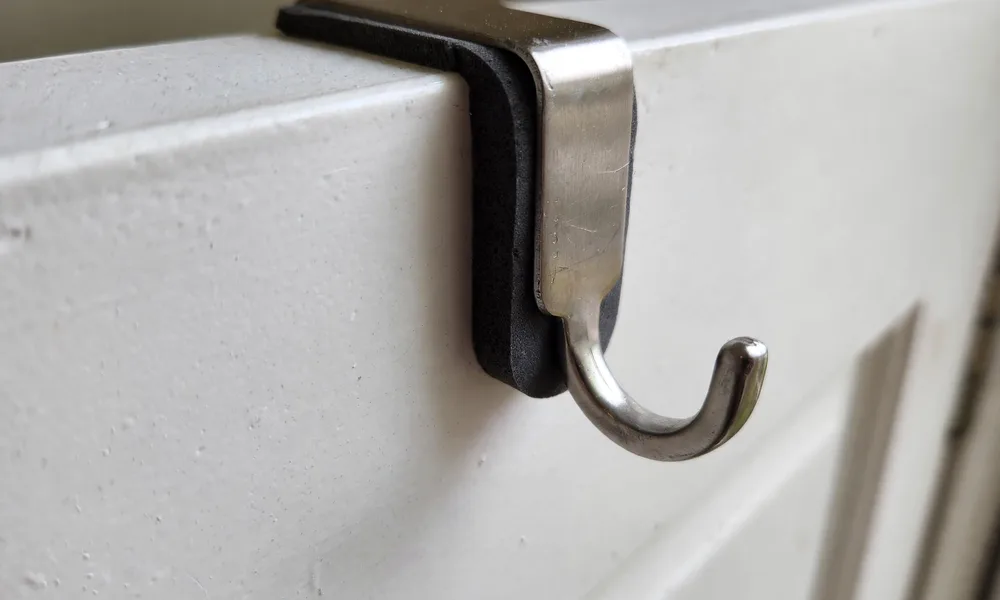
- Look for foam, rubber or felt padding on every surface that touches the door, and a bracket at least 3 centimetres wide where it sits on the door.
- Hang the heaviest items on the hooks nearest the hinges and keep the total load under the stated limit, because weight at the far end pulls the door out of square.
- Choose a rail with four to six hooks for a shared bedroom door, and single hooks for a bathroom door where only towels or a dressing gown need hanging.
- Take the rack off and check the top edge of the door every few months, and wipe away any grit trapped under the bracket before it can scratch the paint.
Why Over-Door Hooks Damage Doors
Most damage comes from movement, not from weight alone. Every time the door opens or closes, the rack shifts a fraction of a millimetre. If the bracket is bare metal sitting on a painted edge, that tiny movement works like sandpaper, and after a few weeks there is a dull patch or a bare line where the paint has worn away.
The second cause is a bracket that does not fit. A bracket made for a 35 millimetre door forced onto a 45 millimetre door squeezes the paint and crushes the fibres at the top edge. A bracket made for a thick door fitted to a thin one rocks back and forth, and its corners dig into the paint with every swing. Overloading does the same damage: weight hung far from the hinges acts as a lever and strains the hinges. None of this means over-door hooks are a bad idea. It means the fit and the load matter more than the design of the hooks themselves.
Measure Your Door Before You Buy
Measure first, buy second. Start with the thickness of the door, measured at the top edge with a tape measure. Most internal doors are between 35 and 40 millimetres thick, but older doors can be thinner and solid fire doors can be 44 millimetres or more. Write the number down, because a bracket that fits a 35 millimetre door will not fit a 44 millimetre one, and the difference is easy to miss by eye.
Next, check the gap between the top of the door and the frame. Close the door and look at the gap from the side. There needs to be enough room for the bracket to pass over the top without scraping the frame. A bracket that is too thick for the gap will jam when the door closes and rub paint off the frame every time the door moves. If the gap is very tight, look for a slim bracket made from folded steel less than 2 millimetres thick. A hollow door has a thin skin that dents easily, while a solid door is far more forgiving.
The Main Types, Compared
Over-door hooks come in a handful of shapes, and the right one depends on the room, the door and what you plan to hang. A bedroom door that holds coats for a family needs a different rack from a bathroom door that holds two towels.
| Type | Hooks | Best for | Typical load | Watch out for |
|---|---|---|---|---|
| Multi-hook rail | 4 to 6 | Bedroom and hallway doors | 5 to 10 kg | Weight at the far end pulls the door |
| Single hook | 1 | Bathroom doors, dressing gowns | 2 to 3 kg | Only holds one item at a time |
| Double-sided rail | 4 to 10 | Shared rooms, both sides | 5 to 8 kg per side | Door will not close if the gap is tight |
| Heavy-duty rail | 4 to 5 | Heavy coats, bags | 10 to 15 kg | Needs a solid door and wide bracket |
Multi-Hook Rails
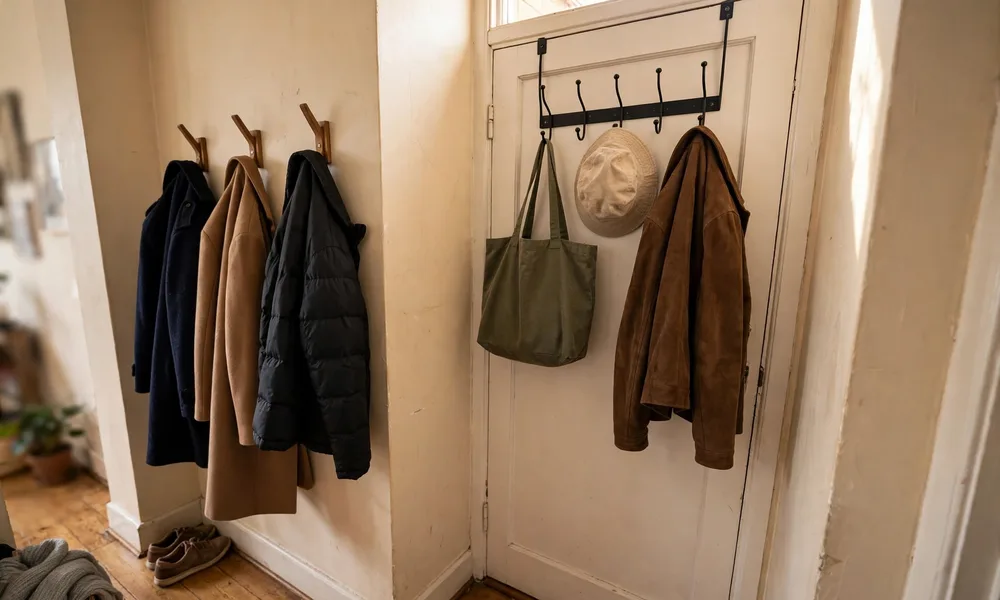
A multi-hook rail is the workhorse of the family: a flat bar with four to six hooks, held over the door by two brackets. It suits a bedroom or hallway door where several people hang coats, hats and bags. The best ones have brackets that are wide and padded, so the weight spreads across the top edge instead of pressing on two narrow points. Check that the hooks curve up at the tip, so a coat loop cannot slide off when the door moves.
Single Hooks
A single over-door hook is one hook on one bracket, and it is the gentlest option for the door because it puts very little weight on one spot. It suits a bathroom door for a dressing gown or a towel, or the back of a bedroom door for the outfit you plan to wear tomorrow. Because it is small, it is also the easiest to fit on a door with a tight gap. The limit is obvious: one hook holds one thing, and a household that needs more space will end up with three single hooks crowded along the top of the door, which defeats the purpose.
Double-Sided Rails
A double-sided rail hangs hooks on both faces of the door, which doubles the storage without taking any more wall space. It suits a door between two bedrooms, or a bathroom door where towels hang on one side and clothes on the other. The catch is thickness: the brackets on both sides have to clear the frame, and the door needs a generous gap at the top. Test the fit before you load it, and close the door slowly the first few times to check nothing scrapes. If the door is a fire door or a solid door in a tight frame, a double-sided rail is usually the wrong choice.
Weight Limits and How to Hang Things
Every over-door rack has a stated weight limit, and the honest way to read it is as a maximum, not a target. A rack rated for 8 kilograms will hold 8 kilograms on a good day, on a solid door, with the weight spread evenly. It will not hold 8 kilograms of wet winter coats all hung on the hooks furthest from the hinges. Spread the load, with the heaviest coat nearest the hinges and the lightest things at the far end. Think about what you hang, too: a dry jacket weighs less than a kilogram, a wet wool coat can weigh three times as much, and a bag full of books can weigh more than a coat.
Fitting a Rack Without Damage
Fitting an over-door rack takes a minute, but doing it properly takes five. Start by wiping the top edge of the door, because grit trapped under the bracket will scratch the paint. Slide the brackets over the top of the door and check that they sit flat, with the padding touching the door on both faces. If a bracket rocks, it does not fit: do not force it, and do not pack it with cardboard, which will compress and let the bracket move. Close the door slowly: if the brackets scrape the frame, the bracket is too thick for the gap and you need a slimmer rack.
Mistakes That Damage Doors
The most common mistake is buying before measuring, and it is also the easiest to avoid. The second is overloading the rack, usually by hanging a bag on top of a coat on top of a scarf on a single hook, until the hook bends and the bracket twists. The third is hanging wet things on the rack and leaving them there: a wet coat drips onto the door, the paint softens, and the bracket leaves a mark in the softened paint. Do not fit a rack to a door that is already damaged: a bracket will catch on loose paint and pull more of it off, so fix the paint first and let it harden for a week.
For a fuller picture of entryway storage, a coat rack suits a hallway with floor space to spare, while a rack that hooks over the door suits a home where the floor is already full. A doorstop is also worth fitting if the door swings into the rack, because a door that bangs against a wall will shake the rack loose. And if you need extra hanging space without any fixings at all, Command strips can hold light hooks on a wall, though they are not a substitute for a proper rack for heavy coats.
Checklist: Before You Buy
- Measure the door thickness at the top edge and write it down.
- Check the gap between the top of the door and the frame for the bracket to pass through.
- Choose a rack whose brackets are padded on every surface that touches the door.
- Pick a load rating at least a third higher than the weight you plan to hang.
- Count the hooks you need and leave one spare for guests.
- Plan to take the rack off every few months to check the paint underneath.
Frequently Asked Questions
Will over-door hooks damage my door?
They can, but they do not have to. Damage comes from a bracket that does not fit, bare metal rubbing on paint, or a rack that is overloaded. A padded bracket that matches the door thickness, fitted to a clean top edge and kept under its load limit, will leave no mark.
What door thickness do over-door hooks fit?
Most racks fit doors between 35 and 45 millimetres thick, but the range varies by model. Measure your door at the top edge before you buy, and choose a rack whose stated range covers your measurement with room to spare.
Can I use over-door hooks on a hollow door?
Yes, for light loads, because a hollow door has a thin skin that dents easily under a narrow bracket. Use a rack with wide, padded brackets, keep the load light, and hang the heaviest items nearest the hinges.
Why does my door not close with the rack fitted?
The bracket is too thick for the gap between the top of the door and the frame. Take the rack off and choose a slimmer bracket, usually a folded steel one, rather than forcing the door or shaving the frame.
How much weight can over-door hooks hold?
Most multi-hook rails hold between 5 and 10 kilograms, and heavy-duty rails hold up to 15 kilograms on a solid door. Treat the stated limit as a maximum, spread the weight across the hooks, and keep the heaviest items nearest the hinges.
Should I use over-door hooks in a bathroom?
Yes, if the rack is stainless steel or powder-coated, because a bathroom is damp and bare steel will rust. Choose a rack with a towel bar so towels can dry, and wipe the brackets dry now and then so moisture does not sit under the padding.
The Bottom Line
The best over-door hooks are the ones that fit your door, not the ones with the most hooks or the highest load rating. Measure the thickness and the gap, choose padded brackets, stay well under the weight limit, and check the paint every few months. Do that, and a rack that costs very little will give you years of extra hanging space without leaving a mark on the door.