A Guide to Muffin Mixes for Quick Baking in 2026
A good muffin mix is the closest thing baking has to a shortcut that still feels like real baking. You tip the powder into a bowl, add an egg, some oil and a splash of milk or water, stir it a few times, and twenty minutes later the kitchen smells like a bakery. The best muffin mixes of 2026 do that without tasting flat, chemical or oddly sweet, and this guide explains how to tell them apart before you buy, what the box is really asking you to add, and which flavours are worth the shelf space. A muffin mix is a packaged dry blend of flour, sugar, raising agents, salt and flavouring, designed to turn into muffins with only wet ingredients added.
Key Takeaways
- A good muffin mix lists flour first, uses baking powder as its main raising agent, and keeps the ingredient list short enough to read at a glance.
- Just-add-water mixes are the fastest, but mixes that ask for an egg and oil almost always bake into a softer, richer muffin.
- Stir a mix only until the flour disappears, because overmixing a muffin mix makes tough, peaked muffins with tunnels inside.
- Blueberry and banana mixes are the safest flavours to buy, while chocolate and bran mixes vary the most from brand to brand.
- Check the box for the muffin count, the pan size and the bake time, because a mix that promises twelve muffins in a standard pan is the honest standard.
What a Muffin Mix Actually Is
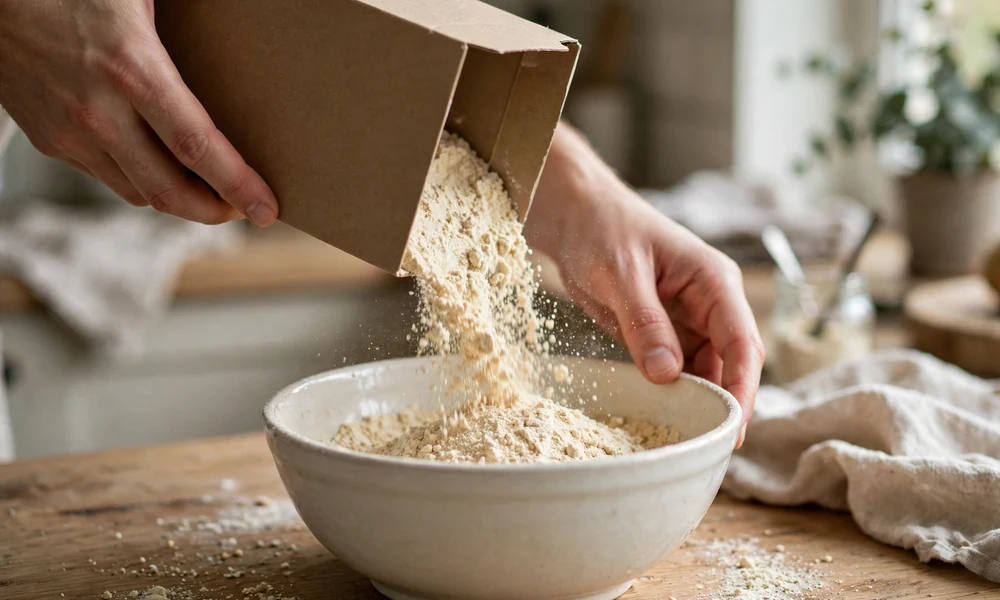
A muffin mix is a bag or box of dry ingredients that has already done the measuring for you. Inside is usually plain or self-raising flour, sugar, baking powder, a little salt, and whatever gives the flavour: dried blueberries, cocoa, bran, dried banana or spice. Some mixes also carry dried milk powder, so all you need to add is water. Others are deliberately leaner, leaving the egg, oil and milk for you to supply, which gives the finished muffin more flavour and a better crumb. Neither approach is wrong, but they bake differently, and knowing which kind you have bought is the first step to a good result.
Just-Add-Water Mixes
Just-add-water mixes are the simplest kind on the shelf. They contain dried egg or dried milk powder as well as the flour and raising agents, so the only thing you add is water. They are the best choice for a holiday cottage, a student kitchen or a bake with children, where you may not have eggs or oil to hand. The trade-off is flavour. Dried egg and dried milk can taste a little flat, and the crumb tends to be softer and less rich than a mix that uses a fresh egg. If you buy one, add a spoonful of oil or melted butter anyway, even if the box does not ask for it, and the result will taste noticeably better.
Mixes That Ask for Egg and Oil
Most of the better mixes ask you to add an egg, oil or melted butter, and milk or water. That is a good sign. A fresh egg gives structure and colour, oil keeps the crumb moist for longer than butter alone, and milk adds a gentle richness that water cannot. These mixes usually cost a little more, but they bake closer to a from-scratch muffin, with a domed top and a tender crumb that stays soft the next day. If the box asks for two eggs, use both: cutting the egg to save one will leave the muffins pale and crumbly.
How to Read the Box Before You Buy
The front of the box is advertising, so turn it over. The ingredient list tells you more in ten seconds than any claim on the front. Flour should come first, followed by sugar, then the raising agent. If sugar comes first, the muffins will taste more like cake than breakfast. If the list is very long, with several gums, starches and flavourings, the mix is doing a lot of work to imitate a simpler recipe, and the flavour usually shows it. A short list is a good sign, and so is a raising agent you recognise: baking powder, or baking powder with a little bicarbonate of soda.
Flavours Worth Buying, and Flavours to Skip
Blueberry is the safest muffin mix flavour, and the one most brands get right. The dried berries rehydrate in the batter, the flavour is familiar, and even a plain mix tastes good with a handful of fresh blueberries stirred in at the end. Banana is nearly as reliable, because the dried banana and the sugar in the mix suit each other, and the muffins stay moist longer than most. Chocolate is where brands split: a good chocolate mix uses cocoa and real chocolate pieces, while a poor one uses flavouring and tastes thin. Bran and oat mixes are the most variable of all, because the bran can soak up the liquid and leave the muffins dry if the balance is wrong.
Comparing the Main Types of Muffin Mix
| Type | What you add | Best for | Watch out for |
|---|---|---|---|
| Just-add-water | Water only | Holidays, students, baking with children | Can taste flat; add a spoonful of oil |
| Egg and oil | Egg, oil, milk or water | Everyday baking, best flavour | Needs a stocked fridge |
| Blueberry | Egg, oil, milk | Breakfast, lunchboxes | Dried berries can be sparse |
| Banana | Egg, oil, milk | A quick bake, moist crumb | Can be very sweet |
| Chocolate | Egg, oil, milk | A treat bake, children | Flavouring instead of cocoa in cheap boxes |
| Plain or vanilla | Egg, oil, milk | Adding your own fruit or chocolate | Bland if baked exactly as the box says |
| Bran or oat | Egg, oil, milk | A heartier breakfast muffin | Can dry out; do not overbake |
Getting the Best Bake Out of a Box
Start by heating the oven properly before you mix anything. A muffin mix batter that sits around while the oven warms up loses its lift, because the baking powder starts working the moment it meets liquid. Fill each cup almost to the top, because a half-filled cup makes a flat muffin however good the mix is, and rest the batter for five minutes after stirring so the flour hydrates and the batter thickens slightly.
Stirring is where most box bakes go wrong. The instructions say to stir until just combined, and they mean it. Ten to twelve strokes with a spoon is enough, and a few lumps are a good sign, not a mistake. A smooth, glossy batter has been mixed too much, and it will bake into tough muffins with long tunnels through the crumb. The same rule applies to a mix as to a from-scratch bake, and it is the single easiest way to improve a box. A good pan helps too, and our guide to muffin pans explains which materials brown most evenly and release cleanest.
Small Upgrades That Actually Help
A spoonful of yoghurt or sour cream stirred into the batter adds moisture and a gentle tang, and it is the easiest upgrade for any mix. A pinch of salt, even if the box already contains some, sharpens the flavour, especially in chocolate and banana mixes. A teaspoon of vanilla extract lifts a plain or blueberry mix without changing anything else. Sprinkling a little sugar over the tops before baking gives a crisp, sugared crust, and a few extra berries or chocolate chips on top make the muffins look like they came from a bakery.

Storing Mixes and Storing Muffins
An unopened muffin mix keeps well in a cool, dry cupboard, usually for six to twelve months, but the raising agents weaken slowly over time, so an old box may bake flatter than a fresh one. Once opened, fold the bag shut, clip it, and use it within a few weeks. Keep the box away from strong smells, because flour picks them up, and never store a mix above the cooker, where steam and heat will spoil it.
Your Muffin Mix Checklist
- Flour is first on the ingredient list, sugar is not, and the list is short enough to read.
- The box asks for an egg and oil, or you are happy with the flatter just-add-water style.
- The weight and the promised muffin count match: about 400 grams for twelve standard muffins.
- You have the pan, the eggs and the oil ready before you start mixing.
- Stir ten to twelve strokes only, fill the cups nearly full, and do not open the oven door early.
- Cool the muffins in the pan for five minutes, then move them to a rack and freeze any spares the same day.
Frequently Asked Questions
Is a muffin mix as good as baking from scratch?
Not quite, but a good mix comes close for a quick bake. From-scratch baking gives you control over the fat, sugar and fruit, while a mix gives you speed and consistency. With one or two small upgrades, such as yoghurt or fresh berries, a good mix is hard to tell apart from a simple from-scratch muffin.
Can I use water instead of milk in a muffin mix?
Yes, in most mixes, but milk gives a richer crumb and a better colour. Water works in a pinch, and it is what just-add-water mixes are designed for, but if the box asks for milk, use milk when you can, or use half milk and half water.
Why did my muffins from a mix come out tough?
Overmixing is the usual cause. Stir only until the flour disappears, even if the batter still has lumps. A smooth batter develops gluten, which makes tough muffins with tunnels inside, and no mix can fix that once the batter is overworked.
Can I add fruit or chocolate to a plain muffin mix?
Yes, and a plain mix is the best one for it. Stir in a handful of fresh or frozen berries, chocolate chips or chopped nuts at the very end, with as few strokes as possible. Toss berries in a spoonful of flour first, which stops them sinking to the bottom.
How long does an opened muffin mix keep?
Fold the bag shut, clip it, and use it within a few weeks. An unopened box keeps for six to twelve months in a cool, dry cupboard, but the raising agents weaken slowly, so an old box may bake flatter than a fresh one.
Are muffin mixes suitable for children to bake with?
Yes, they are one of the best first bakes. A just-add-water mix is the simplest, because there is less to measure and less to spill, and the short bake time keeps a child interested. An adult should still handle the oven, and the stirring is a good job for small hands.
The Bottom Line
The best muffin mixes of 2026 are the ones that are honest about what they are: a quick, reliable way to get warm muffins out of the oven in half an hour. Buy a mix with flour first and a short ingredient list, choose the egg-and-oil style when you can, stir it gently, and add one small upgrade of your own. Do that, and the box in your cupboard will earn its place, whether it is a blueberry mix for breakfast, a plain mix for experimenting, or a chocolate mix for a rainy afternoon. And when you have time to spare, try baking muffins from scratch too: our guide to scones is a good next step for anyone who has caught the baking habit from a box.