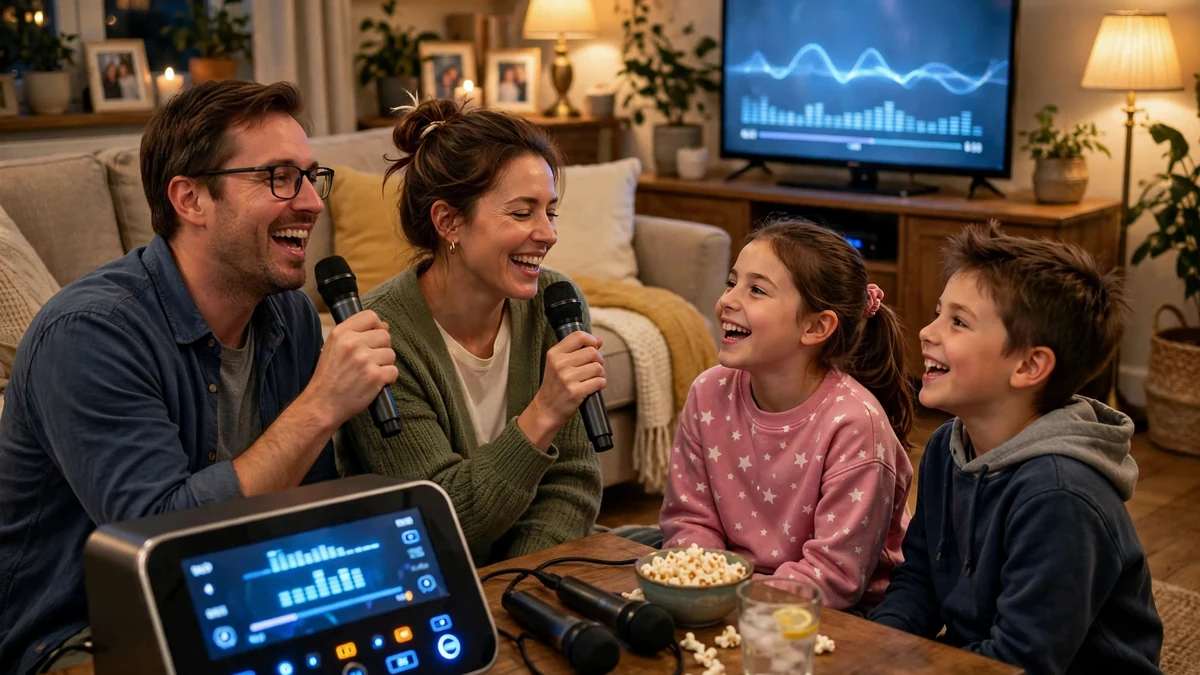
A paddle board looks simple from the shore: a long flat board, a paddle, and a person gliding across calm water. That simplicity is the whole appeal, and it is also what makes choosing one harder than it looks. The wrong board wobbles under your feet, drifts in a crosswind, or feels heavy before you have even reached the water, while the right one feels steady the moment you stand up and stays fun for years. The best paddle boards of 2026 get the basics right first: stability you can trust, a shape that suits the water you actually paddle on, and a kit that is easy to carry, inflate, and store.

The Main Types of Paddle Board
Most boards fall into four families, and the family matters more than any single feature. All-round boards are wide, stable, and forgiving, which makes them the natural choice for lakes, slow rivers, and relaxed days with family. Touring boards are longer and narrower, built to glide in a straight line and cover distance without wasting your energy on every stroke. Yoga boards are extra wide with a large soft deck pad, so you have room to move, stretch, and sit without sliding. Fishing boards are the widest and most stable of all, with mounts and deck space for tackle, a cooler, and a seat.
Construction is the second big choice. Inflatable boards pack down into a bag, fit in a car boot or a cupboard, and are kinder when you fall onto them, which is why they suit most paddlers. Hard boards glide faster, feel more responsive underfoot, and need no pumping, but they need roof bars or a garage and they bruise more easily on rocks and concrete. Neither type is better in every way, so start with how you will store and carry the board, then choose the shape that matches your water.
Best Overall Paddle Board
The best overall board is the one that does the most things well without asking you to be an expert. It is wide enough to stand on without constant correction, long enough to track straight on a lake, and light enough to carry to the water on your own. The deck pad should run most of the length of the board, with enough grip for wet feet and enough softness for kneeling. A good all-round board also comes with a proper three-piece paddle, a coiled leash, and a fin that slides in without tools, because the kit you actually use matters as much as the board itself.
Look for a board that feels steady when you shift your weight and step back towards the tail. That is the test that separates a genuinely good all-round board from a wide board that is simply slow. It should turn when you ask it to, hold a line when you paddle evenly, and stay calm when a small boat wake rolls past. If you are just starting out, our guide to the best paddle boards for beginners in 2026 covers the most forgiving first boards in more detail, but the overall winner here is the board a beginner and a confident paddler can both enjoy.
Best Inflatable Paddle Board
A good inflatable board feels firm, not soft, once it is pumped to its recommended pressure. That firmness is what gives it glide and stability, so check the pressure rating and the quality of the pump before anything else. A double-action pump that switches to single-action near the top saves real effort, and a pressure gauge you can read at a glance stops you guessing. The board should hold its pressure through a long session and dry quickly once you roll it up.
Best Touring Paddle Board
Touring boards are for paddlers who want to go further: across a lake, down a calm river, or along a sheltered coastline. They are longer and narrower than all-round boards, with a pointed nose that cuts through small chop instead of slapping against it. That length gives them glide, which means each stroke carries you further and a long day on the water feels less tiring. The trade-off is stability, so a touring board suits a paddler who is already comfortable standing and turning.
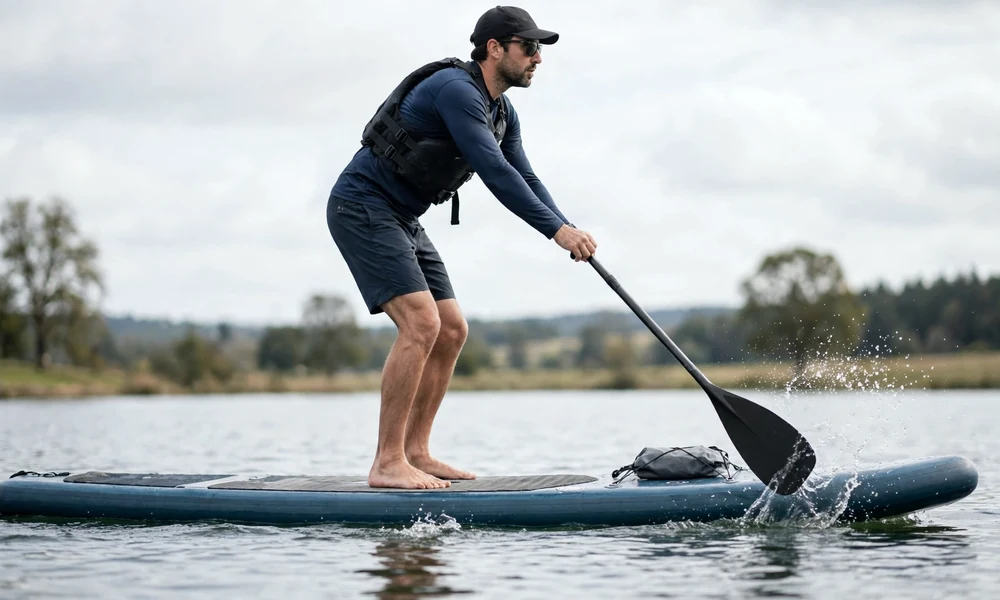
Look for deck rigging that holds a dry bag without shifting, a comfortable carry handle placed at the balance point, and a fin that keeps the board tracking straight in a crosswind. A touring board should also have a weight limit that leaves room for water, snacks, and a spare layer, not just your body weight. If you plan to paddle with a kayak as well, our guide to the best kayaks for beginners in 2026 is a useful comparison, because the two craft suit different days and different water.
Best Yoga Paddle Board
A yoga board is a floating studio, so width and deck space matter more than speed. Look for a board at least thirty-two inches wide with a full-length soft deck pad that runs from nose to tail, giving you room for a mat-sized practice without your hands or feet slipping off the edge. The board should feel steady when you shift from a seated pose to standing, and it should recover gently when you wobble rather than tipping suddenly.
Best Fishing Paddle Board
Fishing from a paddle board works because the board is quiet, shallow, and easy to move into spots a boat cannot reach. The best fishing boards are wide and stable enough to stand and cast without rocking, with a large flat deck and a high weight limit for you, your tackle, and your catch. Mounts for rod holders, a fish finder, and a cooler turn a plain board into a proper fishing platform, but they should be placed where they do not get in the way of your feet.
Best Budget Paddle Board
A budget board is worth buying only if it is safe, stable, and complete. The board itself should be wide and firm at full pressure, with a deck pad that grips when wet and a fin that stays put. The kit matters even more at this price: a paddle that adjusts smoothly and locks in place, a leash that does not tangle, and a pump that actually reaches the recommended pressure without wearing you out before you start.
How to Choose: Length, Width and Weight
Length sets the character of a board. Boards under ten feet turn easily and suit smaller paddlers, children, and short play sessions close to shore. Boards between ten and eleven feet are the all-round sweet spot for most adults, balancing stability, glide, and easy carrying. Boards over eleven feet are touring boards, built for distance and straight-line speed, and they need more room to turn and store.
Width sets stability. A board under thirty-one inches wide feels lively and quick but demands good balance, while a board over thirty-three inches feels planted and forgiving at the cost of a little speed. If you are tall, heavy, or planning to carry a child, a dog, or fishing gear, choose the wider board. Your weight against the board’s limit is the number to respect: stay well under the stated maximum, because a board loaded to its limit sits low, drags, and feels unsteady in any chop.
Water Safety: Life Jacket, Leash and Conditions
Water safety is not an extra chapter in paddle boarding; it is the foundation everything else rests on. Always wear a life jacket that fits properly and is fastened before you step onto the board, even on calm water and even if you are a strong swimmer. Cold water, a sudden gust, or a slip on a wet deck can turn a relaxed paddle into a fight to stay afloat in seconds, and a life jacket does the work your arms cannot. Our guide to the best life jackets of 2026 explains the types and how to check the fit, but the rule is simple: a jacket that stays in the car does not keep you safe.
Always wear a leash, and choose the right one for the water. A coiled ankle leash suits lakes and slow rivers, keeping the board close when you fall without dragging in the water. In flowing water, a quick-release waist leash is the safer choice, because it can be freed in one pull if it snags. Check the leash before every session: a frayed cord, a cracked cuff, or a swivel that no longer turns is a leash that may fail when you need it most.
Children need supervision on and around the water at all times, even in the shallows. A child should wear a properly fitted life jacket, stay within easy reach of an adult, and paddle only in calm, sheltered water with no boat traffic. Teach children to fall away from the board, to hold onto it if they do fall in, and to stay with the board rather than trying to swim after a drifting paddle. Never let a child paddle alone, and never assume a shallow spot is safe without checking the depth and the current first.
Check the conditions before you launch, and be honest about what they mean for you. Wind is the biggest hazard for paddle boarders: an offshore wind can push you away from shore faster than you can paddle back, so stay in sheltered water when the wind picks up and paddle into the wind on the way out so the return is easier. Watch the weather forecast, avoid thunderstorms and fast-moving water, and tell someone where you are going and when you expect to be back. If the water looks rough, the wind is rising, or you feel uneasy, stay on shore; the water will still be there tomorrow.
Care, Storage and Mistakes to Avoid
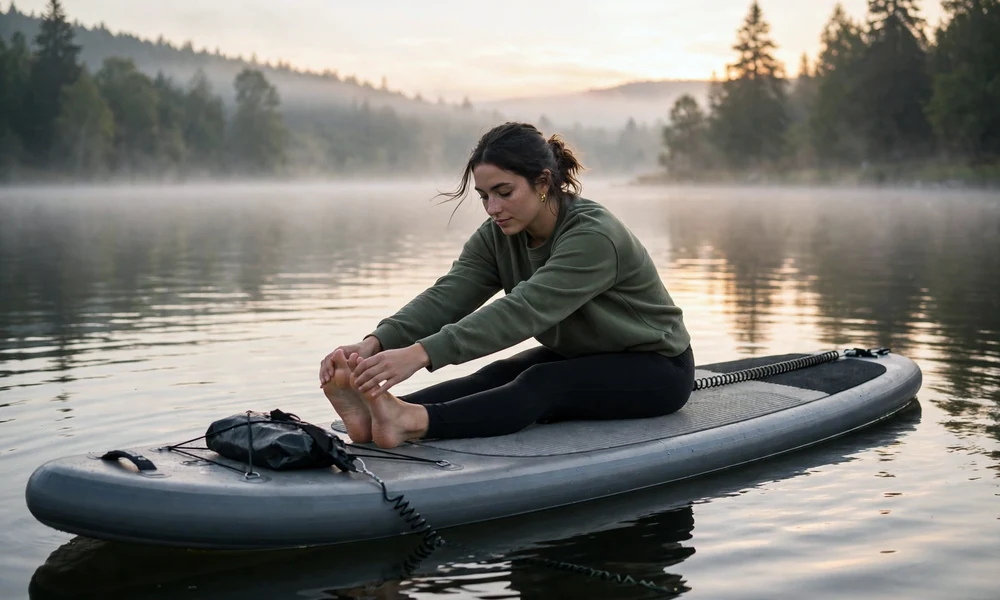
The most common mistakes are easy to avoid once you know them. Do not paddle without a leash or a life jacket, do not overload the board past its weight limit, and do not launch in an offshore wind. Do not drag the board across concrete or gravel, do not leave it inflated in a hot car, and do not store it wet and rolled tight for months. Stand with your feet either side of the carry handle, knees soft, eyes on the horizon, and let the board do the balancing work instead of fighting it with stiff legs.
Closing Thoughts
The best paddle board is the one that matches your water, your body, and the way you actually spend time outside. An all-round board suits most paddlers most of the time, a touring board rewards longer days, a yoga board turns calm water into a quiet practice, and a fishing board opens up water a boat cannot reach. Choose for stability first, check the weight limit honestly, and never compromise on the life jacket and the leash.
Start on calm, sheltered water close to shore, learn to fall and climb back on before you venture further, and build your confidence one easy session at a time. The right board will not make you a better paddler overnight, but it will give you the steady platform you need to become one, and it will still be the board you reach for years from now.