A paper clip is one of the smallest things on a desk, and one of the most used. It holds a receipt to a form, keeps a few pages together without a staple, marks a place in a notebook, and then gets straightened out, bent back, and used again. The best paper clips of 2026 do that quiet job without fuss: they grip firmly, slide on without tearing the paper, come off cleanly when you need them to, and still look neat after weeks in a drawer. The worst ones are almost as common — clips that are too loose to hold anything, too tight to slide on, or coated in a finish that flakes off onto your fingers.
What a Paper Clip Actually Does
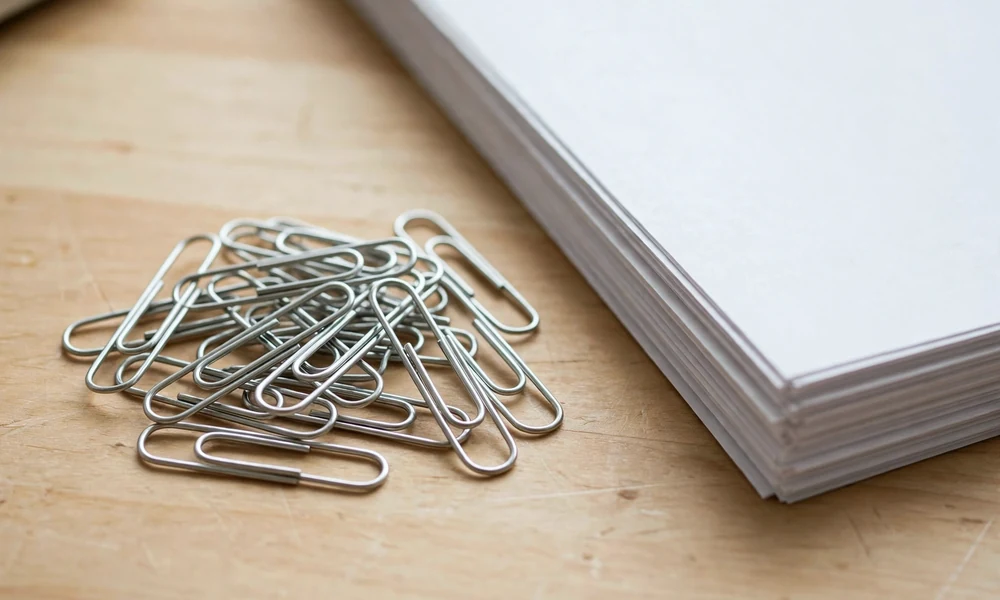
A paper clip works by spring tension. A length of wire is bent into loops, and the loops press the pages together between two runs of wire. That sounds simple, and it is, but the details decide whether a clip is pleasant to use or a small daily annoyance. The wire has to be springy enough to press firmly and keep pressing after dozens of uses, yet soft enough to open without a fight. If the wire is too thin, the clip slips off. If it is too thick, it is hard to push on and leaves a dent in the page.
The shape matters just as much as the wire. A standard clip has an inner loop and an outer loop, and the inner loop is the part that does most of the holding. On a well-made clip the loops sit flat against each other, the ends are smooth, and the wire does not stick out at an angle. On a cheap clip the loops are uneven, one end pokes out, and the clip catches on the paper as you slide it on. That catching is what tears corners and leaves the little creases that make a document look untidy.
The Main Types of Paper Clip
The standard clip is the one most desks are full of. It is about an inch long, made from a single loop of steel wire, and it holds up to about ten sheets of ordinary printer paper comfortably. It is the right clip for everyday paperwork: a letter with its envelope note, a two-page form, a receipt clipped to an invoice. Buy these in boxes of a hundred and you will always have one to hand, and because they are cheap, losing one does not matter.
The jumbo clip is the standard clip grown up. At about two inches long, with thicker wire, it holds twenty to thirty sheets without splaying open. It is the clip for reports, for a small stack of meeting notes, and for anything too thick for a standard clip but too thin to justify a staple. The danger with jumbo clips is using one on too few pages. On two sheets a jumbo clip is loose, it slides about, and it can fall off inside a bag. Match the clip to the thickness of the stack and it works beautifully.
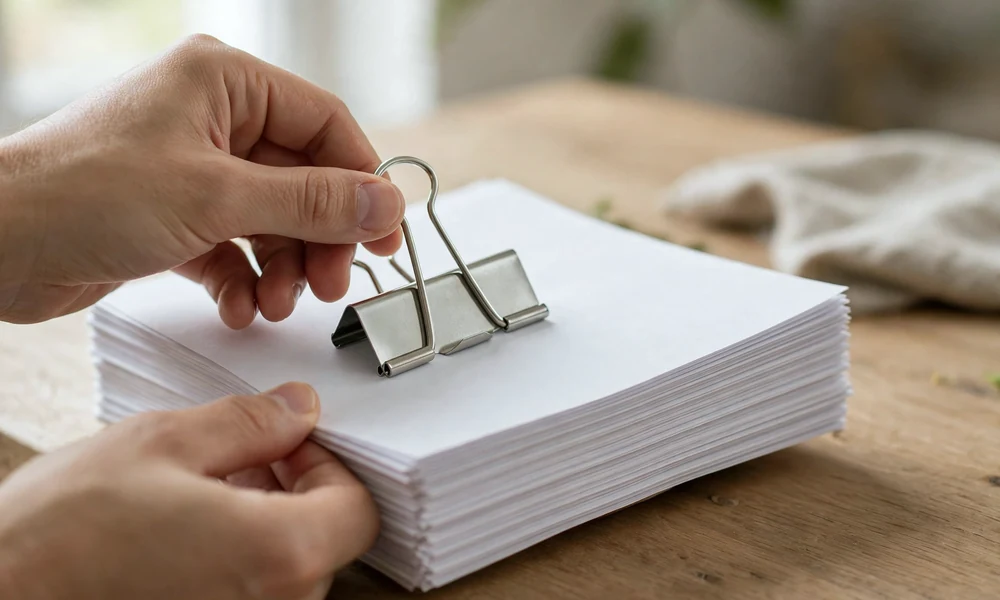
The binder clip is a different design altogether. Two metal jaws close on the paper, held shut by a pair of folding wire handles, and the grip is far stronger than any wire clip. A medium binder clip holds fifty sheets or more, and the largest ones hold a whole ream. Binder clips are best for thick stacks that need to stay together for a long time: a project file, a set of plans, a bundle of receipts for the year. The handles fold flat when the clip is in use and stand up when you need to squeeze it open, which makes them easy to use even with a thick stack. They are also useful around the house, for sealing bags and holding cables, because the grip is so strong.
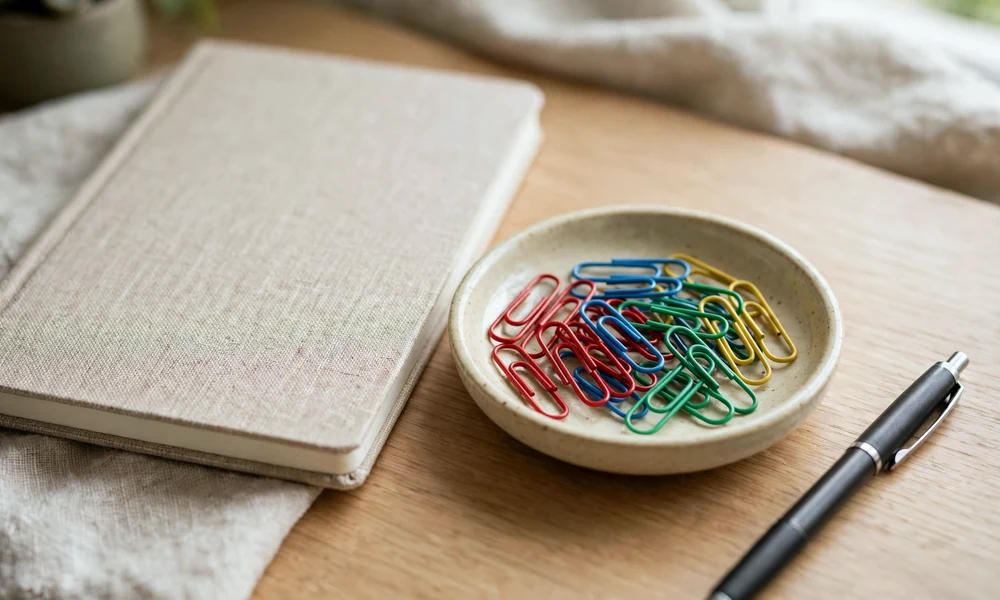
Coloured and vinyl-coated clips are standard clips with a coating of coloured plastic. The coating does two useful things: it stops the metal from marking pale paper, and it lets you colour-code your work — red for urgent, blue for filed, green for paid. They are popular in classrooms, in craft projects, and in any filing system where colour carries meaning. The coating also makes the clip slightly thicker and smoother, which some people find easier to slide on. The trade-off is that a thin coating can crack or peel after long use, especially if the clip is bent open too far. A good coated clip has an even, smooth finish with no bubbles or bare patches.
Size, Wire and Finish: How to Choose
Start with the thickness of the stack you clip most often. For two to ten sheets, a standard clip is right. For ten to thirty sheets, go jumbo. For anything thicker, use a binder clip rather than forcing a wire clip open. A wire clip stretched beyond its natural opening loses its spring and will never grip properly again, so one oversized stack can ruin a clip for good.
Next, look at the wire. A good clip uses smooth, even wire with a consistent thickness all the way round. Run a finger along it: you should feel no rough spots, no sharp ends, and no place where the wire is flattened or nicked. The ends of the wire should be tucked in or rounded, not left sticking out where they can scratch paper or snag fabric. If you are buying in bulk, open a few clips from different parts of the box and check them, because quality can vary within a single box.
The finish is the third thing to check. Plain steel clips are the cheapest and the most common, and they are fine for ordinary use, though they can rust if they get wet or sit in a damp drawer. Nickel-plated clips resist rust better and have a brighter, smoother finish that slides on easily. Vinyl-coated clips add colour and protect pale paper, but check that the coating is smooth and even. Whatever the finish, the clip should slide onto a page with gentle pressure and come off without leaving a mark or a tear.
If you keep notes in bound books rather than loose sheets, the humble clip still earns its place: it marks a page, holds a loose sheet inside a notebook, and keeps a bookmark from slipping out. Our guide to the best notebooks of 2026 covers the books themselves, but a clip is the cheapest way to make any notebook easier to use day to day.
Paper Clips at Work and at School
In an office, the paper clip is a sorting tool as much as a fastener. A clipped set of pages stays in order when it is handed across a desk, carried to a meeting, or filed away and pulled out again months later. Unlike a staple, a clip lets you add or remove a page without tearing anything, which is why forms, drafts and anything still being edited are usually clipped rather than stapled. A clip also survives the scanner: unclip the pages, scan them, and clip them back together in the same order.
At school, clips teach organisation without any fuss. Children learn to keep their homework together, to mark their place, and to file work in order, and coloured clips make the system visible: one colour per subject, one colour for work to hand in, one colour for work to keep. Teachers use them to group worksheets, to hold a class set together, and to mark pages in a register. A box of coloured clips is one of the cheapest classroom tools there is, and one of the most used.
Mistakes That Ruin Good Paper Clips
The most common mistake is forcing a clip onto too many pages. The wire bends past its spring point, the loops splay apart, and the clip will never grip again. If you have to force it, the stack is too thick: use a jumbo clip or a binder clip instead, or split the stack into two clipped bundles. The same goes for bending a clip open to use as a tool. Straightening a clip to reset a device or clean a small hole is a genuine use, but that clip is finished as a clip afterwards, so use an old or damaged one rather than a good one from the box.
Storing clips loose in a deep drawer is the third mistake, not because it damages them but because it wastes them. Clips at the bottom of a drawer are forgotten, and a new box gets opened while hundreds sit unused. A small dish, a magnetic strip, or a desk tidy keeps them visible and within reach. If your desk is often a tangle of stationery, our guide to the best desk organizers of 2026 shows how a little order makes everything, clips included, easier to find.
How to Store and Look After Them
Paper clips need almost no care, but a little attention makes them last longer. Keep them dry: a damp drawer or a windowsill that catches rain is enough to rust plain steel clips, and rusty clips stain paper and feel rough in the hand. If a clip does rust, throw it away rather than cleaning it, because the rust comes back and the wire is already weakened.
When a clip loses its spring, bends out of shape, or gets a cracked coating, retire it. A tired clip is worse than no clip, because it looks as if the pages are held together when they are not, and the pages slide apart at the worst moment — in a bag, on a train, in front of a client. A box of a hundred costs so little that there is no reason to keep a clip that no longer grips.
Paper Clips and the Rest of the Desk
For anyone who sticks things as well as clipping them — labels, notes, craft projects — the same drawer logic applies. Our guide to the best glue sticks of 2026 covers the sticky side of the desk, but the principle is the same: keep the right tool close, use it for the job it suits, and put it back where you can find it.
The Bottom Line
The best paper clips of 2026 are not the most expensive or the most clever. They are the ones that hold firmly, slide on without tearing, come off cleanly, and still feel the same after a hundred uses. For most desks that means a box of smooth standard steel clips, a smaller box of jumbo clips for thicker stacks, a handful of binder clips for the heavy jobs, and a set of coloured coated clips if you like to sort by colour. Buy them in bulk, keep them dry and within reach, match the clip to the thickness of the stack, and retire any clip that loses its spring. It is a small thing, done well, and a tidy desk is built out of a hundred small things done well.