
Why Pasta Bowls Beat Flat Plates Every Time in 2026
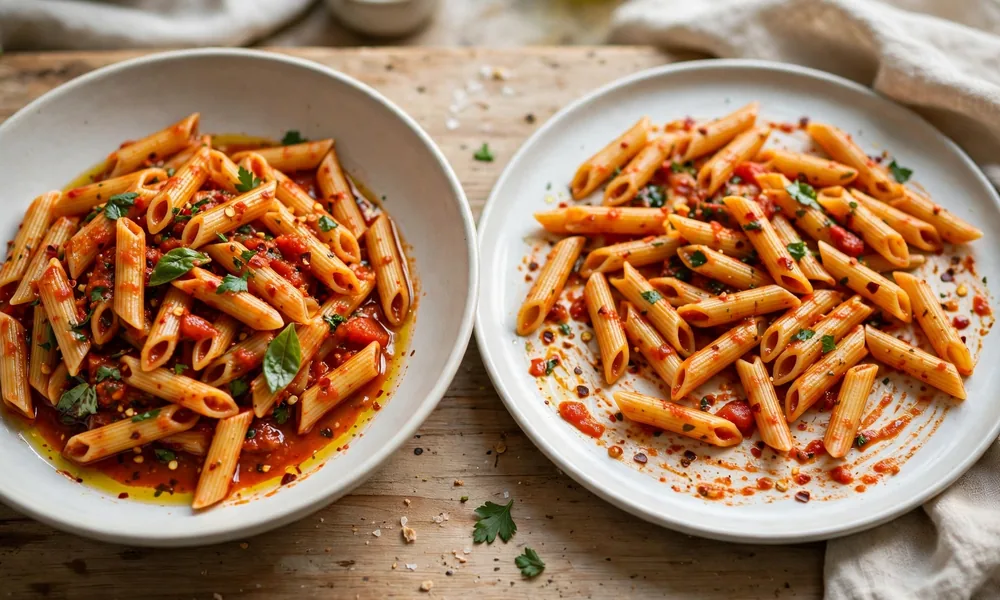
Pasta bowls beat flat plates because pasta was never meant to be eaten off a flat surface. A pasta bowl is wide and shallow, with gently sloping sides that hold the sauce where it belongs, give a fork room to twirl, and keep the last mouthfuls warm instead of spreading them thin across a cold plate. A flat plate does the opposite: it lets the sauce run to the edges, leaves the pasta cooling in a thin layer, and turns every twirl into a chase across a slippery surface. Anyone who has eaten spaghetti from a plate knows the feeling. This guide explains why a good pasta bowl changes the meal, and why the wide, shallow bowl has become the default in 2026.
Key Takeaways
- Wide and shallow beats flat every time: sloping sides hold sauce against the pasta instead of letting it run to the rim.
- Size matters most: 600 to 900 millilitres suits most servings, smaller for children, larger for baked pasta.
- A curved side is what makes twirling work: a fork needs something to push against, and a flat plate gives it nothing.
- Stoneware and porcelain are best: stoneware holds heat longer, porcelain resists staining from tomato sauce.
- Match the bowl to the pasta: wide bowls for long pasta, slightly deeper ones for short shapes and baked dishes.
Why a Flat Plate Fails Pasta
A flat plate fails pasta in three ways, and they all happen at once. First, the sauce escapes. Tomato, cream and oil-based sauces are all liquids, and on a flat plate they flow outward until they reach the rim, leaving the pasta in the middle dry. Second, the pasta cools. Spread thin across a wide plate, pasta loses heat fast, and by halfway through, the second half is lukewarm. Third, the fork has nowhere to work. Twirling spaghetti needs a curved surface to roll the strands against, and a flat plate offers only a slippery plane.
Plates also fail at the table in a quieter way: they look empty. A normal serving on a large flat plate leaves a wide border of bare porcelain, which makes the meal look small. A pasta bowl frames the same serving properly, so the meal looks abundant. Restaurants understood this years ago, which is why pasta arrives in a bowl in almost every good Italian restaurant.
Pasta Bowls, Rice Bowls and Noodle Bowls: The Sibling Distinction
Pasta bowls have two close siblings, and the distinction is worth drawing carefully, because the three bowls look similar in a cupboard but are built for different jobs. A rice bowl is smaller, usually 500 to 600 millilitres, wide and shallow like a pasta bowl but sized for a single portion of rice with toppings arranged on top. Rice is eaten from a wide surface with a spoon, and the bowl is often held in one hand, so it is lighter and smaller. A pasta bowl is larger and heavier, because pasta is twirled with a fork and eaten at the table, with sauce that needs room to stay put.
A noodle bowl is the opposite of a pasta bowl. Noodle bowls are deep, usually 800 to 1,000 millilitres, with a narrow rim that keeps broth hot and gives chopsticks room to lift noodles without splashing. They are built for broth: the depth holds a tall column of hot liquid, and the narrow opening slows the cooling. A pasta bowl is wide and shallow precisely because pasta has no broth to hold; spreading the pasta out lets the sauce coat it, and a deep bowl would bury the pasta and make twirling impossible. A noodle bowl keeps liquid hot and deep, a rice bowl spreads a small portion wide for a spoon, and a pasta bowl spreads a generous portion wide for a fork.
Size: How Big Should a Pasta Bowl Be?
For most adults, 600 to 900 millilitres is the sweet spot: large enough for a generous serving of spaghetti or penne with sauce, small enough that the bowl still feels like a bowl rather than a serving dish. Long pasta such as spaghetti, linguine and tagliatelle suits the larger end, because the strands need room to be twirled without spilling. Short pasta such as penne, rigatoni and fusilli suits the middle of the range. Baked pasta suits the largest bowls, because the portion is heavier.
Diameter and depth tell you more than volume alone. The best pasta bowls are 22 to 26 centimetres across and 5 to 7 centimetres deep, giving a broad, shallow well that holds sauce without hiding the pasta. Shallower than 4 centimetres, and the bowl is really a plate with a rim, so the sauce escapes anyway. Deeper than 8 centimetres, and the bowl starts behaving like a noodle bowl, burying the pasta and making twirling awkward. Weight matters too: a bowl that is too light slides when you twirl firmly.
Shape: The Curve That Makes Twirling Work
The curve of the side is the most important feature of a pasta bowl, and it separates a good bowl from a plate with pretensions. A gently sloping side, rising at roughly forty-five degrees from the base, gives a fork exactly what it needs: a surface to roll the pasta against. The twirl works because the strands catch on the curve and wind around the fork, instead of sliding away across a flat surface.
The base matters as well. A wide, flat base keeps the bowl stable while you twirl, and a slightly curved inner base gathers the last of the sauce into the centre, so the final mouthfuls are as good as the first. A sharp corner where the base meets the side is a trap: sauce collects there, pasta gets stuck, and cleaning becomes a chore. The rim should be broad and comfortable, wide enough to rest a fork on and thick enough to grip.
Materials Compared
Stoneware is the best all-round material for pasta bowls. It is heavy enough to stay put, holds heat well, and its slightly textured glaze grips the table. A stoneware bowl keeps pasta warm noticeably longer than a thin porcelain one, because the thick walls give heat back slowly instead of passing it to your hands. Its drawbacks are weight, and cheap, thinly glazed stoneware can stain from tomato sauce.
Porcelain is the lighter, more refined alternative, and it has one clear advantage: it resists staining better than any other ceramic, so tomato, saffron and turmeric sauces wipe clean without a trace. Porcelain bowls feel more elegant, which suits a dinner party, and they are easier to carry in a stack. They lose heat faster than stoneware, however, and they chip more easily. Glass shows off layered bakes but feels cold, and melamine is practical outdoors but never holds heat like ceramic.
| Material | Best For | Watch Out For |
|---|---|---|
| Stoneware | Everyday pasta, holding heat, staying put | Heavy in a stack; cheap glazes stain |
| Porcelain | Dinner parties, tomato sauces, easy cleaning | Loses heat faster; chips more easily |
| Glass | Showing off layered pasta bakes | Slippery, shows fingerprints, feels cold |
| Melamine | Outdoors, picnics, children | Scratches, stains, never holds heat |
Matching the Bowl to the Pasta
Different pasta shapes ask for slightly different bowls. Long pasta, spaghetti, linguine, tagliatelle and fettuccine, needs the widest, shallowest bowl you own, because the strands need room to spread and be twirled without spilling. Short pasta, penne, rigatoni, fusilli and farfalle, is more forgiving: the pieces pile neatly and the sauce clings in the folds. Filled pasta, ravioli and tortellini, suits a bowl with a little more depth, because the pieces are delicate. Baked pasta and lasagne need the deepest bowl in the set, because the portion is heavy and the sauce needs the extra wall.
A set of four matching pasta bowls in the 600 to 900 millilitre range covers almost every meal, and matching bowls make the table look deliberate. A serving bowl in the same material completes the set for family meals, letting you bring the pasta to the table in one generous bowl and serve into individual bowls there, which keeps the pasta hotter.

Everyday Use, Cleaning and Care
The best pasta bowl is the one you reach for every night, so the practical details decide as much as the looks. Dishwasher safety is the first thing to check, because a bowl that has to be hand-washed after every meal will migrate to the back of the cupboard. Most stoneware and porcelain pasta bowls are dishwasher-safe, but hand-painted or metallic-glazed bowls often are not. Microwave safety matters too, because leftover pasta is reheated in its bowl more often than anyone admits. Stackability is the detail nobody thinks about until the cupboard is full: bowls with a gentle slope stack neatly.
What to Avoid
The worst pasta bowls share a handful of faults, and all of them are visible before you buy. The first is a bowl that is really a plate: under 4 centimetres deep, with a barely-there rim, it does nothing a plate does not do. The second is a bowl that is really a soup bowl: deep and narrow, it buries the pasta and makes twirling impossible. The third is a narrow foot ring, which tips the bowl the moment you lean on it with a fork. The fourth is a novelty shape, fun once and then forgotten in a cupboard, because it does not stack. The fifth is a set that is too small: two bowls are not enough for a family.

Checklist: Choosing Pasta Bowls
- Pick 600 to 900 millilitres per bowl: larger for long pasta, smaller for short shapes.
- Choose wide and shallow over flat or deep, with gently sloping sides for twirling.
- Check the base: wide, flat and stable, so the bowl stays put while you twirl.
- Prefer stoneware or porcelain, and check dishwasher and microwave safety first.
- Buy four matching bowls so the table looks deliberate.
- Test the rim: broad, comfortable to grip, and thick enough not to chip.
Frequently Asked Questions
Are pasta bowls really better than plates?
Yes, for pasta. The sloping sides hold sauce against the pasta, the pile stays warm longer, and the curved side gives a fork something to twirl against. A plate does none of those things.
What size pasta bowl is best?
For most adults, 600 to 900 millilitres is ideal, in a bowl 22 to 26 centimetres across and 5 to 7 centimetres deep. Long pasta suits the larger end, short pasta the middle.
Can I use a pasta bowl for rice or noodles?
You can, but each bowl is built for a different job. Rice bowls are smaller and lighter for spoon eating, while noodle bowls are deep and narrow to hold broth hot. A pasta bowl is too large for rice and too shallow for noodle soup.
What material is best for pasta bowls?
Stoneware is the best all-round choice: heavy, stable and good at holding heat. Porcelain is lighter and more stain-resistant. Glass shows off layered bakes, and melamine suits outdoor use.
How many pasta bowls do I need?
Four is the practical number for most households, covering a family dinner with matching bowls. Two suits a couple, and one is fine for someone eating alone.
Do pasta bowls go in the dishwasher?
Most stoneware and porcelain pasta bowls are dishwasher-safe, but hand-painted or metallic-glazed bowls often are not. Rinse tomato sauce promptly and avoid abrasive scourers.
The Bottom Line
The best pasta bowls of 2026 are wide, shallow, stable and made from good stoneware or porcelain, in a set of four that matches the way you actually eat pasta. They beat flat plates every time because they hold the sauce where it belongs, keep the pasta warm, and give a fork something to twirl against, and each bowl is built for one meal: the pasta bowl is built for pasta.


