
The best phone cases 2026 do far more than stop a cracked screen. They decide how your phone feels in your hand every day, how it survives a drop onto concrete, and whether it still works with a wireless charger. A good case is the cheapest insurance you will ever buy for the most expensive thing you carry.
Yet the market is crowded with lookalikes: thin cases that promise military-grade protection, rugged cases that add a brick to your pocket, clear cases that turn yellow in a month, and leather cases that cost more than some phones. The differences that matter are hidden in the details, from the height of the lip around the screen to whether the case actually fits your exact phone model.
This guide cuts through that noise. We compared the case types real people actually buy on drop protection, grip, bulk, wireless charging, and everyday durability, and picked the winners for every kind of user. Whether you want the slimmest case that still protects, the toughest case for a building site, or a wallet case that replaces your purse, the right pick is below.
Key Takeaways
- The best phone cases 2026 balance drop protection with daily comfort, and the winners protect the screen and camera with a raised lip of at least one millimetre.
- Clear cases show off your phone, but only anti-yellowing blends stay clear for more than a few months.
- Rugged cases protect best but add the most bulk, so they suit outdoor work better than slim pockets.
- Leather wallet cases age beautifully and replace a card holder, but they need care.
- Always buy the case made for your exact phone model, and check MagSafe and wireless charging compatibility first.
How to Choose the Best Phone Case
Start with your life, not the product page. A desk worker needs a different case from a scaffolder, a cyclist, or a parent handing a phone to a toddler. Every extra millimetre of armour costs pocket space, and the best case is the one you will actually keep on the phone.
Fit comes first. A case made for a slightly different model will press the wrong buttons or leave the camera exposed. Check the model number on your phone, not just the brand name, and buy from a seller that lists exact compatibility. If the listing is vague, walk away.
Drop Protection: What the Ratings Really Mean
Drop ratings sound scientific, but they are mostly marketing. A claim of surviving a drop from three metres tells you nothing about the surface or the angle. What matters is the construction: air-cushioned corners, a flexible inner layer, and a rigid outer shell.
The raised lip is the simplest thing to check and the easiest to overlook. Lay the phone face down: if the screen touches the table, the lip is too low. One millimetre is the minimum, and two is better for anyone who drops their phone often. Phones almost always land on a corner, so look for thickened, slightly springy corners.
Materials: TPU, Polycarbonate, Silicone, and Leather
TPU is the workhorse of phone cases: flexible, grippy, and good at absorbing shock. Its weakness is yellowing in clear versions and stretching over a year. Polycarbonate is harder and clearer but can crack on impact and feels slippery. The best designs use both: a TPU bumper and a polycarbonate back.
Silicone feels lovely on day one: soft, warm, and grippy, though it attracts lint and stains over time. Leather starts stiff, then softens and develops a patina. Real leather costs more and hates water; vegan leather is cheaper but rarely ages as gracefully.
Metal cases look premium but can block signal and add weight. For most people, a TPU and polycarbonate hybrid is the sweet spot.
The Best Phone Cases 2026
Our picks below cover the six case types most people actually need, and the comparison table further down puts them side by side.
Best Clear Case: The Show-Off Pick
A great clear case protects your phone while letting the phone itself be the star. The best in 2026 use an anti-yellowing coating on a rigid polycarbonate back with a flexible TPU bumper. Cheaper clear cases use plain TPU and start to yellow within weeks.
Look for a raised lip around the camera and a coating that resists fingerprints. The difference shows up after three months, when a great clear case still looks new. If you bought a phone in a colour you love, this is the case for you, and it pairs naturally with the best smartphones of 2026.

Best Rugged Case: Maximum Drop Protection
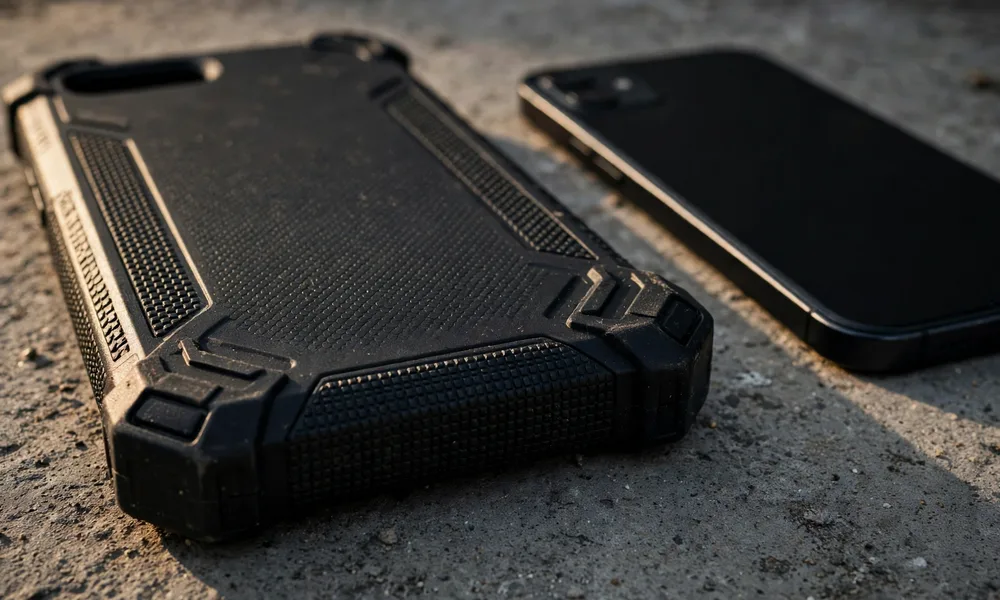
Rugged cases are for people whose phones live dangerously: builders, couriers, parents of small children, and hikers. The best layer a shock-absorbing inner core with a hard outer shell, reinforced corners, port covers, and a deep protective lip.
The cost is bulk: a rugged case can double a slim phone’s thickness, and a very thick back can make wireless charging less reliable. But if your phone regularly hits the floor, the trade is worth it, because a rugged case costs less than a single screen repair.
Best Leather Wallet Case: The Everyday Carry
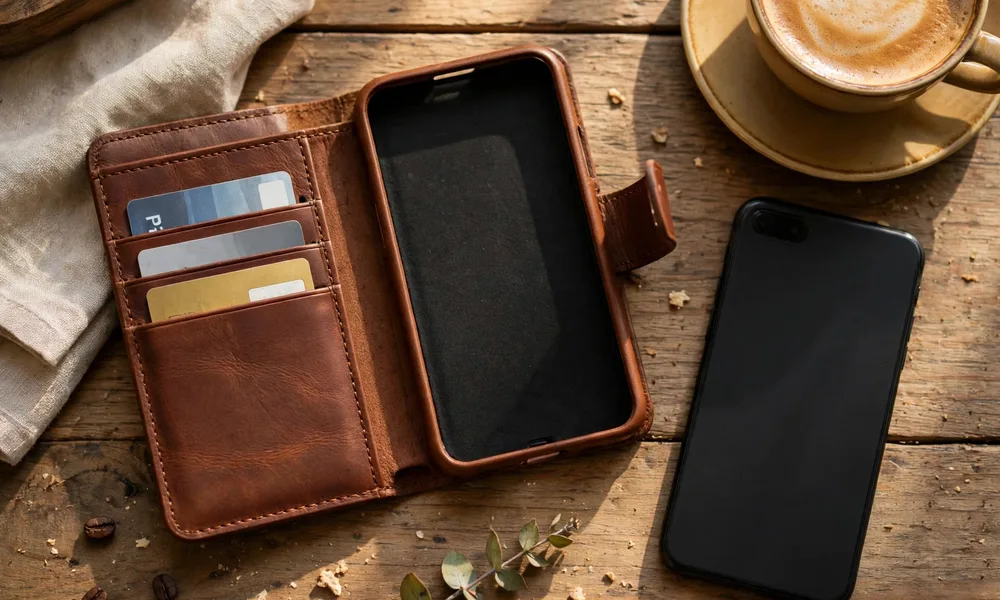
A leather wallet case replaces something else: with room for two or three cards, it lets many people leave the wallet at home. The best use full-grain leather that softens with use, a magnetic clasp that stays shut, and a folio cover that doubles as a video stand.
The compromise is thickness, and leather needs care or it will dry out and crack at the fold. For people who value a tidy pocket and a classic look, though, nothing else comes close.
Best Slim Case: Protection Without the Bulk
Slim cases are for people who hate cases. They add barely a millimetre, keep the buttons crisp, and slide easily in and out of a pocket. The best still manage a raised lip and reinforced corners.
Be honest about what a slim case can do: it saves your phone from scratches and a short drop onto a wooden floor, but not from a long drop onto concrete. If you drop your phone weekly, step up to a hybrid case.
Best Silicone Case: The Comfort Pick
Silicone cases win on feel: soft, warm, and grippy, in the widest range of colours. The best add a microfibre lining inside, so the phone never gets scratched by trapped dust, and they keep the button covers responsive.
The downside is maintenance: silicone attracts lint and stains against dark denim, though a quick wash fixes most of it. If you hold your phone for hours at a time, the comfort of silicone is hard to beat.
Best Everyday Hybrid Case: The All-Rounder
If you only want to buy one case, buy a hybrid. A TPU bumper fused to a polycarbonate back gives you the grip of rubber with the rigidity of hard plastic, plus air pockets in the corners and full MagSafe compatibility.
Hybrids are the easiest cases to live with: not the slimmest and not the toughest, but good at everything. This is the case to buy for a family phone, a work phone, or a gift. Pair it with the best earbuds of 2026 you already use every day.
Best Phone Cases 2026: Comparison Table
| Case Type | Drop Protection | Bulk | Best For | Price Range |
|---|---|---|---|---|
| Clear | Good | Low | Showing off your phone | Low to medium |
| Rugged | Excellent | High | Outdoor and manual work | Medium to high |
| Leather wallet | Good | Medium | Replacing a wallet | Medium to high |
| Slim | Basic | Very low | Scratch protection | Low |
| Silicone | Good | Low | Comfort and grip | Low to medium |
| Hybrid | Very good | Medium | Everyday all-round use | Low to medium |
No case wins on every measure. A rugged case protects best but bulks most; a slim case disappears in the pocket but protects least. The hybrid sits in the middle, which is why it is the default recommendation.
What to Avoid When Buying a Phone Case
The worst cases fail in predictable ways. A loose case lets dust grind against the back of your phone, and a tight one can press the volume buttons until they stop working. A case with no lip does nothing when the phone lands face down. And a case that blocks wireless charging is a fault you will only discover at bedtime, so test charging on the first day.
Finally, be wary of cases that promise everything for a suspiciously low price. A very cheap case often uses brittle plastic that cracks on the first drop or a clear back that yellows within a month. Spending a little more on a case with a warranty usually pays for itself the first time the phone hits the pavement, just as the best headphones of 2026 are worth buying properly.
Phone Case Buying Checklist
- Confirm the case is made for your exact phone model, including the year and size, not just the brand.
- Check for a raised lip around the screen and the camera lenses of at least one millimetre.
- Press every button through the case and check that the charging port and speakers are fully open.
- Test wireless charging and any magnetic mount on the first day, while returns are still easy.
- Hold the phone in the case for a few minutes and check the grip, weight, and pocket fit.
- Read the returns and warranty terms before you buy, and keep the receipt until the case has survived a month of use.
Frequently Asked Questions
Do I really need a phone case?
For most people, yes. Modern phones use glass on both sides, and a single drop can cost more to repair than several years of cases. A case also protects against scratches, dust, and pocket wear that lower resale value.
How often should I replace my phone case?
Replace a case when it no longer fits snugly, the corners are cracked, the buttons feel mushy, or a clear case has yellowed. For most daily-use cases that means every twelve to eighteen months, sooner for silicone and clear TPU.
Are clear cases worse at protecting phones?
Not necessarily. A well-made clear case with a TPU bumper and a polycarbonate back protects as well as any hybrid. The problem is cheap clear cases made from a single soft plastic, which yellow quickly and offer little corner protection.
Will a case stop my phone from charging wirelessly?
Most cases under three millimetres thick work fine, but very thick rugged cases, metal cases, and wallet cases with cards in the back can block the connection. Check the specification and test it yourself on day one.
Is a rugged case worth it if I work in an office?
Probably not. Rugged cases are heavy and bulky, and an office phone rarely faces the drops they are built for. A hybrid case gives almost the same everyday protection with far less bulk.
Can a phone case damage my phone?
A badly fitting case can, by trapping grit against the back or pressing on buttons, but a well-fitting case protects far more than it risks. Clean the phone and the inside of the case every few weeks to stop dust building up.
The Bottom Line
The best phone cases 2026 are the ones that match your life: a clear case if you love your phone’s design, a rugged case if your phone takes a beating, a leather wallet case if you want to carry less, and a hybrid case if you want one case that does everything well. Check the fit, check the lip, and test the charging. Your phone will thank you the first time it hits the floor.


