
What Are Pinking Shears — and Which Cut Cleanest in 2026
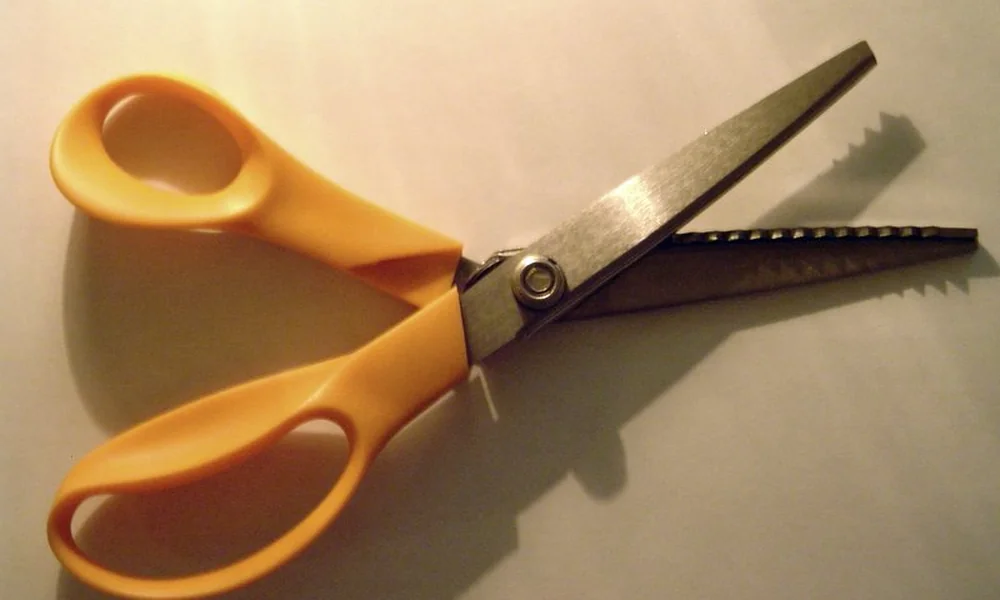
Pinking shears are scissors with zigzag teeth instead of a straight edge, and they cut a sawtooth pattern into fabric that stops the edge from fraying. If you have ever cut quilting cotton only to watch threads unravel within a day, pinking shears are the simple tool that solves the problem. They do not replace your ordinary scissors, but for raw edges hidden inside a garment or a quilt, they are the fastest finish you can buy.
Key Takeaways
- Pinking shears cut a zigzag edge that limits fraying on raw fabric edges, but they do not fully prevent it on fabrics that unravel easily.
- The zigzag is the whole point: each tooth cuts a short diagonal, so a loose thread can only unravel to the next point instead of running along the edge.
- Look for forged steel blades, evenly ground teeth, and a strong adjustable pivot: those three decide whether the cut is clean.
- An eight to nine inch pair suits most sewing, while a smaller pair suits applique and a longer pair suits long lengths.
- Never cut paper, card, or wire with pinking shears, because one wrong cut can blunt the teeth and ruin the edge for good.
What Pinking Shears Actually Are
Pinking shears look like ordinary dressmaking shears, but the cutting edges are completely different. Instead of two smooth blades that meet in a straight line, each blade carries a row of triangular teeth that fit into the teeth of the other. When the blades close, they cut a row of small zigzags. Dressmakers have used this pattern for more than a century because it is fast and needs no thread.
The zigzag works because fraying travels along the grain. On a straight-cut edge, a loose thread can slide out along the full length of the cut. On a pinked edge, every thread is cut at an angle, so the longest any thread can unravel is the width of one tooth, about five millimetres. The edge still frays a little on loosely woven fabrics, but slowly, which is enough for a hidden seam allowance.
Pinking shears are a finishing tool, not a general cutting tool. They are at their best on seam allowances and raw edges inside quilts, bags, and soft furnishings, where the edge will not be seen. They are not the right tool for cutting out pattern pieces, because the zigzag makes accurate matching harder, and they are not a substitute for overlocking on fabrics that fray badly, such as loosely woven linen or rayon.

Pinking Shears vs Fabric Scissors: Zigzag vs Straight Cut
The nearest neighbour is the fabric scissors, and the two are easy to confuse because they look alike. The difference is the edge they leave. Our guide to the best fabric scissors covers shears that leave a smooth, straight edge, which is what you want when cutting out a pattern piece, trimming a seam to an exact width, or cutting a line that will show. A straight edge is precise, easy to measure against, and easy to press flat.
Pinking shears trade that precision for fray resistance. The zigzag edge cannot be measured as exactly, and it is bulkier inside a seam, so it is the wrong choice for a visible edge. What it gives you is an edge that resists unravelling without extra stitching. Fabric scissors cut the shape, and pinking shears finish the edge. Most sewing rooms need both.
Pinking Shears Compared
The table below compares the main types of pinking shears you will find in shops in 2026.
| Type | Best For | Cut Quality | Ease of Use |
|---|---|---|---|
| Classic forged steel | General sewing and quilting | Excellent | Heavier, needs a firm grip |
| Lightweight stainless | Beginners and light fabrics | Very good | Easy, comfortable for long sessions |
| Micro-serrated | Slippery and synthetic fabrics | Very good | Good grip, slightly slower cut |
| Heavy-duty | Denim, canvas, and layers | Excellent on thick cloth | Heavy, best for short cuts |
| Small craft | Applique, crafts, and children | Good on thin fabric | Very easy, limited power |
The Main Types of Pinking Shears
Classic forged steel shears are the standard the rest are judged against: high-carbon steel blades, a fine edge, and a strong screw pivot. They cost more, but cut cleanly through four layers of quilting cotton and can be sharpened again and again.
Lightweight stainless shears are the friendlier option: stamped blades, lighter and cheaper, and rust-resistant. They cut beautifully on cotton, linen, and light wool, but struggle with thick layers and cannot always be sharpened, so they suit a beginner better than a heavy user.
Micro-serrated shears have tiny serrations along each tooth that grip the fabric as it cuts. That grip helps on slippery fabrics such as silk and satin, which slide away from smooth blades. The trade-off is speed, and the serrations are hard to sharpen once they wear.
Heavy-duty shears are built for thick cloth, with longer, thicker blades and an oversized pivot. They cut denim and canvas that would defeat a lighter pair, but they are tiring and overkill for ordinary dressmaking. Small craft shears, about six inches long, suit applique, but treat them as a second pair.
How to Choose Pinking Shears That Cut Clean
Start with the teeth. In good light, check that they are even, sharp, and the same size all the way along the blade. Uneven teeth leave a ragged pattern, and blunt teeth push the fabric instead of cutting it.
Next, check the pivot. The screw in the middle should hold the blades firmly together with no wobble, and on a good pair it can be tightened as the blades wear. Open and close the shears: the action should be smooth, and the blades should meet cleanly at the tip. If they gap at the tip, the pair will never cut cleanly.
Handles matter more than most buyers expect. Bent handles keep the lower blade flat on the table while your hand stays above it, which keeps the fabric flat while you cut. Soft-grip handles help if you have arthritis. Left-handed sewers need true left-handed shears, because the blade order is reversed and a right-handed pair will never cut cleanly in a left hand.
How to Cut Cleanly With Pinking Shears
Technique matters as much as the tool. Lay the fabric flat and keep the lower blade flat against the table, so the fabric does not lift or bunch. Cut with long, smooth strokes using the full length of the blade, rather than short snips with the tip, which leave a mark where the blades stop and start. Let the shears do the work: a steady squeeze cuts cleaner than forcing the blades through.
Cut one layer at a time when accuracy matters, and no more than two when finishing seam allowances. Each extra layer makes the zigzag less crisp, and on thick stacks the bottom layer often ends up with threads the teeth never severed. If you see threads hanging from the points, the blades are blunt or the stack was too thick. A rotary cutter is often faster for long straight cuts, and our guide to the best rotary cutters explains when a rolling blade beats shears, but for finishing a raw edge after the cutting is done, pinking shears are the quicker finish.
Care, Sharpening, and Storage
Pinking shears stay sharp longest when they cut fabric and nothing else. One cut through paper, card, or a pin will blunt the teeth, and a pinked edge is hard to restore once damaged. Keep a separate cheap pair for paper, and keep your pinking shears for fabric only.
Clean the blades after each project with a dry cloth, and oil the pivot every few months. Store the shears closed, where they cannot knock against anything hard. Sharpening is a specialist job: the teeth need a grinder that follows the zigzag, and most home sharpening gadgets will ruin them.

Common Mistakes to Avoid
The most common mistake is using pinking shears to cut out pattern pieces. The zigzag makes it hard to match notches and seam lines, and the extra bulk can make a garment sit badly. Cut the shape with straight scissors, then pink the seam allowances afterwards.
The second mistake is expecting pinking to stop all fraying. On loosely woven fabrics such as gauze and some rayons, the zigzag slows fraying but does not stop it, and the edge will still need overlocking if the garment will be washed often. Test a scrap first: pink the edge, tug it gently, and wash it once before you trust it on a whole garment. When a seam needs undoing, reach for the right tool: our guide to the best seam rippers shows how to unpick stitches without tearing the fabric you just pinked.
Checklist: Buying Pinking Shears in 2026
- Check the teeth are even, sharp, and the same size along the whole blade before you buy.
- Test the pivot: no wobble, smooth action, and a screw you can tighten as the blades wear.
- Choose bent handles so the lower blade stays flat on the table while you cut.
- Pick eight to nine inches for general sewing, longer for curtains and quilts, shorter for applique.
- Buy forged steel if you sew often, and keep a cheap pair aside for paper and household cutting.
- Ask the shop who sharpens pinking shears locally before you need it, not after the blades go blunt.
Frequently Asked Questions
Do pinking shears stop fabric from fraying completely?
No. They slow fraying a great deal by cutting each thread at an angle, so a loose thread can only unravel as far as the next tooth. On tightly woven cotton and wool they are often enough alone, but on loosely woven fabrics the edge will still fray slowly and may need overlocking as well.
Can pinking shears cut paper or card?
They can, but never do it. Paper and card blunt the teeth quickly, and a blunted pinked edge is very hard to sharpen. Keep a separate pair for paper, and reserve your pinking shears for fabric only.
What is the difference between pinking shears and scalloped shears?
Pinking shears cut a sharp zigzag, while scalloped shears cut a rounded wave. The zigzag resists fraying better, while the scallop is mainly decorative and does little to stop unravelling.
How long do pinking shears stay sharp?
A good forged pair used only on fabric will stay sharp for several years, and can then be sharpened by a specialist. A cheap stamped pair may blunt within a few months and often cannot be sharpened at all, which is why buying better usually costs less over time.
Are pinking shears suitable for left-handed sewers?
Yes, but only true left-handed pinking shears, where the blades are reversed. A right-handed pair held in the left hand pushes the fabric apart instead of cutting it, and the cut will always look ragged.
Can I use pinking shears on knits and stretch fabric?
You can, but with care. Knits fray less than wovens, so pinking is often unnecessary, and the teeth can distort a stretch edge if the fabric is pulled. Lay the knit flat, do not stretch it, and test a scrap first.
The Bottom Line
Pinking shears earn their place by doing one job well: cutting a zigzag edge that keeps raw fabric from unravelling. They are not a replacement for straight fabric scissors, and they will not stop all fraying on every fabric, but for seam allowances, quilt edges, and hidden raw edges they are the fastest finish available. Buy a forged pair with even teeth and a strong pivot, in the eight to nine inch size, keep them for fabric only, and they will cut cleanly for years.


