
Pet Doors That Let Pets Come and Go in 2026
Pet doors give dogs and cats the freedom to come and go without waiting for someone to open the door, and they give owners their time back. The best pet doors in 2026 are draught-proof, secure, and sized to the animal, and the difference between a good one and a bad one is usually the seal, the flap and the lock. Here is how to choose, fit and teach one.
Key Takeaways
- Measure your pet, not the door: the flap should clear the shoulders and the back with room to spare.
- A double flap or magnetic seal cuts draughts far better than a single loose flap.
- Microchip and magnetic doors keep out neighbourhood cats and other uninvited animals.
- Most pet doors fit a standard wooden or uPVC door in under an hour with basic tools.
- Train with treats and patience; never push a pet through a flap it is afraid of.
Why a Pet Door Changes Daily Life
A pet that can let itself out is a calmer pet. Dogs that wait too long to go outside get anxious, and cats that are shut in all day get bored and restless. A pet door solves both problems at once, and it solves the owner’s problem too: the constant doorkeeping. A well-fitted pet door is a small change to a house that makes every day run more smoothly.
A pet door is still a hole in your home, so choose and fit it carefully: a cheap flap lets in cold air and rain, an oversized door is a security worry, and a bad fit can damage an expensive door.
The Main Types of Pet Door in 2026
Classic Flap Doors
The classic flap door is a flexible panel that swings both ways in a frame, and it is still the most common type. It is cheap, simple, and easy to fit in a wooden door, a uPVC panel, or even a wall. Look for a flap with a magnetic strip along the bottom, which pulls it shut after the pet passes and stops it flapping in the wind. A single thin flap always lets in some draught, so choose a double-flap model if your door faces driving wind.
Rigid Panel Doors
Rigid doors use a hard plastic panel instead of a flexible flap, and they seal more firmly against the frame. They suit larger dogs, because a big dog can push through a stiff panel without bending it out of shape, and they last longer in heavy daily use. They cost more and can be noisier, so check the closing mechanism: a panel that slams shut will startle a nervous dog.

Electronic and Microchip Doors
Electronic doors open only for a pet wearing the right tag, or for a pet whose microchip the door recognises. They are the best answer to the classic problem of a neighbour’s cat wandering in and eating your cat’s food. Most run on batteries, lock at set times, and offer in-only, out-only or fully open modes. Check your pet’s microchip is a type the door can read before you buy. Some models also record when your pet comes and goes, which is handy for spotting changes in routine.
Sliding Door Inserts and Wall-Mounted Doors
If you cannot cut into your door, a sliding door insert fits into the track of a patio door and gives your pet a flap without any cutting at all. It suits renters and glass doors, though it narrows the opening for people. Wall-mounted doors go through an exterior wall instead, which suits homes where the back door is glass or too thin to cut. A wall tunnel needs more work to fit and insulate, but it can go exactly where the pet wants it and leaves your doors untouched.
Pet Doors Compared
| Type | Best for | Draught seal | Security |
|---|---|---|---|
| Classic flap | Small and medium pets, tight budgets | Fair | Basic lock |
| Rigid panel | Large and strong dogs | Good | Good lock |
| Electronic or microchip | Keeping out other animals | Good | Best |
| Sliding door insert | Renters, glass patio doors | Fair | Fair |
| Wall-mounted | Glass doors, custom placement | Good | Good |
Sizing: The Step Most People Get Wrong
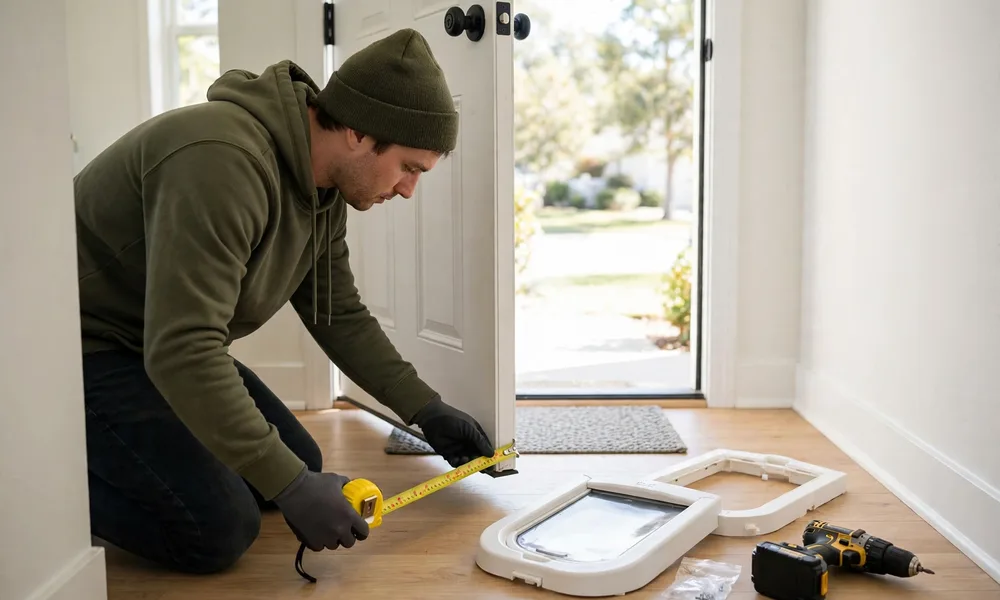
A pet door that is too small is worse than no door at all, because the pet will refuse to use it or will squeeze through and hurt itself. Measure your pet standing normally: the width across the shoulders, and the height from the floor to the top of the back. Then add at least five centimetres to both measurements. The flap should be wide enough for the shoulders to pass without touching the sides, and tall enough that the pet does not have to crouch. Measure twice and check the template twice as well, because a hole cut too big cannot be made smaller, while a flap that is slightly generous still seals well. For a growing puppy or kitten, buy the adult size and use a training insert while it is small.
Set the bottom of the flap low, about five to eight centimetres above the floor for a dog and lower for a cat, so the pet steps through rather than jumping. For an elderly or stiff pet, choose a light flap and avoid heavy rigid panels.
Fitting a Pet Door
Most flap doors fit a standard wooden door in under an hour. Mark the opening using the template that comes in the box, check that the spot is clear of panels, locks and hinges, and cut carefully with a jigsaw. Fit the frame on both sides and test the flap before you tidy up. Cutting a uPVC or composite door can void the warranty, so check first. Glass doors need a glazier, and metal doors need the right blade.
Seal the edges with silicone or a draught strip, which stops wind and rain getting in and the frame working loose. If your door already lets in cold air, fix that too, and the guide to door draft stoppers that keep the cold out covers the cheap fixes that make a real difference.

Draughts, Weather and Insulation
The biggest complaint about pet doors is draughts, and it is a fair one. A flap is a gap in an insulated door, and cold air will find it. The fix is a door designed to seal: a magnetic flap that snaps shut, a double flap with an air pocket between the layers, or a rigid panel with a proper rubber seal. In exposed spots, a brush strip around the frame helps, and the locking cover panel slid on at night stops the worst of the winter wind.
Rain is the other worry: fit the door on the sheltered side of the house when you can, and check the seal after heavy weather.
Security: Keeping the Wrong Animals Out
A pet door big enough for a large dog is big enough for a person to reach through, so security matters. Choose a door with a solid locking panel for nights and holidays, and never fit a large door where it gives access to your keys or alarm panel. Electronic doors stay locked until your pet’s chip or tag opens them.
For cats, the worry is other cats: a microchip flap reads your cat’s chip and ignores the rest. With a basic flap, keep food away from the door so there is nothing to attract visitors.
Teaching Your Pet to Use the Door
Start by taping the flap open so the pet can see through, with a treat on the other side. Lower the flap halfway, then fully, and keep the treats coming. Short sessions work best: five minutes of practice twice a day beats one long session that ends in frustration for both of you. Never push a pet through; one fright can put it off for weeks. Cats often need longer than dogs.
If a pet refuses, check the door: a flap that is too stiff, too noisy or too high will stop even a confident pet. Tape it open for a few days until confidence returns.
Choosing by Pet
Dogs
Dogs use a door many times a day and push hard, so a rigid panel or heavy-duty flap with a strong frame will last where a light cat flap bends and breaks. A dog that spends time in a crate may also benefit from a settled routine, and the guide to the best dog crates in 2026 covers how a crate and a pet door work together as part of a calm daily pattern.
Cats
Cats are lighter and more cautious, so a light flap with a soft magnetic catch suits them best, and a microchip flap is the best upgrade for stopping other cats coming in. A flap that bangs in the wind will put a cat off for days. Keep a few toys near the door so the cat associates it with good things, and the guide to the best cat toys in 2026 has ideas that work well for newly outdoor cats.
Small Pets and Multi-Pet Homes
Rabbits and ferrets can use a pet door too, but only with a very light flap and a secure garden. In a home with both a dog and a cat, a microchip door that recognises both is the simplest answer. Watch the first few days: a dog charging through a light cat flap can damage it.
Checklist: Before You Buy
- Measure your pet’s shoulder width and back height, then add five centimetres to each.
- Pick the type that fits your door: flap, rigid panel, electronic, insert or wall-mounted.
- Check the seal: a magnetic strip, double flap or rubber gasket keeps draughts out.
- Confirm the lock: a solid panel for nights and holidays, or a microchip lock for daily security.
- Check your door: cutting a uPVC, glass or metal door has rules and may need a professional.
- Plan the training: treats ready, flap taped open at first, and no pushing ever.
Frequently Asked Questions
Will a pet door make my house cold?
A cheap single flap lets in cold air, but a magnetic, double-flap or rigid-panel door seals well. Fit it on the sheltered side, seal the frame, and use the locking panel at night.
Can other animals get in through a pet door?
Yes, through a basic flap. A microchip door only opens for your pet, and keeping food away from the door helps.
Can I fit a pet door in a rented home?
Usually, with permission. A sliding door insert needs no cutting, and a flap in a replaceable panel can be swapped back when you move out. Always ask first.
How long does it take a pet to learn to use one?
Most dogs learn in a day or two, most cats in a few days. Tape the flap open at first, use treats, and never force the pet through.
Is a pet door safe for a large dog?
Yes, if it is sized correctly with a strong frame and lock. Use the locking panel at night and keep keys out of reach of the opening.
Can I fit a pet door in glass?
Yes, but you need a glazier: toughened glass often needs a replacement pane with the hole cut before toughening. Do not cut glass yourself.
The Bottom Line
The best pet door in 2026 fits your pet, your door and your home: a sturdy flap or rigid panel for dogs, a quiet microchip flap for cats, and a proper seal and lock whatever the type. Measure carefully, fit it well, and teach your pet with treats and patience.


