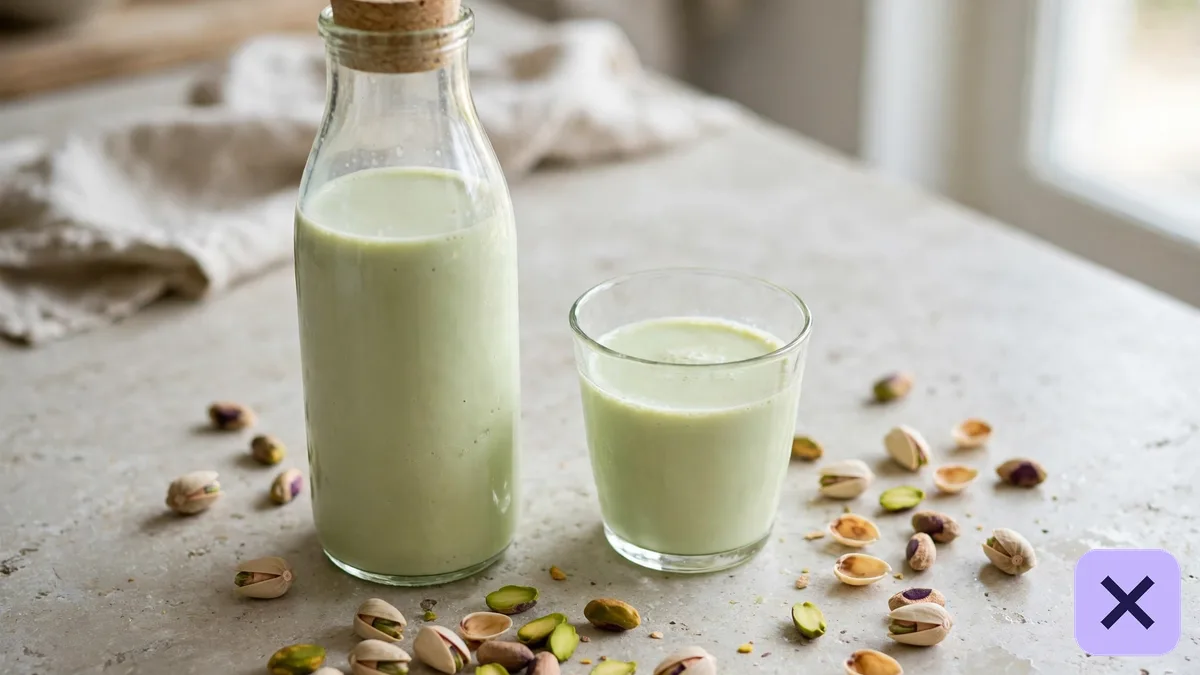
The best pistachio milk in 2026 is the most talked-about plant milk of the year, and the attention is not just a passing trend. It arrives in the glass a pale, creamy green, tastes softly nutty with a hint of something almost floral, and turns an ordinary iced coffee into a cafe-style drink. It has ridden the wave of pistachio everything, from pistachio cream to viral Dubai chocolate bars, and unlike many food trends, it tastes as good as it looks.
Pistachio milk is made by soaking and blending pistachio nuts with water, then straining the mixture into a smooth drink. The best versions taste like the nut itself: rich, slightly sweet, earthy and a little buttery, with a colour that comes naturally from the green kernels. It is dairy-free, soy-free and lower in calories than dairy milk, and it brings a distinctive flavour no other plant milk can copy.
Key Takeaways
- Pistachio milk has a distinctive soft green colour and a rich, nutty, faintly sweet flavour unlike any other plant milk.
- It is at its best in iced coffee, where its flavour stays bright and it mixes cleanly.
- Unsweetened pistachio milk has around 50 to 70 calories per cup, with healthy fats and very little sugar.
- It is a natural fit for desserts, Middle Eastern sweets and baking.
- It is low in protein like other nut milks, so pair it with protein-rich foods.
What Pistachio Milk Actually Is
Pistachio milk starts with the pistachio, a small green nut grown mainly in the United States, Iran and Turkey, and treasured in Middle Eastern and Mediterranean cooking for centuries. Producers soak shelled pistachios, blend them with filtered water, and strain out the solids, leaving a pale green, creamy liquid, with a little salt, calcium, vitamins and stabilisers to keep it smooth.
The colour is the first thing people notice, and it is real: the green comes from the kernels themselves, ranging from a very pale sage to a soft, definite green in richer milks. Brands that use more nuts produce a deeper colour and a stronger flavour, while cheaper versions can look almost white and taste faintly of little at all.
The market is still young. The best-known name in 2026 is Tache, an American brand built entirely around pistachio milk, selling unsweetened, original and barista-style versions in cafes across the United States. Elsewhere, supermarket own-label versions have started to appear.
A Flavour With a Long History
Pistachios have been eaten in the Middle East for thousands of years, and the flavour will be familiar to anyone who has tasted pistachio baklava, pistachio ice cream or Turkish delight. That heritage is part of its appeal: it tastes like a real food with a real history. The nutty, slightly sweet, almost floral quality comes through clearly in the milk, and it pairs naturally with rose water, cardamom, honey and dark chocolate.
What Does Pistachio Milk Taste Like?
Pour a glass of unsweetened pistachio milk and the flavour is gentle but unmistakable: rounder, richer and a little earthier than almond milk, with a soft sweetness that needs no added sugar and a faint buttery quality with a greener, fresher edge. Drink it cold and it tastes clean and creamy.
In coffee, pistachio milk behaves differently from most nut milks because its flavour is strong enough to survive. Where almond milk often disappears into a dark roast, pistachio milk adds a distinct nutty note that complements the coffee. In a latte it tastes like a pistachio-flavoured drink in its own right, which is why cafes charge a premium for it. Sweetened versions taste like melted pistachio ice cream, so save them for milkshakes and baking.
Pistachio Milk Nutrition: What Is Inside the Carton
A typical unsweetened pistachio milk has 50 to 70 calories per cup, with 3 to 4 grams of fat, 1 to 2 grams of carbohydrate and under 1 gram of protein: in the same light, low-calorie group as almond and macadamia milk, and well below oat milk and dairy milk. Most of the fat is monounsaturated, the heart-friendly kind found in olive oil, and pistachios also bring small amounts of potassium, vitamin B6 and antioxidants.
The weakness, as with every nut milk, is protein: pistachio milk contains almost none, so it cannot replace dairy or soy milk as a protein source, and breakfast itself must carry the protein. Calcium depends on fortification, so choose a carton that provides at least 25 percent of your daily calcium per cup. One advantage is sugar: unsweetened pistachio milk contains almost no natural sugar, unlike oat milk, which carries 12 to 16 grams of carbohydrate per cup from the oats themselves.
| Nutrient (per cup, unsweetened) | Pistachio milk | Macadamia milk | Almond milk | Oat milk | Soy milk | Dairy milk |
|---|---|---|---|---|---|---|
| Calories | 50–70 | 40–50 | 30–40 | 90–120 | 80–90 | 150 |
| Fat | 3–4 g | 3–4 g | 2.5 g | 5 g | 4 g | 8 g |
| Protein | Under 1 g | Under 1 g | 1 g | 2–3 g | 7–8 g | 8 g |
| Carbohydrates | 1–2 g | Under 1 g | 1 g | 16–19 g | 4 g | 12 g |
| Calcium (fortified) | 25–30% daily | 25–30% daily | 25–30% daily | 25–35% daily | 30% daily | 30% daily |
| Flavour | Rich, nutty, green | Buttery, mild | Light, mild | Neutral, sweet | Beany, mild | Rich, creamy |
| Best for | Iced coffee, desserts | Hot coffee | Low calories | Everyday use | Protein, foam | Protein, cooking |
Pistachio Milk in Coffee: Iced First, Hot Second
Ask a cafe owner which drink sells pistachio milk and the answer is almost always the iced latte. Cold is where this milk is at its best: it pours into iced coffee in a slow green swirl, mixes cleanly without curdling or separating, and keeps its nutty flavour bright. It needs less added sweetness than an oat milk iced latte, because the pistachio flavour does some of the work itself.
Hot coffee is good but slightly less reliable. Pistachio milk steams into a soft, fine foam that works well in a flat white, but not the tall, stiff foam of soy milk, since it has almost no protein to build the bubbles. Among plant-based milks for coffee, it can also split in very hot, acidic dark roasts if you use a regular carton rather than a barista edition, so use the barista version, warm the milk gently, and pour the espresso into the milk.

Desserts and Middle Eastern Cooking
This is where pistachio milk leaves every other plant milk behind. Its flavour and colour make it a natural ingredient for desserts: pistachio ice cream, panna cotta, rice pudding, milk cakes and creamy puddings all benefit, and it turns an ordinary sponge cake into something that tastes like a patisserie special. Use it in place of dairy milk wherever a nutty flavour is welcome, and reduce the added sugar slightly.
It is also a gift for Middle Eastern cooking: a pistachio milk rice pudding with cardamom and rose water tastes like a dessert from a Beirut bakery, and a pistachio milkshake with honey and a pinch of salt is a simple, impressive end to a meal. For everyday baking it keeps muffins, pancakes and banana bread moist and adds a subtle nutty note.

The Best Pistachio Milk Brands in 2026
Tache is the brand that defines the category in 2026. Founded specifically to make pistachio milk, it sells an unsweetened version, a lightly sweetened original, and a barista edition designed for coffee, all with a noticeably higher pistachio content than most rivals. The barista edition is the one to buy for hot coffee, and the unsweetened is the best all-rounder, widely stocked in the United States and increasingly available online elsewhere.
Outside the United States, the choice is thinner but growing. Supermarket own-label pistachio milks have appeared in larger stores, usually cheaper than Tache, though often thinner and paler, with a lower nut content. Compare the ingredients list: the best cartons list pistachios at 5 percent or more, while budget versions can drop to 2 percent. Small producers with short ingredient lists separate faster and go off sooner, usually within four to five days.
What to Look For on the Label
Four things matter most: pistachio content, aiming for 5 percent or more; added sugar, since unsweetened should mean none at all; fortification with calcium and vitamin D; and colour, where a pale but definite green is a good sign and a white-looking carton has probably been stretched thin.
Price and Value: Is Pistachio Milk Worth It?
Pistachio milk is one of the most expensive plant milks, and the price reflects the cost of the nuts themselves: expect to pay roughly double the price of oat milk per litre, and more than macadamia milk in most shops. For a household that drinks a lot of milk, that is a serious premium, and the main reason pistachio milk works best as a second carton rather than the only one in the fridge.
The value case is strongest where the flavour actually shows. In an iced latte or a dessert, pistachio milk transforms the drink or dish in a way oat milk cannot, and the cost per serving is small because you use only a splash. In cereal or a smoothie, where the flavour gets buried, the premium is harder to justify. Buy the smallest carton you will finish within a week, since once opened it keeps for only five to seven days.
Who Should Buy Pistachio Milk, and Who Should Skip It
Pistachio milk is an excellent choice if you love iced coffee, if you bake or make desserts, if you enjoy Middle Eastern flavours, or if you are simply bored of the same plant milks and want something with a real personality. It is also a good option for people allergic to soy, people who find oat milk too starchy, and anyone on a low-sugar diet.
Skip it if you need protein from your milk, if you are feeding children who rely on milk for nutrition, or if your budget is tight and you drink a lot of milk. People with tree nut allergies must avoid it entirely, since cross-reactivity with other tree nuts is common.

How to Choose a Pistachio Milk: Checklist
- Choose unsweetened for coffee and everyday drinking, and save sweetened cartons for desserts.
- Check the pistachio content, and aim for 5 percent or more.
- Pick a fortified carton with calcium and vitamin D.
- Buy a barista edition for hot coffee, since it steams and resists splitting better.
- Check the colour: a pale but definite green means a good nut content.
- Buy the smallest carton you will finish within a week.
Frequently Asked Questions
Is pistachio milk healthy?
Unsweetened pistachio milk is low in calories and sugar, low in saturated fat and rich in monounsaturated fat. Its main weakness is very low protein, so pair it with protein-rich foods.
What does pistachio milk taste like?
It tastes rich, nutty, faintly sweet and a little earthy, with a soft green, almost floral quality. The flavour is stronger and more distinctive than almond milk, and it comes through clearly in coffee.
Is pistachio milk good in coffee?
It is excellent in iced coffee, where it mixes cleanly and keeps its flavour bright, and good in hot coffee with a barista edition. It steams into a soft, fine foam, though not the tall, stiff foam that soy milk produces.
Why is pistachio milk green?
The green colour comes naturally from the pistachio kernels: richer milks look greener, cheaper thinner ones paler.
Is pistachio milk better than oat milk?
For flavour, iced coffee and desserts, yes. Oat milk is cheaper, more versatile for everyday cooking, and better in tea, so it still wins as an all-round daily milk.
How long does pistachio milk last once opened?
Keep it in the fridge once opened and use it within five to seven days. Shake before each use, since natural separation is normal, and discard it if it smells sour or tastes off.
The Bottom Line
The best pistachio milk in 2026 is the plant milk with the most personality on the shelf: soft green colour, rich nutty flavour, and a natural fit with iced coffee and desserts, turning an ordinary latte into something worth paying cafe prices for. It is expensive, and it will not cover your protein needs, but as a second carton it genuinely tastes like a treat rather than a compromise. Start with an unsweetened carton and try it in an iced latte first.

