
How to Choose a Ciabatta That Holds Up in 2026
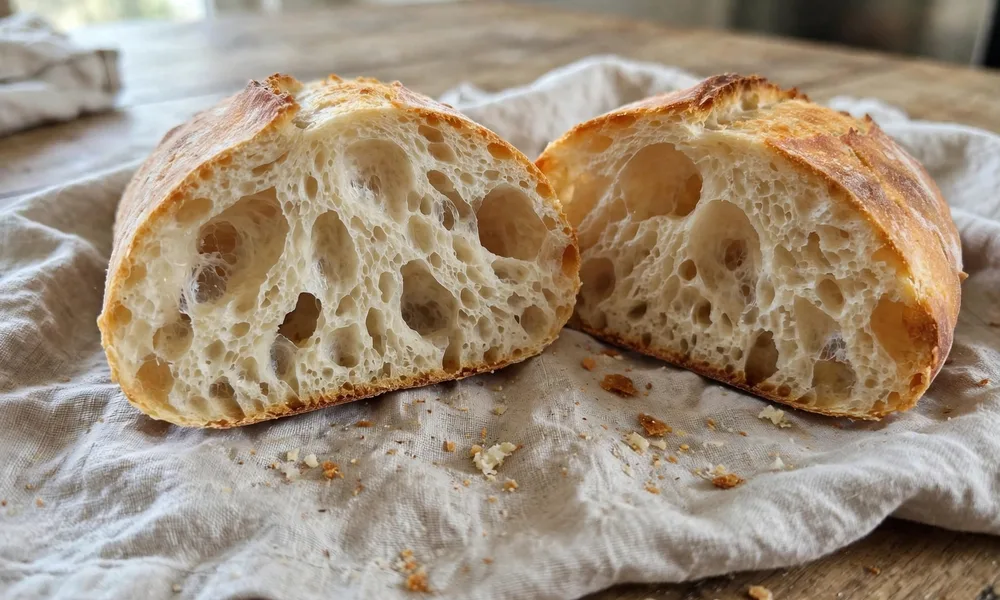
A good ciabatta is easy to recognise and surprisingly hard to buy. It should have a crust that crackles when pressed, a crumb full of big, uneven holes, and enough structure to hold a wet filling without collapsing. Too many loaves sold as ciabatta are really soft white rolls in a flat shape: pale, tight-crumbed, and stale by evening. This guide shows you how to tell the real thing from the imitation, what to look for at the bakery counter, and which ciabatta suits sandwiches, soup, and tearing apart.
Ciabatta is a lean Italian bread made from flour, water, salt, and yeast, with a very wet dough and a long, slow ferment. That wet dough creates the open, airy crumb and chewy texture that make ciabatta so good for sandwiches. Our comparison of the best and worst breads of 2026 puts ciabatta among the lean, crusty breads meant to be eaten the same day, so buy it fresh, judge it by crust and crumb, and eat it soon.
Key takeaways
- The crust should crackle and feel crisp and dry, never soft, pale, or leathery.
- The crumb should have big, uneven holes and a glossy, slightly chewy texture, not a tight, even sponge.
- A real ciabatta feels light for its size and springs back when you press it gently.
- Buy the loaf you will finish today; ciabatta stales faster than almost any other bread.
- Match the ciabatta to the job: a sturdy loaf for wet sandwiches, a lighter one for tearing and dipping.
How the best ciabatta was judged
Every ciabatta in this guide was judged the way you would actually eat it. First, the crust: does it crackle when pressed and stay crisp for a few hours, or turn chewy before you get home? Second, the crumb: are the holes big and uneven, or is the inside tight and dry like a sandwich loaf? Third, the flavour: does it taste of wheat and a gentle tang from the slow ferment, or of nothing at all? Fourth, the structure: does it hold a wet filling without falling apart and slice cleanly without squashing flat? Fifth, freshness: how long does it stay pleasant, and does it toast well the next day?
Two things matter most. The first is the ferment. A ciabatta given a long, slow rise tastes deeper and keeps better than one rushed through in an hour. The second is the bake: a hot oven with steam gives the crust its crackle and colour, while a cool oven gives a pale loaf with a soft skin.
Comparison table: the best ciabatta in 2026
| Rank | Ciabatta type | Best for | Watch out for |
|---|---|---|---|
| 1 | Classic white ciabatta | Sandwiches, soup, tearing at the table | Stales within a day; buy fresh |
| 2 | Wholemeal ciabatta | Hearty fillings, cheese, dipping | Can be dense if the dough is under-hydrated |
| 3 | Ciabatta rolls | Single sandwiches, lunchboxes | Small rolls dry out fastest |
| 4 | Olive ciabatta | Antipasti, cheese boards, snacking | Olives can make the crumb soggy |
| 5 | Seeded ciabatta | Toast, breakfast, nutty flavour | Seeds burn easily if over-baked |
The best ciabatta in 2026
1. Classic white ciabatta: the best all-rounder
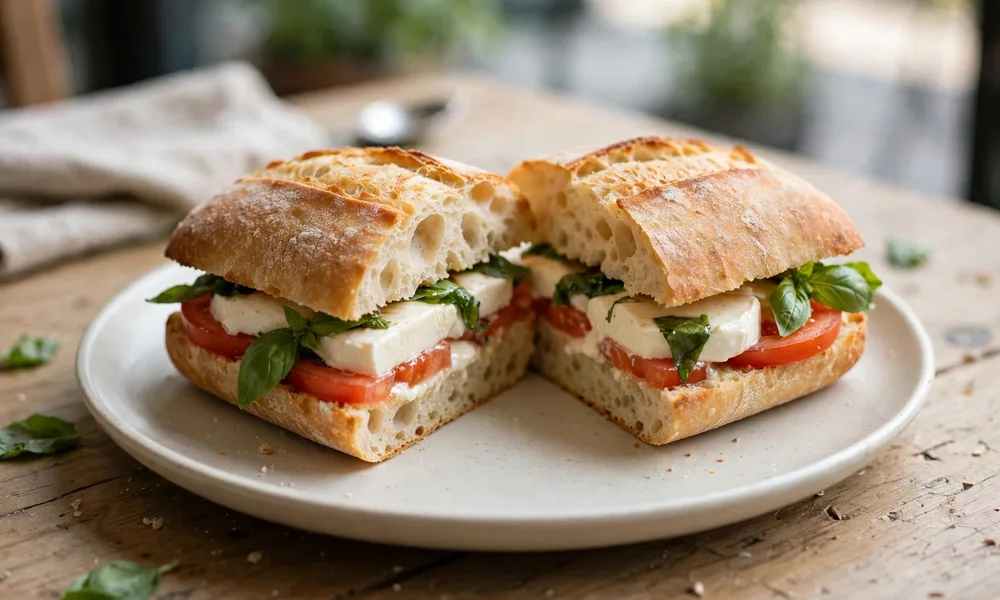
The classic white ciabatta is the loaf to buy if you buy only one. It is flat and wide, with a flour-dusted, golden crust that crackles under your fingers and a crumb full of holes big enough to see through. The flavour is mild and wheaty, with a hint of tang from the long ferment, a quiet partner for strong fillings rather than a rival. It is the best ciabatta for sandwiches: the open crumb soaks up a little dressing without falling apart, and the crust holds a wet tomato or a soft cheese without going limp.
Judge a classic ciabatta by its weight: a good one feels light for its size, because so much of it is air. Press the crust gently and listen for the crackle. Tear a piece from the end; the holes should be uneven, some as big as a thumbnail, with shiny, stretchy walls between them. If the crumb looks even and fine, like sponge cake, it is not a real ciabatta, however flat the loaf looks.
2. Wholemeal ciabatta: the best for hearty fillings
Wholemeal ciabatta uses the same wet dough made with wholemeal flour, giving a denser, nuttier loaf with more fibre and deeper flavour. It is the best choice when the filling is rich: a strong cheese, a salty cured meat, or a roasted vegetable sandwich that would overwhelm a mild white loaf. The holes are smaller and the texture chewier, so it holds up even better under wet fillings and keeps a little longer.
The risk with wholemeal ciabatta is a heavy hand in the bakery. Wholemeal flour drinks more water than white flour, and if the baker does not add enough, the loaf comes out dense and dry. A good one should still feel light and springy, with a crackling crust; if it feels solid and heavy, leave it. It also makes the best toast of the lot, because the nutty flavour deepens as it browns, and it pairs well with olive oil and tomato.
3. Ciabatta rolls: the best for single sandwiches
Ciabatta rolls are the same bread in a single-serving size, the most practical ciabatta for lunch. A roll is the right amount for one sandwich, fits in a lunchbox, and needs no slicing. The best rolls have the same crackling crust and open crumb as the full loaf, just smaller, and are at their best filled simply: mozzarella and tomato, ham and cheese, or a fried egg. They are also the best ciabatta for children, who can hold one without the filling falling out.
The weakness of rolls is that they dry out faster than a whole loaf, because so much of their surface is crust. Buy them the morning you need them, in a paper bag rather than plastic, which softens the crust. If a roll feels light and sounds hollow when you tap it, it is fresh; heavy and dull means it was baked yesterday.
4. Olive ciabatta: the best for snacking
Olive ciabatta folds black or green olives into the dough, and the result is a loaf that needs nothing else. The olives add salt, a fruity sharpness, and little pockets of moisture, so a torn piece eaten on its own is already a complete snack. It is the best ciabatta for a cheese board or an antipasti plate, and keeps its flavour as it cools, so it is the most forgiving to serve hours after baking.
Check the distribution of the olives: a good olive ciabatta has olives in every slice, not a clump in the middle and bare bread at the ends. The crumb should still be open; if the olives have made the dough soggy, the holes collapse and the loaf turns heavy. It is also the best of the five for tearing and dipping, because the flavour stands up to a punchy olive oil or a spicy soup.
5. Seeded ciabatta: the best for toast
Seeded ciabatta rolls the loaf in sunflower, pumpkin, or sesame seeds, giving a crunchy, nutty crust plain ciabatta cannot match. It is the best ciabatta for breakfast, toasted with butter and jam or topped with a soft egg, because the seeds toast a second time and turn even nuttier. The crumb is a little tighter than a classic ciabatta, a fair trade for a loaf that toasts so well.
Watch the bake on a seeded loaf. Seeds burn faster than the bread itself, so an over-baked seeded ciabatta tastes bitter and looks dark before the inside is done. The seeds should be golden, not black, and the crust should still crackle.
What to avoid when buying ciabatta
The most common ciabatta mistake is buying a loaf baked yesterday and sold as fresh. A day-old ciabatta has lost its crust and crumb in a single night, and no warming brings back the crackle. Check the bake time, squeeze the loaf gently to feel whether the crust still resists, and walk away from any ciabatta that feels soft and gives no crackle. A pale, floury loaf with a tight crumb is the second trap: a sandwich loaf in a flat shape that goes soggy the moment you add a wet filling.
Plastic bags are the enemy of ciabatta. A loaf sealed in plastic sweats, the crust goes leathery, and the bread stales faster than in the open air. Carry it home in paper and keep it cut-side down on a board. Do not refrigerate it; the fridge dries bread out faster than the counter. If you cannot finish a loaf the same day, slice and freeze it, and toast it straight from frozen. Enriched breads play by different rules: our guide to choosing a brioche worth the butter shows how butter and eggs change how a loaf keeps, and ciabatta, with no fat at all, needs eating sooner than any of them.
Checklist: choosing a ciabatta
- Press the crust and listen for a crackle; a silent, soft crust means a stale loaf.
- Tear a piece from the end and check for big, uneven holes.
- Pick the loaf up: a good ciabatta feels light for its size because so much of it is air.
- Ask when it was baked, and buy only what you will finish today.
- Carry it home in paper, never plastic, and store it cut-side down on a board.
- Match the type to the job: classic for sandwiches, wholemeal for rich fillings, rolls for lunch, olive for snacking, seeded for toast.

Frequently asked questions
How long does ciabatta stay fresh?
A good ciabatta is at its best for about eight hours after baking. The crust softens after that, and by the next morning the loaf is firm and best toasted. It stales fast because it has no fat and a very open crumb, so buy only what you will eat today.
Why is my ciabatta dense instead of full of holes?
Dense ciabatta usually comes from a dough that was too dry or under-fermented. Real ciabatta dough is very wet and needs a long, slow rise for the gas bubbles to grow into big, uneven holes. A tight, even crumb is the sign of a loaf made too fast, or with too little water.
Can you freeze ciabatta?
Yes, and it freezes better than most breads. Slice the loaf first, wrap the slices well, and freeze them the same day they were baked. Toast the slices straight from frozen; they come back crisp outside and soft inside.
Is ciabatta good for sandwiches?
It is one of the best breads for sandwiches. The open crumb soaks up a little dressing without falling apart, the crust holds wet fillings, and the mild flavour lets the filling shine.
What is the difference between ciabatta and a baguette?
Both are lean, crusty breads, but ciabatta is flatter and wider with a softer, chewier crumb and bigger holes, while a baguette is long and thin with a harder crust and a finer crumb. Ciabatta is better for sandwiches because it is wider and sturdier; a baguette is better eaten on its own the same day. Our guide to challah covers the other end of the shelf, a soft enriched loaf that keeps for days where ciabatta lasts hours.
Should ciabatta be stored in the fridge?
No. The fridge dries bread out faster than room temperature, and ciabatta suffers more than most because of its open crumb. Keep it on the board, cut-side down, for the day, and freeze anything you will not eat.
Bottom line
The best ciabatta in 2026 is the freshest you can buy: light and flour-dusted, with a crackling crust, big uneven holes, and a gentle wheaty tang from a slow ferment. Buy it the day you need it, carry it home in paper, and eat it the same day.

