
The Focaccias Worth the Olive Oil in 2026
The focaccias worth the olive oil in 2026 are not the flat, pale slabs that sit in supermarket chillers, but the golden, dimpled trays that smell of rosemary before you even open the bag. A good focaccia is a simple thing done well: soft, airy dough pressed into a tray, dimpled with fingertips, drowned in good olive oil, and baked until the top is crisp and the bottom golden. The oil is not a garnish but the point of the bread, pooling in the dimples and frying the crust from below. This guide explains how to judge a focaccia before you pay for it, which types are worth your money, and how to keep a good tray at its best once you bring it home.
Key takeaways
- The dimples matter most: deep, even fingertip holes hold the oil, while a flat top means the oil runs off and the crust stays pale.
- Oil is the flavour: a focaccia should taste of good olive oil, so one that tastes of nothing was made with cheap fat or too little of it.
- Press the edge: it should be crisp and golden underneath, not soft, pale or greasy, which means it was underbaked.
- Buy the tray you will finish in two days, since focaccia stales faster than any other bread once it is cut.
- Bakery focaccia costs more, but a small real one eaten warm beats a large pale one left half uneaten.
How the best focaccia was chosen
Every focaccia below was judged on five measures. The crumb comes first: soft, airy and open, with large uneven holes, never dense, doughy or dry. The crust is second, judged on a crisp golden top and a fried, golden base, because a focaccia that is soft underneath was underbaked. Oil is third, because the flavour of the bread is the flavour of the oil, and a focaccia made with poor oil tastes of nothing at all. Freshness is fourth, since focaccia is at its best warm from the oven and fades fast once it is cut. Value is fifth: the price against how much of the tray actually gets eaten.
Two notes before the list. First, focaccia is a flatbread, not a pizza: the dough is similar, but the job is different, and our guide to pizza dough that crisps like a pizzeria explains where the two part ways, focaccia baked thick and soft in a tray, pizza rolled thin and baked hard. Second, focaccia lives or dies by its oil, and our guide to the best olive oils for cooking explains why a bold extra virgin oil on top is exactly what makes a focaccia taste like focaccia, while a mild oil belongs in the dough itself.
Comparison table: the best focaccia in 2026
| Rank | Focaccia type | Best for | Watch out for |
|---|---|---|---|
| 1 | Bakery rosemary focaccia | Everyday eating, sharing, dipping | Price, sells out early |
| 2 | Tomato focaccia | Lunch, picnics, antipasti | Tomatoes can make it soggy |
| 3 | Sea salt focaccia | Soup, sandwiches, plain eating | Too salty if over-seasoned |
| 4 | Olive focaccia | Cheese boards, wine nights | Olives can overpower the crumb |
| 5 | Wholemeal focaccia | Heartier slices, toast | Can be dense if under-risen |
| 6 | Focaccia rolls | Portions, lunchboxes, freezing | Small rolls dry out fastest |
| 7 | Supermarket focaccia | Budget, easy to find | Often pale, dry and under-oiled |
The best focaccia in 2026
1. Bakery rosemary focaccia: the best everyday focaccia
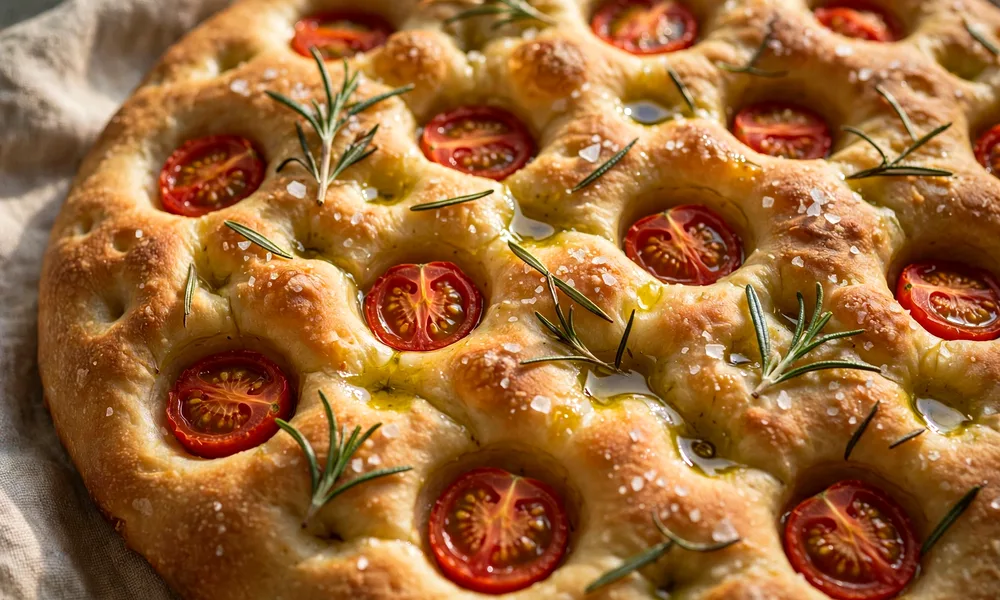
A rosemary focaccia from a real bakery is the benchmark, and the tray against which every other focaccia should be judged. It is baked that morning in a well-oiled tray, with deep dimples holding pools of golden oil, fresh rosemary pressed into the top, and a crust crisp on the edges and golden underneath. The crumb is soft and open, full of holes that soak up the oil without turning soggy. The weakness is time: with no preservatives, a focaccia starts to firm up within a day. Buy the size you will finish in two days, keep it wrapped in a cloth, and reheat the last pieces in a hot oven.
2. Tomato focaccia: the best for lunch
Tomato focaccia presses halved cherry tomatoes into the dimples, where they roast in the oil and turn sweet and jammy. It is the best focaccia for lunch, where a slice on its own is already a meal, and for picnics, where it travels better than a sandwich. The risk is sogginess: tomatoes release juice as they bake, and too many, or ones never salted and drained, turn the middle soft. The best ones use few tomatoes, pressed firmly into deep dimples, so the juice stays in the holes and the crumb around them stays light.
3. Sea salt focaccia: the best plain focaccia
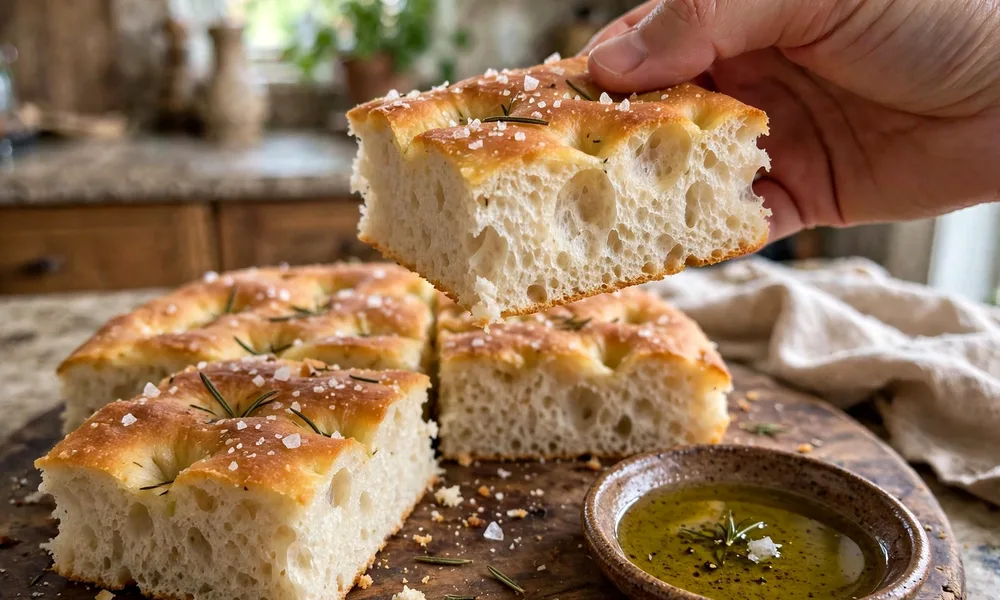
Sea salt focaccia is the plainest focaccia there is, and the hardest to get right, because there is nothing to hide behind. The dough, the oil and the salt are the whole bread, and each one has to be good. The best plain focaccias use flaky sea salt scattered over the top before baking, so the crystals sit in the dimples and crunch against the soft crumb, with oil bold enough to taste. It is the best focaccia for soup, where a thick slice survives dunking, and for sandwiches, where the salty, oily crumb needs nothing more than cheese or cured meat. Avoid trays where fine table salt was sprinkled after baking: it tastes harsh and falls off at the first bite.
4. Olive focaccia: the best for cheese boards
Olive focaccia folds pitted olives into the dough and presses more into the dimples, giving a salty, briny note that suits cheese boards and wine nights. The best ones use whole olives rather than chopped, so each bite carries a burst of flavour, pressed firmly in so they stay put instead of falling off at the first slice. The risk is balance: too many olives make the bread taste only of brine, while too few leave long stretches of plain dough. A good olive focaccia tastes of bread first and olives second, with the oil tying the two together.
5. Wholemeal focaccia: the best heartier focaccia
Wholemeal focaccia swaps some white flour for wholemeal, giving a darker crumb and a nuttier, deeper flavour. It is the best focaccia for toast, where the heartier crumb holds up to butter and toppings without going soggy, and for sandwiches that need a sturdier slice. The risk is density: a wholemeal focaccia that was under-risen or made with too much wholemeal flour can be heavy and close-textured, which defeats the point of a light, airy flatbread. Press it before you buy: it should spring back, feel light for its size, and still show open holes.
6. Focaccia rolls: the best for portions
Small focaccia rolls solve the problem of a tray that is too big for one person. They bake faster, so the crust is a larger share of each roll, and they freeze well, making them the best choice for a single household. The best rolls have the same open crumb as a full tray, just smaller, with deep dimples and a good gloss of oil on top. Avoid rolls that feel heavy for their size, which usually means under-proved dough, and rolls with a pale, dry top, which usually means they were baked without enough oil.

7. Supermarket focaccia: the best budget option
Supermarket focaccia is the easiest focaccia to find and the cheapest, and it is worth knowing what you are actually buying. The honest ones are baked in store from real dough with a proper dimpling and a generous pour of oil, and they can be surprisingly good: a crisp edge, a soft crumb and a price half that of a bakery tray. The rest are pale, flat and dry, made with cheap oil or none at all: shallow dimples, a pale top, and no smell of rosemary or oil when you open the bag. Buy the supermarket tray only after looking closely, and judge it by the same tests: deep dimples, golden base, and oil you can taste.
What to avoid when buying focaccia
The most common focaccia regret is not a bad tray but a dry one: a flatbread that looks golden on top, tastes of nothing, and goes stale by the next morning. Avoid the trap by checking three things before you pay: the dimples, deep and even, holding visible pools of oil; the base, judged by lifting a corner for a golden, crisp underside rather than a pale, soft one; and the smell, because a good focaccia smells of rosemary and warm oil before you taste it. A tray that is heavy for its size, pale underneath, or dry to the touch was underbaked or under-oiled. The same checks work for every tray, and knowing whether sea salt is better than table salt helps too, since flaky sea salt gives a plain focaccia its crunch.
Checklist: buying focaccia worth the olive oil
- Look for deep, even dimples holding visible pools of oil; a flat top means the oil ran off.
- Lift a corner and check the base: golden and crisp underneath, not pale, soft or greasy.
- Smell the tray before you buy: rosemary and warm olive oil should reach you first.
- Ask when the tray was baked and buy the morning bake, not yesterday’s tray at full price.
- Choose the size you will finish in two days, since focaccia stales faster than any other bread.
- Reheat leftovers in a hot oven for five minutes, never in a microwave, which turns the crust soft.
Frequently asked questions
How can I tell a good focaccia from a bad one?
Look at the dimples, the base and the oil. Deep dimples holding pools of oil, a golden crisp underside, and a smell of rosemary and warm oil mean a good tray. A flat top, a pale soft base and no smell mean it was underbaked or under-oiled.
Why is focaccia so oily?
The oil is the point of the bread, not a garnish. It pools in the dimples, fries the crust from below, and carries the flavour of the whole tray. A focaccia made with too little oil, or cheap flavourless oil, tastes of nothing, which is why oil quality matters more here than in any other bread.
How long does focaccia stay fresh?
Focaccia is at its best warm from the oven, still good the next day, and best reheated by day two. Keep it wrapped in a cloth or paper bag at room temperature. The fridge makes it go stale fastest, so never store focaccia there.
What is the best way to reheat focaccia?
Five minutes in a hot oven, around 200 degrees, brings the crispness back to top and base. A microwave turns the crust soft and chewy, so avoid it. A splash of olive oil brushed over the top first helps even more.
Is focaccia the same as pizza dough?
No, though the doughs start in a similar place. Focaccia is baked thick and soft in an oiled tray, its dimples holding oil, while pizza is rolled thin and baked hard for a crisp base. The two share a family but are judged on different things.
What should I serve with focaccia?
Keep it simple: olive oil for dipping, soup, cheese, cured meats or salads. A warm square with nothing but a dish of good oil beside it is the honest test of any tray: if it tastes good with nothing else, it is a good focaccia.
Bottom line
The focaccias worth the olive oil in 2026 are the trays given oil, time and heat: deep dimples, a golden crisp base, a soft open crumb and oil you can actually taste. Check the dimples, lift the corner, buy the size you will finish, and the tray will reward you warm from the oven. The pale, dry ones are cheaper for a reason, and it is written in the oil.


