
Flatbread That Tears, Puffs and Wraps Beautifully in 2026
Flatbread that tears soft, puffs in a hot oven and wraps without splitting is one of the most useful breads a kitchen can have. It is the oldest kind of bread, still found at almost every table in the world: naan beside a curry, pita that opens into a pocket, lavash rolled around grilled meat, and the thin wrap that turns leftovers into lunch. A bad flatbread is stiff or dry, tearing when it should fold and cracking when it should bend. This guide explains what makes a flatbread good, how the main styles differ, and how to choose, buy and bake flatbread for the meal you are serving.
Key takeaways
- A good flatbread is soft and flexible when warm, with a little chew, and it should bend or tear without cracking at the edges.
- Heat is the secret: a very hot pan, oven or stone gives blistered spots, a puffed pocket or a crisp edge, while a cool surface makes flatbread tough.
- Thin flatbreads are for wrapping and rolling, thick ones are for tearing and scooping, and choosing the wrong thickness is the most common mistake.
- Warm flatbread for a minute before serving, because cold flatbread is stiff and warm flatbread is tender and pliable.
- Store flatbread sealed and freeze spares the same day, because flatbread goes stale faster than almost any other bread.
How the best flatbread was judged
Every flatbread in this guide was judged on five measures. Texture comes first: soft and pliable when warm, with a satisfying chew rather than toughness, and no dry or papery edges. Flexibility is second: the bread should bend, fold or roll without splitting, since a flatbread that cracks cannot do its job. Flavour is third: the best flatbreads taste of wheat, a little salt and, where it belongs, olive oil or butter, rather than of packaging. Cooking is fourth: blistered spots, a puffed pocket or a golden edge show the bread was cooked properly, not merely warmed through. Value is fifth: the real cost per piece, not just the price on the pack. Flatbread is a broad family, not a single bread, and each style below has its own job at the table.

Comparison table: flatbread styles in 2026
| Rank | Flatbread style | Best for | Watch out for |
|---|---|---|---|
| 1 | Naan | Tearing, scooping curries | Dries out fast if left uncovered |
| 2 | Pita | Pockets, filling, dipping | No pocket if the oven is too cool |
| 3 | Lavash | Rolling, wraps, crackers | Goes crisp and brittle if overbaked |
| 4 | Focaccia-style flatbread | Sharing, dipping in oil | Can turn greasy with too much oil |
| 5 | Chapati | Everyday meals, light bread | Tough if the dough is overworked |
| 6 | Flatbread wraps | Lunch wraps, leftovers | Splits if filled too full |
| 7 | Flatbread pizza base | Quick pizzas, crisp edges | Soggy centre with wet toppings |
The best flatbread styles in 2026
1. Naan: the soft, tearable classic
Naan is the flatbread most people meet first, and it sets the standard for softness. It is a leavened flatbread from South Asia, baked against the searing wall of a tandoor oven, with a dough of flour, water, yeast and yogurt that gives it a pillowy crumb and a faint tang. A good naan tears easily, feels soft and flexible, and carries golden-brown blistered spots, with melted butter brushed over the top the moment it comes out of the heat. It is made to be pulled apart at the table to scoop up sauces, and it is at its best warm, straight from the pan. Our guide to naan that tears soft and warm covers plain and garlic versions, including how to warm naan so it stays tender.
2. Pita: the pocket that does the work
Pita is the flatbread with a job built into its shape: the pocket. It is a leavened flatbread of flour, water, yeast and salt, baked quickly at high heat so the steam inside lifts the dough into a balloon, which settles into a round with a pocket between two thin layers. That pocket is the whole point: it holds fillings, opens cleanly when warm, and turns salad and grilled meat into a one-handed meal. A good pita is soft, slightly chewy and pale gold, and it puffs only when the oven is truly hot, so a flat pita usually means the oven was too cool or the dough too thick. Our guide to pita bread that puffs like a bakery explains the pocket test and how to get a reliable puff.
3. Lavash: thin, flexible and made for rolling
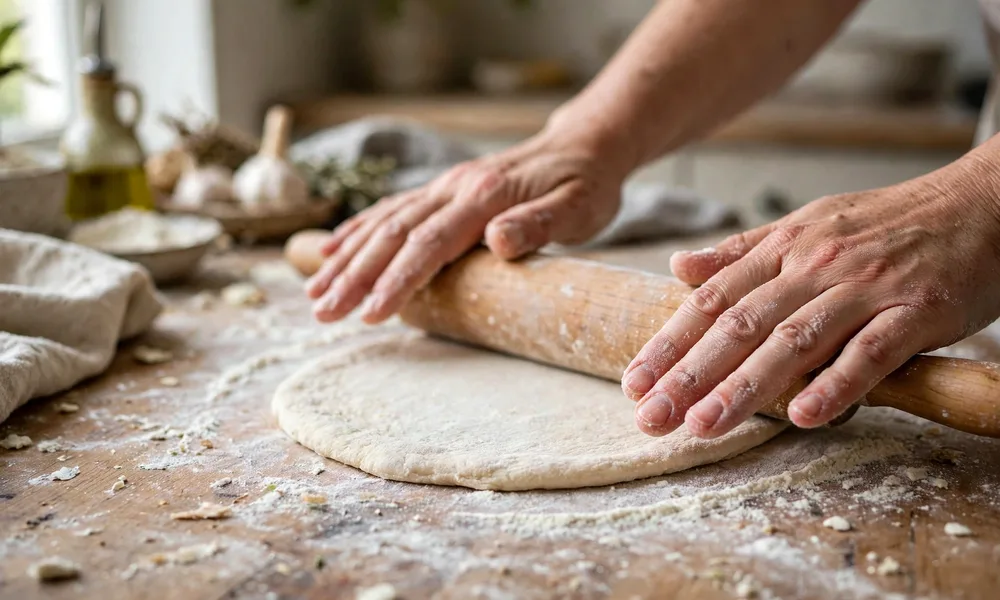
Lavash is the thinnest flatbread in this guide, and that thinness is its strength. It comes from Armenia and the wider region, baked against the wall of a clay oven, rolled out until almost paper-thin, then cooked in a minute or two on a hot surface. Fresh lavash is soft and pliable, rolling around fillings without cracking, which makes it the best flatbread for wraps and picnic food. Left to dry, the same bread turns crisp and cracker-like, excellent broken into shards for dipping. The main risk is overbaking, which turns a soft lavash brittle, so cook it briefly and stack the rounds under a cloth, where the trapped steam keeps them flexible.
4. Focaccia-style flatbread: thick, oily and made for sharing
Focaccia-style flatbread is the thickest member of the family, and it behaves more like a bread than a wrap. The dough is enriched with olive oil, pressed into a tray, dimpled with fingertips, and baked until golden with crisp edges. The dimples hold pools of oil, salt and herbs, so every bite tastes of olive oil first, and the crumb inside stays soft and open. It is the best flatbread for sharing, torn into pieces and dipped in oil or served beside soup, and it makes a generous base for toppings. Too much oil makes the bread greasy rather than rich, so measure it and let the dough do the work. Our guide to the focaccias worth the olive oil covers the styles that get the balance right.
5. Chapati: the light everyday flatbread
Chapati is the everyday flatbread of India, and it is the lightest and simplest style here. It is made from wholemeal flour and water, with no yeast and no oil, rolled thin and cooked in under a minute on a hot dry pan, where it puffs briefly as the steam lifts it. A good chapati is soft, flexible and lightly speckled, eaten the same day, torn and used to scoop up lentils, vegetables and curries. With no proving time, the whole batch takes less than half an hour, which makes it the best flatbread for a weeknight meal. Overworking the dough makes the chapati tough, so knead it only until smooth, rest it for twenty minutes, and roll it gently.
6. Flatbread wraps: the lunchbox workhorse
Flatbread wraps are the most practical style in this guide, because they turn almost anything into a meal you can carry. A wrap flatbread is a thin, soft round, usually wheat flour, flexible enough to fold around a filling without splitting. The best ones are pliable straight from the pack, with a little chew and no dry edges, and they warm in seconds in a dry pan. Use less filling than you think: a wrap filled too full splits at the seam, while a modest filling, folded tightly with the ends tucked in, holds together. They are the best flatbread for lunches, leftovers and picnics.

7. Flatbread pizza base: thin, crisp and fast
A flatbread pizza base is the shortcut that works, because a thin flatbread bakes into a crisp pizza in about ten minutes. The base is a plain flatbread, naan, pita or lavash all work, brushed lightly with oil, topped sparingly, and baked in a hot oven until the edges are golden. The key is restraint: a thin base cannot carry a heavy load, so a spoonful of sauce, a handful of cheese and a few toppings give a crisp result, while a thick layer of sauce makes the centre soggy. It is the best flatbread for a quick supper or for children who want to choose their own toppings.
What to avoid when buying or baking flatbread
The most common flatbread disappointment is a wrong match: a thick naan bought for wrapping that splits when folded, a thin lavash bought for scooping that tears under a curry, or a pack of pita that has sat until it is stiff and dry. Avoid the trap by checking three things before you buy or bake. First, bend the bread gently: it should flex without cracking, and a pack that feels stiff through the plastic will not improve at home. Second, check the date and choose the freshest pack, because flatbread goes stale fast. Third, match the thickness to the job: thin for wrapping, thick for tearing, and a pocket bread when you need a filling held inside. At home, roll the dough evenly, cook on a properly hot surface, and keep the finished breads stacked under a cloth so the steam keeps them soft.
Checklist: choosing and serving flatbread
- Match the style to the meal: thin for wraps, thick for tearing, pocket bread for fillings.
- Buy the freshest pack and feel it gently through the plastic; it should bend without cracking.
- Heat the pan or oven fully before cooking, because a cool surface makes flatbread tough and pale.
- Warm flatbread for a minute before serving, in a hot dry pan or wrapped in foil in the oven.
- Stack cooked flatbreads under a clean tea towel, so the trapped steam keeps them soft.
- Freeze spares the same day in a sealed bag, and thaw them wrapped in a damp cloth before warming.
Frequently asked questions
What is the difference between flatbread, naan and pita?
Flatbread is the whole family, while naan and pita are two members of it. Naan is soft and pillowy, made with yogurt and brushed with butter, while pita is a pocket flatbread that puffs in a hot oven. Lavash, chapati, focaccia-style bread and wraps are flatbreads too.
How do I stop flatbread from going stiff?
Keep it covered and warm it before serving. Stack cooked flatbreads under a tea towel, store bought flatbread sealed, and warm each piece for thirty seconds a side in a hot dry pan.
Can I make flatbread without yeast?
Yes. Chapati, lavash and many wrap flatbreads use no yeast at all, just flour, water and salt, and they cook in a minute or two. Yeast is only needed for thicker styles such as naan, pita and focaccia-style flatbread.
Why does my pita not puff up?
The oven is usually not hot enough, or the dough was rolled too thick. Preheat the oven to its highest setting for at least thirty minutes with a baking stone or tray inside, roll the rounds thin and even, and cover them with a cloth while you wait.
How long does flatbread keep?
Fresh flatbread is best the same day, and it keeps for two or three days sealed. Freeze any spares the same day, because flatbread goes stale faster than loaf bread, and thaw them before warming.
Can flatbread be used as a pizza base?
Yes. Brush a plain flatbread lightly with oil, add a thin layer of sauce, a little cheese and a few toppings, and bake in a hot oven for about ten minutes until the edges are crisp.
Bottom line
Flatbread that tears, puffs and wraps beautifully in 2026 is not one bread but a family: naan for tearing and scooping, pita when you need a pocket, lavash for rolling, focaccia-style bread for sharing, chapati for an everyday meal, a wrap for lunch, and a plain flatbread for a quick pizza. Buy fresh, match the thickness to the job, cook on a properly hot surface, warm the bread before serving, and freeze the spares the same day.


