Naan That Tears Soft and Warm in 2026
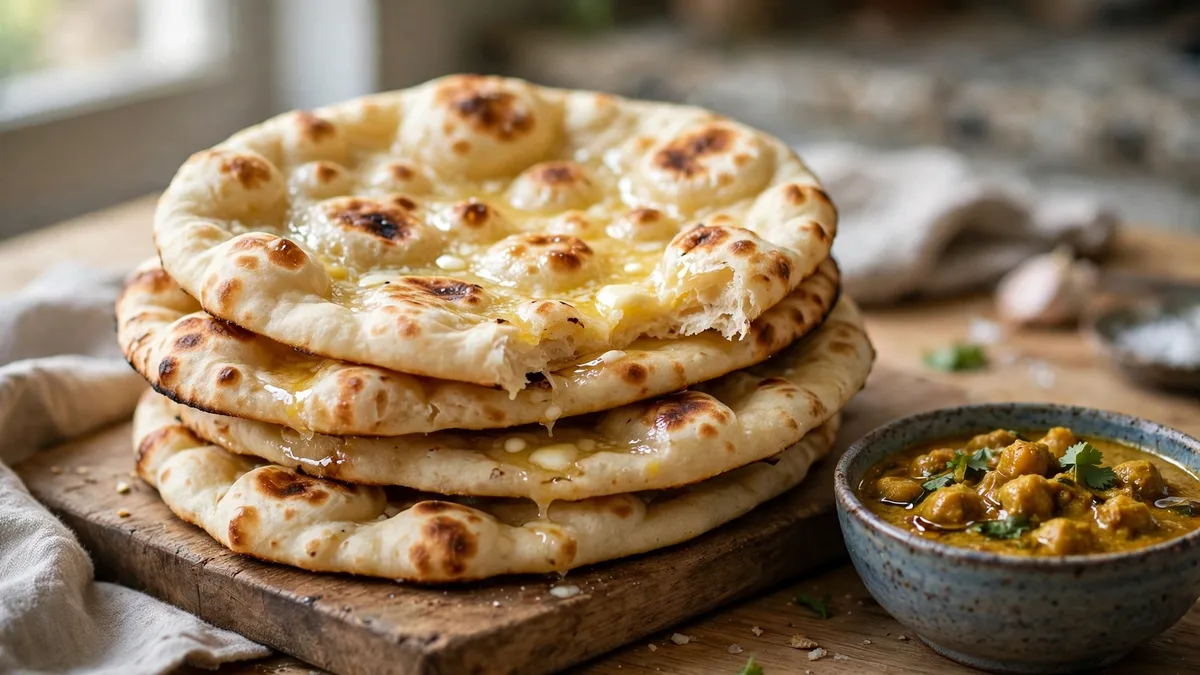
Good naan is one of the simplest pleasures in a kitchen. It arrives at the table warm, soft enough to tear with one hand, with golden blistered spots across the top and a little melted butter running into the folds. A bad one is stiff, dry, or chewy in the wrong way, and it turns a good curry into a chore. The best naan of 2026, whether you buy it ready-made or bake it yourself, is pillowy inside, lightly crisped in spots outside, and still flexible when it cools a little. This guide explains how to choose it, how to warm it, and how to make a batch at home that actually tears the way naan should.
Naan is a leavened flatbread from South Asia, traditionally baked against the searing wall of a tandoor oven. The dough is usually made with flour, water, yeast, and yogurt, which is what gives naan its soft, slightly tangy crumb and its ability to stay tender. Unlike a wrap, it is not meant to be rolled tight, and unlike a cracker, it is never meant to snap. It is a tearing bread, made to be pulled apart at the table and used to scoop up sauces, mop up a plate, or simply eat warm with butter.
Key Takeaways
- A good naan tears easily and feels soft and pillowy, never stiff or papery at the edges.
- Look for golden-brown blistered spots, which show the bread was baked hot and fast.
- Warm naan for a minute before serving, because cold naan is tough and warm naan is tender.
- Yogurt in the dough is what keeps homemade naan soft; dough without it dries out faster.
- Freeze spare naan the same day you buy or bake it, because it goes stale quickly at room temperature.
What Makes a Good Naan
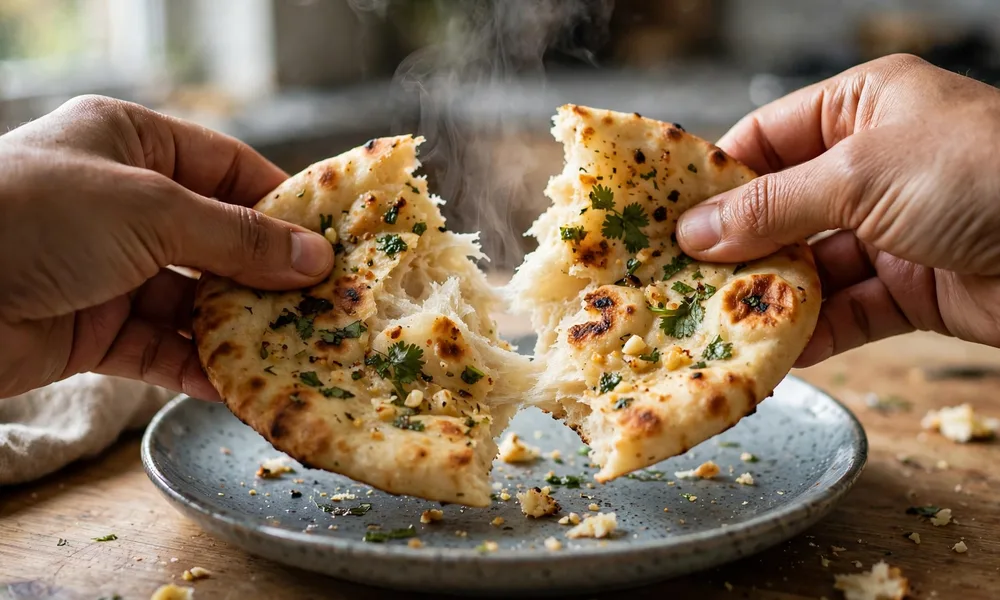
A good naan has four qualities, and you can check most of them before you eat it. First, it should feel soft and flexible when you bend it gently, with no cracking along the edges. Second, it should smell faintly of fresh bread and warm butter, not of plastic packaging or nothing at all. Third, the top should carry golden-brown blisters, the marks of a very hot cooking surface, with paler, softer patches in between. Fourth, when you tear it, the inside should look fluffy and open, not dense and doughy, and the tear should come away cleanly instead of stretching like rubber.
Butter is part of the experience, not an afterthought. In restaurants, naan is brushed with melted butter or ghee the moment it comes out of the oven, and the fat soaks into the hot crumb and keeps it moist. At home, the same trick works: brush warm naan lightly, rather than drowning it, and the butter will carry the flavour of garlic, herbs, or chilli if you have added any of those. The best butter for the job is plain salted butter, melted gently, because it browns the blisters a little further and tastes of itself rather than of anything added.
Plain and Garlic Naan
Plain naan is the benchmark. It is the simplest version, made from the same dough as every other naan, and it is the one to judge a bakery or a recipe by. If the plain naan is soft, well browned, and tender, the flavoured versions from the same kitchen will usually be good too. If the plain naan is tough or dry, no amount of garlic or cheese will save it. Buy or bake plain first, then explore.
Garlic naan is the most popular variation, and it is also the easiest to get wrong. The garlic should be finely chopped or crushed and pressed into the dough before cooking, so it roasts in the heat and turns sweet rather than raw and sharp. Garlic butter brushed on afterwards is a fine second step, but garlic sprinkled on cold bread tastes harsh and never quite sticks. Fresh coriander scattered over the top while the naan is still hot is the classic finish, and it wilts just enough to release its scent without going limp.
Comparing Naan Styles
| Style | Texture | Best for | Watch out for |
|---|---|---|---|
| Plain naan | Soft, pillowy, lightly blistered | Curries, scooping, everyday meals | Dries out fast if left uncovered |
| Garlic naan | Soft, with roasted garlic and herbs | Rich curries, tandoori dishes | Raw garlic tastes sharp if not cooked in |
| Butter naan | Rich, glossy, extra tender | Lentils, mild curries, eating plain | Can feel greasy if over-buttered |
| Cheese naan | Soft with a melted cheese layer | Eating hot, on its own | Cheese firms up quickly as it cools |
| Wholemeal naan | Denser, nuttier, less puff | Hearty stews, dipping | Can turn tough if overcooked |
Buying Naan: What to Look For
Fresh naan from a bakery or a restaurant is almost always better than a long-life pack, and it is worth the small detour. Fresh bread, baked that day, is softer and more flexible, and it warms better. If you are buying from a supermarket, look in the bakery section first and check the date, choosing the pack with the longest life left. Feel the pack gently through the plastic: the naans should bend without cracking, and none of them should feel stiff or dry at the edges.
How to Warm Naan Properly
Cold naan is a disappointment, and warming it takes a minute. The best way is a hot, dry frying pan or a cast iron skillet: lay the naan in the pan for thirty seconds on each side, until it is warm, soft, and starting to puff a little again. The direct heat revives the blistered spots and brings back the smell of fresh bread. A hot oven works too, at around 200 degrees for two or three minutes, wrapped loosely in foil so the bread does not dry out.
Baking Naan at Home
Baking naan at home is simpler than most bread, because there is no shaping to learn and no long proving to wait for. Mix strong white flour, water, yeast, yogurt, and salt into a soft, slightly sticky dough, knead it for eight to ten minutes until it is smooth, and leave it to rise for about an hour, until it has doubled in size. The yogurt is the quiet hero here: its acidity keeps the crumb tender and adds a faint tang that plain water dough never quite manages.
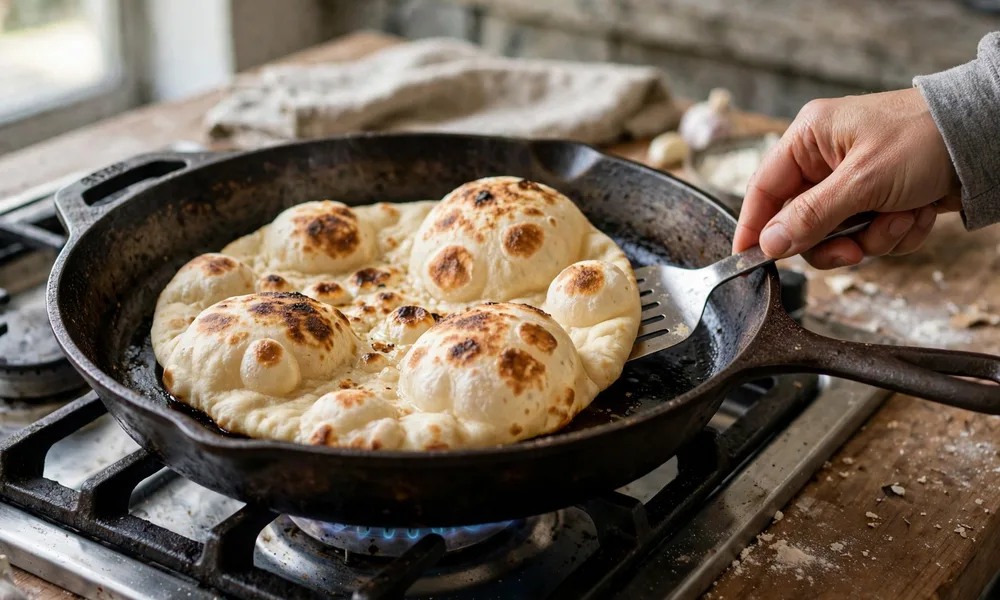
Divide the risen dough into six or eight pieces, roll each one into a ball, and leave them to rest for ten minutes. Then roll or stretch each ball into a round or teardrop about fifteen centimetres across and half a centimetre thick. A hot cast iron skillet is the best stand-in for a tandoor in a home kitchen. Heat it until it is very hot, then lay the dough in dry, with no oil in the pan. The best cooking oil for the pan is none at all for the bread itself, though a lightly oiled skillet can help the first piece release; after that, the dry heat does the work.
The naan should start to bubble within a minute, and it is done after two or three, when the top is puffed in places and the underside is golden with dark spots. Flip it once, cook the other side briefly, and take it out. Brush it with melted butter straight away, and stack the finished naans under a clean tea towel while you cook the rest. The steam trapped under the cloth keeps them soft as they wait, and it is the closest a home kitchen gets to the inside of a tandoor.
Storing and Freezing Naan
Naan goes stale faster than almost any other bread, because it is thin, soft, and full of moisture that escapes quickly. At room temperature, keep it in a sealed bag or wrapped in a tea towel inside a bag, and eat it the same day if you can. Left out uncovered, it will be dry and stiff within a few hours, and no amount of warming will fully bring it back.
Naan vs Pita: What Is the Difference
The difference shows up at the table. Tear a naan and you get a soft, ragged piece with a fluffy inside, ideal for wiping up sauce. Tear a pita and it splits into two thin layers with a clear space between them, ready to be filled. The best pita bread guide explains the pocket in detail, and it is worth reading if you like flatbreads in general. For a curry night, though, naan is the right bread, and pita would be a poor substitute.
Checklist: Choosing and Serving Naan
- Pick naan that bends without cracking and shows golden blistered spots.
- Check the date and choose the freshest pack, from the bakery section when you can.
- Warm it for a minute in a hot, dry pan before serving, never straight from the packet.
- Brush with melted butter as soon as it comes off the heat.
- Serve it immediately, while it is still warm and soft.
- Freeze any spares the same day, stacked with baking paper between them.
Frequently Asked Questions
Is naan the same as pita bread?
No. Naan is a soft, rich flatbread made with yogurt and usually finished with butter, and it has no pocket. Pita is a leaner bread baked hot so steam forms a pocket inside, which is used for filling. They look similar at a glance but behave differently at the table.
Can you eat naan cold?
You can, but it is much better warm. Cold naan is firmer and drier, and warming it for a minute in a hot pan or oven brings back its softness and flavour. If you are eating it cold, choose a fresh, soft piece and eat it the same day it was baked.
How do you keep naan soft?
Keep it covered, brush it with melted butter while it is warm, and stack finished naans under a tea towel. At room temperature, store it in a sealed bag and eat it the same day. For longer storage, freeze it the same day rather than refrigerating it, because the fridge makes naan go tough.
Is naan healthy?
Naan is an energy-dense bread made mostly from refined flour, so it is best treated as part of a balanced meal rather than a health food. Wholemeal naan has more fibre, and eating it with vegetables, lentils, or a lighter curry keeps the meal balanced. One piece with a vegetable curry is a reasonable portion for most people.
Can you make naan without a tandoor?
Yes. A very hot cast iron skillet or a heavy frying pan is the best home substitute, and it gives a good result with golden blistered spots. A hot oven with a preheated baking stone or an upside-down baking tray also works. The key is high heat and a short bake, so the bread puffs and browns without drying out.
How long does naan last?
Fresh naan is best the same day, and it will keep for a day or two in a sealed bag at room temperature. In the freezer, stacked with baking paper between the pieces, it keeps well for up to three months. Reheat frozen naan in a hot pan for a minute or two on each side.
The Bottom Line
The best naan of 2026 is soft, warm, and easy to tear, with golden blisters on top and a pillowy inside. Buy it fresh when you can, warm it for a minute before serving, and brush it with butter while it is still hot. Or bake it yourself: the dough is simple, the yogurt keeps it tender, and a hot skillet does the job of a tandoor well enough. Either way, serve it straight away, because naan is at its best in the first few minutes, warm from the heat and ready to tear.


