How to Choose Yeast That Actually Rises in 2026
Yeast is the living ingredient that decides whether bread rises into a light, airy loaf or stays flat in the tin. It is a single-celled fungus: fed warm water and a little sugar or starch, it produces carbon dioxide gas and alcohol, which puff up dough and flavour bread. The best yeast in 2026 wakes up fast, works reliably, and forgives the small mistakes every home baker makes.
Most doughs that refuse to rise are not the recipe’s fault, but the fault of dead yeast, water that was too hot, or the wrong type of yeast. A packet past its date, or a jar left open in a warm cupboard, gives the same result: a dough that sits flat for hours. Once you know the types, how to test a spoonful, and how to store the packet, yeast becomes one of the most dependable ingredients you own.
Key Takeaways
- Yeast is alive: it needs warmth, moisture and food to make the gas that lifts dough, and water hotter than 46°C kills it.
- Instant yeast suits most home bakers: it needs no proofing and goes straight into the flour.
- Active dry yeast needs waking in warm water first, and suits slow, flavourful rises.
- Fresh yeast works fastest and tastes best, but keeps only a few weeks in the fridge.
- Test old yeast first: a teaspoon in warm sugared water should foam within ten minutes, or the packet belongs in the bin.
What Yeast Actually Is
Yeast is a living micro-organism, a single-celled fungus of the species Saccharomyces cerevisiae, also used to brew beer and make wine. Mixed into dough, it eats the simple sugars in the flour and produces carbon dioxide gas and a little alcohol. The gas gets trapped in the gluten network, forming thousands of tiny bubbles that make bread rise.
Yeast is not the same as baking powder or baking soda, and the three are not interchangeable. Baking powder and baking soda are chemical leaveners: they make gas the moment they meet liquid, and they work in minutes. Yeast is biological: it works slowly, over one to three hours, and the slow rise gives yeasted bread its flavour and chewy crumb. A cake made with yeast would take hours to rise and taste of bread; a loaf made with baking powder would rise fast and taste flat.
The Main Types of Yeast
Most yeast falls into four types, differing in speed, storage and taste. The table gives the short version; the sections after it explain when each type is the right buy.

| Type | How to use it | Best for | Watch out for | Verdict |
|---|---|---|---|---|
| Instant yeast | Mix straight into flour | Everyday bread and pizza dough | Rises fast, can over-proof | Best overall |
| Active dry yeast | Wake in warm water first | Slow rises and enriched doughs | Dies in hot water | Best for flavour |
| Fresh yeast | Crumble into lukewarm liquid | Bakery loaves and soft rolls | Keeps only weeks, refrigerate | Best for taste |
| Rapid-rise yeast | Mix straight into flour | One-rise breads, bread machines | Less flavour, one rise only | Best for speed |
| Brewer’s yeast | Not for baking | Brewing beer, supplements | Will not lift dough | Not for bread |
Instant Yeast
Instant yeast, also sold as fast-action or easy-blend yeast, is the best choice for most home bakers. Its fine granules mix straight into the flour, and it starts working within minutes. It is the most forgiving type: it tolerates a wide range of water temperatures, keeps for months in a sealed jar, and rises reliably even in a cool kitchen. One seven-gram packet suits about 500 grams of flour. The only drawback is speed: a dough left too long can over-proof, so watch the dough, not the clock. When it has doubled, it is ready. Our guide to pizza dough agrees: a slow, cold rise develops flavour, while a rushed rise tastes bland.
Active Dry Yeast
Active dry yeast is the classic type, sold as larger granules in packets or jars. It is dormant, coated in dead yeast cells, and needs waking up first. Sprinkle it over warm water, about 37 to 43 degrees, with a pinch of sugar, and leave it for five to ten minutes. If it foams and smells yeasty, it is alive and ready; if nothing happens, the yeast is dead, and the packet belongs in the bin. It works a little more slowly than instant yeast, which suits enriched doughs such as brioche, and long, slow rises. Most older recipes mean active dry when they say yeast.
Fresh Yeast
Fresh yeast, also called cake yeast or compressed yeast, is a soft, crumbly block like a pale bar of cheese. It is the liveliest type: it works faster than any dried yeast, and many bakers say it gives the best flavour, with a mild, slightly sweet note. To use it, crumble it into lukewarm water or milk, stir until it dissolves, then mix it into the flour. The drawback is shelf life: it keeps for only two to three weeks in the fridge, and dies quickly if left warm or allowed to dry out. Freeze spare in small portions: it keeps for up to three months and can go straight from the freezer into warm liquid.
Rapid-Rise and Brewer’s Yeast
Rapid-rise yeast is instant yeast with extra enzymes, for breads that rise only once. It suits a bread machine or a quick one-rise loaf, but gives less flavour than a slow rise. Use it only when speed matters more than flavour. Brewer’s yeast is a different product: the yeast left over from brewing beer, sold as a supplement, and it will not lift dough properly. Do not buy it for baking.
How to Choose Yeast That Actually Rises
Choosing yeast is mostly about the recipe and how often you bake. For everyday bread and quick loaves, instant yeast is the easiest choice. For enriched doughs and slow rises, active dry yeast gives the better flavour. For a special loaf, fresh yeast is worth the bakery trip, if you use it within a few weeks.
Buy yeast in the smallest pack you will finish within a few months, and check the date first. Dried yeast keeps for a year or more unopened, but once open, it loses strength, especially if stored warm or damp. Keep an opened jar in the fridge or freezer, tightly closed; a jar left open on a warm shelf can fail within weeks.
Match the amount to the recipe, and resist the urge to add extra. More yeast does not make better bread: it makes the dough rise too fast, run out of food, and collapse, leaving a sour taste. Most recipes use one seven-gram packet, about two and a quarter teaspoons, for 500 grams of flour. For a slow overnight rise, half that amount is enough.
How to Test Yeast Before You Bake
The test takes ten minutes. Put a teaspoon of yeast in a small cup with warm water, about body temperature, and a pinch of sugar, then leave it somewhere warm. Live yeast foams and bubbles within five to ten minutes, rising up the cup and smelling pleasantly yeasty. Dead yeast does nothing at all. If the cup stays flat, throw the packet away: no kneading will save a dough made with dead yeast.
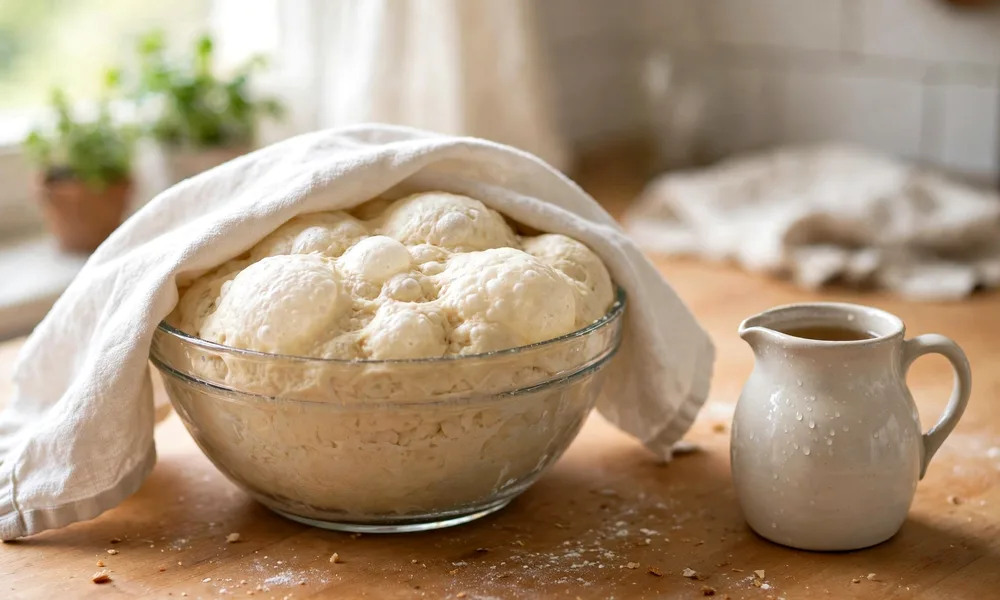
The test also settles the commonest yeast question: is the water too hot? Water comfortably warm on the inside of your wrist, about 37 to 43 degrees, is right. Water above about 46 degrees kills the yeast outright. If unsure, use cooler water and wait longer. A warm kitchen helps dough rise, but a bowl on a hot oven can kill it.
Yeast vs Baking Powder: Which One Rises What
Yeast and baking powder are both leaveners, but they work in completely different ways. Yeast is alive, and it lifts dough slowly, over one to three hours, producing gas and flavour as it feeds. Baking powder is a chemical: it makes gas the moment it meets liquid, and works in minutes. That is why yeast belongs to bread, pizza dough and naan, while baking powder belongs to cakes, muffins and scones.
You cannot swap one for the other. A loaf made with baking powder will rise fast and taste flat, with a crumb closer to cake than to bread. A cake made with yeast will take hours to rise and taste of bread. A good pita bread shows the yeast side clearly: flour, water, yeast and salt, risen for about an hour, then baked fast at high heat so steam lifts it into a pocket.
Common Mistakes That Stop Dough Rising
Most yeast failures come down to temperature, salt, or time. The first mistake is water that is too hot, which kills the yeast before it starts. The second is adding salt directly onto the yeast: a spoonful tipped straight onto it can stop it working. Mix salt into the flour first.
The third mistake is impatience. A dough in a cold kitchen can take twice as long to rise as the recipe says, and that is normal. Give the dough time in a warm spot, such as an oven with only the light on. The fourth mistake is over-proofing: a dough left for hours past doubling will collapse in the oven, because the yeast has run out of food. And the fifth is using dead yeast, which is why the ten-minute foam test matters. A good naan follows the same rules.

Checklist: Buying Yeast in 2026
- Buy instant yeast for everyday bread, active dry for slow rises, and fresh yeast only when you will use it soon.
- Choose the smallest pack you will finish within a few months.
- Test any packet open for months before baking.
- Store opened yeast tightly closed in the fridge or freezer.
- Use water warm on your wrist, never hot, and mix salt into the flour.
- Watch the dough, not the clock: when it has doubled, it is ready.
Frequently Asked Questions
Can I use instant yeast instead of active dry yeast?
Yes. Use the same amount by weight, and mix instant yeast straight into the flour. The dough rises a little faster, so shape it as soon as it has doubled.
How much yeast do I need for a loaf?
Most recipes use one seven-gram packet, about two and a quarter teaspoons, for 500 grams of flour. For a slow overnight rise, half that amount is enough.
Why did my dough not rise?
The usual causes are dead yeast, water too hot, or a kitchen too cold. Test the yeast in warm sugared water: if it does not foam in ten minutes, it is dead. If it is alive, give the dough more time in a warm spot.
Can I freeze yeast?
Yes. Dried yeast freezes well in a sealed jar or bag and keeps for months. Fresh yeast also freezes well in small portions for up to three months, and can go straight into warm liquid.
Does yeast go bad?
Yes. Dried yeast loses strength over time, especially once the packet is open, and fresh yeast keeps for only two to three weeks in the fridge. Always test old yeast first.
Can I use brewer’s yeast for bread?
No. Brewer’s yeast is sold as a nutritional supplement and will not lift dough properly. Use baking yeast instead: instant, active dry or fresh.
The Bottom Line
The best yeast in 2026 is fresh instant yeast from a recently opened pack, stored in the fridge, tested in warm sugared water before any bake that matters, and used as the recipe asks. It needs no proofing, works in minutes, and forgives the small delays of a real kitchen, provided the water is warm rather than hot and the salt goes into the flour. Buy it small, keep it cold and dry, and watch the dough, not the clock. BestXWorst verdict — bxw_verdict [10]: instant yeast is the best yeast for most home bakers in 2026.