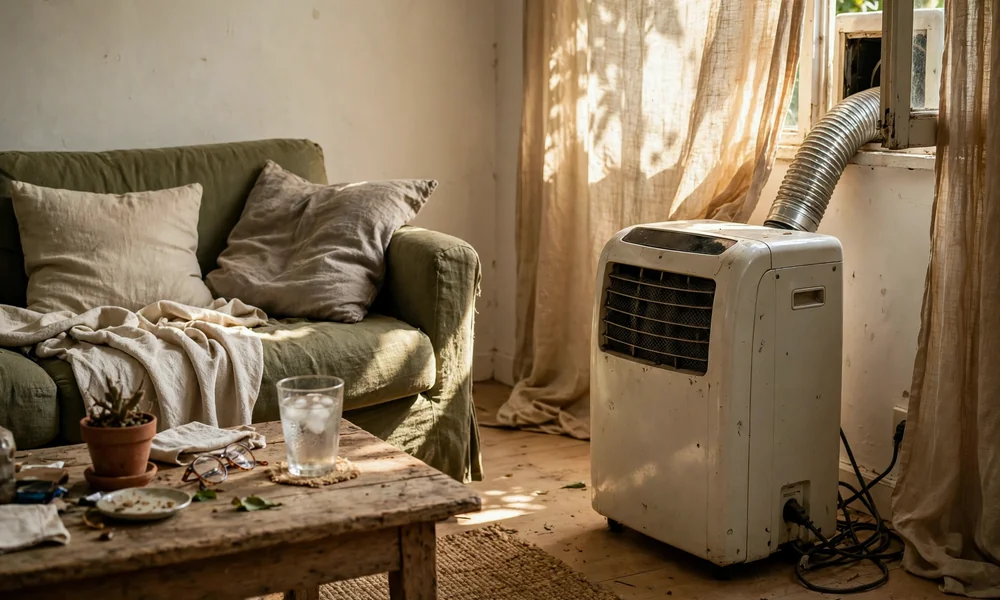
A portable air conditioner is the simplest answer to a room that will not stay cool. It sits on the floor, rolls on small wheels, and plugs into a normal wall socket. A flexible hose carries hot air out through a window, and within half an hour a stuffy bedroom or sun-baked living room starts to feel like a place you want to sit in. There is no drilling, no permanent fitting, and no need to ask a landlord for permission.
That simplicity is also the trap. Two machines can look almost identical and behave very differently in a real room. One cools steadily, runs quietly enough to sleep beside, and drains itself without fuss. The other rattles, leaves one corner cold and the rest warm, and needs emptying at two in the morning. This guide sorts the good from the disappointing, so you can buy once and stay cool all summer.
Key Takeaways
- Match the BTU rating to your room size first. An undersized unit will run all day and never catch up, while a hugely oversized one cools too fast and leaves the air damp.
- Dual-hose models cool faster and more evenly than single-hose models, especially in larger rooms.
- Noise matters as much as cooling power. A unit rated above 55 decibels will be hard to sleep beside, however cold it makes the room.
- Check the window kit before you buy. A kit that fits your window type saves an afternoon of improvising with cardboard and tape.
- Drainage is the chore nobody mentions in the shop. Self-evaporating models and a continuous drain hose make a real difference in humid weather.
How We Judged
We judged portable air conditioners the way they are actually used, in ordinary rooms on hot days. Cooling speed came first: how long a warm room took to reach a comfortable temperature and whether it stayed there without swinging hot and cold. We paid close attention to evenness, because a unit that blasts cold air at one chair while the rest of the room stays warm is not doing its job.
Noise came next, judged at night as well as during the day. A bedroom unit that hums softly is a pleasure; one that clicks or cycles loudly every few minutes is not. We also weighed setup, the window kit, how heavy the unit felt to move, and how often it needed draining. Running cost mattered too, since a cheap machine that drinks electricity all summer is not cheap at all. Finally, we looked at extras that earn their keep: a heater mode, a dehumidifier mode, a timer, and a remote that works from the sofa.
Best Overall: The Balanced 12,000 BTU Dual-Hose Unit
The best overall portable air conditioner is a 12,000 BTU dual-hose model that does everything well and nothing badly. It cools a medium bedroom or small living room, roughly 350 to 450 square feet, in about twenty minutes, then settles into a steady, quiet rhythm. With two hoses, one drawing in outside air and one pushing hot air out, it does not pull warm air back into the room the way single-hose models do.
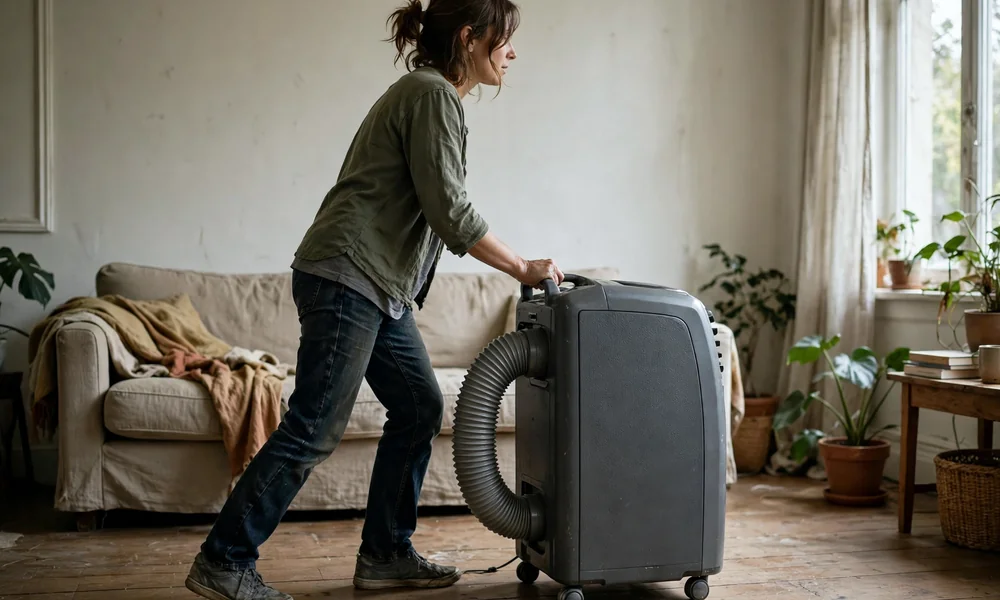
In daily use this is the unit you forget about, which is the highest praise a portable air conditioner can earn. The fan is smooth rather than gusty, the temperature holds steady, and the self-evaporating system means the tank rarely needs emptying in normal summer weather. The castor wheels roll easily across wooden floors and short-pile carpet. If you buy one unit to use in more than one room, this is the type to choose.
Best Powerful: The 14,000 BTU Unit for Large Rooms
Some rooms simply need more muscle. A large open-plan living room, a loft with a high ceiling, or a south-facing room with big windows will overwhelm a small unit. The best powerful portable air conditioner is a 14,000 BTU dual-hose machine built for spaces of 500 to 700 square feet, and it earns its size on the hottest days.
What sets the strong models apart is not just the headline BTU figure but how they sustain it. A good powerful unit keeps cooling when the afternoon peaks, rather than fading as the compressor struggles. Look for a high airflow rate, a sturdy window kit that seals properly, and a fan that can move air across a long room without sounding like a jet engine. The trade-off is real: these units are bigger, heavier, and louder on full power, and they cost more to run.
Best Quiet: The Bedroom-Friendly Unit
A portable air conditioner that keeps you awake has failed at its main job, however cold it makes the room. The best quiet models run at around 45 to 50 decibels on sleep setting, roughly the sound of a library, without sudden clicks or surges as the compressor cycles. They achieve this with better insulation, a smoother fan, and a sleep mode that gradually raises the temperature through the night, so you are not woken by cold air at three in the morning.
Quiet units are usually smaller, often 8,000 to 10,000 BTU, which suits a bedroom of 200 to 300 square feet perfectly. They are also the easiest to live with in a flat. When you compare models, do not trust the headline noise figure alone. Check the figure for the highest fan speed as well as the lowest, and if you can, listen to one running in a shop. A unit that is quiet on low but roars on high will still disturb you on the hottest nights.
Best With Heater: The Year-Round Unit
A portable air conditioner with a heater mode is the most useful machine in this guide for anyone short on space. In summer it cools; in spring and autumn it takes the chill off a room without switching on the central heating for the whole house. The heater is not a replacement for a proper heating system in deep winter, but for a home office or guest room it is genuinely handy.
The best heater models warm a room evenly and safely, with a thermostat that switches the heat off at the target temperature. They cost a little more than cooling-only models, but if you would otherwise buy a separate portable heater, the combined machine saves money, floor space, and a plug socket. Keep the kit safe over winter rather than throwing it away in September.
Best Budget: The Sensible 8,000 BTU Single-Hose Unit
Not everyone needs a large dual-hose machine. If you want to cool one small bedroom, a study, or a rented room, a budget 8,000 BTU single-hose unit can be the smartest buy of all. It costs far less to buy and to run, it is lighter and easier to move, and in a room of 200 square feet it cools perfectly well. The key is to be honest about the room: put a small unit in a big room and you will be disappointed, through no fault of the machine.
Budget models cut costs in sensible places and in places you should notice. The sensible cuts are a simpler display, fewer modes, and a plainer case. The cuts to watch for are a flimsy window kit, a short hose, and a drain that needs emptying every day in humid weather. Choose a budget unit from a brand with a proper warranty, check that the window kit fits your windows, and you will have a machine that does its one job well for several summers. For a closer look at how cooling choices compare, see our best and worst air conditioners of 2026.
What to Look for When Choosing
Start with BTU and room size, because everything else is secondary if the cooling power is wrong. As a rough guide, an 8,000 BTU unit suits up to about 250 square feet, a 10,000 BTU unit suits up to about 350, a 12,000 BTU unit suits up to about 450, and a 14,000 BTU unit suits up to about 550. Add capacity if the room has high ceilings, large south-facing windows, or more than two people in it regularly. A slightly oversized unit is better than one far too weak, but a hugely oversized one cools quickly without removing enough moisture, leaving the room cold and clammy.
Noise is the second number to check, quoted in decibels. Under 50 decibels on low is comfortable for a bedroom, 50 to 55 is fine for a living room, and above 55 will be noticeable all evening. Manufacturers often quote the quietest figure, so look for the full range. The vent kit is the third thing to inspect. A good kit seals the window gap properly, fits sliding and sash windows with the parts supplied, and holds the hose firmly without sagging. A poor kit leaks hot air back in and undoes much of the cooling you paid for.
Drainage deserves a careful look too. Portable air conditioners pull moisture from the air as they cool it, and that water has to go somewhere. Self-evaporating models send most of it out through the vent hose, so you may only need to drain the tank at the end of the season. Cheaper models collect it in a tank that needs emptying, sometimes daily in humid weather, so check the tank size and whether a continuous drain hose is included. On mild days a good fan can be enough on its own, and our guide to portable fans for camping shows how much difference airflow alone can make outdoors. At home, a desk fan beside you can let you run the air conditioner a degree or two higher and still feel comfortable.
Setup, Care and Mistakes to Avoid
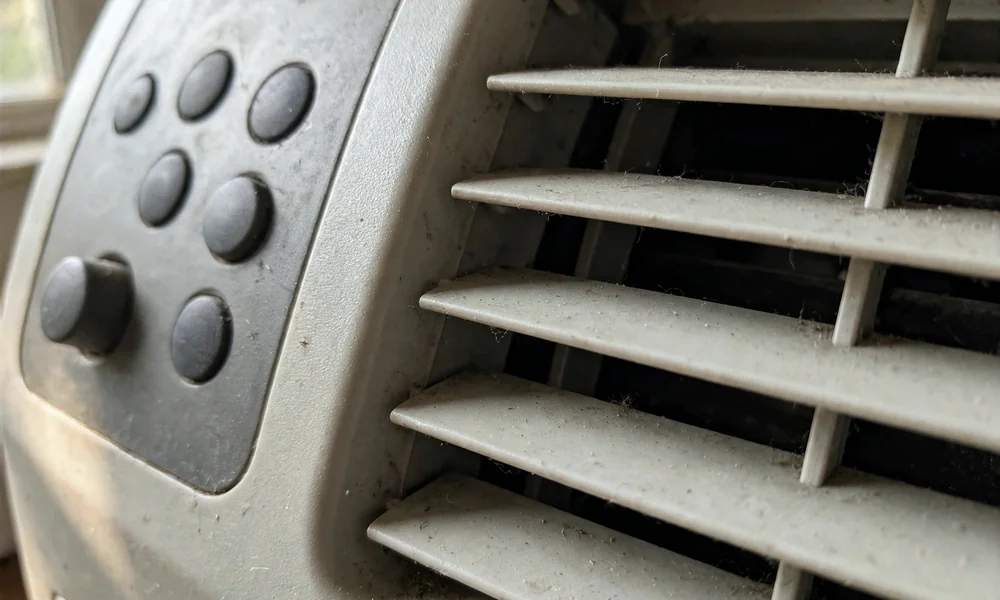
Setup takes about twenty minutes if you take it slowly. Fit the window kit first, before you switch anything on, and make sure it seals the gap with no daylight showing through. Keep the vent hose as short and straight as you can, with no sharp bends, because every bend makes the machine work harder and cool less. Place the unit at least a foot from the wall so air can circulate, and let it stand upright for a few hours after delivery before you first switch it on.
The most common mistake is putting the unit in the wrong room for its size, followed closely by leaving a window open elsewhere, which lets hot air straight back in. Another is forgetting the filter. A dusty filter chokes airflow, makes the machine louder, and can leave a musty smell, so wash or vacuum it every couple of weeks in heavy use. At the end of summer, drain the tank fully, run fan-only mode for an hour to dry the inside, clean the filter, and store the unit upright with the hose and window kit together. A machine stored damp will smell dreadful next June.
Finally, be realistic about what a portable air conditioner can and cannot do. It will cool one room well, not a whole flat, and it will always be a little noisier than a split system fixed to the wall. What it gives you in return is freedom: cool air in the room you are actually in, without installation, and a machine you can roll into a cupboard when summer ends.
Buy for the room you have, check the noise and the window kit before the price, and keep the filter clean. Do that, and the hottest weeks of 2026 will pass almost unnoticed.