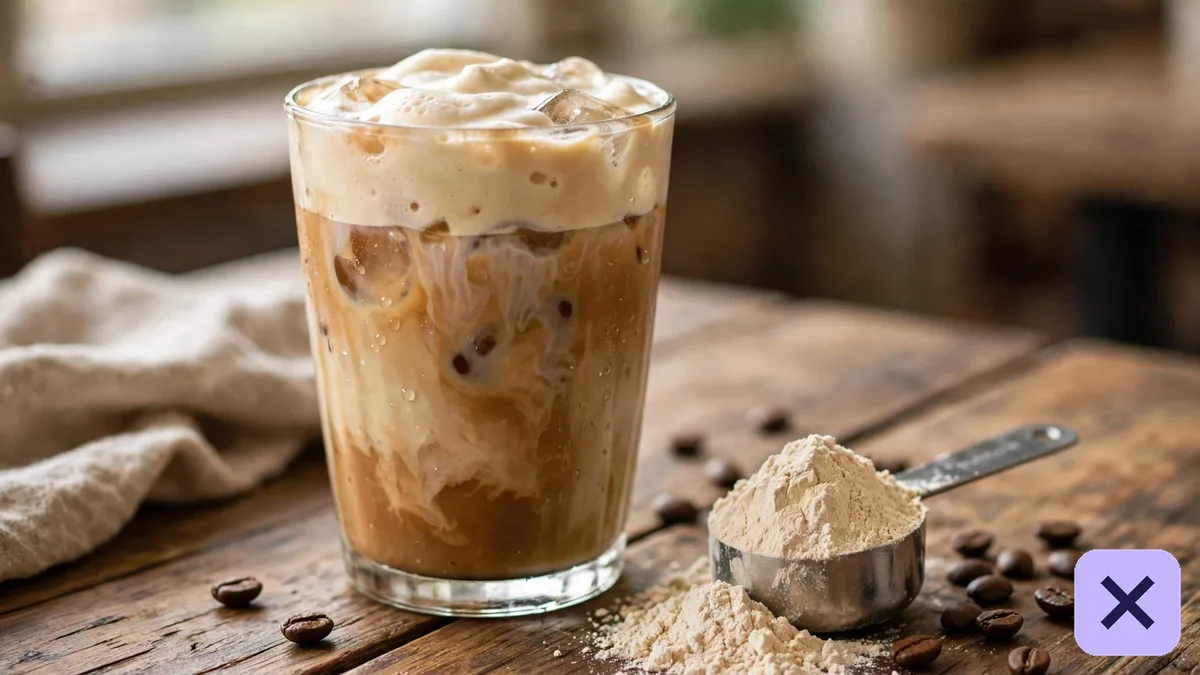
The best protein coffee in 2026 ends the morning trade-off: coffee or breakfast, caffeine or protein, speed or substance. Protein coffee, or proffee as it is known online, puts twenty grams of protein into the coffee you were going to drink anyway. It tastes like a latte, works like a breakfast, and takes about two minutes to make.
The best protein coffee shares a few qualities. It delivers at least fifteen grams of protein per serving, keeps sugar low, and dissolves smoothly into hot or iced coffee without clumps or a chalky aftertaste. It comes in three main forms: powder you mix into your own coffee, ready-to-drink bottles, and coffee-shop style drinks you make with a frother.
This guide compares the best protein coffee of 2026 across all three formats. We explain how much protein you actually get, which powders mix best into hot coffee, which ready-to-drink bottles are worth the price, and how to make proffee at home without ruining either ingredient.
Key Takeaways
- Look for at least 15 grams of protein per serving and under 5 grams of sugar; the best options hit 20 grams with under 2 grams of sugar.
- Whey isolate mixes cleanest into hot coffee; plant blends work better in iced coffee and cold brew.
- Ready-to-drink protein coffee costs roughly $3 to $5 per bottle; homemade proffee costs under $1.50 a serving.
- Never mix protein powder into boiling coffee: let it cool slightly or the powder clumps and the protein denatures.
- Protein coffee is a breakfast replacement, not a supplement to one; pair it with real food when you can.
What Is Protein Coffee?
Protein coffee is exactly what it sounds like: coffee with protein powder mixed in, or a ready-made drink that combines the two. The idea started in gyms, where people were already drinking a protein shake and a coffee within minutes of each other. A scoop of vanilla or mocha protein powder stirred into coffee gives you caffeine, protein and flavour in a single cup.
The drink took off because it solves a real problem. Most people do not eat enough protein at breakfast, and most people do drink coffee. Breakfast is the meal where protein intake is lowest, and it is also the meal most often skipped. Protein coffee fixes both at once, with no extra time and no extra washing up beyond a shaker or a frother.
Proffee vs a Protein Shake With Coffee
There is a difference between proffee and simply drinking a shake next to a coffee, and it is mostly about taste. A shake beside a coffee is two drinks and two sets of washing up. Proffee is one drink where the coffee does the flavouring: the bitterness of the coffee hides the sweetness of the powder, and the powder softens the coffee into something creamy. The result tastes more like a cafe drink than a gym supplement.
How Much Protein Does Protein Coffee Have?
The protein number is the whole point, so it is worth checking properly. A homemade proffee made with one scoop of whey isolate gives you twenty to twenty-five grams of protein, which is a serious breakfast. A scoop of plant-based powder gives you a similar amount, usually twenty grams. Ready-to-drink protein coffee bottles usually contain fifteen to twenty grams, though some cheaper ones contain as little as ten grams and a lot of sugar.
The number to watch is not just protein but protein per calorie. A good proffee gives you twenty grams of protein for about 150 to 200 calories. A bad one gives you twelve grams for 250 calories, most of them from sugar, which is a dessert with caffeine. Check the label for sugar first, then for the protein source, and then for the serving size: some bottles count two servings per bottle.
Best Protein Coffee Powders in 2026
Powders are the cheapest and most flexible way to make protein coffee. You choose your own coffee, your own powder, and your own dose, and a tub that lasts a month costs less than a week of ready-to-drink bottles. The best powders for coffee are unflavoured or lightly flavoured: vanilla, mocha and salted caramel all work well, because they blend with coffee rather than fighting it.
Whey Isolate: The Best Mixer for Hot Coffee
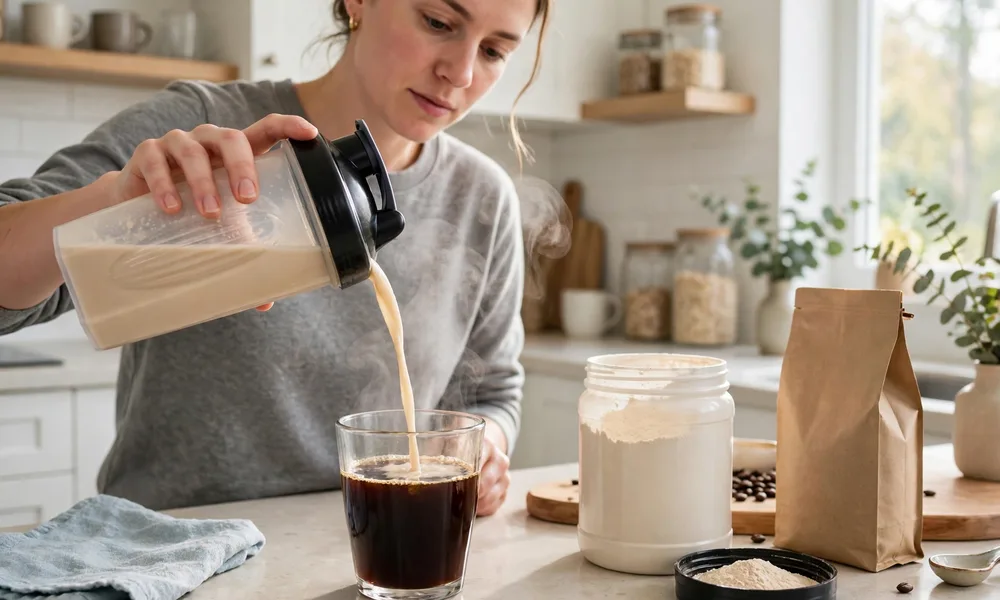
Whey isolate is the best protein powder for hot coffee, because it dissolves cleanly and has almost no lactose. The trick is temperature: never pour powder into boiling coffee. Let the coffee cool for a minute or two, or mix the powder with a splash of cold milk first to make a smooth paste. A milk frother gives the drink a proper latte foam. For the full picture, our guide to the best protein powders of 2026 compares the options.
Plant-Based Powders for Iced Coffee
Plant-based powders, usually a blend of pea and rice protein, are the best choice for dairy-free drinkers and for iced coffee, where they mix surprisingly well. The flavour is earthier than whey, so a vanilla or caramel plant powder works better in coffee than an unflavoured one. The one weakness is texture: plant powders are slightly thicker and grittier than whey isolate, so a blender or a good shaker bottle helps.
Best Ready-to-Drink Protein Coffee in 2026
Ready-to-drink protein coffee is the convenience option: open the bottle, drink, done. No powder, no shaker, no frother, no washing up. The best bottles contain fifteen to twenty grams of protein, under five grams of sugar, and real coffee rather than coffee flavouring. They cost roughly $3 to $5 per bottle, which is expensive per gram of protein, but they are always ready and always in your bag when you need them.

What to Look for on the Bottle
The label tells you everything. First, the protein: at least fifteen grams per bottle, ideally twenty. Second, the sugar: under five grams, and the best bottles have under two. Third, the coffee: look for real brewed coffee or cold brew on the ingredients list. Fourth, the protein source: milk protein or whey tastes most like a real latte. And fifth, the calories: a good bottle sits between 140 and 200.
RTD vs Homemade: The Honest Trade-Off
Homemade proffee wins on price and control: under $1.50 a serving, your choice of coffee and powder, and no packaging waste. Ready-to-drink wins on convenience: no preparation, no cleaning, and no planning beyond keeping a few bottles in the fridge. The drink you actually have is better than the powder sitting unused in the cupboard. Our guide to the best protein shakes of 2026 covers the wider world of ready-to-drink protein.
How to Make the Perfect Proffee at Home
Making good proffee is easy once you know the two rules. Rule one: never mix powder into boiling coffee. Let it cool for a minute, or mix the powder into a splash of cold milk first. Rule two: use a frother or a shaker, not a spoon. A spoon leaves clumps; a frother gives you a smooth, foamy latte in thirty seconds.
The Best Coffee Base for Proffee
The coffee you start with matters more than people think. A strong, smooth cold brew is the best base for iced proffee, because it is naturally sweet and low in acid. For hot proffee, a medium roast brewed in a French press or a pour-over gives you a clean cup that the powder can soften. If you want to upgrade the coffee, our guide to the best cold brew of 2026 covers the strongest options.
Protein Coffee Compared
| Protein Coffee Type | Protein | Typical Cost | Best For |
|---|---|---|---|
| Homemade proffee, whey isolate | 20–25 g | Under $1.50 | Daily breakfast, best value |
| Homemade proffee, plant blend | 20 g | About $1.50 | Dairy-free, iced coffee |
| Ready-to-drink bottle | 15–20 g | $3–$5 | Commuters, gym bag, travel |
| Cafe protein latte | 15–20 g | $5–$7 | Occasional treat |
| Protein coffee creamer | 10 g | About $1 | Light top-up, not a meal |
| Collagen coffee | 10 g | About $1.50 | Skin and joints, not muscle |
When Protein Coffee Works, and When It Does Not
Protein coffee works best as a weekday breakfast for people who train, who skip breakfast, or who struggle to eat enough protein in the morning. It is also a good pre-workout drink: caffeine plus protein, taken an hour before training, is a genuinely useful combination. It works less well as a replacement for every meal, so use it on busy mornings and eat a proper breakfast when you have time.

Common Mistakes to Avoid
The most common mistake is pouring powder into boiling coffee, which makes it clump into rubbery lumps. Let the coffee cool first. The second mistake is buying a protein coffee that is mostly sugar: check the label, and if sugar is the second ingredient, put the bottle back. The third is treating protein coffee as a supplement to breakfast rather than a replacement. And the fourth is drinking it late in the day: it will still keep you awake.
Protein Coffee Shopping Checklist
- Pick your format first: powder for value and control, ready-to-drink bottles for convenience, or a mix of both.
- Check the protein per serving: at least 15 grams, ideally 20, and under 5 grams of sugar.
- Choose whey isolate for hot coffee and plant blends for iced coffee or dairy-free diets.
- Buy a milk frother: it is the difference between a smooth latte and a lumpy shake.
- Let hot coffee cool for a minute before adding powder, or mix the powder into cold milk first.
- Keep a few ready-to-drink bottles in the fridge for the mornings when you have no time at all.
Frequently Asked Questions
Is protein coffee healthy?
Protein coffee is as healthy as its ingredients. A homemade proffee with whey isolate, black coffee and no added sugar is a solid breakfast: twenty grams of protein, minimal sugar, and the well-studied benefits of coffee. A bottled version with fifteen grams of sugar is a different drink entirely, so read the label before you judge the category.
How much protein is in protein coffee?
A homemade proffee with one scoop of powder contains twenty to twenty-five grams of protein. Ready-to-drink bottles usually contain fifteen to twenty grams, though some cheaper ones contain as little as ten. Always check the serving size: some bottles count two servings per bottle.
Can I put protein powder in hot coffee?
Yes, but let the coffee cool for a minute first. Boiling coffee makes most powders clump and can damage the protein. Mix the powder into a splash of cold milk to make a smooth paste, then stir in the coffee, or use a milk frother for the smoothest result.
Is protein coffee good for weight loss?
Protein coffee can help, because protein keeps you full and a proffee replaces a heavier breakfast. But it is not a weight-loss drink on its own. A twenty-gram proffee at 180 calories is a good breakfast; a sugary bottled version at 300 calories is not, and neither will help if the rest of the day is unchanged.
What is the difference between protein coffee and a protein shake?
A protein shake is powder mixed with water or milk; protein coffee is powder mixed with coffee, or a ready-made coffee and protein drink. Shakes are cheaper per gram of protein and more flexible, but proffee tastes like a cafe drink and replaces your morning coffee and breakfast in one cup.
Can I drink protein coffee every day?
Yes, if the ingredients are good and you are not overdoing the caffeine. One proffee a day is fine for most healthy adults. Vary your breakfasts when you can, and avoid drinking protein coffee late in the day, because the caffeine will still affect your sleep.
The Bottom Line
The best protein coffee in 2026 is the simplest version: good coffee, a scoop of whey isolate or a plant blend, and a frother. It costs under $1.50 a serving, delivers twenty grams of protein, and tastes like a latte from a cafe. Ready-to-drink bottles are worth the premium on chaotic mornings. Check the sugar, let hot coffee cool before you add powder, and treat your proffee as breakfast, not as an extra.


