
A Guide to Recycling Bins for a Tidy Kitchen in 2026
Recycling only works when it is easy, and in most homes it fails at the bin. The paper goes in with the plastic, the glass ends up in the general waste, and the good intentions from the supermarket run out somewhere between the kitchen counter and the back door. A good recycling bin changes that, because it turns sorting into a habit instead of a chore. The best recycling bins for a tidy kitchen in 2026 are the ones with clear separate compartments, lids that open easily with messy hands, and a size that fits the space you actually have.
The difference between a recycling bin and a general trash can is the job it does. A trash can holds whatever you throw away. A recycling bin sorts what you throw away, keeping paper, plastic, glass, and food waste apart so each stream can actually be recycled. A well-chosen recycling bin brings the sorting inside, to the place where the waste is created.
Key Takeaways
- Separate compartments are the whole point: one bin per stream, with clear labels or colours, so sorting happens without thinking.
- Measure the space first, including the swing of the lid and the gap beside the fridge, before you look at any bin.
- A 16-gallon total capacity suits most households, split across two or three compartments rather than one big box.
- Pedal lids are the best all-round opening for messy hands, while swing lids are simpler and cheaper but let smells out.
- Rinse containers before they go in, because a recycling bin full of unrinsed food tubs smells within days and attracts flies.
What Makes a Recycling Bin Good or Bad
The compartments are the first thing to check, and they decide whether the bin sorts your waste or just stores it. A good recycling bin has two or three compartments sized to match what your household actually throws away: paper and card usually take the most space, plastic and cans less, and glass the least. A bin with three equal compartments looks neat but wastes space, because the glass section sits half empty while the paper section overflows.
The lid is the second thing, and it decides whether the bin is a pleasure or a nuisance to use a dozen times a day. A pedal lid opens with a foot, which matters when your hands are full of peelings or covered in flour, and a soft-close lid shuts quietly without slamming. A swing lid is simpler and cheaper, and it suits a bin that lives inside a cupboard, but it lets smells out and needs a push every time. For a busy kitchen, a pedal lid with a soft close is the best all-round choice.
Size and shape are the third thing, and they decide whether the bin fits your kitchen or fights it. A recycling station that is too big dominates a small kitchen and gets in the way of every cupboard door, while one that is too small needs emptying every day, which is fine if you live alone and miserable if you cook for a family. Measure the height under the counter, the width of the gap beside the fridge, and the swing of the lid before you buy. Remember that a recycling system takes up more floor space than a single can of the same capacity, because sorting needs separate boxes.
Material and cleaning tie the whole system together. Stainless steel looks smart and wipes clean, but it shows fingerprints and costs far more than plastic. Whichever material you choose, check that the compartments lift out easily, because a bin that cannot be lifted out and rinsed will smell within a month.
The Main Types of Recycling Bin Compared
Recycling bins come in several shapes, and the right one depends on your kitchen, your household, and your local collection rules.
| Type | Best for | Strength | Weakness |
|---|---|---|---|
| Dual-compartment pedal bin | Most family kitchens | Two streams in one footprint | Only two streams; glass needs a third |
| Triple-compartment station | Households that sort fully | Paper, plastic, glass in one unit | Wide; needs real floor space |
| Stackable sorting boxes | Small kitchens and flats | Flexible; add or remove a box | Open tops; smells escape |
| Pull-out cabinet bins | Tidy kitchens that hide waste | Hidden; uses dead cupboard space | Smaller capacity; needs fitting |
| Compost caddy plus bins | Households that compost | Food waste kept out of recycling | Caddy needs emptying every few days |
| Wheeled outdoor bins | Gardens and large households | Big capacity; goes straight to the kerb | Too big for indoors; weather wear |
The dual-compartment pedal bin is the best starting point for most homes, because it covers the two biggest streams in a single footprint that fits beside a fridge or under a counter. A triple-compartment station is the better choice if your council collects glass separately, because it keeps all three streams apart without needing a second unit.
The Best Recycling Bins in 2026
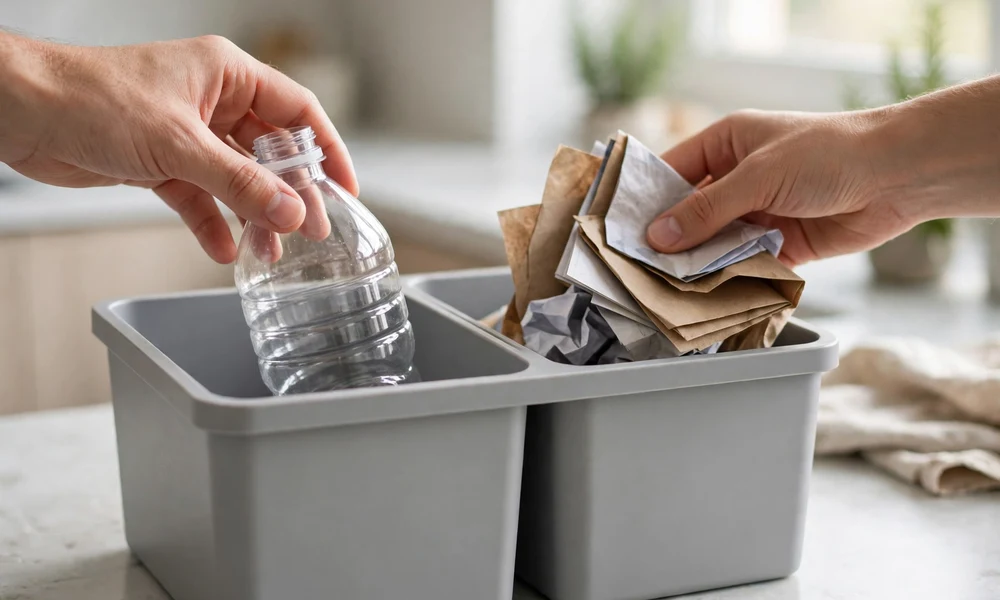
The best recycling bins share a short list of qualities, and you can check every one of them before you buy. First, the compartments are clearly marked, with colours, labels, or different lid shapes, so anyone in the household can sort without asking. Second, the compartments lift out and the whole unit wipes clean, because a recycling bin that cannot be cleaned becomes a smell in the kitchen within weeks. Third, the lids open easily with messy hands and close without slamming.
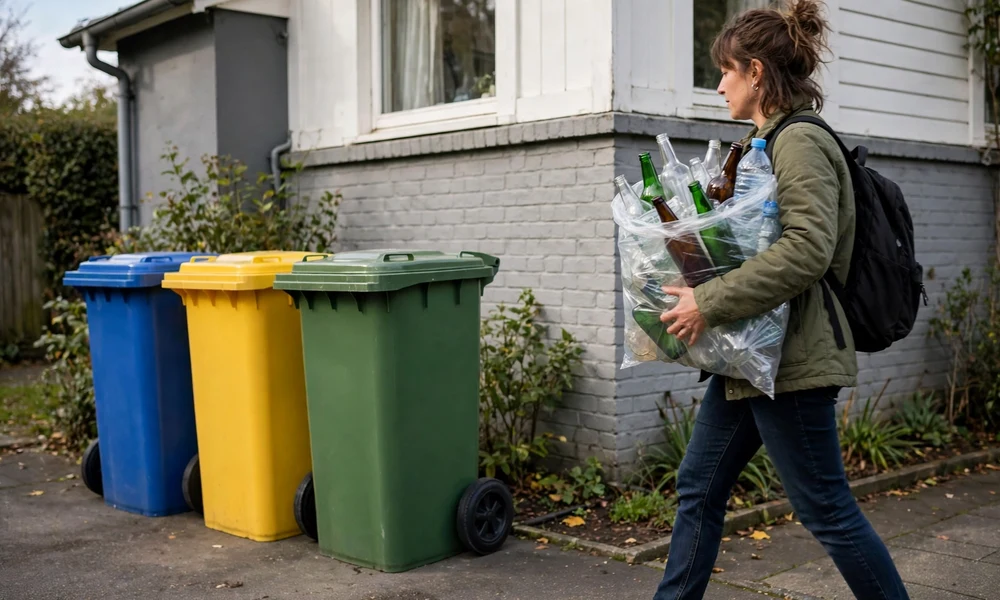
Labels are a small detail with an outsized effect. A bin with a blue lid for paper, a yellow lid for plastic, and a green lid for glass needs no explanation, and visitors and children sort correctly without being told. Odour control is the detail that decides whether a recycling station stays in the kitchen or gets banished to the garage. A lid that seals properly keeps smells in, and rinsing containers before they go in is the single most effective habit, because a milk bottle rinsed in seconds does not smell, while an unrinsed one smells within a day.
The Worst Recycling Bins: What to Avoid
The worst recycling bins all fail at the same thing: they make sorting harder than not sorting. A single-compartment bin with a recycling sticker on the front is not a recycling bin, it is a trash can with good intentions, and it guarantees that sorting happens never, because there is nowhere separate to put anything. A system with compartments so small that the paper section fills up by Tuesday is just as bad, because the overflow goes into the general waste and the habit dies within a week.
The second failure is a lid that fights you. A pedal that bends, sticks, or snaps turns every trip to the bin into a small struggle, and once the pedal goes the whole bin is useless, because the lid will not open without it. When you are choosing a bin, press the pedal or lift the lid a few times in the shop if you can, and walk away from any mechanism that flexes, wobbles, or sticks.
The third failure is a bin that cannot be cleaned. Fixed compartments that do not lift out trap spills and crumbs in corners you cannot reach, and a bin with nooks and ridges inside collects grime that no wipe can shift. A good recycling bin comes apart easily, with smooth inner surfaces and removable buckets that rinse under a tap.
Setting Up a Recycling Station That Stays Tidy
Location is the first decision, and it matters more than the bin itself. The recycling station belongs where the waste is created, which is usually beside the kitchen bin or under the counter near the sink, not in the garage or the utility room. Every step between the counter and the bin is a chance for sorting to fail, and a station that is a short walk away gets used, while one that is two rooms away gets ignored.
The routine is what keeps the station tidy between emptying days. Rinse bottles and tubs before they go in, flatten cardboard so it does not eat the whole compartment, and take the glass out as soon as its section is full, because glass is heavy and a full glass compartment makes the whole unit hard to move. If you want a guide that focuses on the general waste side of the kitchen, our guide to kitchen trash cans worth the counter space in 2026 covers the sizes and lids that suit a busy kitchen best.

Recycling Bins and the Rest of the Kitchen
A recycling bin is one part of a tidy kitchen, and the rest of the kit decides how much waste you create in the first place. Trash bags are the unglamorous half of the system: a bag that rips or leaks turns emptying the bin into a mess, and a bag that slips down inside the bin is the most annoying daily failure of all. Our guide to trash bags that do not rip, leak or smell in 2026 covers which bags actually hold up, including which ones fit dual-compartment bins without slipping. Our guide to the best and worst trash cans of 2026 explains why the best kitchens have both a trash can and a recycling station.
Buying Checklist: Six Checks Before You Pay
- Measure the space first: height under the counter, width of the gap, and the swing of the lid.
- Check that the compartments match your real waste, with the biggest section for paper and card.
- Look for clear labels or colours on each compartment, so anyone can sort without asking.
- Lift the compartments out and confirm they come apart easily for rinsing and cleaning.
- Test the lid mechanism several times; walk away from any pedal that flexes, sticks, or slams.
- Confirm the total capacity suits your household, and that bags for each compartment are easy to find.
Frequently Asked Questions
How many compartments does a recycling bin need?
Two is the minimum for a useful system: one for general waste and one for recycling. Three is better if your council collects glass separately, because glass is heavy and breaks, and it should not share a compartment with paper.
Do I need to rinse containers before recycling them?
Yes, a quick rinse is enough. It stops smells, keeps the bin clean, and stops food residue contaminating the paper and card in the next compartment. A swirl of cold water and a shake is all it takes.
What size recycling bin suits a family kitchen?
A total of around 16 gallons across the compartments suits most families, split so paper and card get the largest share. A couple needs less, and a family of five needs more or more frequent emptying.
Where should a recycling bin go in the kitchen?
Where the waste is created: beside the general bin, near the sink, or under the counter.
Are pedal lids or swing lids better for recycling bins?
Pedal lids are better for a busy kitchen, because they open with a foot when your hands are full, and a soft-close pedal lid shuts quietly and seals smells in. Swing lids are simpler and cheaper, and they suit a bin that lives inside a cupboard.
How do I stop my recycling bin from smelling?
Rinse containers before they go in, empty the bin before it overflows, and rinse the compartments out with warm soapy water once a week. A lid that seals properly helps, and a small compost caddy keeps food waste out of the recycling entirely.
The Bottom Line
The best recycling bin is the one with clear separate compartments sized to your real waste, lids that open easily with messy hands, and a size that fits the space beside your fridge or under your counter. Avoid single-compartment bins with a recycling sticker, lids that fight you, and compartments you cannot lift out and clean.


