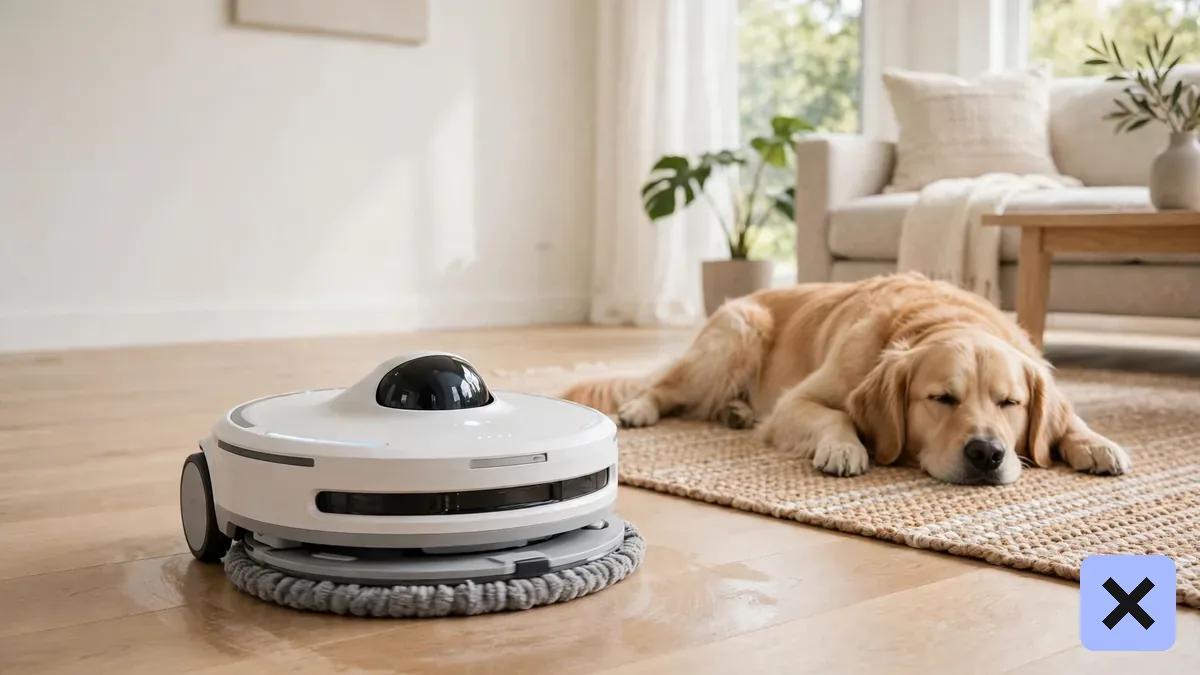
The Best Robot Mops for Small Apartments 2026 are the compact, quiet machines that clean a whole flat without taking over it. In a studio or one-bedroom home, a mop that is too wide, too loud, or too thirsty will spend more time in your way than on your floors. The right one glides under low furniture, turns in tight corners, and finishes a kitchen and living room on a single tank.
Small apartments create a very specific cleaning problem. Floors get dirty fast because the same few rooms carry all of your cooking, eating, and coming and going, and a spilled coffee can cross half the home before you notice it. A full-size mop and bucket feels like overkill, yet ignoring the floors for a week leaves them dull and sticky.
This guide explains how to judge size, water control, navigation, and noise, compares the main types of robot mop side by side, and picks the strongest options for different floors and budgets. Every recommendation is chosen for a small footprint first, because a mop that fits your apartment is one you will use.
Key takeaways
- Choose a mop under 33 centimetres wide so it fits between chair legs and under furniture.
- Adjustable water flow matters more than tank size, since over-wetting is the main risk.
- LiDAR or smart mapping saves time by cleaning in neat rows instead of random bumps.
- A slim dock in a hallway corner beats a bulky self-cleaning station in most small flats.
- Wash or replace mop pads weekly for the best results on hard floors.
Why Small Apartments Need a Different Robot Mop
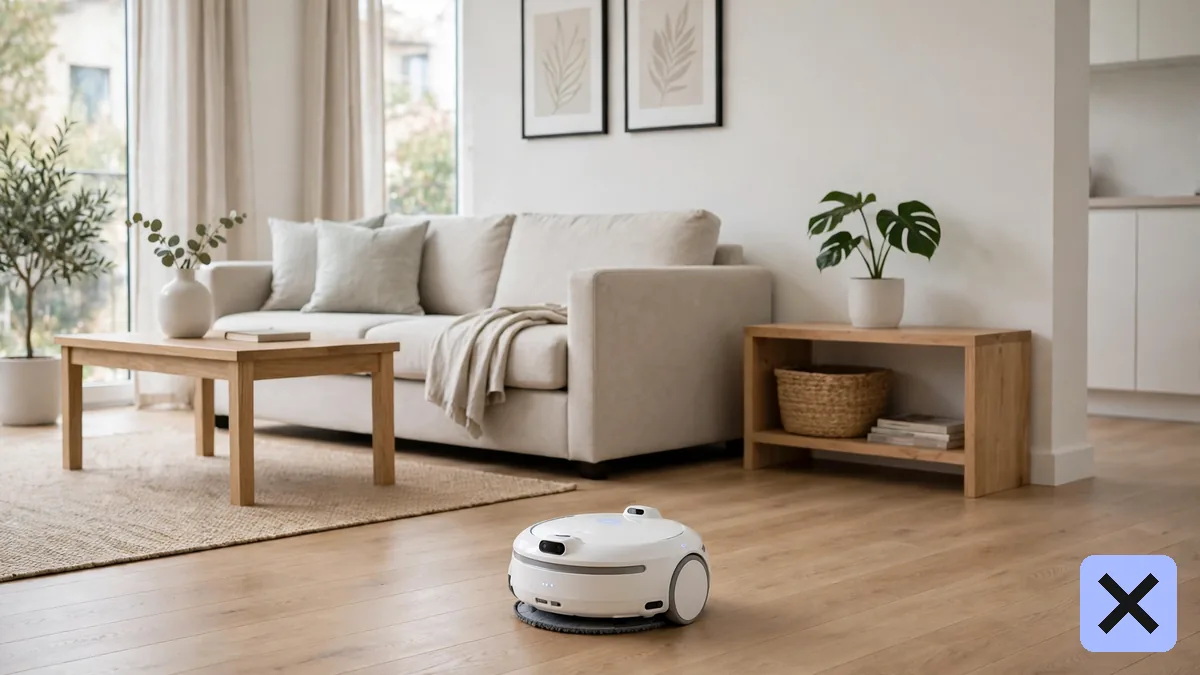
A robot mop designed for a large house is often the wrong tool for a flat. Big machines carry large tanks and wide cleaning paths, but they struggle to turn in a galley kitchen, squeeze past a dining table, or park neatly. In a small home, the mop needs to be nimble first and powerful second.
Noise matters more in a compact space too, because there is no spare room to close a door on. The best models run quietly enough to talk over, and many offer a quiet mode. Storage is the third difference: a self-emptying dock can eat a noticeable share of a hallway corner, so measure the dock spot before you buy. Pair a compact mop with the best robot vacuums for small apartments for a complete floor routine that still fits in one small corner.
What to Look for in a Robot Mop for a Small Apartment
Shopping is easier once you know which features genuinely help in a small space and which ones only add bulk. The five points below separate a mop you will love from one that gathers dust.
Size and Shape
Look for a round or D-shaped body no wider than about 33 centimetres, with a low profile that slips under beds and sofas. A D-shaped front reaches further into corners, while a round body turns more smoothly in narrow gaps. A tall machine will get stuck between furniture legs.
Water Control
Good water control is the most important feature for hard floors. A mop that dumps too much water leaves streaks and harms wooden boards over time. Choose at least three water levels, so you can use a light mist on sealed wood and a heavier flow on kitchen tiles, and one that lifts its pads over rugs.
Navigation and Mapping
In a small apartment, smart navigation is worth paying for. A LiDAR or camera-based mop maps the flat on its first run and cleans in straight, overlapping rows, while cheaper random models bounce around and miss patches. Mapping also lets you set no-go zones around pet bowls and cables.
Noise Level
Favour models rated under 60 decibels on their standard mode, roughly the volume of a normal conversation, which makes a real difference when you are working from home. If you plan to run the mop at night, look for a quiet mode and a dock that does not beep loudly.
Dock and Storage
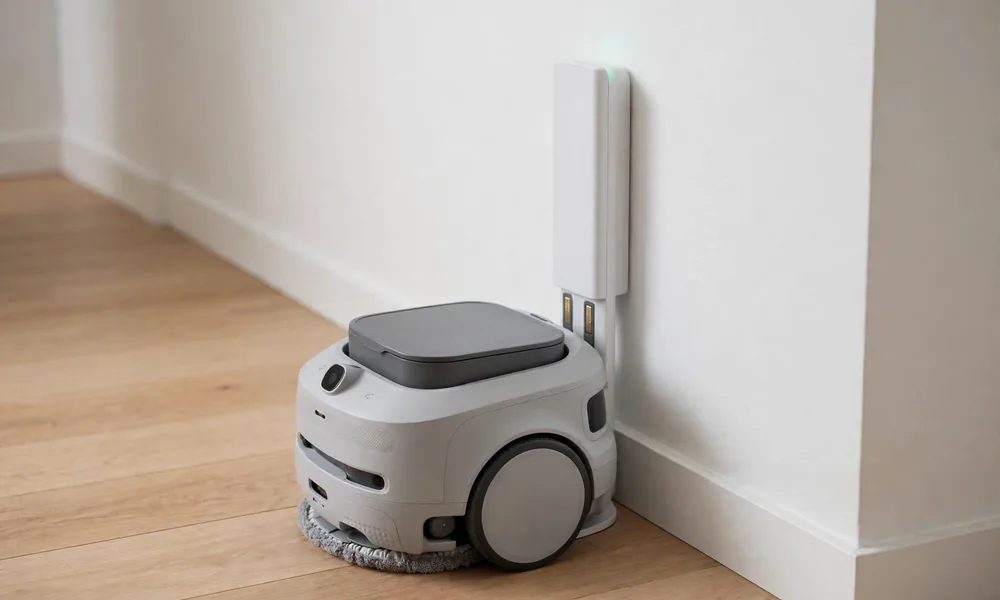
Judge the dock as carefully as the mop itself. A slim charging dock needs only a small patch of wall, while a self-cleaning station needs far more room and regular emptying, so a simple dock plus washable pads is often the smarter choice in a small apartment. For a broader view, compare these picks with the best robot mops overall to see how compact models stack up against full-size machines.
Robot Mop Types Compared
Most robot mops for small apartments fall into four groups, and the table below shows how they differ on the points that matter most.
| Type | Best for | Water control | Dock size | Noise |
|---|---|---|---|---|
| Spinning pad mop | Sticky kitchen floors | Good | Small | Moderate |
| Vibrating pad mop | Everyday dust and light marks | Good | Small | Low |
| Vacuum and mop combo | Flats with mixed floors | Fair | Medium | Moderate |
| Self-cleaning dock mop | Hands-off cleaning | Excellent | Large | Higher |
Spinning pad models scrub hardest, which helps with dried coffee rings and kitchen grease, while vibrating pad models are quieter and gentler on sealed wood. Vacuum and mop combos save space by doing two jobs in one body, though their mopping is usually lighter. Self-cleaning dock models are the most convenient, but their stations are the hardest to fit into a small flat.
Best Robot Mops for Small Apartments 2026
The picks below are organised by the job each one does best. All are compact enough for a studio or one-bedroom flat, with proper water control rather than a single damp setting.
Best Overall: Compact Spinning Pad Mop
The best overall choice for most small apartments is a compact spinning pad mop with LiDAR navigation and three water levels. It scrubs dried marks far better than a flat dragging pad, yet it stays slim enough to pass under most sofas and beds. It learns a one-bedroom layout in a single run, its pads lift over low rugs, and the app lets you send it to the kitchen alone after a spill. Keep spare pads on hand, since spinning pads need washing after every two or three runs.
Best for Hardwood Floors: Gentle Vibrating Pad Mop
Sealed hardwood needs a light touch, and a gentle vibrating pad mop is the safest option for it. It uses a fine mist and a rapid, small vibration to lift dust and footprints without soaking the boards, and the low water setting dries within a few minutes. It is also one of the quietest types, so it suits open-plan flats, and for daily hardwood care it is the most careful choice. If most of your floors are wood, see the best robot mops for hardwood floors for more detail on protecting boards while keeping them clean.
Best Budget: Slim Vacuum and Mop Combo
If you want one machine to handle both dust and damp mopping, a slim vacuum and mop combo is the best value. It vacuums crumbs and hair first, then drags a damp pad behind it, so a single pass leaves hard floors cleaner, and the combined body means only one dock and one charging spot. The trade-off is mopping strength: it will not scrub a dried stain like a spinning pad, so keep a manual mop for a deep clean.
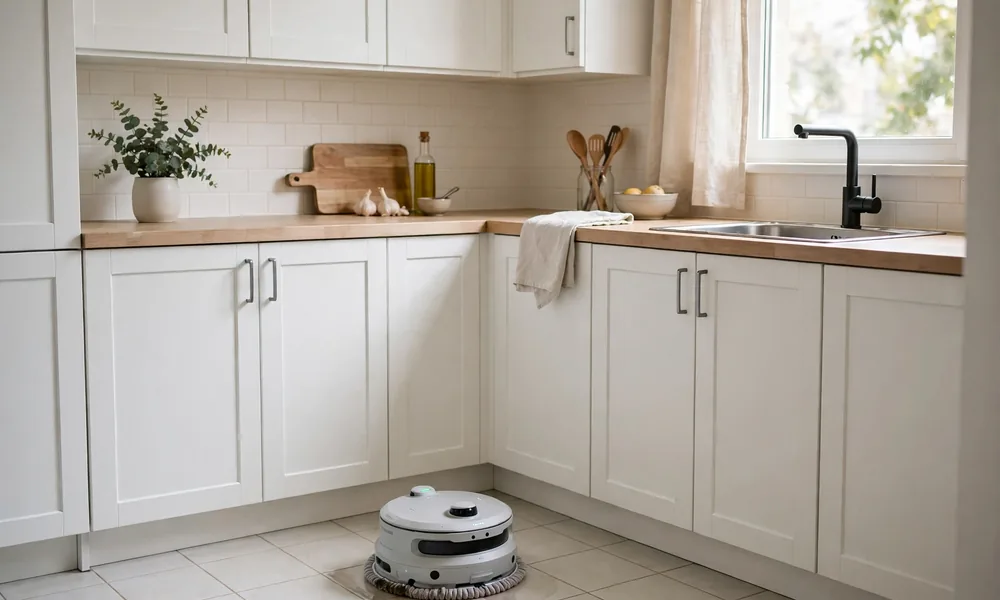
Best for Pet Owners: Strong Suction Mop Combo
Pet hair and muddy paws are a daily test in a small flat, where there is nowhere for the mess to hide. A strong suction mop combo with a tangle-resistant brush handles hair well, and its larger dustbin means fewer trips to empty it. Look for a pet mode that raises suction and water flow near food bowls. Washable pads matter even more with pets, since a dirty pad spreads smells, so rinse them after each run.
Best Quiet Pick: Low-Noise Vibrating Mop
For flats where someone works from home or sleeps lightly, a low-noise vibrating mop is the best pick. It cleans at a soft hum, and its quiet mode is quiet enough to run during a video call. The cleaning is gentle, so it suits homes with sealed wood, laminate, and tile that are cleaned often. Run it every day or two and it will keep floors fresh without becoming a distraction.
Docking and Storage in a Small Flat
Where the mop lives matters as much as how it cleans. The best spot is a flat stretch of wall with a power socket nearby, a little clearance on both sides, and no rug in front of the dock. Hallway corners and the space beside a wardrobe work well, provided the mop can drive straight in and out. Avoid direct sunlight and damp spots, and keep spare pads and a sensor cloth in a basket near the dock.
Keeping Your Robot Mop Working Well
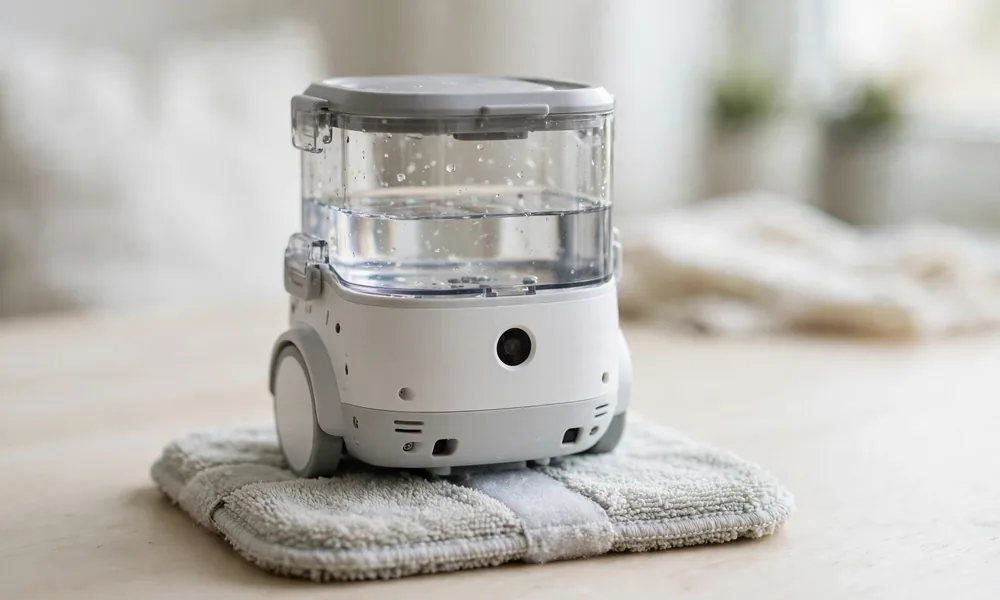
A robot mop is only as good as its pads, tank, and sensors. Rinse the pads after every run and machine wash them weekly, so they stay absorbent and fresh. Empty and rinse the water tank after each use, wipe the sensors with a dry cloth once a week, check the wheels for trapped hair, and replace pads every two to three months.
Common Mistakes to Avoid
The most common mistake is buying a mop that is too big for the flat, so measure doorways, furniture gaps, and the dock spot before ordering. The second is using too much water or the wrong cleaner: only use approved cleaners, never pour bleach into the tank, and start on the lowest water setting. The third is skipping the first mapping run: let the mop map the flat, then set no-go zones around cables, pet bowls, and rug fringes.
Before You Buy Checklist
- Measure the mop against your narrowest furniture gap and doorway.
- Check that the dock fits your chosen wall spot.
- Confirm three water levels and a lift function for rugs.
- Look for LiDAR or smart mapping with no-go zones in the app.
- Check the noise rating and whether a quiet mode is included.
- Confirm spare pads and filters are easy to buy and affordable.
Frequently Asked Questions
Are robot mops worth it in a small apartment?
Yes, they are often more useful in a small apartment than in a large house. A compact flat is cleaned in one short run, so the mop finishes quickly and keeps floors fresh with minimal effort.
Can a robot mop replace a regular mop?
For daily upkeep, yes. A robot mop handles dust, footprints, and light spills very well, though you will still want a manual mop for a deep clean every few weeks.
Will a robot mop damage hardwood floors?
Not if you choose a model with adjustable water flow and use the lowest setting on sealed wood. Avoid soaking the boards and never use unapproved cleaners.
How often should I run a robot mop in a small flat?
Every day or two is ideal, since dirt builds up quickly in a compact space. A short daily run keeps floors clean and each clean light work.
Do robot mops work on rugs and carpets?
Most robot mops are designed for hard floors and will either avoid rugs or lift their pads over them. A vacuum and mop combo can vacuum low rugs, but it will not deep clean carpet.
How long does a robot mop battery last?
Most compact models run for 90 to 150 minutes on a charge, which is more than enough for a small apartment. The mop usually returns to its dock to recharge and resumes if the job is not finished.
The Bottom Line
The Best Robot Mops for Small Apartments 2026 are the slim, quiet, well-mapped machines that fit your home instead of fighting it. Choose a compact spinning pad mop for the strongest all-round clean, a gentle vibrating model for hardwood, or a slim combo for vacuuming and mopping in one. Measure your space, pick the right water level for each floor, and run it often, and your small apartment will stay clean with almost no effort from you.