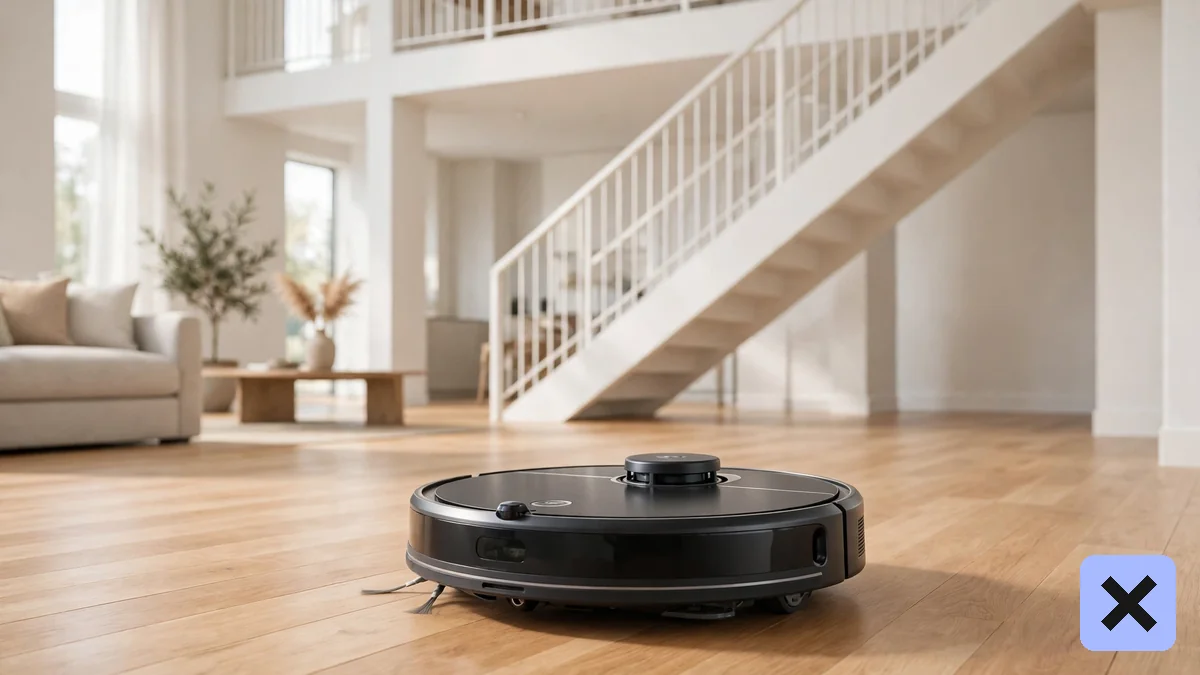
The best robot vacuums for small apartments in 2026 are slim, quiet, and smart enough to clean a compact home without taking it over. In a studio or one-bedroom flat, every square foot matters, and a robot that is too tall, too loud, or too bulky quickly becomes a problem rather than a solution. The right model slides under low furniture, maps tight corners, and runs while you work, cook, or relax.
Small homes suit robot vacuums well in many ways. There is less floor to cover, so one charge easily finishes the job, and a daily run stops dust, crumbs, and pet hair from building up. The catch is that the margin for error is smaller: a robot that stalls on a rug edge or blocks a hallway will annoy you daily.
This guide explains what to look for, compares the main types of compact robot vacuums, and helps you pick the right one for your layout, floors, and budget.
Key Takeaways
- Choose a robot under 3.5 inches tall so it can clean under beds, sofas, and low cabinets.
- LiDAR navigation matters more in small flats than raw suction, because tight layouts punish random bump-and-go robots.
- A compact or self-empty dock saves effort, but measure the wall clearance before you buy.
- Quieter models under 60 decibels are worth paying for when you live, work, and sleep in one room.
- Empty the dustbin often and clear cables and small rugs before each run for the best results.
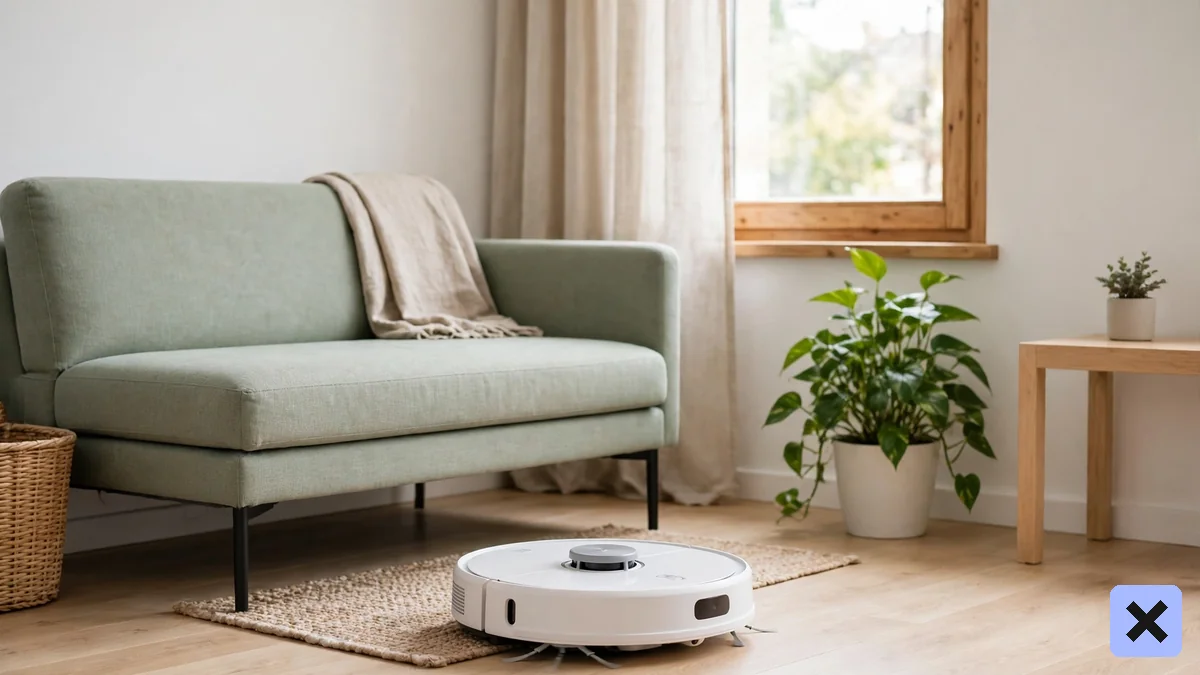
Why Small Apartments Need a Different Robot Vacuum
A robot built for a large family home is designed around big batteries and wide cleaning paths. In a compact home, the robot spends more time turning and squeezing past furniture than crossing open floor, so agility and intelligence beat brute force.
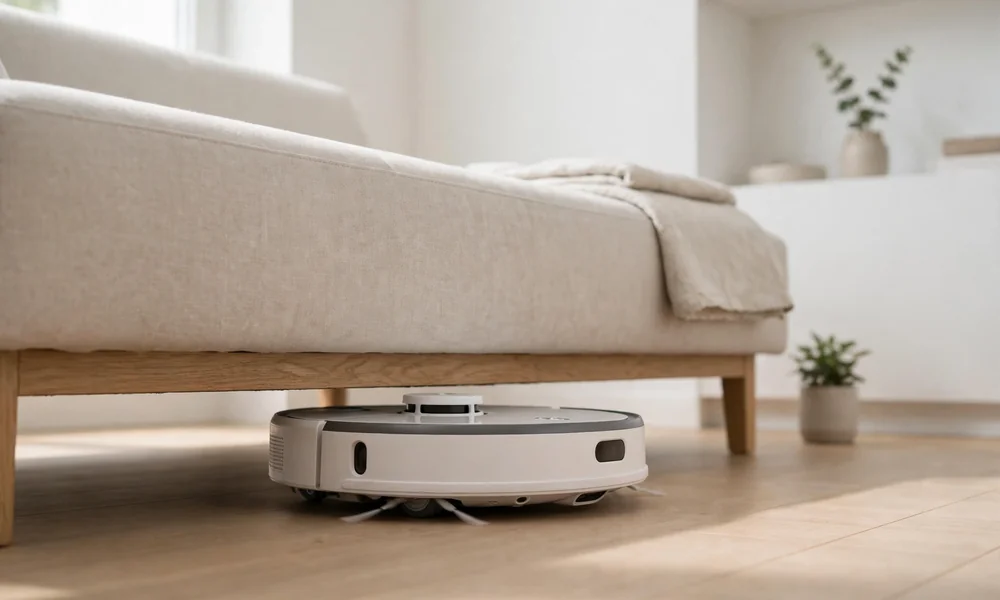
Height is the first thing to check. Many sofas and beds in small flats sit low, and the dust underneath them is exactly the dust you never reach with a normal vacuum. A robot that measures 3.8 inches tall will bounce off the furniture and leave that dirt behind, while a slim model at 3 inches or less glides underneath and cleans the spots you forget about.
What to Look for in a Robot Vacuum for a Small Apartment
Shopping for a compact home is mostly about avoiding the wrong features rather than chasing the biggest numbers.
Height and Slim Design
Measure the clearance under your lowest furniture before you shop. Most beds and sofas leave between 3 and 5 inches of space, and the robot needs a small margin to move freely. A height of 3.5 inches or less is a good target, and the slimmest models dip under 3 inches with a low-profile sensor.
Navigation and Mapping
Navigation is where small apartments punish cheap robots. Random-navigation models bounce from wall to wall and rely on luck to cover the floor. In an open house that can still work, but in a flat full of chair legs, plant stands, and door frames, a random robot misses corners and repeats the same patch while ignoring others.
LiDAR mapping is the clear winner for small spaces. A LiDAR robot scans the room, builds a map, and cleans in neat rows, which means it finishes faster and rarely gets stuck. Once the map exists, you can send the robot to clean just the kitchen after cooking or just the hallway after guests leave, which is genuinely useful in a small home.
Suction Power and Floor Types
Suction matters, but only up to a point. On hard floors, even a modest 2,000 to 3,000 pascals picks up dust and crumbs easily, and extra suction mainly adds noise. On low-pile rugs, stronger suction helps pull dirt from the fibres, so a model that boosts power automatically when it detects carpet is ideal.

Most small apartments mix hard floors with one or two rugs, so the best choice is a robot that handles both without you changing settings. Our guide to the best robot vacuums for hardwood floors goes deeper into which models handle bare floors best.
Dustbin Size and Self-Empty Docks
A small dustbin fills fast, especially if you have a pet or cook often. Robots with bins under 300 millilitres may need emptying after every run, which defeats the point of automation. A bin of 400 millilitres or more is more practical, and a self-empty dock solves the problem entirely by moving the dirt into a bag you change every month or two.
Noise Level
Noise is measured in decibels, and the difference between 55 and 70 decibels is dramatic. A robot at 55 decibels sounds like a quiet conversation, while one at 70 sounds like a traditional vacuum. In a one-room home, that difference decides whether you can run the robot while you work from home.
App Control and Scheduling
A good app turns a robot vacuum from a gadget into a habit. Look for room-by-room cleaning, no-go zones, and scheduling, so the robot can clean the kitchen every evening and the bedroom every morning without you touching it. Voice control through a smart speaker is a bonus, but the schedule is the feature that matters most.
Best Robot Vacuums for Small Apartments Compared
The table below compares the five main types of robot vacuums that suit small apartments, so you can see the trade-offs at a glance.
| Type | Typical Height | Navigation | Best For | Watch Out For |
|---|---|---|---|---|
| Slim LiDAR model | Under 3.5 inches | LiDAR mapping | Low furniture and tight layouts | Higher price |
| Budget mapping model | 3.5 to 3.8 inches | LiDAR or gyroscope | First-time buyers on a budget | Smaller dustbin |
| Mop and vacuum hybrid | 3.5 to 4 inches | LiDAR mapping | Hard floors that need mopping | Needs regular pad washing |
| Self-empty slim model | 3.5 to 3.8 inches | LiDAR mapping | Pet owners and busy schedules | Bulky dock footprint |
| Compact pet-hair model | Under 3.5 inches | LiDAR mapping | Flats with cats or dogs | Brush needs frequent cleaning |
Best Picks by Situation
Best Overall for Small Apartments
The best overall choice is a slim LiDAR robot with strong hard-floor cleaning, quiet operation, and a compact dock. It should be short enough to reach under your sofa, smart enough to map a small flat in one pass, and quiet enough to run while you are home.
Best for Low Furniture and Tight Corners
If your flat has a low bed or a low sofa, height is your deciding factor. Choose the slimmest LiDAR model you can find, ideally under 3.2 inches, and check the sensor turret height rather than just the body.
Best for Pet Hair in a Small Flat
Pet hair is a bigger problem in a small apartment because there is nowhere for it to hide. A pet-focused robot needs a tangle-resistant brush, strong suction on carpet, and a dustbin you can empty without spreading hair everywhere.
Rubber brush rollers resist tangles far better than bristle brushes. A self-empty dock is especially valuable for pet owners, because the hair leaves your home in a sealed bag. For a closer look at models built for shedding, see our guide to the best robot vacuums for pet hair.
Best Budget Pick
A budget robot can still be a good buy for a small apartment, as long as it has real mapping. The cheapest random-navigation robots are a false economy in a small flat, because they miss spots and get stuck, but a budget LiDAR model cleans nearly as well as a premium one on hard floors. The differences are usually a smaller dustbin, a louder motor, and fewer app features. For the wider market beyond small-space models, our roundup of the best robot vacuums of 2026 covers the full range.
Setting Up a Robot Vacuum in a Small Apartment
Good setup takes twenty minutes and saves hours of frustration. Start by choosing the dock spot: a power outlet, a flat stretch of wall, and clear space of at least half a metre on each side so the robot can approach straight on.
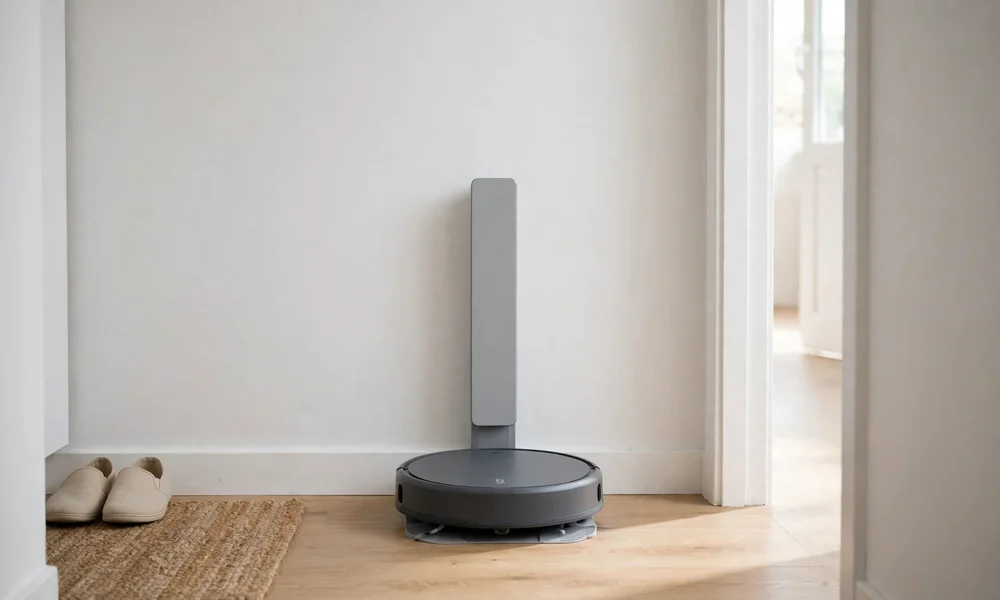
Then tidy the floor the way the robot needs it. Lift cables off the floor, move small rugs with tassels, and pick up socks and pet toys. It is the single biggest factor in whether the robot finishes its run. Finally, set a schedule that fits your life: a daily run while you are out or a quiet evening run both work well.
Common Mistakes to Avoid
The most common mistake is buying the most powerful robot instead of the slimmest one. A robot that cannot reach under your furniture leaves the dirtiest areas untouched, no matter how strong its suction is.
The third mistake is expecting the robot to replace all cleaning. It keeps floors clean day to day, but you will still need to vacuum stairs and upholstery yourself and mop properly from time to time.
Small Apartment Robot Vacuum Checklist
- Measure the clearance under your bed, sofa, and lowest furniture before you buy.
- Choose LiDAR mapping over random navigation for tight, furniture-filled layouts.
- Check the dock dimensions and make sure you have a suitable spot with power.
- Pick a noise level under 60 decibels if you work or sleep in the same room.
- Make sure the dustbin holds at least 400 millilitres, or choose a self-empty dock.
- Clear cables, tasselled rugs, and small objects from the floor before the first run.
Frequently Asked Questions
Are robot vacuums worth it in a small apartment?
Yes, often more so than in a large home. A small flat takes only twenty to thirty minutes to clean, one charge covers the whole space, and a daily run keeps dust and hair under control. The key is choosing a slim, well-mapped model that fits your furniture.
What size robot vacuum is best for a small apartment?
A diameter of around 13 inches and a height under 3.5 inches works well in most small flats. Height matters more than diameter, because it decides whether the robot can clean under beds and sofas.
Do robot vacuums work well on rugs in small apartments?
Yes, on low-pile and flat-weave rugs they work very well, especially models that boost suction automatically on carpet. Thick shag rugs and rugs with long tassels can cause problems, so lift them before a run or set a no-go zone around them in the app.
How loud are robot vacuums for small apartments?
Most models run between 55 and 70 decibels depending on the power mode. Quiet modes sit at the lower end and are fine while you work or watch television, so save maximum power for times when you are out.
Do I need a self-empty dock in a small apartment?
It is convenient but not essential. A self-empty dock means you only handle dirt every month or two, which is valuable with pets or allergies. If space is very tight, a robot with a large dustbin that you empty twice a week is a good alternative.
Can a robot vacuum replace a regular vacuum in a small flat?
For daily floor cleaning, mostly yes. A robot handles hard floors and low-pile rugs well, but it cannot clean stairs, sofas, or curtains, so keep a small handheld vacuum for those jobs.
The Bottom Line
The best robot vacuum for a small apartment is the one that fits your home, not the one with the biggest numbers on the box. Choose a slim LiDAR model that slides under your furniture, maps your rooms properly, and runs quietly enough to use every day. Measure your clearances, give the dock a proper spot, and let a daily schedule do the work.