A good room divider does something no curtain ever can: it stands in the middle of a room and turns one open space into two useful ones. A room divider is a freestanding partition, not a window dressing. It does not hang from a rod over glass or need a wall to hold it up. It stands on its own feet, and the moment it is in place, a studio flat gains a bedroom and a living room gains a home office. This guide judges room dividers on how well they stand, how much privacy they give, and how easily they move.
Most people buy a divider the way they buy a curtain, and that is where the trouble starts. A curtain is judged on fabric and drape; a divider is judged on stability, height, and footprint. This guide keeps those jobs separate, so you buy the partition your room actually needs.
Key Takeaways
- A room divider is a freestanding partition, not a window covering, and should be judged on stability first.
- Folding screens are the most flexible, bookcase dividers add storage, curtain-rod dividers are the softest and cheapest, and freestanding panels give the most privacy.
- Height decides privacy: below 150 centimetres a divider marks a zone, above 170 centimetres it genuinely hides what is behind it.
- Measure the floor space the divider will occupy, including its feet and folding angle, not just the panel width.
- Choose a divider you can move alone in under a minute, or it will stay in the wrong place.
What a Room Divider Actually Does
A room divider splits a space without building a wall, in three ways at once: it blocks the view, so the bed is not the first thing a guest sees in a studio flat; it marks a boundary, so a desk area reads as an office; and it softens sound and movement. No divider does all three perfectly: a solid panel blocks the view best, a bookcase marks a boundary while storing things, and a fabric screen softens a room but blocks little sound.
It is not a curtain, even when made of fabric. Curtains hang at windows to control light and give privacy from outside, and our guide to curtains that make any room feel finished covers that job. A divider stands away from the window, in open floor, to split the room itself: it is bought to shape the space, and anything it stores is a bonus.
The Main Types of Room Divider
Room dividers come in four main families. The folding screen is the classic: three or four hinged panels that zigzag across the floor. It is light, folds flat for storage, and comes in every style from plain wood to printed fabric. Its weakness is stability: a tall screen needs a proper zigzag angle to stand, and a child or dog running into it will knock it over.
The bookcase divider is the hardest-working type: an open shelving unit placed across a room, dividing the space while holding books, plants, and boxes. It is the most stable divider, because its own weight holds it in place, and the only type that earns its floor space twice. The trade-off is weight: moving a full bookcase means emptying the shelves first. It also divides less completely than a solid panel, because open shelves let light and glimpses through, which often suits a small flat. Our guide to bookshelves that make small rooms feel bigger covers choosing shelves that do not swallow a room.
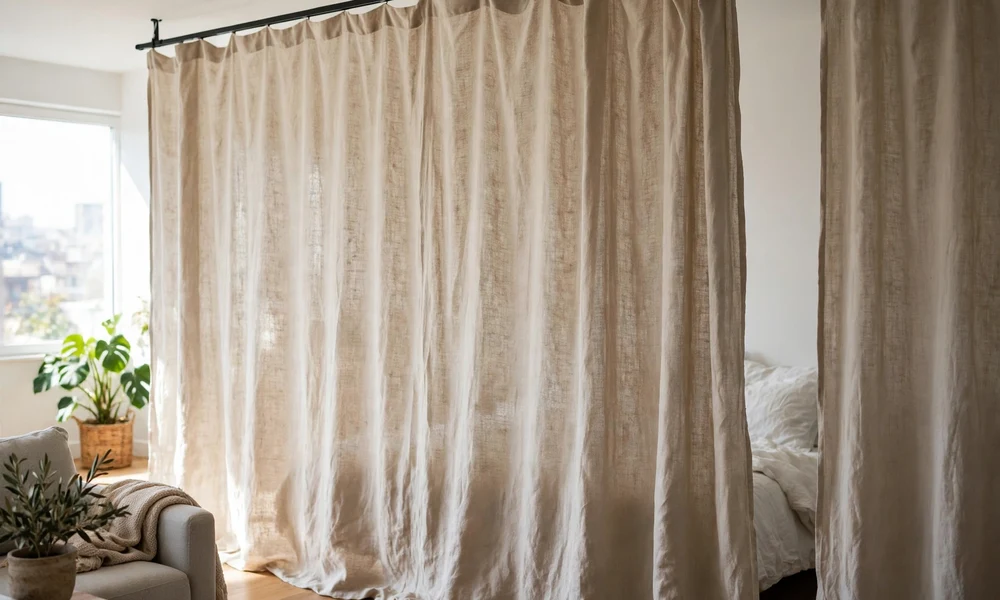
The curtain-rod room divider is the softest option: a ceiling track or tension rod with fabric panels hung across the room, not across a window. It is the cheapest way to divide a large space, takes up almost no floor, and softens sound. It is the least private in one sense: fabric moves, gaps open at the edges, and it blocks little sound. It suits a bedroom corner in a studio, where the goal is a visual screen rather than a sealed room. Choose a ceiling track over a tension rod, because a track holds heavier fabric and will not slip.
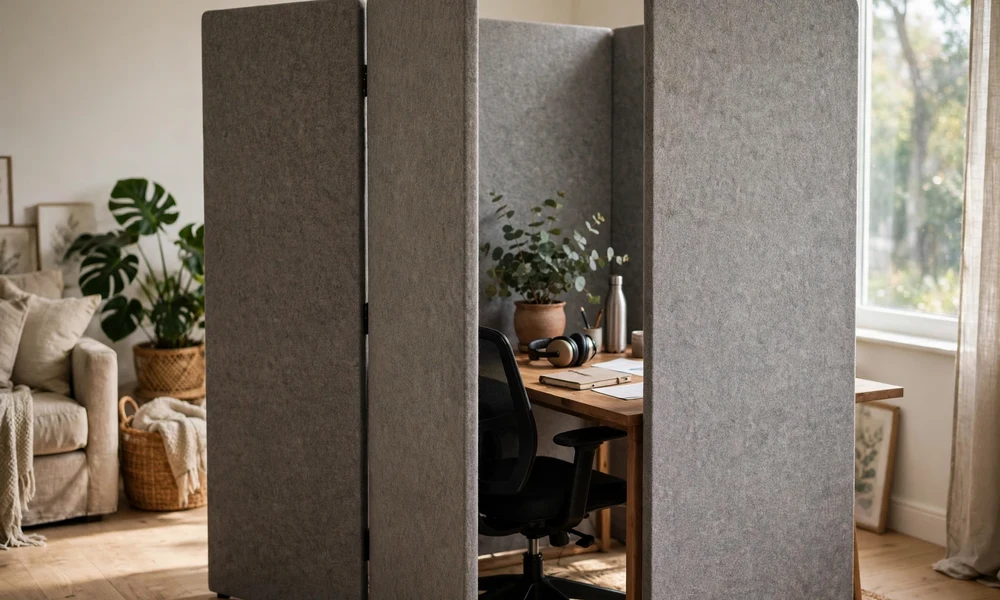
Freestanding panels are the modern answer: single solid panels on feet or castors, in wood, acoustic felt, or frosted acrylic, giving a clean surface that blocks the view and deadens sound. They are the best choice for video calls or focused work, and the worst when you want the divider to disappear, because a solid panel is always visibly present. Look for weighted feet, and for home working an acoustic felt panel beats every other type for concentration.
Room Dividers Compared
| Type | Privacy | Stability | Best for | Watch out for |
|---|---|---|---|---|
| Folding screen | Medium to high | Medium | Renters, flexible rooms | Tips easily if stood straight |
| Bookcase divider | Medium | High | Studios, living rooms | Heavy to move, open shelves |
| Curtain-rod divider | Medium | High once fitted | Bedroom corners, soft zones | Gaps at edges, little sound blocking |
| Freestanding panel | High | High | Home offices, video calls | Can look stark, needs floor space |

Choosing a Divider by Room
In a studio flat, the divider has the hardest job: turning one room into two without making either half feel like a corridor. A folding screen or curtain-rod divider works best, opening up by day and closing at night for privacy. Put the bed behind the divider, tall enough to hide it from the front door, and leave 60 centimetres of walkway around its end.
In a bedroom shared by two people on different schedules, the divider is about sleep: one reads late, the other sleeps early, and a divider that blocks lamplight beats one that merely looks good. A solid panel or heavy curtain divider works here. A tall wardrobe can do a similar job, and our guide to wardrobes that hold more without eating the room is worth reading if storage is part of the plan.
In a home office carved out of a living room, the divider is about concentration and video calls: a tidy background on camera and a barrier that tells the household you are working. A freestanding acoustic panel behind your chair is the best tool for this. Sit in your chair and check what the camera will see before you buy.
In a large living room, the divider makes the space feel intentional rather than empty: a low bookcase divider between sofa and dining table makes both halves feel finished. A row of tall plants on a low bench can do the same job softly, though it needs a bright spot and regular watering.
Height, Width, and Stability
Height decides whether a divider divides. Below 150 centimetres it marks a zone: you can see over it, light flows over it, and the room still feels like one space. That suits zoning a living room, not hiding a bed. Between 150 and 170 it blocks a seated person’s view but not a standing one. Above 170 it genuinely hides what is behind it, and that is the height to buy when privacy is the point. Measure your own standing eye level before you shop: a divider five centimetres too short fails every time someone walks past.
Width is where most buyers go wrong, because they measure the gap and forget the divider’s own footprint. A folding screen needs its zigzag angle, adding 20 to 30 centimetres of depth. A freestanding panel needs its feet, which stick out on both sides. Measure the floor where it will stand, including the skirting boards, and leave 60 centimetres of walkway at one end. A divider that blocks the natural path through a room will be resented within a week.
Stability is the measurement nobody takes, and it matters most in a home with children, pets, or a busy hallway. Push a divider gently from the side at the height a child would reach, and see whether it rocks. Good hinges hold their angle, a good bookcase is heavy enough that a push moves it an inch, and a good panel has wide, weighted feet. With small children, strap a tall bookcase divider to the wall. Never place a divider where it blocks a fire exit.
Materials, Light, and Privacy
The material decides how much light passes through. Solid wood blocks light completely, which gives privacy but can leave the far side dark. Frosted acrylic or fabric lets light through while blocking the view, the best compromise in a small flat.
Privacy is not only about sight: a divider that blocks the view but lets every word through promises privacy without delivering it. If sound matters, choose heavy materials. A thin fabric screen will not stop a conversation, however tall it is.
Mistakes to Avoid
The most common mistake is buying a divider too short, too narrow, or too light, so it marks a space without dividing it. The second is buying for the photograph rather than the room. The third is forgetting the floor: a divider on a thick rug sits unevenly, and on a polished floor it slides unless its feet grip.
Finally, do not forget the ceiling: a divider that stops well short of it will always let sound and light over the top, and will never seal a room the way a wall does.
Room Divider Checklist
- Measure the floor space, including feet and folding angle, and leave 60 centimetres of walkway at one end.
- Choose the height for the job: above 170 centimetres for privacy, below 150 for gentle zoning.
- Push the divider from the side before you commit, and check it stands firm on your floor.
- Check the light at the time of day you will use the space.
- Make sure you can move it alone in under a minute.
- Keep the path to the door clear, and never block a fire exit.
Frequently Asked Questions
Is a room divider the same as a curtain?
No. A curtain hangs at a window to control light and privacy from outside, while a room divider stands freestanding in the middle of a room to split the space. A curtain on a ceiling rod across a room can act as a divider, but with softer privacy and no stability of its own.
How tall should a room divider be?
Above 170 centimetres for genuine privacy, so a standing person cannot see over it. For gentle zoning, 120 to 150 centimetres marks the boundary while keeping the room open.
Will a room divider block sound?
Only partly. Heavy fabric, solid wood, and acoustic felt reduce echo and muffle conversation, but no freestanding divider seals sound like a wall. Choose the heaviest material you can, and accept some sound will travel over the top.
Can I use a room divider in a rented flat?
Yes. A freestanding divider needs no fixing to the wall, so it creates a bedroom or office without drilling, and you can take it with you when you move. A ceiling track does need screws, so check your tenancy agreement first.
What is the best room divider for a studio flat?
A folding screen or curtain-rod divider, because both open up by day so the flat feels large, and close at night for privacy. A bookcase divider is best if you also need storage.
How do I stop a folding screen falling over?
Stand it in a proper zigzag, not a straight line, so the angles brace each other, on a firm floor rather than a thick rug, with solid hinges that hold their position.
Bottom Line
The best room divider in 2026 matches the job your room needs: a folding screen for flexibility, a bookcase divider for storage, a curtain-rod divider for softness, or a freestanding panel for privacy at work. Measure the floor, buy tall enough to hide what must be hidden, test the stability, and choose one you can move alone. Done right, a divider does not shrink a room. It gives you two rooms where you only had one.