
Wardrobes That Hold More Without Eating the Room in 2026
The best wardrobes of 2026 are not the biggest ones. They are the ones that store the most clothes in the least floor space, so a small bedroom still feels like a bedroom instead of a storage cupboard with a bed squeezed into it. A wardrobe earns its place by what it holds, not by how much wall it covers, and the cleverest designs pack a surprising amount into a slim footprint.
Most of us buy wardrobes the wrong way round. We fall for the finish and the mirror, and only later discover that the rail is too short, the shelves are fixed at the wrong heights, and the bottom has become a graveyard of shoes and bags. This guide puts capacity first, footprint second and looks third.
Key Takeaways
- Capacity is about the inside, not the outside: a slim wardrobe with a double rail and adjustable shelves can hold more than a wide wardrobe with one rail and fixed shelves.
- Depth matters more than width: a wardrobe 60 centimetres deep holds hangers properly, while a shallow one creases everything it touches.
- Sliding doors save real floor space: they need no swing clearance, which can free up nearly a square metre in a small bedroom.
- Measure your clothes, not just the wall: count your long coats, your shirts and your folded jumpers before you choose a layout.
- Plan the bottom and the top too: shoes below and out-of-season storage above turn dead space into useful storage.
Why Most Wardrobes Waste a Third of Their Space
Open a typical wardrobe and you will see the same waste: one long rail across the top, a single shelf above it, and a large empty space below the hanging clothes where nothing lives except a few shoes. The clothes occupy the top half. The bottom half is air, wasted in almost every flat-pack wardrobe.
The second waste is the shelf above the rail, usually fixed at a height that fits nothing properly: too high for folded jumpers, too low for storage boxes, and too deep to see what is at the back. The third waste is the door. A hinged door needs up to 60 centimetres of clear floor to swing open, which in a small room is often the most useful patch of floor you have.
The wardrobes that hold more in 2026 fix all three wastes at once: a second rail for short clothes, adjustable shelves, and sliding doors that need no swing arc. None of this needs a bigger wardrobe. It needs a better-planned one.
What Makes a Wardrobe Hold More
A wardrobe’s capacity is decided by four things: depth, rails, shelves and drawers. Get those right and even a modest wardrobe holds a surprising amount; get them wrong and even a large one feels cramped within a month.
Depth: the 60-centimetre rule
A hanger is about 45 centimetres wide, and a coat on a hanger needs a little more. A wardrobe 60 centimetres deep lets clothes hang freely without brushing the doors or the back panel, which keeps them from creasing. A wardrobe 45 centimetres deep might look slimmer, but inside, every sleeve presses against the door, and every shirt you pull out drags two others with it. Depth is the one dimension you cannot fix later, so do not compromise on it unless you have no choice.
Double hanging: the single biggest capacity win
A single rail wastes the space below short clothes. Shirts, blouses and trousers only need about 100 centimetres of hanging height, while a full-length rail gives them 170 or more. A double rail stacks two short sections in the same height, and suddenly the same wardrobe holds nearly twice as many hanging garments. Keep one section full-length for coats and dresses and double up the rest: a second rail and a few brackets.
Adjustable shelves: storage that changes with the seasons
Fixed shelves are a gamble. Your jumpers are thick in winter and thin in summer, and the boxes you buy next year will not match the gaps you have this year. Adjustable shelves, moved on pins or slots, let the wardrobe change with you. A shelf at the wrong height is worse than no shelf at all, because it creates a gap too small to use and too big to ignore.
Drawers: where the small things go
Underwear, socks, belts, scarves and jewellery do not hang well and do not stack well on shelves. They belong in drawers, and a wardrobe with two or three drawers built into its base holds far more, far more tidily, than the same space left open. Drawers also stop the classic problem of the pile: folded clothes stacked on a shelf eventually lean and fall, while the same clothes in a drawer stay put. If the wardrobe you like has no drawers, add stacking boxes, but built-in drawers use the full depth of the wardrobe instead of half of it.
The Wardrobe Types That Save the Most Room
Not every wardrobe shape suits a small room. The right type depends on how much wall you have, how much clearance you can spare, and whether you want it to disappear into the room or stand as furniture in its own right.
| Wardrobe type | Floor space needed | Storage per metre of wall | Best for |
|---|---|---|---|
| Sliding-door wardrobe | Low, no swing arc | High | Small bedrooms, tight layouts |
| Hinged-door wardrobe | Medium, needs swing space | High | Rooms with space in front |
| Fitted wardrobe | Low, wall to wall | Highest | Awkward walls, floor to ceiling |
| Open wardrobe or rail | Low | Medium | Spare rooms, capsule wardrobes |
Sliding-door wardrobes are the small-room champions. Because the doors glide sideways, you can put the bed or a chest of drawers right up against them, and the wardrobe gives back the floor its hinged rival would claim. Test the glide before you buy: a good door moves with one finger and stays quiet, while a bad one jumps its track. Hinged doors are simpler and give full access to the interior at once, but they charge rent in floor space every time you open them.
Fitted wardrobes hold the most per metre of wall but cost the most and depend heavily on the installer. Open wardrobes hold the least but cost the least and suit a spare room or capsule wardrobe. Corner wardrobes rescue dead corners, though their deep corners suit out-of-season storage better than everyday clothes.
Measuring for a Wardrobe That Fits
Measure twice, buy once, and measure in more places than you think you need to. Walls are rarely straight: a wardrobe that fits at the floor may not fit at the top of the skirting board. Measure the width at the floor, at waist height and near the ceiling, and use the smallest number. Leave a few centimetres of breathing room on each side.
Leave room for everything else too: the bed, the bedroom door and the radiator, because a wardrobe pushed against a radiator will dry your clothes and warp its back panel. Build the wardrobe where it will stand, on a flat floor.

Planning the Inside Before You Buy
The best time to plan a wardrobe’s interior is before you buy it, not after it is built and the clothes are already in. Start by counting what you actually own: long coats and dresses for full-length hanging, shirts and trousers for a double rail, jumpers that fold, and shoes for the floor. Those numbers are your shopping list.
Then divide the interior into zones: long hanging on one side, double hanging on the other, shelves above for folded clothes, and drawers at the bottom. Put everyday clothes at eye level and twice-a-year things on the top shelf.
If your wardrobe’s interior is fixed, add organisation inside it rather than buying a new one. Good closet organizers can add a second rail, shelf dividers and hanging shelves for far less than new furniture. A well-chosen set of dressers takes folded clothes out of the wardrobe entirely, freeing the rails for the things that truly need to hang.
Small-Bedroom Tricks That Actually Work
A mirror on the wardrobe door bounces light around the room and makes a small bedroom feel larger, which matters when the wardrobe is the biggest object in it. A light-coloured finish does the same, while a dark wardrobe can feel like a wall that moved in overnight. To make the wardrobe disappear, match it to the walls and keep the handles small.
Use the top of the wardrobe properly: flat, labelled storage boxes of the same size turn it into useful space for out-of-season clothes. Inside, slim hangers are worth the small cost, because chunky wooden hangers eat several centimetres of rail each. Keep one type of hanger throughout, because mixed hangers snag each other and waste space.
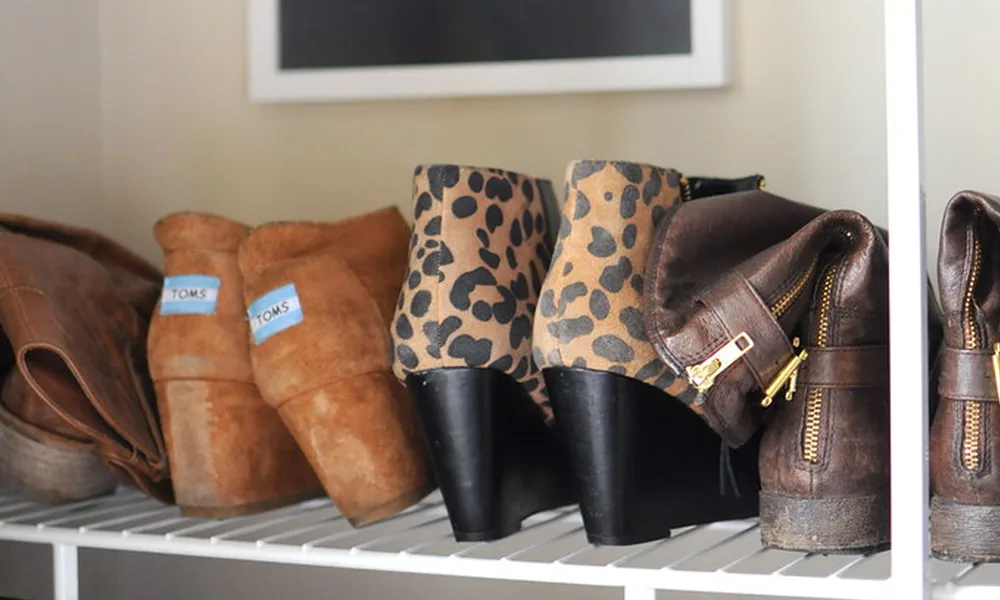
Do not forget the floor of the wardrobe. Shoes left loose become a jumble within days, while a low rack or a row of boxes keeps them in order. Good shoe racks inside the wardrobe, or just beside it, can be the difference between a wardrobe that stays tidy and one that collapses into a pile by the end of the week.

Checklist: Before You Buy a Wardrobe
- Measure the wall in three places and use the smallest width, leaving a few centimetres of breathing room on each side.
- Check the depth is at least 60 centimetres so hangers clear the doors and clothes do not crease.
- Count your clothes first and make sure the layout has enough long hanging, double hanging and shelf space.
- Open and close the doors ten times and watch for sticking, sagging or rattling, which only gets worse at home.
- Look for adjustable shelves and a strong rail fixed through the sides, not screwed into thin board.
- Plan where the shoes and out-of-season clothes go so the bottom and top work as hard as the middle.
Frequently Asked Questions
What size wardrobe do I need for a small bedroom?
For one person, a wardrobe 120 to 150 centimetres wide with a double rail usually holds a full wardrobe without dominating the room. Couples should look at 180 to 200 centimetres, or two slim wardrobes.
Are sliding-door wardrobes better than hinged ones?
Sliding doors are better when floor space is tight, because they need no swing clearance. Hinged doors are better when you want full access at once and have room for them to swing. The runners or hinges matter more than the type.
How deep should a wardrobe be?
Sixty centimetres is the standard, because hangers and coats need that depth to hang freely. Fifty centimetres can work for shirts, but heavy coats will press against the doors. Less suits only shallow storage or children’s clothes.
Can a small wardrobe really hold a lot of clothes?
Yes, if the inside is planned well. A double rail nearly doubles hanging capacity, adjustable shelves stop wasted gaps, and drawers hold the small things. Slim hangers and a seasonal rotation add even more.
Should I choose a fitted wardrobe or a freestanding one?
Fitted wardrobes hold the most per metre of wall and suit awkward rooms, but they cost more, cannot move with you, and depend on the installer. Freestanding wardrobes cost less, move house with you, and suit renters.
How do I stop my wardrobe smelling musty?
Leave air between the clothes, do not pack the wardrobe tight, and leave the doors open after a steamy shower. Keep it a few centimetres off a cold outside wall, and wipe up damp at once.
Bottom Line
The best wardrobes of 2026 prove capacity is a matter of planning, not size. A slim wardrobe with a double rail, adjustable shelves and solid depth will hold more and stay tidier than a big wardrobe bought for its looks. Measure your clothes, measure the wall, plan the inside first, and choose the wardrobe that stores the most in the least space.


