
The best running socks 2026 runners actually swear by are not the cheapest pair in the drawer, and they are not the thickest pair either. They are the pair you forget you are wearing at kilometre eight, when your feet are warm, dry and blister-free. A bad sock, by contrast, announces itself within the first mile: a heel slipping, a seam rubbing a toe raw, damp fabric bunching under the arch. Ask any regular runner what ruined their last long run and the answer is rarely the shoes. It is usually the socks.
That is why the best running socks deserve the same attention as the shoes they go inside. A good running sock manages moisture, reduces friction, holds its shape, and cushions exactly where your foot strikes the ground. This guide compares the types, materials and fits that matter in 2026, so you can pick the right pair for your distance, your climate and your feet.
Key Takeaways
- Moisture control matters more than thickness: synthetic blends and merino wool keep feet drier than cotton, which holds sweat and causes blisters.
- Match cushioning to your distance: light cushioning for speed work and racing, medium cushioning for everyday training, and maximum cushioning for long runs and recovery days.
- Fit is everything: a sock that is too big bunches and rubs, while one that is too small pulls tight and slips down into the shoe.
- Height is a practical choice, not a fashion one: no-show socks suit road racing, crew socks suit trails and cold weather, and quarter socks suit most training.
- Replace running socks every 300 to 500 kilometres, or sooner if the heel thins or blisters return.
What Makes a Running Sock Different From a Normal Sock
A normal everyday sock is designed to look neat and feel soft for a few hours at a desk. A running sock is designed to survive repeated impact, sweat and friction for hours at a time. Running socks use technical fibres that pull moisture away from the skin and dry quickly, instead of absorbing it like a sponge. They add cushioning only where it is needed, at the heel and the ball of the foot, and use a tighter, more anatomical fit, with a defined heel pocket and an arch band that stops the sock from twisting or sliding.
The seams matter just as much. Cheap socks join the toe with a raised ridge that rubs with every step until it becomes a blister. The best running socks use a flat or seamless toe closure you can barely feel.
Why Blisters Happen, and How Socks Prevent Them
Blisters are caused by friction, heat and moisture working together. When a sock gets damp, the skin softens, and every step drags the softened skin against the fabric. A good running sock breaks that chain in three ways. First, it wicks sweat away from the skin so the foot stays drier. Second, its smooth, close fit reduces the movement between sock and skin. Third, double-layer designs put the friction between the two sock layers instead of between the sock and your foot.
If you already get blisters in the same place every run, check three things before you blame your shoes: whether your socks are cotton, whether they are the right size, and whether the toe seam sits on the blister spot. In most cases, switching to a proper technical running sock in the correct size solves the problem within a week.
Best Running Sock Types Compared
Running socks come in three heights and three cushioning levels. No-show socks sit below the ankle and disappear inside the shoe, which keeps you cool. Quarter socks rise just above the ankle bone, protecting the Achilles area from shoe rub without adding warmth. Crew socks reach mid-calf, shielding the lower leg from trail debris and cold wind.

Cushioning works the same way. Lightweight socks feel barely-there and suit racing, speed sessions and hot weather, but offer little protection on rough ground. Medium-cushion socks are the everyday default: enough padding under the heel and forefoot to soften impact without making the shoe feel cramped. Maximum-cushion socks feel plush and protective, which long-distance runners love, but they take up more room in the shoe, so try them with your usual shoes before race day.
Road Running Socks
Road running socks prioritise breathability and a low profile. The best ones use thin, fast-drying yarns with mesh ventilation panels over the top of the foot, where heat builds up fastest. They are usually no-show or quarter height, with light to medium cushioning.
Trail Running Socks
Trail socks are built tougher. They use denser yarns and a crew height to keep out grit, twigs and dust, and many add reinforced toes and heels to survive rocky ground. Merino wool blends are popular here because wool keeps insulating even when damp.
Running Sock Materials: What to Choose and What to Avoid
Material decides how a sock handles sweat, and sweat decides whether you blister. Synthetic blends of polyester and nylon dry fastest and hold their shape best, which is why they dominate the running sock market. Merino wool is the premium alternative: it regulates temperature beautifully, resists odour for days, and stays warm when wet, making it ideal for cold-weather and trail running. The trade-off is price and slightly slower drying.
Cotton is the material to avoid for running. It absorbs sweat, stays wet, loses its shape, and turns rough and heavy as a run goes on, which is the perfect recipe for blisters. Bamboo and modal blends sit in the middle: soft and comfortable, with decent moisture handling, but less durable than synthetics and wool. For most runners, a synthetic blend is the best starting point, and merino is the upgrade for winter and trails.
How to Get the Right Fit
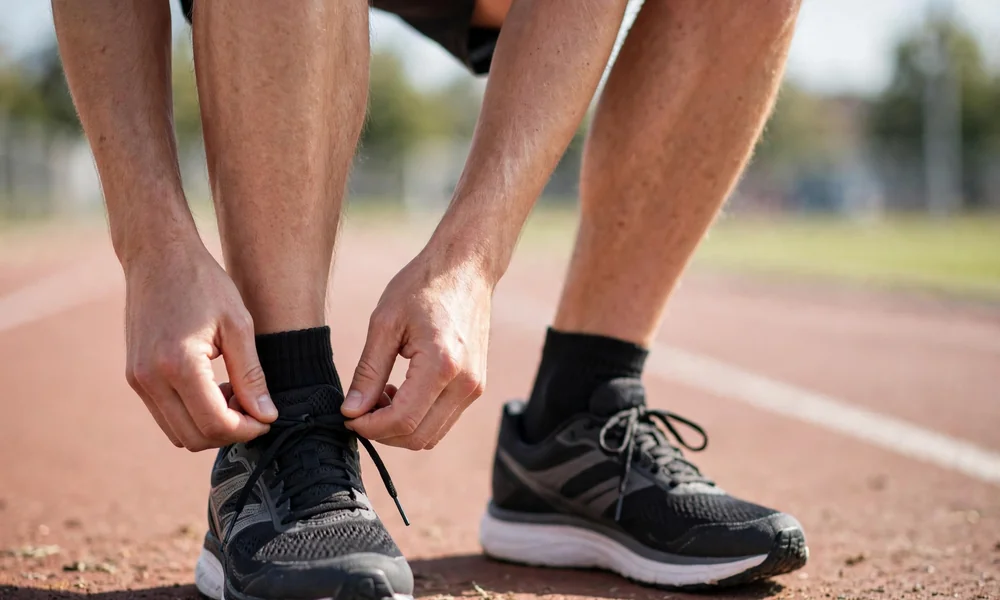
Running socks are sized by shoe size, and getting it right matters. A sock that is a size too big will have loose fabric at the heel and toe, which folds into wrinkles and rubs. A sock that is too small will pull tight across the toes, slide down at the heel, and wear through faster. Try them on with your running shoes: the heel pocket should sit exactly on your heel, the toe seam should lie flat without pressing, and the arch band should feel supportive without pinching.
Height also affects fit. A no-show sock needs a silicone grip or a deep heel tab to stay up, otherwise it will slip under your heel within the first kilometre. A quarter sock should sit just above the ankle bone, clear of the shoe collar. A crew sock should reach mid-calf without sagging.
Your shoes play a part in this too. Thick, maximum-cushion socks take up real space, and if your shoes already fit snugly, they can make your toes feel cramped. When you buy new running shoes, take your usual running socks to the fitting. Our guide to the best budget running shoes of 2026 is a good place to start if you want shoes that pair well with quality socks without spending a fortune.
Best Running Socks 2026 Compared
| Sock Type | Best For | Cushioning | Key Material | Typical Price |
|---|---|---|---|---|
| Lightweight no-show | Racing, speed work, hot weather | Light | Polyester and nylon blend | $10–$15 per pair |
| Medium quarter | Everyday training, most runners | Medium | Synthetic blend with elastane | $12–$18 per pair |
| Maximum cushion crew | Long runs, recovery days | Maximum | Merino wool blend | $15–$22 per pair |
| Double-layer crew | Blister-prone feet, ultrarunning | Medium | Double-layer synthetic | $14–$20 per pair |
| Merino trail crew | Trail running, cold weather | Medium | Merino wool and nylon | $16–$24 per pair |
| Compression-style run sock | Recovery runs, tired legs | Light to medium | Nylon and spandex | $18–$30 per pair |
There is no single best running sock for everyone. A sprinter racing a 5K in summer wants the lightest, coolest sock available, while a marathoner training through winter wants warmth, cushioning and durability. Own two types: a lightweight pair for fast and hot days, and a medium-cushion pair for everything else.

The Worst Running Sock Mistakes
The worst mistake is also the most common: running in cotton socks. They feel fine for the first ten minutes, then they soak up sweat, go heavy, and start rubbing, and the blisters they cause can take a week to heal. For a reminder of what bad gear choices look like, our roundup of the worst running shoes of 2026 shows how the wrong kit can undo an otherwise good run. The second mistake is wearing socks that are too old. Elastic fades, heels thin out, and the sock starts moving inside the shoe, which is exactly when blisters return even though nothing else changed.
Running Socks for Women, Wide Feet and Sensitive Skin
Women-specific running socks are cut slightly narrower through the heel and midfoot, which helps if standard unisex socks bunch or slip. If you have wide feet, look for a roomier toe box and higher elastane content, and avoid socks that feel tight across the toes before you put your shoes on. Runners with sensitive skin should prioritise seamless toes and double-layer designs. If you are shopping for women-specific kit more broadly, our guide to the best running shoes for women in 2026 covers shoes designed around the same fit principles.
Running Sock Buying Checklist
- Choose a technical fibre first: synthetic blend for most running, merino wool for cold and trail days, never cotton.
- Match cushioning to your run: light for racing and heat, medium for everyday training, maximum for long runs.
- Pick the right height: no-show for road racing, quarter for most training, crew for trails and winter.
- Check the fit with your shoes on: heel pocket in place, toe seam flat, arch band snug but not tight.
- Look for a seamless or flat toe closure, a supportive arch band, and a cuff that stays up without digging in.
- Buy at least four pairs so you can rotate them, and replace each pair after 300 to 500 kilometres or when the heel thins.
Frequently Asked Questions
What are the best running socks for blisters?
Double-layer socks and seamless-toe technical socks are the best choice for blister-prone feet. The double layer lets friction happen between the two layers instead of against your skin, while a seamless toe removes the ridge that causes most toe blisters. Make sure the socks are the right size and made from a moisture-wicking fibre, not cotton.
Are expensive running socks worth it?
Yes, within reason. A pair costing $12 to $18 usually lasts several times longer than a bargain pair, fits better, and protects your feet far more effectively. Start in the middle of the range.
Should running socks be tight or loose?
Running socks should fit snugly, like a second skin, without feeling tight. There should be no loose fabric at the heel or toe. If you can pinch a fold of fabric at the arch, the sock is too big.
Can I run in normal cotton socks?
You can, but you should not. Cotton absorbs sweat and stays wet, which softens the skin and causes blisters, and it loses its shape as it gets damp. For anything over 30 minutes, a technical running sock is a genuine upgrade that your feet will notice.
How often should I replace my running socks?
Replace them every 300 to 500 kilometres, or sooner if the heel thins, the elastic weakens, or blisters start appearing again.
What is the best running sock height?
Quarter height is the best all-rounder for most runners, because it protects the ankle from shoe rub without adding heat. No-show socks suit road racing and hot weather, while crew socks suit trail running and cold weather.
The Bottom Line
The best running socks 2026 has to offer are the ones that disappear on your feet: dry, smooth, supportive and perfectly fitted to your run. Start with a moisture-wicking fibre, match the cushioning and height to your distance and terrain, and buy enough pairs to rotate them. It is the cheapest upgrade in running.


