
Best Salt and Pepper Shakers for Tables That Stay Seasoned in 2026
The best salt and pepper shakers for 2026 are the matched sets you reach for without thinking: they pour a steady, even shake, they never clog in damp weather, and anyone at the table can tell at a glance which holds the salt and which holds the pepper. A bad set announces itself every day: one shaker pours nothing for three shakes and then drops a white landslide over a finished plate, the other rushes the pepper out, and neither tells you which is which until you have seasoned the wrong dish. This guide covers the salt and pepper shaker sets worth buying in 2026, in glass, ceramic, stainless steel and wood, and what separates a set that earns its place on the table from one that ends up pushed to the back of a cupboard.
It helps to be clear about what a shaker is, because three different tools get mixed up under the same name. A salt and pepper shaker holds seasoning that is already ground, and releases it in a controlled sprinkle when you tip it. A salt and pepper mill is a different tool altogether: it grinds whole peppercorns and coarse salt fresh, with a mechanism you twist, and it suits cooks who want the sharper flavour of freshly ground pepper. A spice grinder is different again, built to powder whole spices for cooking, not for sprinkling at the table. This guide is about shakers only: pre-ground seasoning, pour and sprinkle, no grinding, just a well-made pair that works every time.
Key Takeaways
- Hole size decides everything: fine holes suit fine table salt, fewer and larger holes suit pre-ground pepper, and the wrong match is the main cause of clogging and sudden rushes.
- A matched set must make the two shakers easy to tell apart, by hole count, by a clear marking, or by shape, so guests never have to guess which is which.
- Glass bodies are the most practical choice for everyday use, because you can see at a glance when a refill is due and whether moisture has got in.
- A tight-fitting lid and a dry filling routine matter more than price; most shakers fail because damp seasoning clumps, not because the design is poor.
- Buy a set that fits your hand and your table: too tall and it topples, too small and you refill it every week, too heavy and it chips the table when it is set down hard.
Shakers, Mills and Grinders: Three Different Tools
The first decision is not which shaker to buy, but whether a shaker is the right tool at all. If you cook with whole peppercorns and coarse salt and you love the ritual of grinding fresh pepper over a finished plate, a mill will make you happier than any shaker, because freshly ground pepper smells sharper and tastes warmer than pepper ground weeks ago. A shaker, by contrast, works with one hand, in one second, and anyone can use it, which is exactly what a table needs at breakfast and at Sunday lunch.
Grinders belong in the kitchen, not on the table: a spice grinder turns whole spices into powder for cooking, judged on fineness, not on how neatly it sprinkles over a plate. The honest division is simple: mills and grinders prepare seasoning in the kitchen, shakers serve it at the table. If your seasoning is already ground, the shaker is the right tool.
There is one more distinction worth making. A single salt shaker is not the same purchase as a matched salt and pepper set, and our guide to the best salt shakers already covers salt on its own in depth. A set has to solve a problem a single shaker never faces: the two shakers must be easy to tell apart, they must suit two different seasonings with different flow, and they must look like a pair on the table. That is the subject of this guide.
The Main Types of Salt and Pepper Shakers
Glass Shakers: The Everyday All-Rounder
A classic glass shaker set with stainless steel tops is still the best choice for most households. You can see the salt level at a glance, the glass does not stain or absorb smells, and a good set is easy to wash and refill. The one weakness of glass is obvious: it breaks if it falls on a stone floor, so glass suits dining tables better than picnic tables. In a good glass set, the pepper shaker has fewer, larger holes than the salt shaker, because pre-ground pepper is coarser and jams in small holes. Check that difference before you buy.

Ceramic Shakers: The Pretty Table Piece
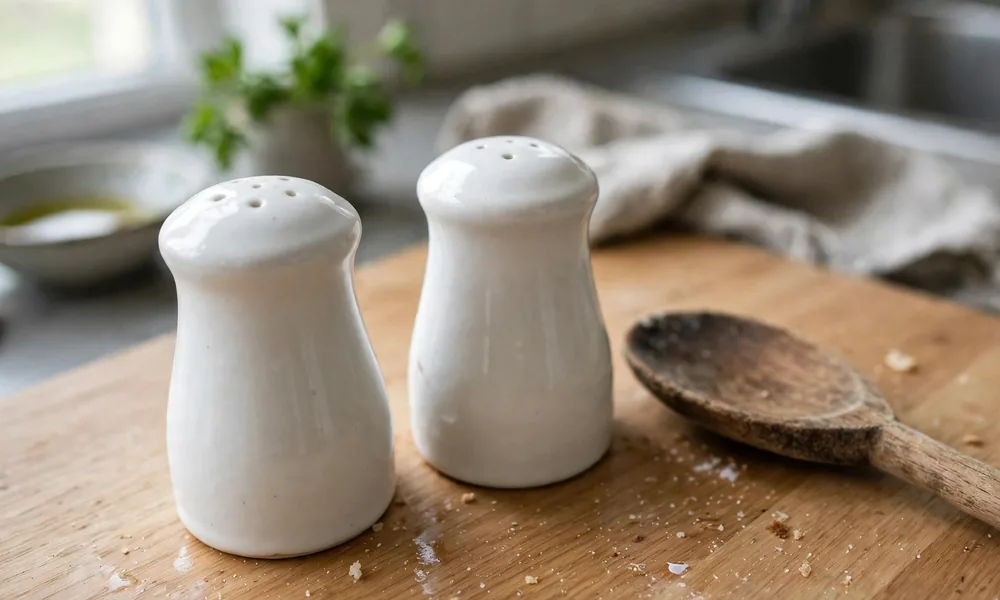
Ceramic shaker sets earn their place by looking good, and the best ones are just as practical as they are pretty. A glazed ceramic body is non-porous, so it keeps seasoning a little drier than glass in a humid kitchen. The trade-off is that you cannot see how much is left, so a ceramic set needs a wider neck and an easy refill. Ceramic sets also solve the telling-apart problem elegantly: many come in two colours, or with a salt and pepper marking baked into the glaze, which is far more reliable than trying to remember which identical shaker is which.
Stainless Steel Shakers: The Tough, Modern Option
Stainless steel shaker sets suit busy kitchens that want something that will not break. They are light, they do not chip or crack, and a well-made steel top resists corrosion far better than chrome-plated alternatives. The downside is that you cannot see the level, and cheaper steel can spot after repeated washing, so buy food-grade steel. In steel sets, look for a clear difference between the two shakers, because two identical steel cylinders are the hardest pair to tell apart of all: a different number of holes, a different height, or an engraved letter makes all the difference.
Wooden Shakers: Warm and Traditional
Wooden shaker sets are warm and traditional, and they suit coarse salt best, because the wide neck and larger holes let flakes through without jamming. Wood absorbs moisture slowly, so a wooden shaker needs a dry kitchen and a lid that seals well, and it should never go in the dishwasher. The best wooden sets use dense hardwoods such as beech or walnut. If your table is rustic and your salt is flaky, wood is a genuine contender.
| Type | Best for | See the level? | Clog risk | Durability |
|---|---|---|---|---|
| Glass with steel top | Fine table salt, everyday use | Yes | Low | Good, but breakable |
| Glazed ceramic | Flaky salt, humid kitchens | No | Low | Good, can chip |
| Stainless steel | Busy kitchens, outdoor eating | No | Low | Excellent |
| Wooden | Coarse salt, rustic tables | No | Medium | Fair, swells with damp |
| Adjustable top | Fine and flaky salt | Depends on body | Very low | Good |
Glass remains the default because it is the only type that lets you see the level.
How to Choose a Matched Set
Start with the holes, because they decide how the set performs. Fine table salt needs three to five small holes; anything larger and it rushes out. Pre-ground pepper is coarser and slightly oily, so it needs fewer and larger holes, usually two or three, or it jams and then bursts out in a clump. The best sets make the two shakers genuinely different in hole count or size, so each seasoning flows the way it should.
Next, check how you will tell the two apart. The salt shaker traditionally has more holes, but that is a convention many guests do not know, and it fails in a dim dining room. Better sets mark the difference clearly: a letter on the top, a different colour, a different height, or a different shape. Test it in the shop: if you cannot tell them apart by touch and by a glance, the set will cause mistakes at your table.
Then look at the seal. Salt draws moisture from the air, and once damp it clumps and blocks the holes. A lid that screws on firmly, with a gasket or a snug inner seal, keeps seasoning dry far longer than a loose push-on cap. This is why very cheap shakers disappoint: the lid is usually the first thing to fail. Pick the set up and try the lid: it should turn smoothly, close firmly, and show no wobble.
Keeping Shakers Dry and Clog-Free
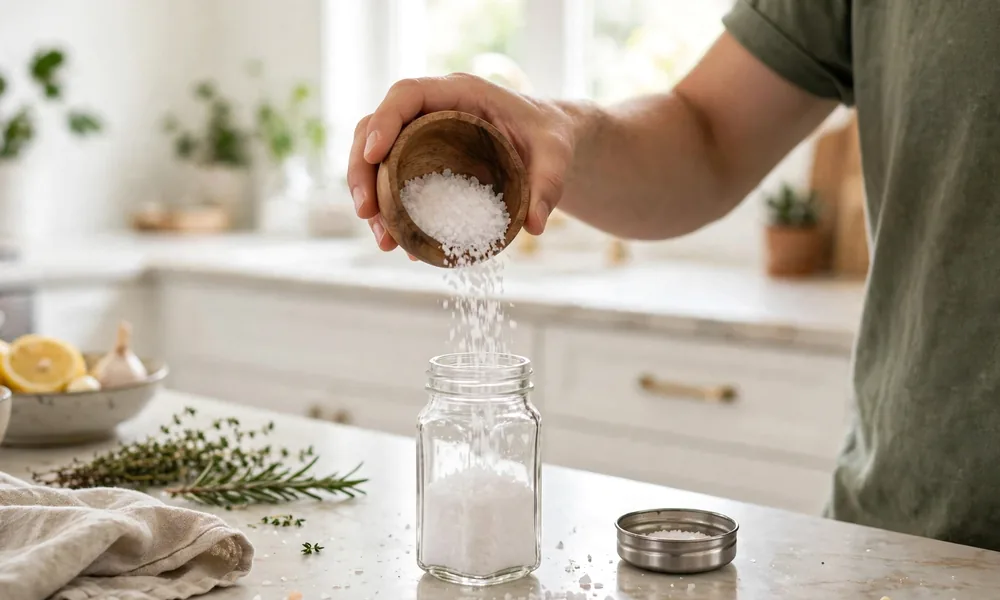
Most shaker problems are moisture problems, and most moisture problems are filling problems. Always fill a shaker with completely dry hands, over a dry surface, and never hold it over a steaming pot, because the steam goes straight into the open neck and the salt clumps before the lid is back on. Fill in the morning, when the kitchen is cool and dry. If your salt does clump, a few grains of dry rice in the salt shaker is the old remedy, and it still works. Do not put rice in the pepper shaker, where it does nothing and can block the holes.
Salt and Pepper Shaker Checklist
- Different hole counts for salt and pepper, so each seasoning flows at the right speed.
- A clear way to tell the two apart at a glance, by marking, colour, shape or height.
- A screw-on lid with a firm seal that shows no wobble when you shake the set.
- A body material that suits your table: glass to see the level, steel for toughness, ceramic for looks.
- A wide, flat base that keeps the shakers steady when the table is bumped.
- A top that unscrews fully and a neck wide enough to clean and refill without a funnel and a struggle.
Frequently Asked Questions
How many holes should a salt shaker have?
Three to five small holes suit fine table salt. Fewer, larger holes suit flaky sea salt, and the pepper shaker should have fewer and larger holes than the salt shaker, because pre-ground pepper is coarser and jams in small holes.
Which shaker is salt and which is pepper?
By convention the salt shaker has more holes, but the reliable answer is the marking on the set: a letter, a colour, a different shape or a different height. If your set has no marking, add a small dot of nail polish to the salt shaker’s lid.
Why does my salt shaker keep clogging?
Almost always moisture. Salt draws water from the air, clumps, and blocks the holes. Fill it with dry hands away from steam, keep the lid sealed tightly, and add a few grains of dry rice to the salt shaker to absorb moisture.
Are salt and pepper mills better than shakers?
They are different tools, not better ones. Mills grind whole peppercorns fresh, which tastes sharper, but they need two hands and grind slowly. Shakers hold pre-ground seasoning and serve it in one second with one hand, which is what a busy table needs.
Can I put flaky sea salt in a normal shaker?
Only if the holes are large enough. Standard shakers have holes too small for flakes, so the salt jams and then rushes out when the jam clears. Use a shaker made for flakes, with two or three larger holes and a wider neck, or an adjustable-top set.
How often should I refill and clean my shakers?
Refill when the level drops below a third, because a nearly empty shaker pours unevenly. Clean the set every month or two: wash it in warm soapy water, dry it completely, and refill with fresh, dry seasoning.
The Bottom Line
The best salt and pepper shakers of 2026 are matched sets that respect the fact that salt and pepper are two different seasonings: different holes, a clear way to tell them apart, a lid that seals, and a body that suits your table. Glass is the safest all-round choice, ceramic the prettiest, steel the toughest, and wood the warmest for coarse salt. Buy the set that pours evenly, stays dry, and never makes a guest guess.


