The Sanding Blocks That Keep Wood Flat and Smooth in 2026
The best sanding blocks in 2026 are the simplest tools in the workshop, and the ones that decide whether wood feels like glass or like a rough plank. A sanding block is a firm pad, cork, rubber or foam, that holds sandpaper flat while you work it across the wood. A good block spreads pressure evenly, keeps the surface flat, and stops your fingertips digging grooves into the grain. A bad one flexes, lets the paper bunch, and leaves dips that only show up after the paint goes on. Choosing the right block means matching it to the job.
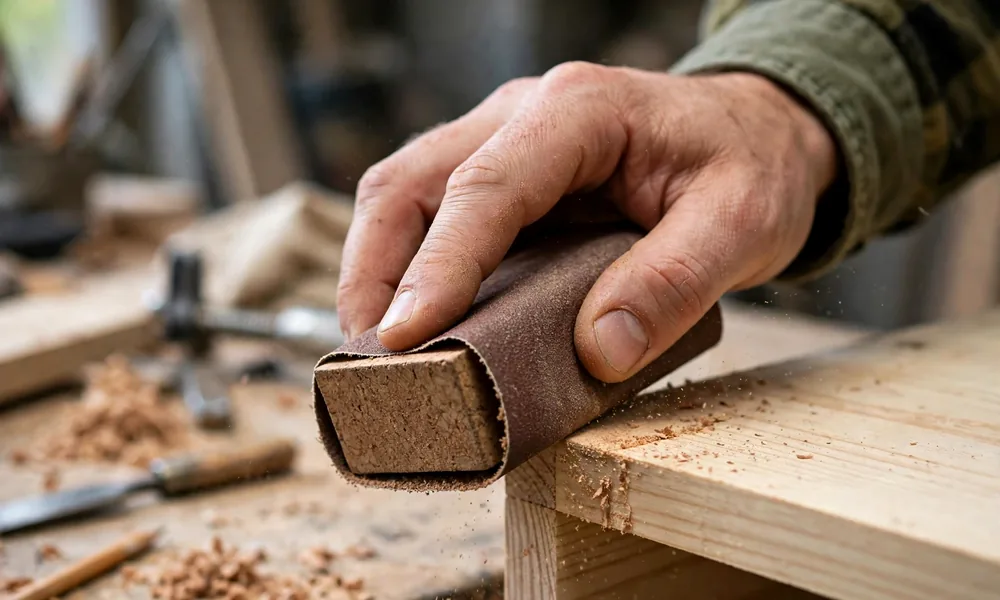
Hand sanding without a block is the mistake almost every beginner makes. Folding paper around your fingers puts all the pressure on your fingertips, which digs grooves, tires your hand, and wears the paper out in minutes. A block spreads the same pressure across its whole face, so the paper cuts evenly and lasts far longer, and it bridges small hollows instead of following them, which is what a flat finish needs.
Key Takeaways
- A sanding block spreads pressure evenly, so the paper cuts flat instead of digging grooves.
- Cork suits flat surfaces, rubber suits firm flat sanding, and foam suits curves, because it follows the shape.
- Coarse grits need a firm block, fine grits need a flat, clean face, and a worn face ruins both.
- Always sand with the grain, stepping up one grit at a time, because a block cannot hide cross-grain scratches.
- Keep the block face clean and flat, and replace sandpaper often, because clogged paper scratches.
What a Sanding Block Actually Does
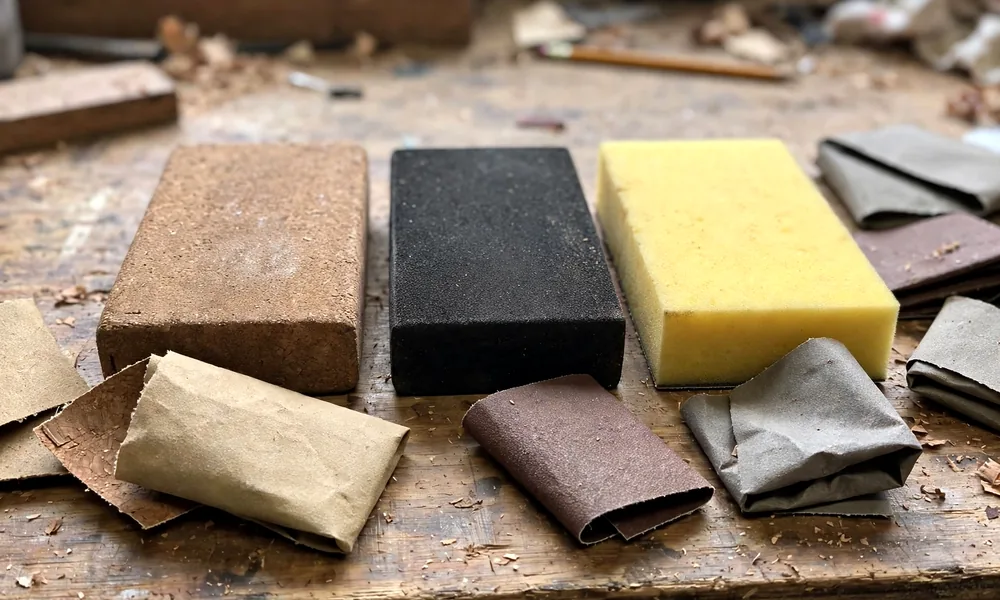
A sanding block is a firm, flat pad that turns a loose sheet of sandpaper into a controlled cutting tool. The paper wraps around the block or clamps to it, and the block gives your hand a flat, even surface to push with. Without it, the paper follows every bump in the wood and every curve of your fingers. With it, the paper stays flat, the pressure stays even, and the scratches stay shallow and uniform. That uniformity is the whole point of sanding: each grit removes the scratches of the one before, and that only works if the pressure is even. Cork is light and springy, rubber is firmer and heavier, and foam is soft and follows curves.
Cork, Rubber and Foam Blocks
Cork Blocks
A cork block is the standard for flat sanding. It is light, warm in the hand, and slightly springy, so it forgives small bumps without following them. A sheet of sandpaper folds around it and stays put, and the cork grips the paper without clamps. Cork suits tabletops, shelves and doors, and it is cheap enough to own several, one for each grit. Its weakness is wear: the face softens over time, so replace it when it stops being flat.
Rubber Blocks
A rubber block is firmer and heavier than cork, with a textured grip that stays secure even with dusty hands. It suits long, flat sanding sessions, because the weight does some of the work and the firm face keeps the paper flat. Many rubber blocks clamp the paper taut. Rubber is the right choice for hardwood, where a soft block would round the edges.
Foam Blocks and Sponges
A foam block, often called a sanding sponge, is soft and flexible, and it follows curves, mouldings and chair legs that a rigid block cannot reach. The abrasive is bonded to the foam, so there is no loose sheet to wrap, and the sponge can be rinsed clean when it clogs. Foam suits contoured work and final finishing. It is not a substitute for a flat block on a tabletop, where it would follow the hollows instead of bridging them.
Sanding Blocks vs Sandpaper and Sanders
The nearest neighbours are worth knowing, because a block is only one part of the sanding system. Sandpaper is the abrasive itself: the grit, the backing and the mineral that actually cuts the wood. Our guide to the best sandpaper of 2026 explains grits and formats in full. A block without the right paper is just a pad, and paper without a block is a groove waiting to happen. Power sanders are the other neighbour: machines that remove material fast, covered in our guide to the best and worst sanders of 2026. A sander does the heavy work, and a block does the finishing. And sanding is only preparation: paint sits flat only on a well-sanded surface, as our guide to the best interior paint of 2026 explains.
How We Judged the Best Sanding Blocks
We judged every block the way it actually gets used: flattening a pine board, smoothing a shelf edge, sanding a chair leg, and finishing a tabletop before painting. Flatness came first: a block whose face stays true leaves a surface that feels even, while a block that flexes leaves dips you can feel. Next came grip and comfort, then paper holding: a block that keeps the sheet taut scores highly. We also weighed versatility and value, because a good block is cheap and should last for years.
The Best Sanding Blocks of 2026
Five blocks stood out in 2026, covering every material and every kind of sanding. All share the same qualities: a face that stays flat, a grip that stays secure, and paper that stays put.
| Block | Material | Best for | Paper hold |
|---|---|---|---|
| Classic Cork | Cork | Flat boards | Folded sheet |
| Heavy Rubber | Rubber | Hardwood flats | Clamp |
| Foam Sponge | Foam | Curves | Bonded |
| Hook-and-Loop | Rubber | Quick changes | Hook-and-loop |
| Contour Block | Foam | Mouldings | Bonded |
The Classic Cork
The classic cork block is the one most workshops should own first. It is light, cheap, and slightly springy, and a folded sheet of sandpaper stays put on it without clamps. It suits tabletops, shelves and doors, and it is easy to keep several, one for each grit. Check the face against a straight edge, and replace it when it rounds.
The Heavy Rubber
The heavy rubber block is the choice for hardwood and long sessions. Its firm face and extra weight keep the paper flat, and its clamp holds the sheet taut so it never bunches. It suits oak and maple, where a soft block would round the edges, and it stays secure in dusty hands. It costs more than cork, but lasts far longer.
The Foam Sponge
The foam sponge is the block for curves. Its soft body follows chair legs, mouldings and turned shapes that a rigid block cannot reach, and the bonded abrasive means no loose sheet to wrap. It can be rinsed clean when it clogs. Use it for contoured work and final finishing, not for flattening a tabletop, where it would follow the hollows instead of bridging them.
The Hook-and-Loop Block
The hook-and-loop block is the choice when you change grits often. Its face grips hook-and-loop sandpaper, so a worn sheet peels off and a fresh one presses on in seconds, with no folding or clamping. It suits anyone working through a grit sequence, because the change is so fast that you actually do it instead of pushing on with clogged paper. Keep the face clean: dust in the hooks weakens the grip.
The Contour Block
The contour block is shaped for mouldings, beads and profiles. Its curved faces match the shapes on skirting, picture frames and turned furniture, so the abrasive reaches into the hollows instead of cutting only the high spots. It is a specialist, not a generalist: it will not flatten a tabletop. For trim and detail work, though, it saves hours of folded-paper finger sanding.
Grit Sequences That Actually Work
Sanding is a sequence, not a single step. Start coarse, then step up one grade at a time, never skipping a grade, because each grit removes the scratches of the one before. A typical sequence for bare wood is 80, then 120, then 180, then 240 for a painted finish, or up to 320 for a clear varnish. Skipping a grade leaves deep scratches that show through the finish. Change the paper often, and wipe the surface clean between grits.
Sanding With the Grain, Not Against It
Always sand with the grain, in long strokes that follow the direction of the wood fibres. Cross-grain scratches show through every finish, and a block cannot hide them. Use long, even strokes with light pressure, and let the paper do the work: pressing harder does not sand faster, it just clogs the paper. On edges, ease the pressure at the ends, because a block that runs off the edge will round it. On veneer, sand lightly and stop early, because the veneer is thin. Check your work in raking light, which shows scratches that overhead light hides.
Looking After Your Sanding Blocks
A sanding block lasts for years if its face stays flat and clean. After each session, brush the face clean and check it against a straight edge: if light shows under the middle, the block is worn, because a hollow face sands a hollow into the wood. Keep blocks dry, because cork swells and rubber hardens when stored badly. Replace sandpaper the moment it stops cutting freely: fresh paper is cheap, and the damage from clogged paper is not.

Before You Buy: The Checklist
- The face is flat and firm, checked against a straight edge, with no rounding.
- The material matches the job: cork or rubber for flats, foam for curves.
- The paper holds taut and never slips mid-stroke.
- The grip is comfortable for long sessions, with no sharp edges.
- The size fits your hand and your work: small for detail, full-size for boards.
- Spares are cheap and easy to find, whether sheets, discs or bonded sponges.
Frequently Asked Questions
Do I need a sanding block, or can I just fold the paper?
A block is worth it. Folding paper around your fingers puts all the pressure on your fingertips, which digs grooves and tires your hand. A cork or rubber block spreads pressure evenly and keeps the surface flat. For curves, a foam sponge does the same job in a shape that follows the wood.
Which sanding block is best for a tabletop?
A firm cork or rubber block, full size, with a flat face. It bridges small hollows instead of following them, which is what a flat finish needs. Use a grit sequence, stepping up one grade at a time.
Can I use a sanding block on curved wood?
Yes, but use foam. A rigid block cannot follow a curve, so it cuts only the high spots. A foam block gives a little and follows the shape, and it suits chair legs, mouldings and turned pieces.
How do I keep sandpaper from clogging?
Use a fresh sheet, keep pressure light, and clean the sheet often. Open-coat paper clogs less on softwoods. When the paper stops cutting freely, replace it: clogged paper scratches instead of smoothing.
What grit should I start with?
For rough-sawn boards, start at 80 grit; for planed boards, start at 120. Then step up one grade at a time: 120, 180, 240 for paint, up to 320 for varnish. Never skip a grade.
How long does a sanding block last?
Years, if the face stays flat. Cork softens and rounds with use, so check it against a straight edge. Rubber lasts longer, and foam sponges last until the abrasive wears thin. A worn block sands a hollow into the wood, so replace the block, not just the paper.
Bottom Line
The best sanding block for most workshops is a classic cork block for flat work, with a foam sponge alongside it for curves. The block is cheap, the paper is cheap, and the difference they make is not: even pressure, a flat face and a proper grit sequence turn rough wood into a surface that paint and varnish can shine on. Buy the block that matches your work, keep its face flat, and change the paper often.