
Shop Vacs That Swallow Water, Sawdust and Garage Mess in 2026
Shop vacs are the vacuums you buy when the mess stops being dust. A flooded basement, a sawdust-covered garage floor, a muddy car boot: these are the jobs that kill an ordinary home vacuum. A good shop vac picks up water and dry debris with the same machine, and keeps going when the mess is measured in buckets.
That is a very different job from the one a home vacuum does. A home vacuum is tuned for carpet and hard floors. A shop vac is a wet and dry machine with a big drum, a wide hose and a filter you take out before you pick up water.
Key Takeaways
- A shop vac is a wet and dry machine: it picks up water, sawdust and rubble a home vacuum cannot touch.
- Tank size decides how long you work before emptying: 20 litres suits a garage, 40 litres a workshop.
- Take the paper filter out before wet pickup, or fit a foam sleeve, or the filter will clog.
- Suction is measured in airflow and sealed suction, not watts: a wide hose and a clean filter matter.
- A drain at the bottom of the drum saves your back when you empty dirty water.
What a Shop Vac Actually Is
A shop vac, also called a wet and dry vacuum, is built around a large drum instead of a small bin. Everything you pick up lands in the drum: dust, water, wood shavings, plaster chunks, spilled paint. Where a home vacuum holds half a litre, a shop vac holds 20, 40 or even 60 litres, so you can clear a flooded corner or a whole garage floor without stopping.
The wet and dry part is what separates it from every other vacuum. A home vacuum must never pick up water: the motor sits in the airflow and the filter is paper. A shop vac is designed for it. Remove the paper filter, fit a foam sleeve or run with no filter, and the machine sucks up litres of water into the drum. A float valve rises with the water and shuts off suction before water reaches the motor.
It is not a better home vacuum. It has no spinning brush bar for carpet, no sealed HEPA system for allergies, and no delicate floor head for polished wood. Our guide to the best vacuum cleaners of 2026 covers the machines that suit living rooms and bedrooms. A shop vac belongs in the garage, the workshop, the basement and the car, where the mess is rough, wet or heavy.
The Main Types of Shop Vac
Most shop vacs fall into four shapes. The classic drum vac is the big one: a 30 to 60 litre steel or plastic drum on castors, with a powerful motor on top and a long hose. It is the workshop standard, holding the most mess and moving easily across concrete. The trade-off is size: it needs a corner of the garage, and it is too heavy to carry upstairs.
The compact drum vac is the smaller sibling, usually 12 to 20 litres, often with a carry handle and no castors. It suits a small garage, a car and occasional spills, and it stores on a shelf, but it empties more often and suits light mess rather than a renovation clean-up. The wall-mounted vac bolts to a garage wall and stays out of the way, but the drum is small and you bring the mess to it.
The fourth type is the portable wet and dry vac, a small 5 to 10 litre unit with a shoulder strap, made for car interiors and small spills. It is useful as a second machine, but the drum fills in minutes on a real job.

Shop Vacs Compared
| Type | Tank size | Best for | Watch out for |
|---|---|---|---|
| Classic drum vac | 30–60 litres | Workshops, floods, renovation | Heavy, needs floor space |
| Compact drum vac | 12–20 litres | Garages, cars, spills | Empties often, weaker motor |
| Wall-mounted vac | 10–15 litres | Small garages, fixed spot | Small drum, short reach |
| Portable wet and dry | 5–10 litres | Car interiors, spot spills | Too small for real jobs |
What to Look For Before You Buy
Tank size comes first, because it decides how long you work before you stop to empty. A 20 litre drum sounds generous until you suck up a flooded corner: water is heavy, and a full drum weighs over 20 kilograms. For a garage and a car, 20 litres is enough. For a workshop or a basement that floods, 40 litres or more is the sensible minimum. Stainless steel resists dents and rust; plastic is lighter and cheaper but can crack if dropped full.
Suction is the second thing, and the numbers on the box need reading with care. Watts measure the motor, not the cleaning. Airflow, in litres per second, and sealed suction, in kilopascals, are the figures that matter, and a wide hose matters as much as either: a 32 millimetre hose passes sawdust and screws that a narrow hose chokes on. A clean filter matters more than a big motor, because a clogged filter can halve the suction of the strongest machine.
Filtration is the third thing, and it changes with the job. For dry dust, a pleated cartridge filter traps fine particles far better than a flat paper one, and a disposable bag inside the drum keeps the filter clean and the emptying tidy. For wet pickup, take the cartridge out and fit a foam sleeve, or run with no filter: water through a paper filter turns it to pulp and starves the motor.
The Best Shop Vacs of 2026
The best overall shop vac for most homes is a 30 litre stainless drum on castors, with a pleated cartridge filter, a foam sleeve in the box and a drain valve. It is big enough for a flooded corner and a full garage tidy, and the stainless drum shrugs off workshop knocks. Look for a hose that locks, castors that swivel, and a cord long enough to reach across a double garage.
The best shop vac for water is a large drum with a float valve you can hear working, a bottom drain and a wide squeegee nozzle. The squeegee is the part people forget: a flat nozzle leaves a film of water behind, while a squeegee head pulls the last millimetres into the hose. Check the drain is at the very bottom of the drum.
The best shop vac for a workshop is the biggest drum you have room for, 40 litres or more, with a fine-dust cartridge and a power take-off socket that starts the vac when the saw starts. Dust extraction is where a shop vac earns its keep: connected to a saw or a sander, it catches dust at the source. Our guide to the best canister vacuums of 2026 covers the quiet machine for hard floors inside the house, but for sawdust in the workshop, only a drum vac with a proper cartridge filter will do.

Wet Pickup: What Changes
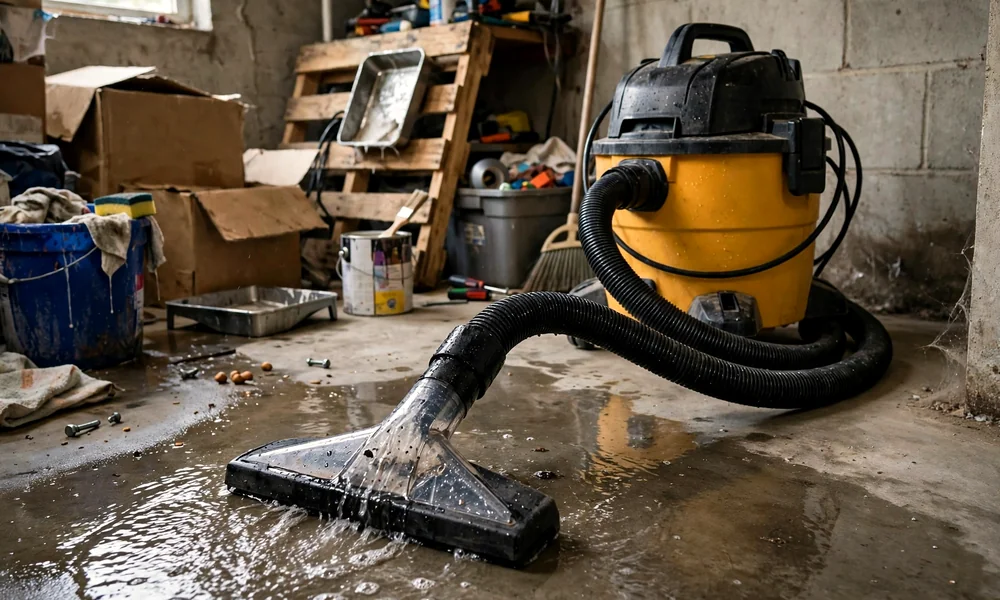
Wet pickup is the shop vac’s signature job, and it has three rules. First, remove the paper or cartridge filter before you start, and fit a foam sleeve if you have one: a wet paper filter clogs in minutes and the motor strains. Second, watch the float valve: when the drum is nearly full, the float rises and cuts the suction. That is the machine protecting itself, not a fault. Third, drain and dry the drum after a wet job, or water left in a steel drum will rust it and grow mould.
The jobs that suit wet pickup are the ones no other tool handles: a flooded basement after heavy rain, a washing machine leak across a utility floor, a spilled paint tin, a car footwell soaked by a forgotten window. For a flooded basement, work in passes: suck up the standing water, drain the drum, and repeat. A dedicated pump is faster for the first bulk of it. The shop vac is for the last centimetres and the drying out.
Using a Shop Vac in the Garage
In the garage, a shop vac is the machine that ties the other cleaning tools together. It clears sawdust from the bench, grit from the floor and leaves from the car boot, all with the same hose and a change of nozzle. The crevice tool reaches between bench slats and into car seat rails, the brush nozzle lifts dust from shelves, and the wide floor nozzle covers concrete fast. Keep the nozzles on the drum, because a nozzle lost in a drawer is never used.
Pair it with the right companions and the garage stays clean with far less effort. A pressure washer blasts ground-in grime off a driveway that a vacuum cannot touch, and our guide to the best pressure washers of 2026 covers the ones worth owning: wash first, then finish with the shop vac on the damp floor. A leaf blower clears the driveway, and the shop vac picks up what it leaves in the corners.
Checklist: Before You Buy a Shop Vac
- Match the drum to your biggest mess: 20 litres for a garage, 40 litres or more for a workshop or a flood-prone basement.
- Check the filter setup: a pleated cartridge for dry dust and a foam sleeve for water, ideally both in the box.
- Measure the hose: at least two metres, 32 millimetres wide, and locking into the drum.
- Look for a drain valve at the very bottom of the drum, so you can empty litres of dirty water without lifting it.
- Count the nozzles: a floor nozzle, a crevice tool and a brush cover nearly every job, plus a squeegee head for water.
- Test the weight full: a 40 litre drum of water weighs over 40 kilograms, so castors and a drain matter more than a carry handle.
Frequently Asked Questions
Can a shop vac pick up water?
Yes, that is its defining job. Remove the paper or cartridge filter first, fit a foam sleeve if you have one, and the float valve will shut off suction before water reaches the motor. Drain and dry the drum afterwards.
Can a shop vac replace my home vacuum?
No. A shop vac has no brush bar for carpet, no sealed HEPA filtration and no delicate floor head, so it cleans living-room floors badly. It works alongside a home vacuum rather than replacing it.
What size shop vac do I need?
For a garage and a car, 20 litres is enough. For a workshop or a basement that floods, choose 40 litres or more: stopping to empty a small drum halfway through a flood is the worst part of the job.
Do I need a bag in a shop vac?
For dry dust, a disposable bag keeps the cartridge filter clean and makes emptying tidy. For wet pickup, never use a paper bag: it will disintegrate, and the drum will be far harder to clean.
Why does my shop vac lose suction?
Almost always a clogged filter, a full drum or a blocked hose. Check the filter first and tap or wash it, empty the drum, and clear the hose with a broom handle. A clean filter restores most lost suction.
Can a shop vac pick up ash from a fireplace?
Only cold ash, with a fine-dust cartridge and preferably a bag, because ash clogs filters fast. Never pick up warm ash: embers can smoulder in the drum and melt the hose or start a fire.
The Bottom Line
The shop vacs that swallow water, sawdust and garage mess in 2026 are the ones matched to the mess: a 30 litre stainless drum for most homes, a big drained drum with a squeegee for water, and a 40 litre-plus drum with dust extraction for a workshop. Buy for your biggest mess, take the filter out before water, and drain the drum after every wet job.


