
Pool Covers vs Pool Heaters: Which Keeps Your Pool Warm in 2026
Pool covers and pool heaters both promise a warmer pool, but they do it in opposite ways. A pool cover keeps the heat you already have: it sits on the water, stops warmth escaping overnight, and blocks leaves and dirt from getting in. A pool heater makes new heat: it burns gas or electricity to warm the water, whatever the weather. Most owners only need one of them first. This guide compares pool covers vs pool heaters head to head, so you can see which one solves your actual problem in 2026.
A cover and a heater fix different problems. If your pool loses its warmth overnight and fills with leaves every morning, a cover is the answer. If your pool never gets warm enough to swim in, even on sunny days, a heater is the answer. A heater without a cover warms the water all day and loses most of it the first cold night. A cover without a heater keeps the water you have, but it cannot warm a pool that never heats up.
Key Takeaways
- A cover keeps heat in and debris out; a heater makes new heat. Different problems.
- A solar cover can raise the water by several degrees for free, using only the sun.
- A heater without a cover wastes money: most of its heat escapes overnight.
- Only a safety cover can hold the weight of a person or a pet that walks onto it.
- For most owners, the cover comes first: cheaper, no fuel, and any heater added later works far less hard.
What a Pool Cover Actually Does
A pool cover is a sheet or a slatted blanket that lies on the water or stretches across the pool. Its main job is to stop evaporation, which is where most pool heat goes: warm water evaporates from the surface, and every litre that leaves takes its heat with it. A cover cuts that loss sharply. The same sheet keeps leaves, insects and dust out, which means less skimming and less chlorine.
Covers also cut chemical use: sunlight breaks chlorine down, and a cover that blocks the sun while the pool is not in use keeps the chlorine working longer. A proper safety cover, anchored to the deck, can also hold the weight of a child or a pet that wanders onto it, which a floating solar cover cannot do.
What a Pool Heater Actually Does
A pool heater adds heat to the water, on demand, in any weather. Gas heaters warm a pool fast, which suits owners who swim at weekends. Electric heat pumps warm it slowly and cheaply, moving heat from the air into the water, and suit owners who keep the pool warm all season.
The catch is that a heater warms water that then sits open to the sky. An uncovered pool loses most of its heat from the surface overnight, so a heater working alone runs far longer and costs far more than the same heater under a cover. The heater makes the heat, and the cover keeps it.
The Main Types of Pool Cover
Solar Covers
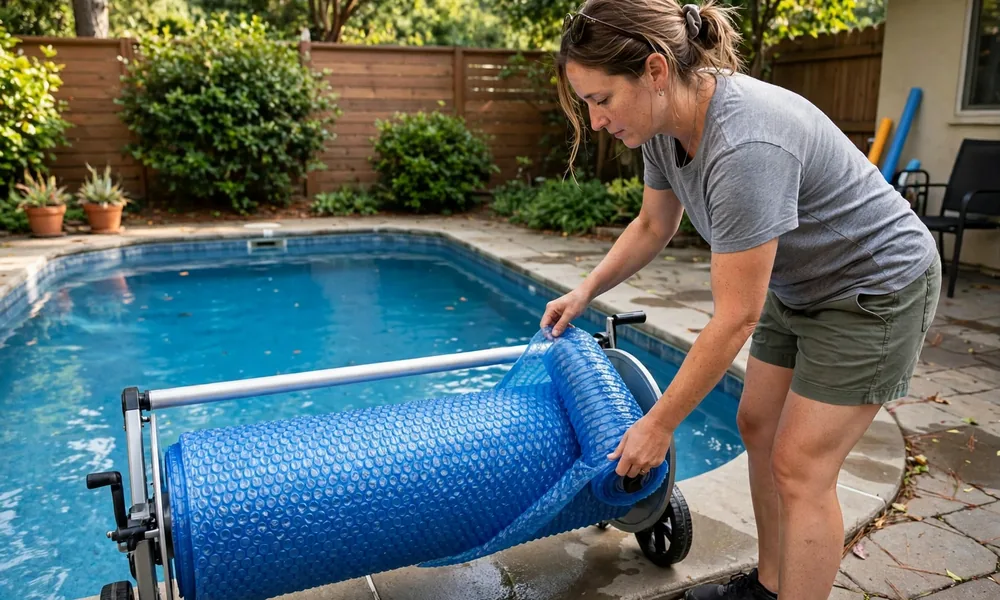
A solar cover, also called a bubble cover, is a sheet of plastic covered in air bubbles that floats on the water. The bubbles trap the sun’s warmth and pass it into the pool, while the sheet stops evaporation overnight. Solar covers are the cheapest type, need no power, and can raise the water by several degrees over a sunny week. Their weakness is handling: they are bulky, they tear after a few seasons, and rolling one up alone is hard work. A reel makes the job far easier.
Mesh Safety Covers
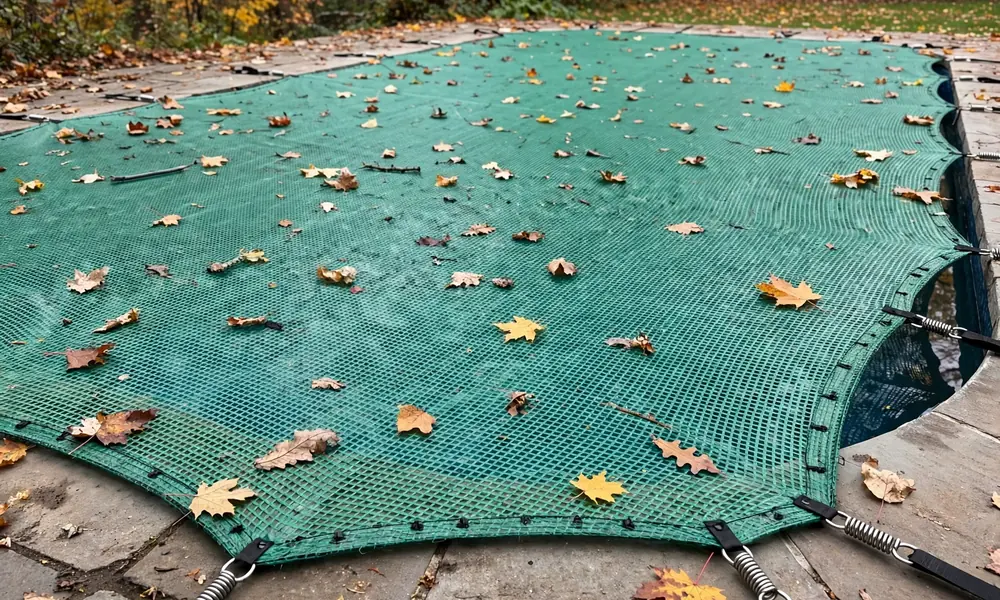
A mesh safety cover is a strong woven sheet anchored to the deck with straps and springs, stretched taut above the water. Rain drains through the mesh, leaves sit on top, and the cover can hold the weight of a person. Mesh covers are the standard winter cover for in-ground pools, and the right choice when children or pets use the garden. They do not warm the pool, and fitting one takes two people and an hour.
Solid Winter Covers
A solid winter cover is a heavy waterproof sheet that seals the pool for the cold months. It blocks all light, which stops algae growing while the pool is closed, and keeps every leaf out. Solid covers need a pump to clear the rainwater that pools on top. They are a closing-down cover, not a daily cover.
Automatic Covers
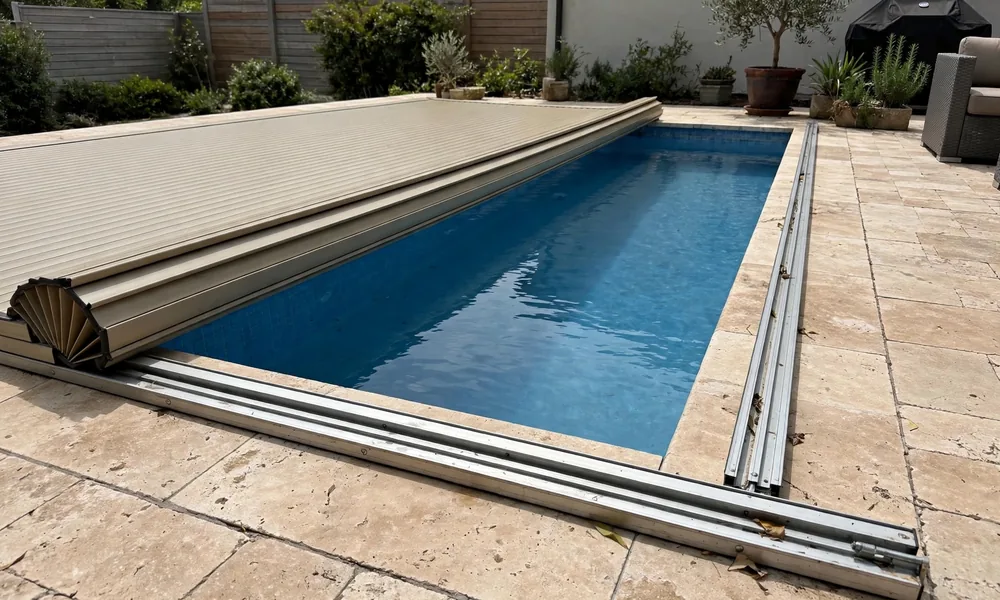
An automatic cover is a slatted blanket that runs on tracks along the pool edge and opens or closes at the touch of a button. It is the easiest cover to live with, strong enough to walk on, and keeps heat and debris out every night with no effort. It is also by far the most expensive type, and needs the tracks fitted when the pool is built or rebuilt.
Pool Covers vs Pool Heaters Compared
| Option | What it does | Running cost | Warms the water | Keeps debris out | Up-front cost |
|---|---|---|---|---|---|
| Solar cover | Traps sun heat | Free | Yes, several degrees | Yes | Low |
| Mesh safety cover | Seals the pool | Free | No | Yes | Mid-range |
| Automatic cover | Opens on tracks | Tiny | Yes | Yes | Premium |
| Gas heater | Heats water fast | High | Yes, fast | No | Mid-range |
| Heat pump | Heats water slowly | Low to medium | Yes, slow | No | Mid-range |
Which One Should You Buy First?
For most owners, the cover comes first: cheapest, no fuel, and it solves heat loss and debris at once. A pool with a solar cover and no heater is often warm enough for most of the season. If the pool is still too cold with a cover on, add a heater then: it only tops up the warmth the cover has saved.
Buy the heater first only if the pool never warms up at all: a shaded pool, or one in a cool climate, may never reach a comfortable temperature on sun alone. In that case a heat pump is usually the better choice than gas, and a cover fitted alongside it keeps the heat it makes from escaping overnight. The worst buy is a gas heater on an uncovered pool: fast heat, made expensively, lost by morning.
A cover must fit the pool properly, with no gaps at the edges. Measure the pool at its widest points, including any steps, and order to the real shape rather than the nominal size. A heater must match the pool volume: an undersized heater runs constantly and never reaches temperature.
What a Patio Cover Is Not
A patio cover is a different product entirely: a roof or canopy over a patio, giving shade to the seating area beside the house. A pool cover lies on the water and protects the pool itself. One shades people, the other insulates water. A patio cover will not warm your pool or keep leaves out of it, and a pool cover will not shade your chairs.
Looking After a Pool Cover
A cover lasts longer if it is stored properly. Solar covers should be kept out of direct sun when they are off the pool, ideally on a reel in the shade: the same sun that warms the water breaks the plastic down. Rinse a solar cover before rolling it up. Mesh and solid covers need a clean, dry store over summer, and the straps and springs should be checked each autumn.
Check the water under the cover regularly: algae grows in warm, still, covered water if the chlorine drops, and you will not see it until the cover comes off. Test the water weekly even when the pool is covered, and run the pump daily. The cover is no substitute for circulation.
The Pool Cover Checklist
- Measure the pool at its widest points, including steps, before ordering any cover.
- Choose a solar cover for free warmth, a mesh safety cover for winter and safety, or an automatic cover for daily ease.
- Buy a reel with a solar cover: rolling one up by hand is why most covers end up unused.
- Fit a cover every night the pool is not in use, not just in autumn.
- Test the water weekly even when the pool is covered, and keep the pump running daily.
- Store the cover clean and dry, out of direct sun.
Common Mistakes With Pool Covers
Buying a Cover and Never Using It
The most common pool-cover mistake is buying one and leaving it rolled up. A cover only works when it is on the water, and a solar cover left on its reel saves no heat and stops no leaves. If the cover is hard to put on, the answer is a reel or an automatic cover, not a better cover.
Expecting a Cover to Heat a Cold Pool
A cover keeps heat in; it does not make heat from nothing. A solar cover adds some warmth from the sun, but a mesh or solid cover adds none at all. If your pool is cold even with a cover on, you need a heater as well, and the cover will make it far cheaper to run. Our guide to the best pool floats is a reminder of what a warm pool is for: floating and swimming are only pleasant when the water is warm.
Ignoring the Skimmer
A cover keeps most debris out, but not all of it. The skimmer catches what floats, and the pump pulls the water through it. Our guide to the best pool skimmers explains how the surface needs its own tool: a cover reduces the skimming, it does not replace it. Skim before you put the cover on.
Forgetting the Floor
A cover protects the surface, but the floor still collects sand, grit and dead algae. Our guide to the best robotic pool cleaners covers the machines that scrub the floor and walls, which is the job a cover will never do.
Frequently Asked Questions
Does a pool cover really warm the water?
A solar cover does: its bubbles trap the sun’s heat and pass it into the pool, often raising the water by several degrees over a sunny week. Mesh and solid covers add no heat, but they stop the heat you have from escaping overnight.
Do I still need a heater if I have a cover?
Often not. A solar cover is enough for most of the season on a sunny pool. If the pool is shaded, add a heat pump and keep the cover on.
Can a pool cover hold a person’s weight?
Only a proper safety cover can, when anchored to the deck with straps and springs. A floating solar cover cannot hold any weight at all. Never walk on one.
How long does a solar cover last?
Usually three to five seasons: sun, chlorine and folding wear the bubbles out. Storing it on a reel in the shade and rinsing it before rolling it up stretches its life.
Should I cover the pool every night?
Yes, whenever it is not in use. Most heat loss happens overnight, and a cover put on every evening saves more heat and chemicals than one used only in autumn.
Is an automatic cover worth the money?
If you swim daily and the cover would otherwise stay on its reel, yes: it is the only type that gets used every night without effort. If you swim at weekends, a solar cover on a reel gives most of the benefit for a fraction of the price.
The Bottom Line
A pool cover and a pool heater are not the same purchase. The cover keeps the heat and keeps the debris out; the heater makes new heat when the sun cannot. For most owners the cover comes first: cheaper, no fuel, and any heater added later runs far cheaper. Fit a solar cover on a reel, use it every night, and add a heat pump only if the pool is still too cold.


