
Pool Skimmers vs Pool Vacuums: Which Cleans Your Pool in 2026
Pool skimmers are the tool that keeps the surface of a swimming pool clear, and they do a job no other pool cleaner does. A pool skimmer lifts leaves, insects, pollen, seeds and the fine film of dust that settles on the water before any of it sinks, rots and clouds the pool. A pool vacuum, by contrast, cleans the pool floor: it sucks up the dirt, sand and algae that have already sunk to the bottom. The two tools work on different halves of the same pool, and confusing them is the fastest way to waste money on the wrong one. If the surface is dirty but the floor is clean, you need a skimmer; if the floor is gritty, you need a vacuum. This guide explains what each type of pool skimmer does, how the manual net, the built-in skimmer basket and the automatic surface skimmer differ, and how to pick the right one for your pool in 2026. Our guide to the best robotic pool cleaners covers the machines that scrub the floor and walls; this one is only about the surface.
Key Takeaways
- A pool skimmer cleans the water surface; a pool vacuum cleans the floor. They are different tools for different dirt.
- A manual net skimmer is the cheapest way to clear leaves, and a pool net IS a manual skimmer.
- A built-in skimmer basket catches floating debris automatically, but only if you empty it before it clogs.
- Fine mesh catches pollen and dust; coarse mesh handles leaves but lets small debris through.
- Skim daily in autumn and after storms, and skim before you run the pump, not after.
What a Pool Skimmer Actually Does
A pool skimmer removes debris from the surface of the water, where most pool dirt arrives. Leaves fall on the surface, insects land on it, pollen drifts onto it and sunscreen forms a thin film across it. Left alone it sinks within a day or two, and once it is on the floor it is far harder to remove: it stains, feeds algae and forces the filter to work harder. Skimming interrupts that process at the cheapest point, while the dirt is still floating and easy to lift out.
There are two kinds of skimmer, and they work together. A manual skimmer is a net on a pole that you sweep across the surface by hand. A built-in skimmer is a box set into the pool wall at water level, with a basket inside it and a flap, called a weir, that lets surface water flow in while keeping debris from floating back out. The pump pulls water through the built-in skimmer all day, so it catches debris passively; the manual net is for what it misses and for the morning after a storm. A pool that has both, used regularly, stays clear with less chlorine and less filter cleaning than a pool that relies on either one alone.
Pool Skimmer vs Pool Vacuum: The Real Difference
The difference between a pool skimmer and a pool vacuum is the layer of water each one works in. A skimmer works on the surface. Its net or basket sits at the top of the water, where floating debris gathers, and it removes that debris before it sinks. A vacuum works on the floor. It rolls or is pushed along the bottom, sucking up sand, grit, dead algae and the leaves that already sank. A skimmer cannot clean the floor, because its net never reaches it, and a vacuum cannot clean the surface, because it works underwater and never touches the floating layer.
The distinction matters when you buy, because the two tools are sold side by side. A robotic pool cleaner, for example, is a kind of vacuum: it scrubs the floor and walls and climbs to the waterline, but it does not skim. If you own a robot and still find leaves floating every morning, the robot is not failing; it was never designed to catch them. The fix is a skimmer, not a better robot. Equally, if the floor is gritty after a windy week, buying a finer skimmer net will not help, because the dirt has already sunk past the surface. Skim the surface, vacuum the floor, and the pool stays clear from top to bottom. A pool net deserves a note of its own: a net on a pole is not a separate tool from a skimmer. A pool net IS a manual skimmer, the hand-held version of the same job the built-in basket does automatically.
The Main Types of Pool Skimmer
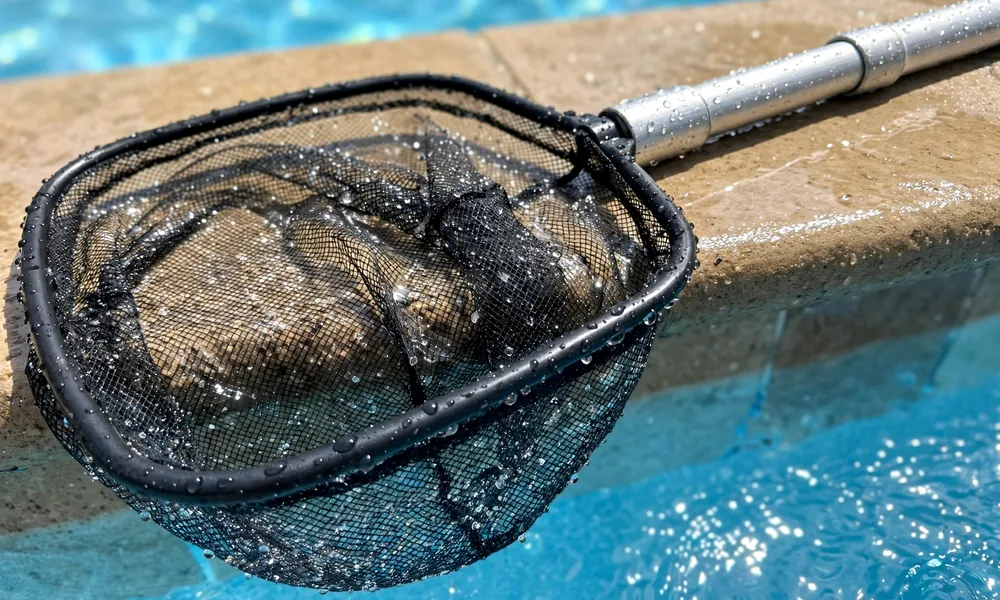
Manual net skimmers are the simplest type: a mesh bag on a frame, fixed to a telescopic pole. A leaf net has a deep bag and a wide mouth for scooping armfuls of leaves, while a fine-mesh net has a shallow, tight weave for pollen, dust and insects. A leaf rake is a wider, heavier version, built for dragging large amounts of debris from a big pool after a storm. The pole matters as much as the net: a telescopic aluminium pole that reaches across the pool is the difference between a five-minute job and a twenty-minute one.
Built-in skimmers are fitted into the pool wall when the pool is built; most in-ground pools have one or two. Water flows over the weir flap into a basket that traps leaves before they reach the pump, and a skimmer sock, a fine fabric sleeve over the basket, catches the small debris the mesh misses. Above-ground pools use a hang-on skimmer that clamps to the wall and works the same way. Automatic surface skimmers are the newest type: small solar or battery-powered robots that cruise the surface on their own, collecting floating debris into an onboard basket and returning to the edge when full. They cost far more than a net, but they skim while you are at work, which is the only way the surface stays clear every day in a leafy garden.
Pool Skimmers Compared
| Skimmer type | Best for | Cost | Effort |
|---|---|---|---|
| Manual leaf net | Daily leaf clearing | Low | Five minutes a day |
| Fine-mesh net | Pollen, dust, insects | Low | Five minutes a day |
| Leaf rake | Heavy debris after storms | Low to mid | Ten minutes a session |
| Built-in skimmer basket | Passive all-day catching | Built into pool | Empty the basket weekly |
| Automatic surface skimmer | Leafy gardens, daily cover | High | Almost none |
How to Choose a Pool Skimmer
Start with the debris your pool actually collects. Under trees, a deep leaf net with a wide mouth is the first buy, because it moves the most debris per scoop. If the water is cloudy with pollen or the surface carries a fine dust film, a fine-mesh net is the one that fixes it, because a coarse leaf net lets that debris straight through. Many owners keep both nets on the same pole and swap them by season: leaf net in autumn, fine mesh in spring and summer. Check the frame before you buy: a rigid aluminium frame holds its shape when full of wet leaves, while a flimsy plastic frame folds and spills the catch back into the water.
Measure the pole against the pool. A telescopic pole should reach the far side of the pool from one standing position, with a metre to spare; a pole that is too short forces you to walk around the pool or lean over the water, and a job that is awkward is a job that does not get done. For the built-in skimmer, the decision is about the basket and the sock: a basket with a handle lifts out without tipping leaves back in, and a skimmer sock costs very little while catching the fine debris that would otherwise reach the filter. A good garden hose is the unglamorous partner here: topping up the water level keeps the built-in skimmer working, because a skimmer starved of water pulls in air and the pump loses prime. Keep the water at mid-skimmer height and the whole system works as designed.

A Skimming Routine That Keeps Water Clear
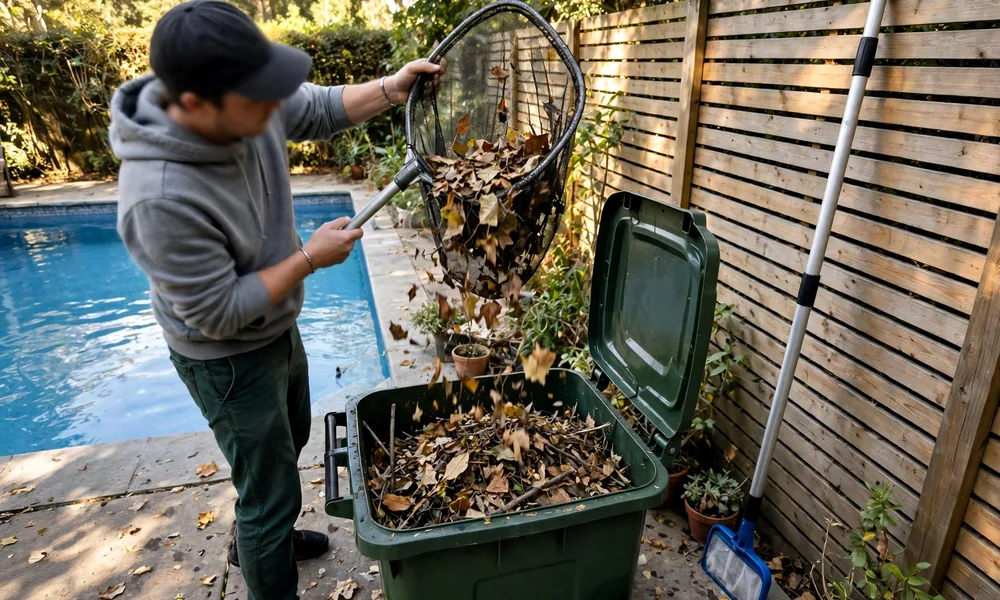
The routine that works is short, daily and done in the right order. Skim first, before the pump runs its main cycle, so the debris you lift out never reaches the filter. Sweep the net slowly across the surface in overlapping passes, rather than stabbing at individual leaves. Empty the net often: a full net drags, spills and pushes debris back into the water. Then check the built-in skimmer basket, tip it into a bucket, and rinse it before it clogs. A clogged basket starves the pump, and a starved pump is how a clear pool turns cloudy in a week.
After a storm, skim twice: once for the bulk and once more after the wind drops, because leaves keep falling for hours. In autumn, a pool cover overnight cuts the morning job in half, and a pool float left in the water is worth moving first, since floats trap leaves against the wall where the net cannot reach them. The payoff for the routine is measurable: a pool that is skimmed daily uses less chlorine, because rotting leaves eat chlorine, and needs its filter cleaned less often. Five minutes a day beats an hour of vacuuming and a chemical shock at the weekend.
Pool Skimmer Buying Checklist
- Match the net to the debris: deep leaf net for leaves, fine mesh for pollen and dust.
- Buy a telescopic pole that reaches the far side of the pool from one spot.
- Check the frame is rigid aluminium, not flimsy plastic that folds when full.
- Empty the built-in skimmer basket weekly, and fit a skimmer sock for fine debris.
- Keep the water level at mid-skimmer height so the pump never pulls in air.
- Skim before the pump cycle, not after, so debris never reaches the filter.
Frequently Asked Questions
Is a pool net the same as a pool skimmer?
Yes. A pool net on a pole is a manual skimmer: the hand-held version of the same surface-cleaning job the built-in skimmer basket does automatically. The words describe the same tool in two forms, not two different tools.
Do I need a skimmer if I have a robotic pool cleaner?
Yes. A robot is a floor and wall cleaner, a kind of vacuum, and it does not skim. Leaves floating on top will still sink and rot unless a skimmer removes them first.
How often should I skim my pool?
Daily in autumn and after storms, and every two or three days in a calm summer week. Five minutes of skimming prevents the debris from sinking, which is when it starts costing chlorine and filter cleanings.
Why does my built-in skimmer not catch anything?
Usually the water level is wrong or the basket is full. The water must sit at mid-skimmer height for the weir flap to work, and a clogged basket blocks the flow. Empty the basket and check the level.
What is a skimmer sock?
A fine fabric sleeve that fits over the built-in skimmer basket. It catches pollen, dust and tiny insects that slip through the basket mesh, and it lifts out with the debris inside for easy emptying.
Can a pool skimmer clean the pool floor?
No. A skimmer only works on the surface layer. Dirt on the floor needs a vacuum, manual or robotic. Skim the surface and vacuum the floor, and the pool stays clear from top to bottom.
The Bottom Line
The best pool skimmer for most owners in 2026 is a deep leaf net on a telescopic pole that reaches across the pool, plus a fine-mesh net for pollen season and a skimmer sock on the built-in basket. That combination costs little, takes five minutes a day, and keeps debris off the surface before it sinks: the whole secret of a clear pool. Add an automatic surface skimmer only if your garden drops leaves faster than you can scoop them.


