
Pool Vacuums That Clear the Floor Without Wasting Your Weekend in 2026
Pool vacuums are the tool that cleans the part of the pool you actually swim in: the floor. Leaves, sand, grit, dead algae and fine dust all sink sooner or later, and once down there no skimmer can reach them and no filter can pull them off the plaster. A pool vacuum sucks that settled dirt up and out, leaving the floor clean underfoot. This guide explains the four kinds, how each is powered, and how to pick the right one for your pool, your pump and your time.
Key Takeaways
- A pool vacuum cleans the floor; a pool skimmer cleans the surface. A pool needs both.
- A manual vacuum is the cheapest and most thorough option, but it costs twenty to forty minutes every week.
- A suction-side automatic runs off your existing pump, needs no electricity, and suits pools with steady debris.
- A pressure-side vacuum needs a booster pump and costs more to run, but it collects leaves in its own bag, not your filter.
- Match the head to your surface: soft brushes for vinyl, wider heads for concrete, and one that fits your steps and corners.
What a Pool Vacuum Actually Does
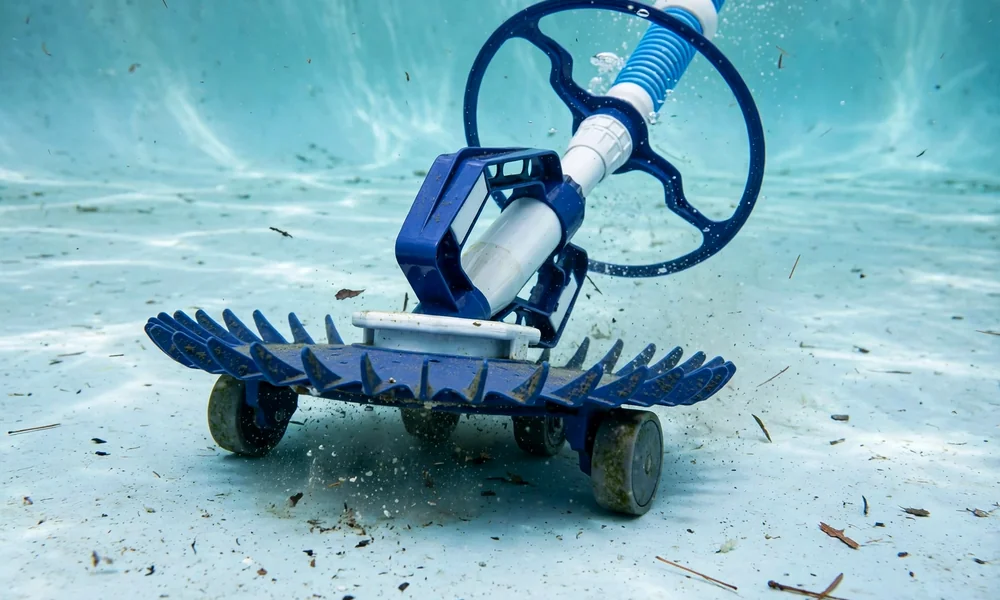
A pool vacuum works like a household vacuum turned upside down and put underwater. A head with wheels or brushes rolls along the floor, a hose carries water and dirt away, and suction pulls the dirt into a filter, a bag or the pool’s filtration system. It removes what has already sunk: sand, grit, dead algae and leaves that slipped past the skimmer.
Nothing else does this job. The pump circulates water but does not lift dirt off the floor. The filter catches what floats past it, not what sits on the plaster. A brush loosens algae but only moves dirt into the water; without a vacuum to follow, most of it settles back down.
How often you vacuum depends on what falls in. A pool under trees in autumn needs one every few days, while a covered pool in a sheltered garden can go a week or more. The sign is the floor itself: if you can see dust, sand or leaf fragments from the deck, the vacuum is due.
Pool Vacuum vs Pool Skimmer: Different Halves of the Pool
The difference between a pool vacuum and a pool skimmer is the layer of water each one works in. A skimmer works on the surface. Its net or basket sits at the top of the water and removes leaves, insects and pollen before they sink. A vacuum works on the floor, rolling along the bottom and sucking up the sand, grit, dead algae and leaves that already sank. A skimmer cannot clean the floor, because its net never reaches it, and a vacuum cannot clean the surface, because it works underwater and never touches the floating layer.
The distinction matters when you buy: the two tools are sold side by side and look like they do the same job. They do not: a dirty surface needs a skimmer, a gritty floor needs a vacuum. Our guide to pool skimmers that keep the surface clear covers the surface half in full. The two tools also work as a pair: skim first and less dirt ever reaches the floor, and vacuum after brushing to pick up what the brush loosened.
Pool Vacuum vs Robotic Pool Cleaner: Hand-Driven vs Self-Propelled
A robotic pool cleaner is a kind of vacuum, but it is a very different one from the vacuums in this guide. A robot is self-propelled, with its own motor, filter basket and, in cordless models, battery. You drop it in, press a button, and it drives itself around the floor and walls. A manual or suction-side vacuum has no motor of its own: it is pushed by hand on a pole, or dragged around by the suction of your pool pump, and only goes where you steer it.
A robot costs far more to buy, but almost no time. A manual vacuum costs very little, but half an hour of work every week. A suction-side automatic sits in the middle: it moves on its own while the pump runs, but cleans randomly and gets stuck in corners. A robot also scrubs with its own rotating brushes as it vacuums, loosening algae while it cleans; a manual vacuum only sucks. That is why brushing before vacuuming matters so much with a hand-driven vacuum, and why our guide to the best robotic pool cleaners of 2026 is the right read if you want a machine that does both jobs at once.
The Main Types of Pool Vacuum
There are four kinds, differing mainly in what powers them and where the dirt ends up. Pick the power source first.
Manual vacuums
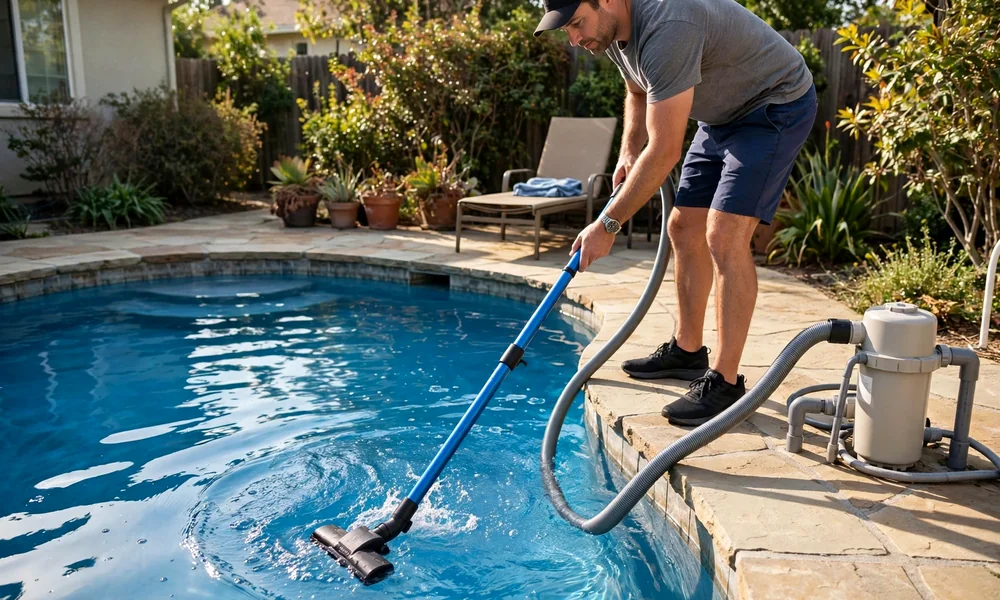
A manual vacuum is a head on a telescopic pole, connected by a hose to the skimmer or a dedicated suction line. Prime the hose, attach it, and push the head slowly across the floor while the pump sucks dirt into the filter. It is the cheapest and most thorough type, because you decide where the head goes. Its weakness is your time: twenty to forty minutes, every week.
Suction-side automatic vacuums
A suction-side vacuum plugs into the same skimmer line, but moves on its own. Water flow drives a turbine or pulsing diaphragm that makes it crawl across the floor in a random pattern, picking up dirt as it goes. It needs no electricity and no booster pump, which keeps the running cost at zero. Its weaknesses are a random pattern that can miss the same corner twice, and everything it collects goes straight into your filter, so you backwash more often.
Pressure-side vacuums
A pressure-side vacuum works the other way round: pressurised water from a booster pump pushes it around the pool and sweeps debris into an onboard bag. The bag catches leaves before they reach your filter, and the cleaner moves faster than a suction-side model. The cost is the booster pump and the electricity to run it: right for a large pool under trees, overkill for a small pool with light debris.
Battery-powered handheld vacuums
A handheld vacuum is a small, cordless unit with its own battery and fine filter bag, made for spot cleaning rather than whole-pool cleaning. It suits the sand patch by the steps, the leaves that sank overnight, or the corner the automatic cleaner always misses. It will not clean a whole pool on one charge. Think of it as a dustpan for the pool, not the main vacuum.
Pool Vacuums Compared
| Vacuum type | Best for | Power source | Where dirt goes | Effort |
|---|---|---|---|---|
| Manual vacuum | Thorough weekly cleans | Pool pump | Pool filter | High: 20 to 40 minutes |
| Suction-side automatic | Steady debris, low running cost | Pool pump | Pool filter | Low: check and empty |
| Pressure-side automatic | Large pools, heavy leaves | Booster pump | Onboard bag | Low: empty the bag |
| Battery handheld | Spot cleaning, steps, corners | Rechargeable battery | Onboard filter bag | Medium: short sessions |
How to Choose a Pool Vacuum
Start with your pool, not the catalogue. A small above-ground pool with light dust needs nothing more than a manual vacuum and a decent hose. A large in-ground pool under trees needs an automatic cleaner, probably pressure-side, with a bag big enough for a storm’s worth of leaves. Buying more vacuum than your pool needs wastes money and electricity; buying less wastes weekends.
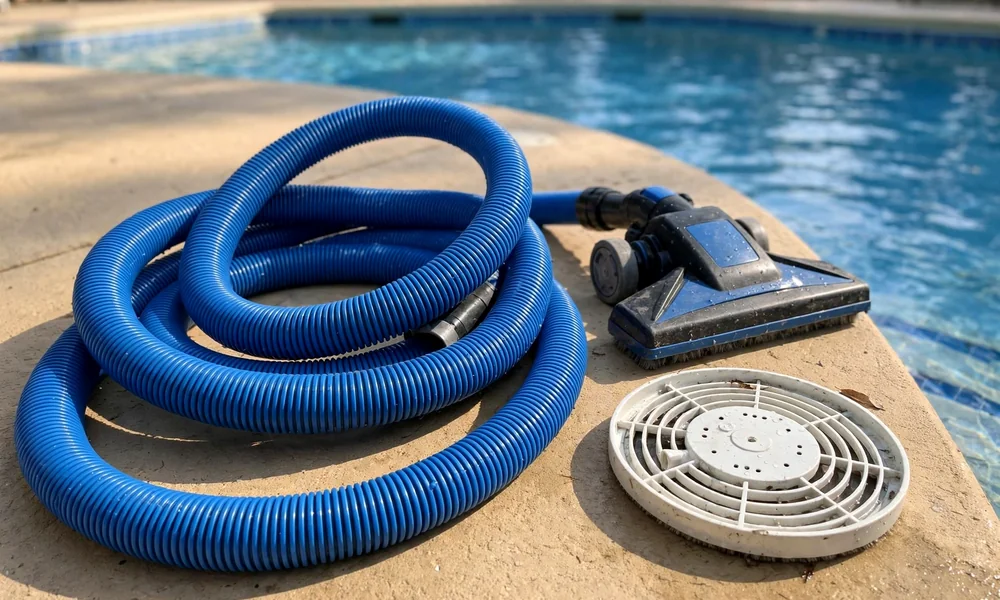
Check the hose first: it causes the most trouble. A manual vacuum hose must reach the far corner from the skimmer with slack to spare, and be the right diameter for your suction line: too narrow and suction drops, too wide and it will not seal. Buy the hose in sections you can add to, and store it coiled in the shade: a hose left baking in the sun goes stiff and cracks within a season or two. And clean the filter before you judge a vacuum: a dirty filter chokes suction.
Match the vacuum head to your pool surface. Soft brushes suit a vinyl liner, which scratches easily and tears if a stiff brush catches a seam. A wider, stiffer head suits concrete and plaster, where the surface is hard and the dirt grips. Side brushes or a triangular shape reach into corners and along steps, where a wide rectangular head cannot go.
Mistakes That Waste a Weekend
The most common mistake is vacuuming too fast: a fast head leaves a cloud and most dirt settles back where it was. The second is air in the hose, which kills suction and strains the pump; fill the hose with water first, holding it upright until the bubbles stop. The third is ignoring the filter: a suction-side vacuum sends everything into it, so check the gauge after a storm clean and backwash when it climbs. The fourth is a head that does not fit the pool: one wider than your steps cannot clean them, and the wrong brushes can scratch vinyl. Measure the steps and check the surface before you order. A quick rinse off afterwards is part of the job too: our guide to pool brushes that scrub the walls and floor covers setups that keep chlorine and dirt outside the house.
Before You Buy: The Checklist
- Measure from the skimmer to the farthest corner, and buy a hose that reaches it with slack to spare.
- Check your surface first: vinyl needs soft brushes, concrete and plaster can take stiffer ones.
- Test pump suction before choosing a suction-side cleaner, and clean the filter first.
- Pick a head that fits your steps and corners, not just the open floor.
- Count the debris: heavy leaves need a pressure-side bag, light dust does not.
- Check running cost: a booster pump adds electricity every time the cleaner runs.
Frequently Asked Questions
How often should I vacuum my pool?
Once a week is right for most pools, more often after storms, in autumn leaf fall, or after shocking, when dead algae settles. A pool under trees may need it every two or three days in peak season.
Can a pool vacuum replace brushing?
No. A vacuum sucks up loose dirt, but it does not loosen algae that has gripped the wall or floor. Brush first, then vacuum. A robot is the exception, because it scrubs while it vacuums.
Why does my pool vacuum keep losing suction?
Air in the hose is the usual cause: prime it fully before connecting. A clogged skimmer basket, a full pump basket or a dirty filter will also choke suction; check those three before blaming the vacuum.
Is a suction-side or pressure-side vacuum better?
Suction-side is cheaper and costs nothing extra to run, but it loads your filter and cleans in a random pattern. Pressure-side costs more and needs a booster pump, but it collects debris in its own bag and handles heavy leaves better. Choose by debris load, not price alone.
Can I vacuum my pool to waste?
Yes, if your filter has a waste setting. It sends dirty water straight out instead of through the filter, which is right after an algae treatment or a very dirty clean. It uses a lot of water, so top the pool up afterwards.
Do I still need a manual vacuum if I own a robot?
Most robot owners keep one. Robots miss tight corners, steps and ledges, and a manual vacuum is the fastest way to deal with a small patch of dirt.
Bottom Line
A pool vacuum takes the dirt out of your pool instead of moving it around. Buy a manual vacuum for the cheapest, most thorough clean if you do not mind the work; a suction-side automatic if you want the pump to do the driving for no extra running cost; a pressure-side model if your pool sits under trees and your filter cannot keep up with the leaves. Whichever you choose, match it to your pool surface, prime the hose properly, and vacuum slowly in overlapping lanes weekly.


