Sauce Bottles That Serve Cleanly, From Squeeze to Glass, in 2026
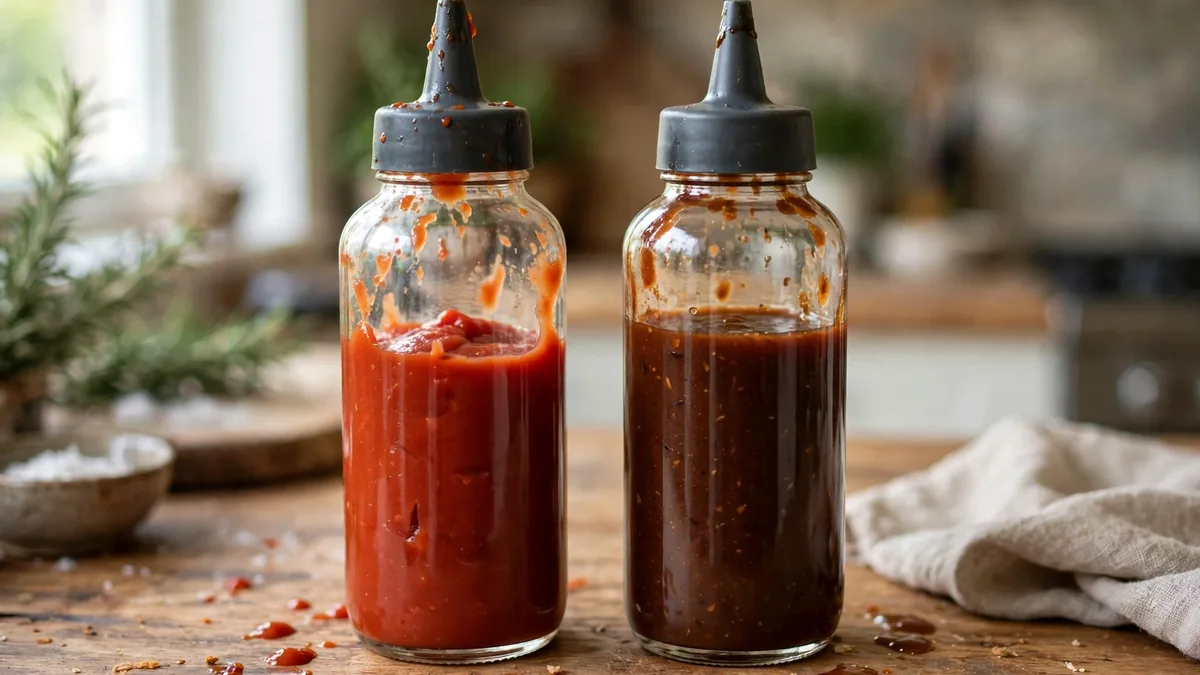
Sauce bottles are the small piece of kitchen kit that decides whether dinner ends with a neat drizzle or a sticky table. A good sauce bottle puts exactly the amount you want exactly where you want it, whether that is a thin line of hot sauce over eggs, a zigzag of barbecue sauce over chicken, or a careful spoonful of dressing over a salad. A bad one glugs, drips down the side, clogs at the tip, or leaves half the sauce stuck in the bottom where no knife can reach it.
Most sauces arrive in bottles designed for the shop shelf, not the table. They are too tall, too wide, or sealed with a cap that pours in a flood the moment you tip it. Moving the sauce into a proper sauce bottle changes the meal: the same ketchup, the same mustard, the same chilli sauce suddenly behaves, and the table stays clean. This guide covers the main types of sauce bottle, what makes one serve cleanly, and how to match the bottle to the sauce inside it.
Key takeaways
- A squeeze bottle gives the most control over thick sauces, because pressure, not gravity, decides how much comes out.
- Match the tip to the sauce: a wide tip for thick barbecue sauce and mayonnaise, a narrow tip for thin hot sauce and vinegar dressings.
- Glass bottles with steel pourers suit thin sauces and the table, while plastic squeeze bottles suit thick sauces and the kitchen.
- A cap that seals properly matters more than the shape of the bottle, because a sauce bottle that leaks in the cupboard ruins everything around it.
- Buy a bottle you can take fully apart and clean, since dried sauce in a fixed tip is the most common reason a sauce bottle gets thrown away.
Sauce bottles versus the bottle the sauce came in
A shop bottle is built to survive a lorry, a warehouse shelf and a supermarket trolley. Its cap is usually a wide screw top or a flip lid that opens far too far, so the first pour is always a guess. A sauce bottle is built for the opposite job: small, controlled servings, repeated dozens of times, often with one hand while the other holds a plate.
Control is the whole point
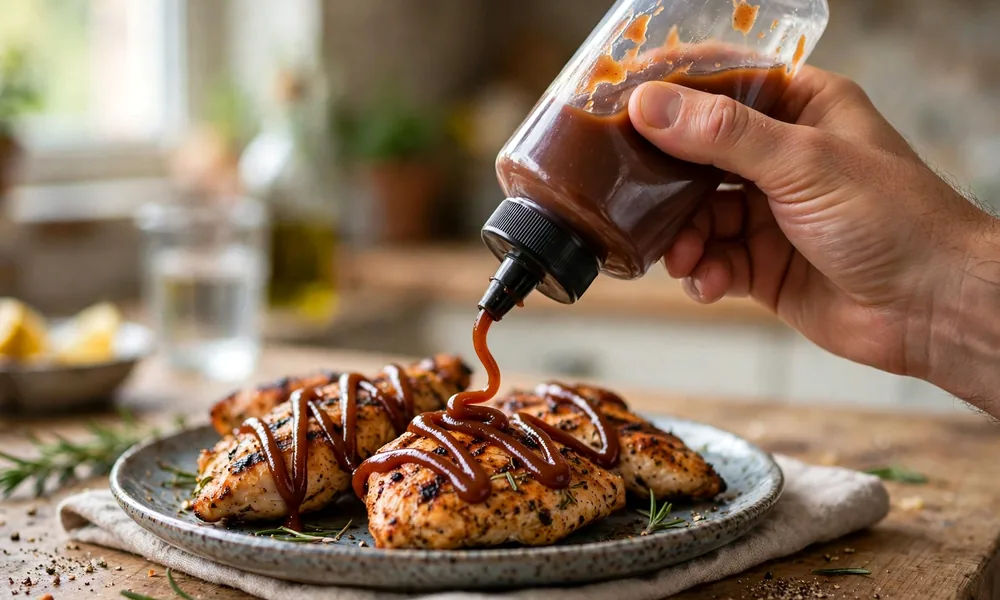
Every sauce bottle is judged by the same test: can you put a small amount on one part of the plate and stop? If the answer is yes, the bottle works, whatever it looks like. If the sauce keeps coming after you stop squeezing, or drips down the outside of the bottle onto your hand, the bottle fails the only test that matters. Our guide to vinegar bottles that pour cleanly makes the same point about thin liquids, and the lesson carries over: the spout decides the serving, not the body of the bottle.
Portion and presentation
The main types of sauce bottle, compared
| Type | Best for | Strength | Weakness |
|---|---|---|---|
| Plastic squeeze bottle | Ketchup, barbecue, mayonnaise | Precise pressure control, cheap, unbreakable | Can stain and hold smells over time |
| Glass bottle with steel pourer | Thin sauces, dressings, table use | Clean pour, no smells, looks good on the table | Breakable, poor for very thick sauces |
| Glass bottle with screw cap | Homemade sauces, storage | Seals well, easy to fill, fridge-friendly | Pouring is hard to control without a pourer |
| Pump bottle | Large groups, buffets, thick sauces | Same portion every pump, one-handed | Hard to clean inside, pumps clog with seeds |
| Ceramic jug or boat | Fresh sauces served at the table | Attractive, pours smoothly, easy to wash | No seal, not for storage or the fridge |
| Mini travel bottle | Packed lunches, picnics | Small, leak-proof when capped, light | Holds very little, fiddly to fill |
The plastic squeeze bottle is the safest first buy. It costs little, it survives being dropped, and it works with almost every thick sauce a home cook uses. Choose a clear one so you can see how much sauce is left, and a bottle with a pointed tip that can be cut wider if the sauce is very thick. The glass bottle with a steel pourer is the better second bottle, for thin sauces and for the table, where it looks like it belongs.
What to look for when buying
Start with the tip, because the tip is the bottle. A narrow tip gives a thin line and suits hot sauce, soy sauce and thin dressings. A wide tip gives a thick ribbon and suits barbecue sauce, ketchup and mayonnaise. Some squeeze bottles come with interchangeable tips, which is the most useful feature of all: one bottle, several sauces, a tip swapped in seconds. A tip that cannot be removed is a warning sign, because it cannot be cleaned properly either.
The cap and the seal
The cap decides whether the bottle can live in the fridge or the cupboard without making a mess. A good cap clicks or screws shut firmly and stays shut when the bottle is knocked over in a crowded fridge door. A flip cap is convenient at the table but leaks more often than a screw cap, so keep flip caps for bottles that stay upright and use screw caps for bottles that travel. Test the seal in the shop if you can: turn the bottle upside down over your hand and squeeze gently. If sauce escapes around the cap, it will escape in your bag too.
Material and size
Plastic is light, cheap and unbreakable, and it is the right choice for squeeze bottles, because glass does not squeeze. Glass is better for storage and for the table, because it does not stain, does not hold smells, and lets you see the sauce clearly. Stainless steel looks smart but hides the level, so you never know when the sauce is about to run out. For size, 250 to 350 millilitres suits most homes: large enough to hold a useful amount, small enough to finish before the sauce goes stale. Larger bottles suit families and barbecues, while 100 millilitre bottles suit packed lunches.
Thick sauces deserve a special note here. A sauce with bits in it, such as a chunky salsa or a seeded mustard, needs a wide tip or it will clog on the first squeeze. Our guide to ketchup that actually tastes like tomatoes is about the sauce itself, but the same thickness problem applies: if the sauce barely flows, the bottle must do the work, and a narrow tip will only frustrate you.
Matching the bottle to the sauce
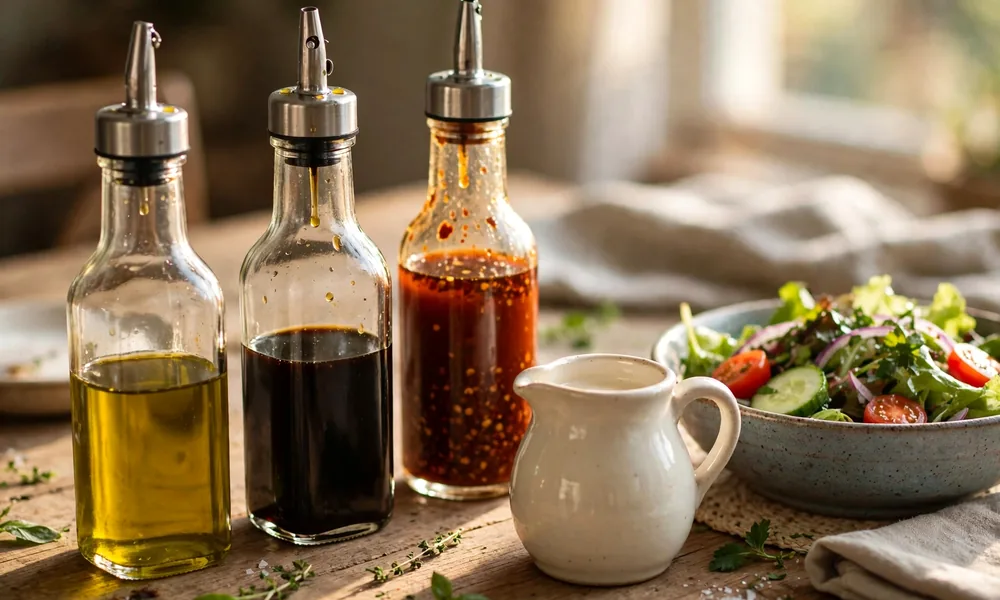
Thin sauces need a narrow opening and a bottle that pours slowly. Hot sauce, soy sauce, Worcestershire sauce and thin vinaigrettes all flood a plate from a wide mouth, so a glass bottle with a steel pourer or a squeeze bottle with a fine tip is the right tool. A bottle that glugs is the enemy here, because a glug of hot sauce is a ruined plate. Our guide to hot sauces that bring the heat covers the sauces themselves, and every one of them is easier to enjoy from a bottle that lets you add a few drops at a time.
Thick sauces need pressure and a wide opening. Ketchup, barbecue sauce, mayonnaise and salad cream all sit still in a glass bottle until shaken, and then arrive all at once. A soft plastic squeeze bottle is the answer: it starts the flow with a gentle squeeze and stops it the moment you release. If the sauce is very thick, cut the tip a millimetre wider rather than squeezing harder, because hard squeezing is what makes a bottle burst sauce across the plate.
Sauces with bits and sauces that separate
Cleaning, refilling and storage
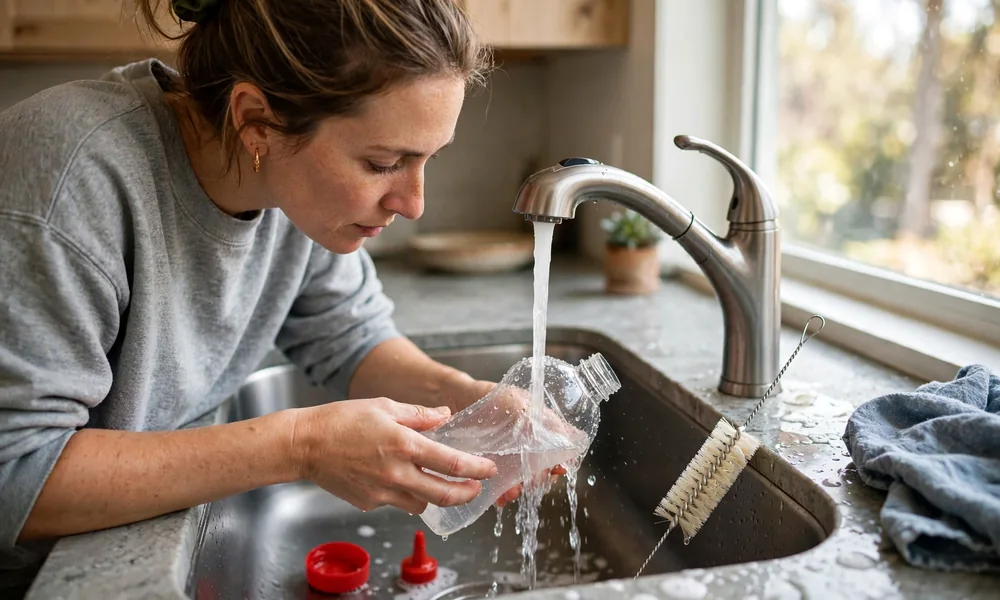
A sauce bottle is only as good as its cleaning. Dried sauce in a tip hardens into a plug, and the next squeeze either does nothing or sends the plug flying across the kitchen. The fix is simple: rinse the tip under hot water after every use, and take the bottle fully apart once a week. Bottles with removable tips, wide mouths and smooth insides clean in seconds, while bottles with fixed tips and narrow necks need a thin brush and patience.
Mistakes that make sauce bottles annoying
The most common mistake is buying one bottle for every sauce. A single narrow tip cannot serve both hot sauce and barbecue sauce, and a single wide tip cannot serve both either. The second mistake is buying a bottle that cannot be taken apart, then discovering the tip is clogged with dried sauce that no amount of soaking will shift. The third is filling a bottle to the brim, leaving no air for the squeeze to work, so the first squeeze sends sauce everywhere.
Checklist: before you buy
- Check the tip: narrow for thin sauces, wide for thick sauces, removable for cleaning.
- Test the cap: screw it shut, turn the bottle upside down, and squeeze gently to check for leaks.
- Choose the size: 250 to 350 millilitres for home use, smaller for packed lunches.
- Pick clear plastic for squeeze bottles and glass for table bottles, so you can see the level.
- Confirm the bottle comes fully apart, with no fixed tip or sealed neck you cannot clean.
- Label the bottle, or buy different coloured caps, so ketchup never gets mistaken for barbecue sauce.
FAQs
What is the best sauce bottle for ketchup?
A soft plastic squeeze bottle with a wide, removable tip is the best sauce bottle for ketchup. It gives pressure control, so the ketchup comes out in a line instead of a splat, and the wide tip stops it clogging.
Can I put hot sauce in a squeeze bottle?
Yes, if the tip is narrow. Hot sauce is thin, so a wide tip floods the plate, while a fine tip lets you add a few drops at a time. Choose a bottle with a cap that seals tightly, because hot sauce stains everything it touches, and wash the tip after use so it does not clog.
How do I stop a sauce bottle clogging?
Use a tip wide enough for the sauce, rinse the tip under hot water after every use, and take the bottle apart for a proper wash once a week. Sauces with bits in them need the widest tip, and a bottle brush reaches dried sauce that soaking alone will not shift.
Are glass or plastic sauce bottles better?
Plastic is better for squeeze bottles, because glass does not squeeze, and it is safer around children and outdoors. Glass is better for table bottles and storage, because it does not stain, does not hold smells, and shows the sauce clearly. Most kitchens need one of each.
How do I clean a sauce bottle properly?
Take it fully apart, soak the parts in hot soapy water for ten minutes, then scrub the inside with a bottle brush and run hot water through the tip. Leave every part to dry completely before reassembling, because a damp bottle grows mould, and never refill a bottle that still smells of the old sauce.
How long does sauce keep in a sauce bottle?
It keeps as long as the sauce itself would keep, provided the bottle is clean and sealed. Most opened sauces last weeks to months in the fridge, but a bottle that is topped up without ever being washed will go off faster, because old residue spoils fresh sauce. Wash the bottle fully before every refill.
Bottom line
Sauce bottles that serve cleanly in 2026 are bought for the sauce, not the shelf: a squeeze bottle with a wide tip for thick sauces, a glass bottle with a narrow pourer for thin ones, a cap that seals, and a body that comes fully apart for cleaning. Get the tip right, keep the bottle clean, and the sauce lands where you meant it to, every time.