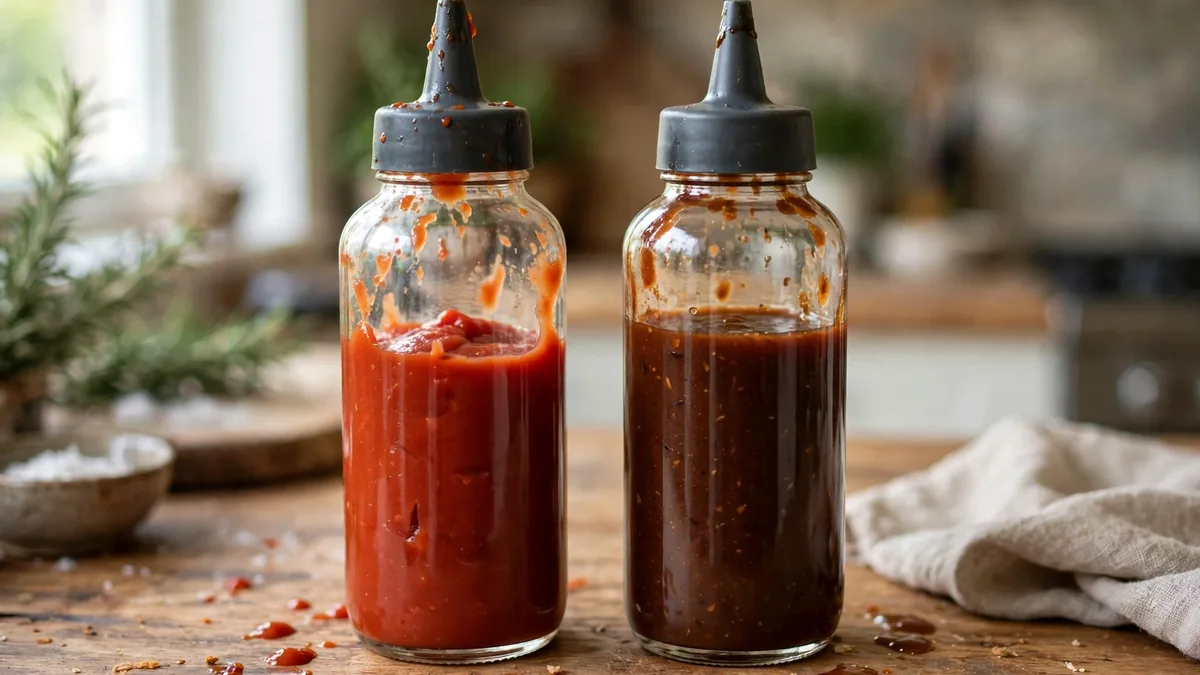
How to Pick a Vinegar Bottle That Pours Cleanly in 2026
A vinegar bottle that pours cleanly in 2026 is a small kitchen upgrade you notice every day. A good bottle delivers a thin, steady stream that starts and stops exactly when you want it to, with no drips and no sudden glug flooding the salad.
Most vinegar bottles are not designed for pouring at all. They are designed for shipping, with wide mouths that gush and caps that stick. This guide explains what makes a bottle pour cleanly, compares the main types, and picks the eight best vinegar bottles of 2026.
Key Takeaways
- A narrow, well-shaped spout matters most: it controls the stream and stops drips.
- Glass cruets with steel pourers give the best balance of control, visibility, and value.
- Choose 250 to 500 ml; larger bottles are heavy and the vinegar goes flat before you finish them.
- A spout you can remove and clean is essential, because dried vinegar clogs narrow pourers.
- Dark glass or ceramic blocks light; clear glass lets you see the level at a glance.

Why a Clean Pour Matters
Vinegar is one of the few ingredients you use by feel rather than by measure. A splash in a dressing or a drizzle over tomatoes needs a small, controlled amount. When a bottle pours badly, the first pour floods the bowl and the dressing is too sharp before you have tasted it.
A clean pour also keeps the kitchen tidy. Vinegar running down a bottle leaves a sticky ring on the shelf and a sharp smell in the cupboard. A bottle with a good spout and a sealing cap solves this at once.
The Main Types of Vinegar Bottle
Glass Cruets with Steel Pourers
Glass cruets are the most common vinegar bottles and the best choice for most kitchens. A tall glass body with a narrow steel pourer gives a thin, controlled stream, and the glass lets you see how much is left. They are cheap and easy to clean. Their weakness is light: keep clear glass away from the window.
Ceramic Bottles
Ceramic bottles are the traditional choice in Mediterranean kitchens and the best at blocking light. An opaque body keeps vinegar fresh longer, and the weight gives stability on the table. The trade-off is that you cannot see the level.
Stainless Steel Bottles
Stainless steel bottles are the toughest option and the best pick for busy kitchens where glass feels risky. They are practically unbreakable, block light completely, and wipe clean in seconds. The pour is good, though not quite as precise as a glass cruet.
Dual-Chamber Bottles
Dual-chamber bottles hold oil and vinegar in one footprint, each with its own spout, so you can dress a salad in one motion. The idea is clever, but the pour is harder to control than a single bottle, and cleaning two chambers takes more effort.
The 8 Best Vinegar Bottles of 2026
We judged each bottle on pour control, drip resistance, ease of refilling and cleaning, build quality, and value. The eight below are the best vinegar bottles of 2026 for home cooking.
1. Classic Glass Cruet with Steel Pourer
Our overall winner is the classic glass cruet with a steel pourer. The spout delivers a thin, steady stream that stops cleanly, the glass shows the level, and the flip-top cap closes with a click. It holds 500 ml and fits easily beside the stove. If you buy one vinegar bottle, buy this one.
2. Dark Green Glass Bottle
The dark green glass bottle is the best choice for premium vinegar. Tinted glass blocks the light that degrades vinegar, while the same steel pourer as our top pick keeps the stream precise.
3. Ceramic Table Bottle
The ceramic table bottle is the most beautiful option here and the best for the dining table. Its opaque body blocks light completely, and a hand-glazed finish gives it a crafted look glass cannot match. The pour is slower and more deliberate.
4. Stainless Steel Bottle
The stainless steel bottle is the toughest we tested and the best pick for a busy family kitchen. It survives drops that would shatter glass, blocks light completely, and wipes clean in seconds.
5. Small Table Cruet
A small 250 ml cruet is the right choice for the dining table, for infused vinegars, or for anyone who cooks for one or two. It is light and easy to handle with one hand, and the vinegar stays fresh because you finish it quickly.
6. Dual Oil and Vinegar Bottle
The dual bottle holds oil and vinegar side by side, each with its own spout, so you can dress a salad in one motion. The pour takes a little practice, since two streams are harder to aim than one.
7. Wide-Mouth Bottle for Infused Vinegars
Infused vinegars need a wide mouth, so you can get herbs, chillies, or fruit in and out. This bottle has a removable spout and an opening big enough for a sprig of rosemary, and it pairs well with a good balsamic vinegar for finishing dishes.
8. Budget Glass Cruet Set
The budget glass cruet set proves you do not need to spend much to pour well. Two simple glass cruets with steel pourers cover oil and vinegar for the price of one premium bottle. The pour is good rather than great, but for a first set they are hard to beat.

Comparison Table
| Bottle | Capacity | Material | Pour Control | Best For |
|---|---|---|---|---|
| Classic Glass Cruet | 500 ml | Glass and steel | Excellent | Everyday cooking |
| Dark Green Glass | 500 ml | Tinted glass | Excellent | Premium vinegar |
| Ceramic Table Bottle | 500 ml | Ceramic | Good | Dining table |
| Stainless Steel | 500 ml | Steel | Good | Busy kitchens |
| Small Table Cruet | 250 ml | Glass | Good | Table and infused |
| Dual Oil and Vinegar | 2 x 250 ml | Glass and steel | Good | Salad dressing |
| Wide-Mouth Infused | 350 ml | Glass and steel | Good | Infused vinegars |
| Budget Cruet Set | 2 x 250 ml | Glass and steel | Good | First set |
What to Look For When Buying
Pour Control
Pour control is the single most important thing about a vinegar bottle. A good spout produces a thin, steady stream that starts when you tilt and stops when you straighten, with no surge and no dribble. Narrow steel pourers are the most reliable shape; avoid wide, open mouths.
Drip Resistance
A bottle that drips is a bottle that makes a mess, however good the pour. The best spouts are shaped so the last drop falls back into the bottle instead of running down the side. If a bottle drips in the shop, it will drip at home: test it with water.
Materials
Glass is the best body material for most cooks: it does not react with vinegar, it lets you see the level, and it is easy to clean. Ceramic blocks light completely and looks beautiful on the table. Stainless steel is the toughest. Whatever the body, look for a stainless steel spout rather than a plastic one.
Capacity
Choose 250 to 500 ml for everyday use. That is enough for a month or two of cooking, which keeps it fresh, and the bottle stays light enough to handle with one hand. A litre bottle is heavy and awkward at the table.
Cleaning and Refilling
A vinegar bottle needs cleaning often, because dried vinegar leaves a crust inside the spout. The best bottles have a wide mouth for refilling and a spout you can pull out and rinse. Avoid fixed spouts you cannot reach. A bottle brush and hot water once a month keeps any cruet pouring like new, and you can even make vinaigrette right in the bottle and shake.
How to Pour Cleanly Every Time
Tilt the bottle slowly and let the stream start before you move it over the food; a fast tilt causes the surge that floods a salad. Hold the bottle close to the bowl, about ten centimetres above it. When you have poured enough, straighten it with a small flick of the wrist to break the stream cleanly.
Keep the spout clean between uses: a quick wipe after pouring stops the crust that causes drips. Store the bottle upright with its cap on, away from the hob. If you decant from a large shop bottle, use a funnel and fill to just below the shoulder.

Common Mistakes to Avoid
The most common mistake is buying a pretty bottle with a bad spout: if the pour gushes and drips, the bottle will live at the back of the cupboard. The second is buying too big: a litre bottle is heavy and hard to aim. The third is never cleaning the spout. Finally, do not store vinegar in direct sunlight: light dulls its flavour.
Checklist: Choosing Your Vinegar Bottle
- Pick a glass cruet with a steel pourer for cooking, or ceramic for the table.
- Check that the spout gives a thin, steady stream and stops cleanly, with no drips.
- Choose 250 to 500 ml, which keeps vinegar fresh and the bottle light.
- Make sure the spout comes out for cleaning and the mouth is wide enough to refill.
- Look for a stainless steel spout and a cap that seals, not a loose plastic stopper.
- Test the pour with water before committing, or buy from a seller that accepts returns.
Frequently Asked Questions
What is the best material for a vinegar bottle?
Glass is the best all-round choice: it does not react with vinegar, it lets you see the level, and it is easy to clean. Ceramic is better for light protection. Stainless steel is the toughest. Avoid plastic, which can absorb smells.
Why does my vinegar bottle drip down the side?
The spout is the wrong shape, or it is dirty. A good spout sends the last drop back into the bottle. Dried vinegar crust also causes drips, so remove the spout and rinse it in hot water. If a bottle drips from new, the spout is badly designed.
Can I store vinegar in a clear glass bottle?
Yes, but keep it away from sunlight. Light dulls vinegar’s flavour, so a clear bottle belongs in a cupboard, not on a sunny windowsill. If it lives on the counter, choose dark glass or ceramic.
How do I clean a vinegar bottle spout?
Pull the spout out if it comes apart, then soak it in hot soapy water for ten minutes. For a fixed spout, run hot water through it and use a thin bottle brush. Do this once a month.
What size vinegar bottle should I buy?
For most households, 250 to 500 ml is right. A 500 ml cruet suits everyday cooking, while 250 ml suits the table or infused vinegars. Larger bottles are only worth it if you pickle or make dressing in big batches.
Can I use the same bottle for oil and vinegar?
You can, but it is better not to. Oil and vinegar need different spouts, and swapping liquids leaves residue that spoils both. Use a matched pair of cruets instead, or a dual-chamber bottle. A good apple cider vinegar deserves its own bottle.
The Bottom Line
Picking a vinegar bottle that pours cleanly in 2026 comes down to one thing above all: the spout. A narrow steel pourer on a glass cruet gives a thin, steady stream and stops cleanly. For most kitchens, that is the classic glass cruet: cheap, honest, and excellent at the job. If it lives on the table, choose ceramic; for premium vinegar, choose dark glass. Keep it clean, out of the sun, and pour slowly.