Saucepans That Heat Evenly Without the Hot Spots in 2026
The best saucepan for even heat in 2026 is a tri-ply stainless steel saucepan with a thick aluminium core and a flat, heavy base, because it spreads heat across the whole cooking surface instead of concentrating it in one scorching ring. A saucepan is the pan sauces live or die in: a thin base burns milk in the centre while the edges stay cold, a custard catches in one spot, and a tomato sauce sticks in a ring that no amount of stirring saves. The right saucepan heats evenly from edge to edge,.
Hot spots form when a pan’s base is too thin to spread heat sideways, so the area directly above the burner overheats while the edges lag behind. On a gas hob the flame pattern makes it worse, creating a ring of intense heat that scorches anything thick. A good saucepan solves this with a thick, layered base that conducts heat sideways as well as upwards.
Key Takeaways
- Tri-ply stainless steel is the best saucepan material for even heat: an aluminium core spreads warmth across the whole base, while steel surfaces handle high heat and acidic sauces.
- Base thickness decides everything: look for a base at least 5 millimetres thick, with a flat bottom that sits flush on the hob.
- A 2-quart saucepan suits most households for sauces and reheating; add a 3 or 4-quart pan for soups, pasta and larger batches.
- Avoid thin single-layer pans for sauces: they scorch in the centre and leave the edges undercooked, whatever the brand claims.
- Pouring lips, a tight lid and a handle that stays cool matter as much as the metal.

What Even Heat Actually Means in a Saucepan
Even heat in a saucepan means the cooking surface stays within a few degrees from centre to edge while a sauce simmers. A good pan holds its whole base between 95°C and 100°C on a medium simmer; a poor one runs 130°C in the centre and 85°C at the edges, so the middle burns while the sides barely cook.
The physics is straightforward. Heat enters from the burner and must travel sideways through the base before it reaches the food. Aluminium conducts heat about ten times better than stainless steel, which is why the best saucepans sandwich aluminium inside steel: the steel gives durability and a non-reactive surface, the aluminium does the spreading. A single layer of thin stainless steel cannot spread heat fast enough, so hot spots form. In tests, a tri-ply saucepan varies by less than 8°C across its cooking surface at a simmer, while a thin single-ply pan varies by more than 35°C.
The Saucepan Materials That Matter
Five materials dominate saucepan shelves, and they behave very differently when a sauce is on the line. Choose the material first; everything else follows.
1. Tri-Ply Stainless Steel
Tri-ply stainless steel is the best all-round saucepan material for even heat. An aluminium core between two layers of stainless steel spreads heat fast and evenly, the steel surface takes high heat, handles metal utensils, and never reacts with acidic sauces. A good tri-ply saucepan costs $60 to $150, lasts decades, and goes in the dishwasher.
2. Hard-Anodised Aluminium
Hard-anodised aluminium heats faster and more evenly than almost any other material, because aluminium is a superb conductor and the anodised surface is tough and non-reactive. A hard-anodised saucepan costs $40 to $90, weighs little, and responds to heat changes almost instantly, which makes it excellent for delicate sauces. It should not go in the dishwasher, and it will not work on induction unless it has a magnetic base plate.
3. Copper Core
Copper conducts heat even better than aluminium, and a copper-core saucepan offers the most precise temperature control of any pan. It responds to a turned-down burner in seconds, which is why pastry chefs love it for custards and caramels. The catch is price: $150 to $300 for a single saucepan, plus more maintenance, since copper tarnishes and needs polishing.
4. Nonstick
Nonstick saucepans are the easiest to clean and the most forgiving for beginners: sauces release, milk does not weld itself to the base, and washing takes seconds. Our guide to nonstick pans that actually last covers which coatings hold up and which wear out fast. The problem for even heat is the base: most nonstick saucepans are thin aluminium, so they heat fast but unevenly, and the coating degrades above 230°C.
5. Enamelled Steel and Cast Iron
Enamelled saucepans look beautiful and handle acidic sauces well, but the enamel is a poor heat conductor, so they heat slowly and unevenly unless the base is thick. Small enamelled saucepans suit melting chocolate and warming milk, not reductions. Cast iron saucepans hold heat superbly once hot, but they are heavy, slow to respond, and overkill for a 2-quart sauce pan.
Saucepan Sizes: Which Do You Actually Need?
Saucepans are sold from 1 quart to 6 quarts, and the right size depends on what you cook. A 1-quart pan suits melting butter or warming a single serving of soup, but it is too small for most family cooking. A 2-quart pan is the workhorse: big enough for sauces for four, reheating leftovers, cooking rice for two, and boiling eggs, while still light enough to pour one-handed. A 3 or 4-quart pan handles soups, pasta for a family, and larger batches of sauce, and it is the size to buy second. Anything above 4 quarts is a stockpot in practice, and it heats less evenly because the base is so wide.
The honest advice is to buy a 2-quart tri-ply saucepan first, then add a 4-quart pan if you cook soups and pasta often. Two good saucepans cover almost all home cooking, and they cost less than a mediocre set of five.

The Best Saucepans of 2026 Compared
| Saucepan | Material | Size | Base | Weight | Price |
|---|---|---|---|---|---|
| Best Overall: Tri-Ply Classic | Tri-ply stainless | 2 qt | 5 mm clad | 1.1 kg | $85 |
| Best Premium: Copper Core | Copper core | 2 qt | 6 mm clad | 1.3 kg | $210 |
| Best Budget: Hard-Anodised | Hard-anodised aluminium | 2 qt | 4 mm | 0.8 kg | $45 |
| Best Large: Family Tri-Ply | Tri-ply stainless | 4 qt | 5 mm clad | 1.6 kg | $110 |
| Best Small: Butter and Sauce Pan | Tri-ply stainless | 1 qt | 5 mm clad | 0.7 kg | $60 |
Our Picks: The Saucepans That Heat Evenly
Best Overall: The 2-Quart Tri-Ply Classic
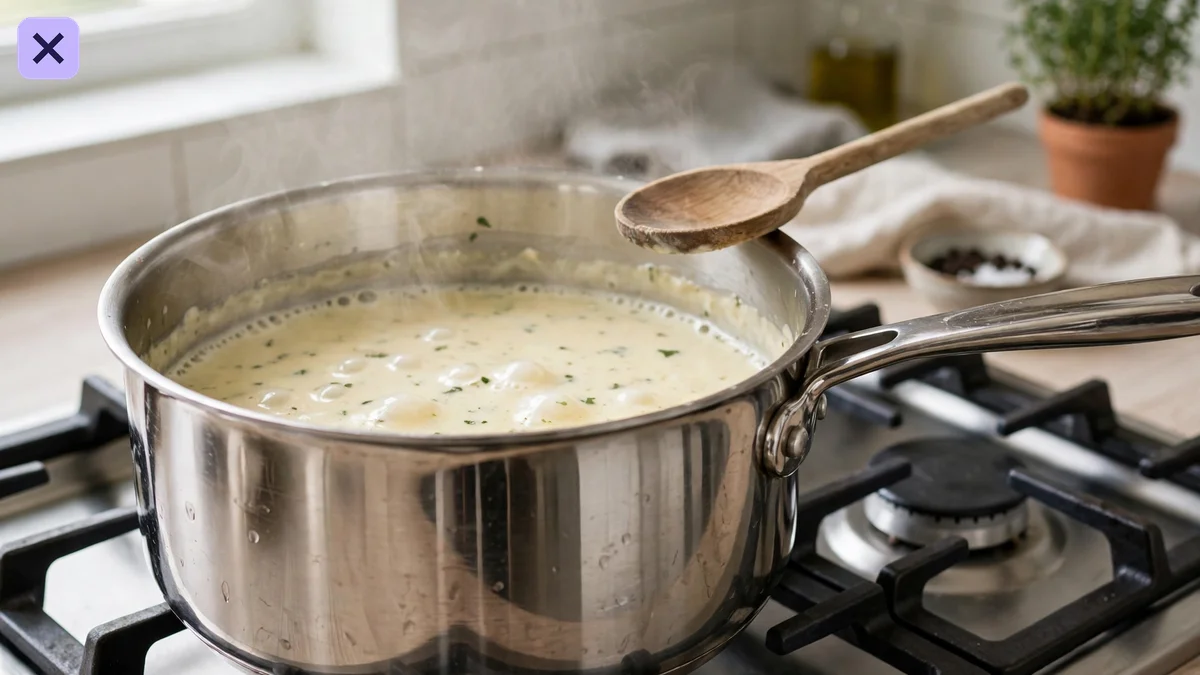
The 2-quart tri-ply classic is the saucepan every kitchen should own. Its aluminium core spreads heat so evenly that a béchamel thickens without a single scorched patch, and the 5-millimetre clad base holds its temperature when cold cream is added.
Best Budget: The Hard-Anodised 2-Quart
The hard-anodised 2-quart saucepan proves even heat does not need a big budget. Aluminium conducts heat superbly, so sauces simmer evenly across the base, and at 0.8 kilograms it is the lightest pan here. The anodised surface resists staining and needs little oil.
Best Large: The 4-Quart Family Tri-Ply
Soups and pasta need a bigger pan, and the 4-quart family tri-ply is the one that heats evenly at scale. The same clad base as our top pick, stretched across a wider footprint, keeps a soup simmering uniformly instead of boiling hard in the middle and idling at the edges.
The Sauces That Expose a Bad Pan
Some dishes forgive a mediocre pan, and some expose it in minutes. Tomato sauce is the classic test: it is thick, acidic and prone to sticking, so a thin pan scorches it in a ring while the edges stay cool. A good saucepan keeps it at a lazy bubble across the whole surface. If you cook tomato sauces often, it pays to start with good ingredients too: our guide to how to choose canned tomatoes that actually taste fresh in 2026 covers which tins give you a sauce worth protecting from hot spots.
Custard and béchamel are the second test. Both thicken through starch and egg, and both catch the moment one part of the pan runs hotter than the rest. Caramel is the third test: sugar goes from perfect to burnt in seconds, and only an even base gives you the margin to catch it.
How to Keep a Saucepan Heating Evenly
Even the best saucepan heats unevenly if it is misused. The most common mistake is a burner that is too small for the pan: the flame or element heats only the centre, and no base, however thick, can fully compensate. Match the burner to the pan, or go one size down on the pan. The second mistake is cranking the heat to maximum and hoping for speed; a saucepan on full blast overheats the centre before the edges catch up. Medium heat, given an extra minute, produces a far more even result.
Care matters too. A warped base is the end of even heating: never plunge a hot pan into cold water, and never heat an empty thin pan on high. A full cookware set is only as good as its saucepans, and our comparison of the best vs worst cookware sets 2026 shows how often the saucepans are the weakest pieces in a boxed set. Buying one good saucepan beats inheriting three bad ones.
Saucepan Buying Checklist
- Material first: tri-ply stainless steel for the best all-round even heat, hard-anodised aluminium for the best budget option.
- Base thickness: at least 5 millimetres for tri-ply, with a flat bottom that sits flush and does not rock.
- Size for your cooking: 2 quarts first for sauces and reheating, 4 quarts second for soups and pasta.
- Pouring lips on both sides, so the pan pours cleanly for left- and right-handed cooks.
- A tight-fitting lid and a handle that stays cool on the hob, with a hanging hole if cupboard space is tight.
- Hob compatibility: check induction compatibility before buying, since not every aluminium pan works on induction.

Frequently Asked Questions
What size saucepan is best for sauces?
A 2-quart saucepan is the best size for sauces for a household of two to four people. It holds enough sauce without spreading it too thin, which keeps the heat even and stops the sauce reducing too fast.
Is stainless steel or nonstick better for saucepans?
Stainless steel, specifically tri-ply, is better for even heat and longevity: it spreads heat across the whole base, handles high temperatures, and lasts decades.
Why does my saucepan burn in the middle?
A brown ring in the centre means the base is too thin to spread heat sideways, so the area above the burner overheats. It can also mean the burner is too small for the pan. A thick, layered base and a burner matched to the pan size are the fixes; no amount of stirring fully compensates for a thin base.
Do saucepans work on induction hobs?
Tri-ply stainless steel saucepans work on induction, because the steel is magnetic. Plain aluminium saucepans do not, unless they have a magnetic base plate bonded on. Always check for an induction-compatible marking before buying.
How long should a good saucepan last?
A tri-ply stainless steel saucepan lasts 20 years or more with normal use, because there is no coating to wear out. A nonstick saucepan lasts 2 to 3 years before the coating fails and it needs replacing.
Can saucepans go in the dishwasher?
Stainless steel saucepans can go in the dishwasher, though hand washing keeps the finish brighter. Hard-anodised aluminium and nonstick saucepans should be hand washed, because dishwasher detergents dull the surface and shorten the life of the coating.
The Bottom Line
The saucepan that heats evenly without hot spots in 2026 is a 2-quart tri-ply stainless steel saucepan with a base at least 5 millimetres thick and a flat bottom that sits flush on your hob. It spreads heat edge to edge, holds its temperature when ingredients are added, and lasts for decades. Buy the base first, match the size to your cooking, and the sauces will look after themselves.