Shower Caps That Keep Hair Dry Without the Squeeze in 2026
A shower cap has one job: keep your hair dry. It sounds simple, and yet most shower caps fail at it. They leak at the edges, slide down over your eyes, squeeze your head until it aches, or trap so much steam inside that your hair comes out damp anyway. The best shower caps in 2026 solve all four problems at once: they seal properly, stay put, and feel comfortable for a full shower.
The difference between a good cap and a bad one is rarely the price. It is the material, the elastic, and the fit. A cheap vinyl cap can keep water out perfectly and still be miserable to wear, while a well-made fabric cap with a waterproof lining can feel like wearing nothing at all. This guide explains how shower caps work, which type suits your hair, and how to pick one that stays dry, stays put, and does not squeeze.
Key Takeaways
- Waterproof beats water-resistant every time: a water-resistant cap slows water down, a waterproof one stops it, and only the second keeps styled hair dry.
- Fit matters more than material. A cap that is too tight gives you a headache, and a cap that is too loose leaks at the edges.
- Look for a wide, soft elastic band or an adjustable drawstring rather than a thin, tight elastic that digs in.
- A lined cap is the best all-rounder: a waterproof outer layer with a soft lining that absorbs steam and feels gentle against your hair.
- Hang your cap to dry after every shower and wash it weekly, because a damp cap left in a heap grows mould fast.
What a Shower Cap Actually Has to Do
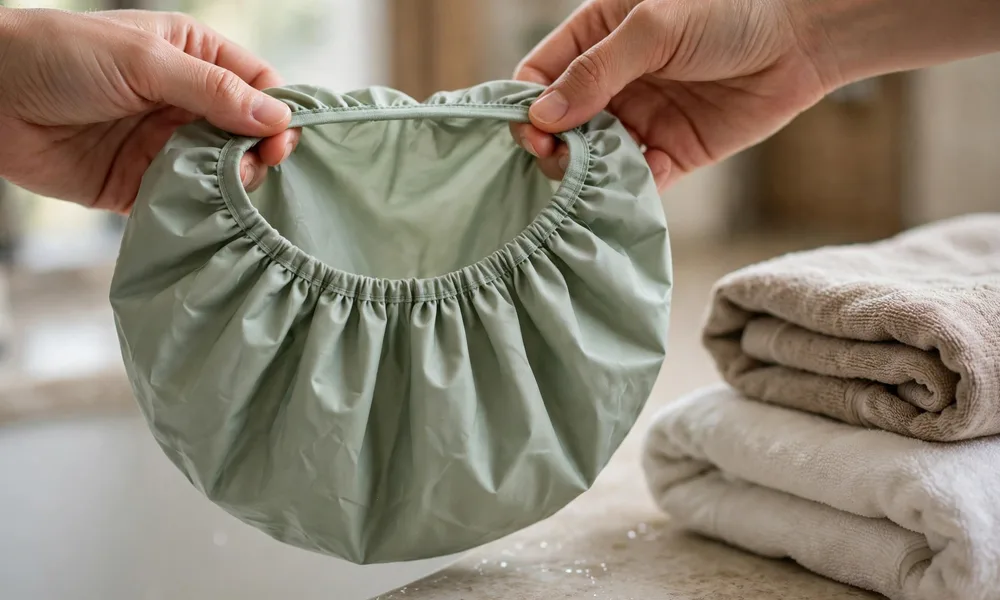
A shower cap fights water on two fronts. The obvious one is the spray itself: water hitting the cap and running down, trying to find any gap at the edge. The less obvious one is steam. A hot shower fills the air with warm, damp air, and if the cap seals too tightly, that steam condenses inside it and your hair comes out damp from the inside, even though not a drop got through from the outside. A good cap handles both: a waterproof outer layer for the spray, and a lining that deals with the steam.
The seal at the edge is where most caps fail. Water runs down the outside of the cap and pools at the elastic, and if the elastic does not sit flat against your skin, water wicks underneath. Long hair makes this worse, because hair escaping at the nape draws water in. The best caps are roomy enough to hold all your hair inside. If your hair pokes out anywhere, the cap is too small.
Comfort is the third job, and it is the one buyers forget until the cap is on their head. A thin elastic stretched tight leaves a red mark across the forehead and a headache after ten minutes, and a cap that is too heavy slides down over the eyes. The best caps disappear once they are on: you forget you are wearing one, which is exactly the point.
The Shower Cap Types That Matter
Most shower caps fall into four types, and each one suits a different kind of hair. The right choice depends mostly on how much hair you have and how long your showers are.
Waterproof vinyl and plastic caps
Vinyl caps are the cheapest and the most waterproof. They stop water completely, dry in seconds, and cost very little. Their weakness is comfort: they trap heat and steam, feel clammy, and the elastic is often thin and tight. They suit short showers and travel, where drying fast matters, but not long, hot showers.
Lined fabric caps
A lined fabric cap has a waterproof layer hidden inside a soft fabric shell, often with a cotton or terry lining against the hair. It is the best all-rounder and the type most people should buy. It keeps water out, absorbs steam so hair stays dry inside, and feels gentle. It takes longer to dry than vinyl and needs washing, but for everyday use it is the most comfortable option by a clear margin.
Terry cloth caps
Terry cloth caps are soft, absorbent and comfortable, but they are not waterproof on their own. They suit keeping hair out of the way while you wash your face, or short showers where little water reaches your head. Some have a waterproof lining added, which makes them far more useful. Without one, a terry cap will soak through in a proper shower.
Caps for long, thick and curly hair
Standard caps are sized for short to medium hair, and anyone with long, thick or curly hair knows the result: hair escapes at the back, the elastic strains, and the cap rides up. Oversized caps solve this with a deeper crown and a wider opening, so all the hair fits inside without being crushed. If you have ever had to tuck hair in twice before stepping under the water, an oversized cap is the fix.
Shower Caps at a Glance
| Type | Waterproof | Comfort | Drying time | Best for |
|---|---|---|---|---|
| Vinyl or plastic | Yes, fully | Low, can feel clammy | Minutes | Travel, short showers |
| Lined fabric | Yes, fully | High, soft lining | Hours | Everyday use |
| Terry cloth | No, unless lined | Very high | Hours | Face washing, short showers |
| Oversized | Yes, if lined | High, roomy fit | Hours | Long, thick, curly hair |
| Disposable | Yes, briefly | Low | Single use | Hotels, emergencies |
Materials: What the Cap Is Made Of
The material decides how waterproof the cap is, how it feels, and how long it lasts. Most caps layer a few materials together, and the label does not always make the layers clear.
Vinyl, also sold as PVC, is the classic waterproof layer. It stops water completely and wipes clean, but it can feel stiff and noisy, and it does not breathe at all. PEVA is the lighter, softer alternative: still waterproof, but more flexible and quieter, and the material most lined caps use for their hidden layer. Silicone is soft and stretchy, but heavier than fabric and warm on the head. Fabric outers add softness but no waterproofing: always check for a waterproof lining, because without one it is just a hat.
Elastic is the part that fails first on most caps. A wide band spreads the pressure and stays comfortable, while a thin cord digs in and stretches out within weeks. Some caps use an adjustable drawstring instead, which lets you set the fit yourself. The elastic should feel firm but not tight when you first put the cap on: elastic only ever gets looser, never tighter.

Getting the Fit Right
Fit is the single biggest factor in whether a shower cap works, and it is the one most people get wrong. A cap that is too small leaks and squeezes; a cap that is too big slides down and lets water in at the edges. The right fit feels snug all the way around with no gaps, and you should be able to fit one fingertip under the elastic.
Before you buy, gather your hair the way you will wear it in the shower: a low bun for long hair, a loose twist for curly hair, or swept back for short hair. The cap has to hold that shape, not fight it. Put it on from the front, pulling it back over the crown, and check the back of your neck: no hair should poke out. Then bend forward as if rinsing your face. If the cap stays put, the fit is right.
For curly and coily hair, fit matters even more, because the cap has to protect the curl pattern as well as keep water out. A roomy cap that lets curls sit loosely inside is far better than a tight one that crushes them flat, and a satin or silk lining reduces frizz where a rough lining would catch and tangle. If your curls come out flattened, the cap is too small, not too old.
Travel, Care and Making a Cap Last
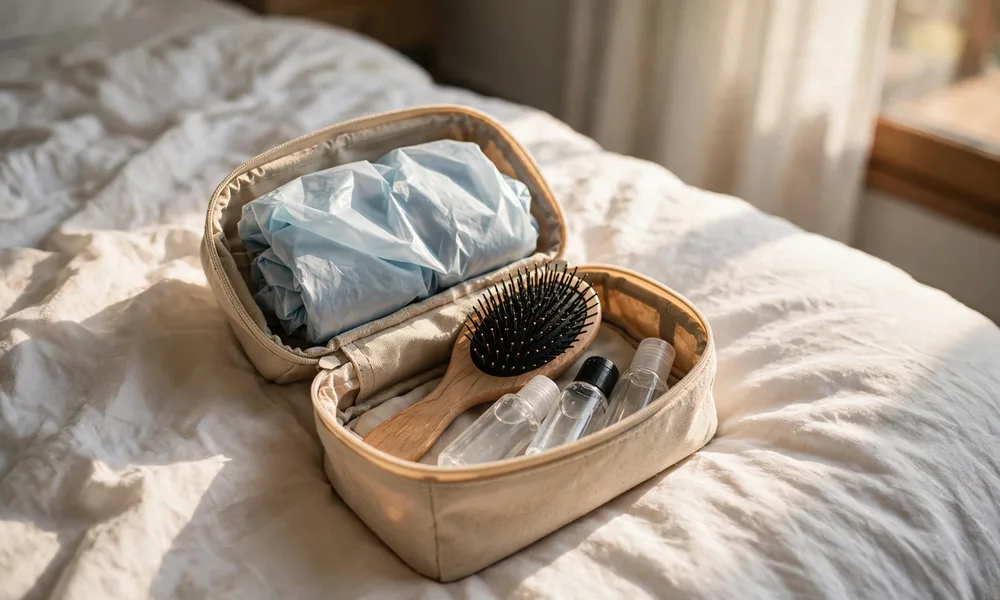
A shower cap earns its keep away from home as much as in it. Hotel showers are where hair gets ruined most often: unfamiliar water pressure, a handheld head that sprays everywhere, and no time to restyle. A lightweight vinyl cap packs flat, weighs nothing, and dries in minutes, which makes it the best travel choice. Keep one in your toiletry bag permanently.
At home, care is simple but not optional. Hang the cap to dry after every shower, inside out if it has a fabric lining, so both layers dry properly. A cap left in a damp heap will smell musty within days and grow mould within weeks. Wash a fabric cap weekly, and wipe a vinyl cap down with a damp cloth. If the elastic has gone slack, the lining smells despite washing, or the waterproof layer has cracked, it is time for a new one.
The rest of the bathroom matters too. A cap keeps your hair dry, but the water still has to go somewhere. A good shower head that suits your water pressure keeps the spray where it belongs, and a shower curtain that hangs straight keeps the water inside the tub. Once you step out, a bath mat that soaks up water fast keeps the floor safe under wet feet.
Shower Cap Checklist
- Choose waterproof, not water-resistant, for styled hair.
- Pick a lined fabric cap for everyday use, and a vinyl cap for travel.
- Check the fit with all your hair inside: no hair poking out, no gaps.
- Look for a wide, soft elastic band or an adjustable drawstring, not a thin cord.
- Size up if you have long, thick or curly hair.
- Hang it to dry after every shower and wash it weekly to stop mould.
Frequently Asked Questions
Will a shower cap keep curly hair completely dry?
Yes, if it is waterproof, lined, and roomy enough to hold all your hair inside. A tight or unlined cap lets steam in, and steam is what frizzes curls.
Why does my shower cap leak at the edges?
Almost always because of fit. Either the cap is too small and hair is escaping at the nape, acting as a wick, or the elastic has stretched and no longer sits flat. Try a larger size, or a cap with an adjustable drawstring.
How do I stop a shower cap giving me a headache?
Switch to a cap with a wide, soft elastic band or an adjustable drawstring, and size up. A thin elastic stretched tight is the usual cause, and a red mark on your forehead means it is too tight.
Can I wear a shower cap with a hair treatment in?
Yes. A cap traps warmth and keeps the treatment on your hair instead of letting it wash away. Use a lined fabric cap rather than vinyl, and wash the cap after so the product does not build up.
How often should I wash my shower cap?
Wash a fabric cap once a week, and wipe a vinyl cap down after each use. If it smells musty despite washing, or the waterproof layer has cracked, replace it.
Are disposable shower caps any good?
They work in an emergency, but they are thin, tight, and tear easily. A reusable lined fabric cap is more comfortable, keeps hair drier, and costs less over a year than a box of disposables.
The Bottom Line
The best shower cap is the one that fits your hair and your head, not the cheapest one on the shelf. A lined fabric cap in the right size, with a wide soft elastic, keeps styled and curly hair dry through a full hot shower without squeezing. A vinyl cap packs flat for travel, and an oversized cap is the fix for long or thick hair. Get the fit right and hang it to dry.