How to Choose the Best Shower Squeegees of 2026
The best shower squeegees of 2026 are the smallest cleaning tools you will ever buy and the ones that save the most scrubbing. Used for thirty seconds after every shower, a good shower squeegee pulls the water off the glass before it dries, keeping limescale, soap scum and water spots from building up. The deep clean that used to take an hour becomes a five-minute wipe.
Choosing one looks simple until you stand in front of a shelf of them. Blades run from soft silicone to firm rubber, handles from short grips to long reaches, storage from suction hooks to freestanding stands. The wrong pick leaves streaks, slips from a wet hand, or grows mould in a damp corner. This guide explains how to choose one for your shower, your water and your habits, so the one you buy gets used daily.
Key Takeaways
- A shower squeegee removes water before it dries, stopping limescale and soap scum from forming.
- Silicone blades suit daily shower use because they stay flexible in constant damp, while firm rubber blades suit smooth glass.
- Match the blade width to your shower: eight to ten inches turns easily in a small cubicle, while a wider blade covers a large panel faster.
- Storage decides whether it gets used: a hook or mount inside the shower beats a cupboard every time.
- Wipe top to bottom in overlapping strokes, flick the blade dry between passes, and rinse it after use so it never grows mould.
Why Thirty Seconds After Every Shower Beats a Deep Clean
A shower leaves water and whatever was dissolved in it on the glass. In a hard-water home it carries calcium and magnesium, which dry into the white crust we call limescale. Soap adds its own film, and shampoo residue sticks to both. Left a week, they bond and need a descaler to shift; removed while wet, they never get the chance.
That is the whole logic of the shower squeegee. It does not clean like a spray or sponge; it removes the water, and with it almost everything that would have dried into a stain. A thirty-second wipe keeps the glass clear and cuts deep cleaning from weekly to monthly. The habit matters more than the tool: a squeegee on a hook inside the shower gets used, while one in a cupboard gets forgotten.
The Shower Squeegee Types Worth Knowing
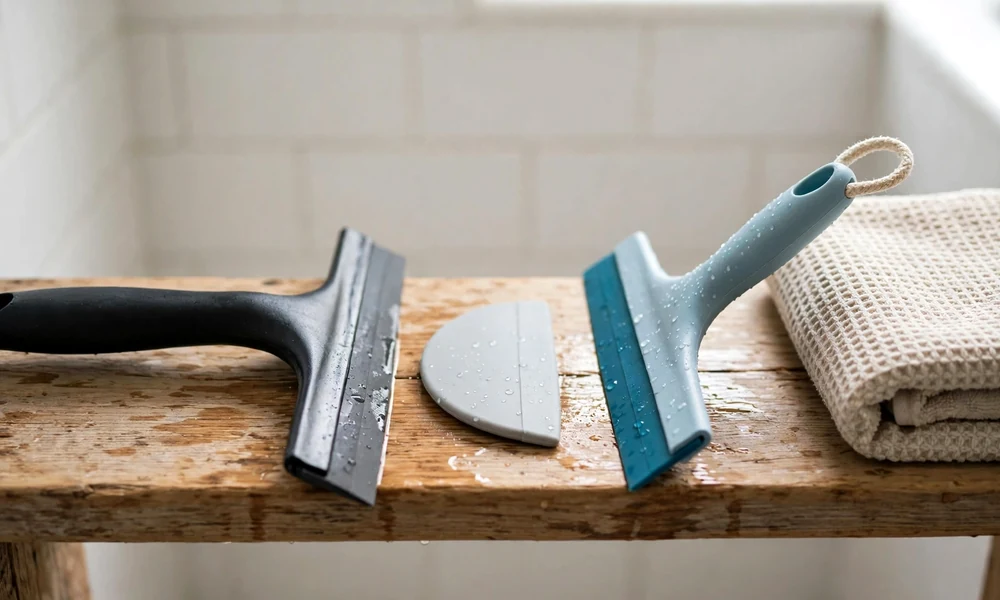
Every shower squeegee is a blade on a handle, but the variations decide how it feels in a wet hand. The four types below cover nearly everything on sale in 2026.
Silicone-blade handheld squeegees
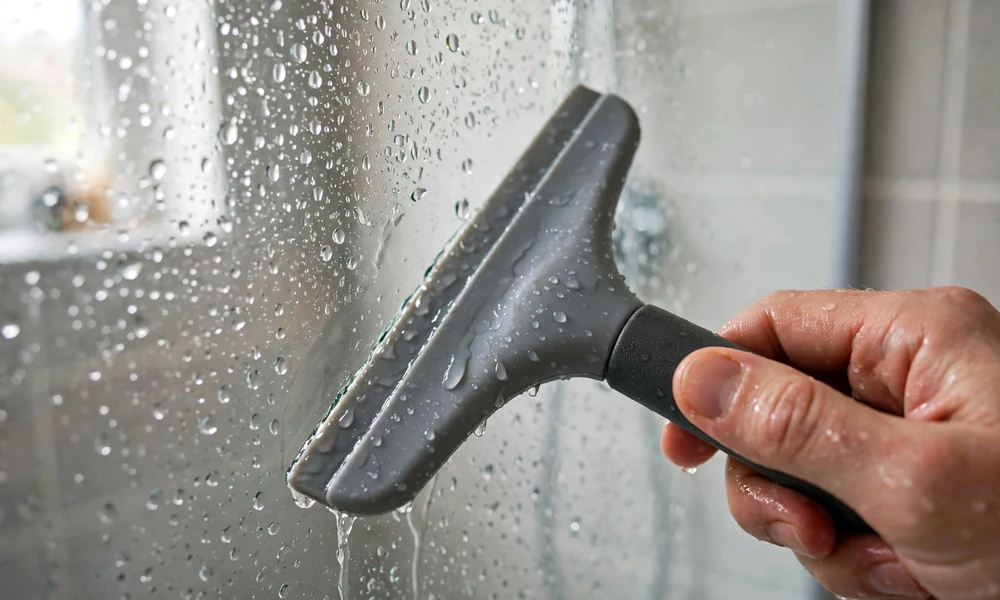
The standard shower squeegee is short-handled with a soft silicone blade, usually eight to ten inches wide. Silicone stays flexible in constant damp, resists mould better than rubber, and glides over glass without chattering.
Rubber-blade squeegees
Rubber blades are firmer and sharper-edged than silicone, excellent on perfectly flat glass where a crisp edge leaves nothing behind. They wear faster in damp, and a blade gone hard or nicked will skip and leave lines.
Long-handle squeegees
A handle of twelve to eighteen inches suits tall panels, over-bath showers and anyone who does not want to bend across a wide enclosure. The extra length adds leverage but reduces control in tight corners, so it is a second tool for big showers, not a first choice for a small cubicle.
Compact and palm squeegees
Compact squeegees have a five to seven inch blade and a short grip or a loop you hold in your palm. They turn easily around taps, hinges and curved screens, suiting small cubicles, over-bath showers and glass shelves. The trade-off is speed.
Shower Squeegees Compared
| Type | Best for | Blade | Watch out for |
|---|---|---|---|
| Silicone handheld, 8–10 inch | Most showers, daily use | Soft silicone | Cheap blades that flex and skip |
| Rubber blade, 10–12 inch | Large flat frameless glass | Firm rubber | Edge hardens and nicks faster |
| Long handle, 12–18 inch | Tall panels, over-bath showers | Silicone or rubber | Clumsy in tight corners |
| Compact palm, 5–7 inch | Small cubicles, curved screens | Silicone | More strokes to cover the glass |
| Two-in-one with spray | Quick clean plus wipe | Silicone | Spray bottle needs refilling |
What Makes a Blade Work on Shower Glass
The blade is the whole tool, and the part most buyers ignore. A good blade is soft enough to follow the tiny curves of the glass and sharp enough to cut the water cleanly, with a single edge free of nicks, chips or curls. Run a fingertip along the edge before use: a nick will draw a line of water down every pane until the blade is replaced.
Silicone and rubber behave differently in a shower. Silicone stays supple in constant damp and warm steam, which is why it dominates shower squeegees, though it is slightly less sharp than rubber. Rubber gives a crisper wipe but stiffens and degrades faster in a wet shower. Either can give a streak-free finish; storage and replacement decide. A blade left hanging blade-down in a damp corner will deform, so hang it blade-up or flat and replace it at the first sign of wear. Our guide to the best squeegees for streak-free windows in 2026 covers the larger twelve to eighteen inch channel tools for house windows, a different job: window squeegees chase a perfect finish once a month, while a shower squeegee is a small daily tool judged on wet grip, damp storage and limescale prevention.
Matching the Squeegee to Your Shower
Glass panels, framed doors, tiled walls and mirrors all want slightly different things. Glass doors are the main job: a medium silicone blade, wiped top to bottom, keeps the panel clear. Framed doors add a track where water collects, so wipe it too or it will stain the frame. Glossy tiles benefit from the same wipe, but rough tiles catch a soft blade, so use a firmer edge or finish with a cloth.
Hard-water homes need the squeegee most. If your kettle furs up within weeks, your shower glass is under the same attack, and a daily wipe is the only habit that keeps limescale at bay. Pick silicone for durability in damp, and pair the routine with a weekly descaling spray. Our guide to the best shower cleaners of 2026 explains which sprays cut through limescale without damaging seals; a quick spray once a week plus a daily squeegee beats either habit alone. Small bathrooms suit a compact blade and a hook inside the enclosure; large walk-ins suit a wider blade and a long handle; and a palm squeegee with a fat textured handle is easier to hold than a slim stick when grip strength is limited.
How to Squeegee a Shower Properly
Technique takes one shower to learn. Start at the top and pull down in a straight line, overlapping each stroke by a couple of centimetres. Flick the blade dry after every stroke: a wet blade deposits water as a line, and those lines dry into the streaks you are trying to prevent. Work across the panel, then wipe the edges and bottom track with a dry cloth. It takes about thirty seconds, and works best while the glass is still wet and warm.
The most common mistake is pressing too hard: a squeegee works on a light, even touch, and hard pressure bends the blade and leaves a band of water. After use, rinse the blade under the shower to wash off soap residue, shake it once, and hang it blade-up on its hook. Once a week, wash the blade with warm soapy water. That routine is what separates a squeegee that lasts two years from one that is useless in two months.
Storage That Keeps It Mould-Free
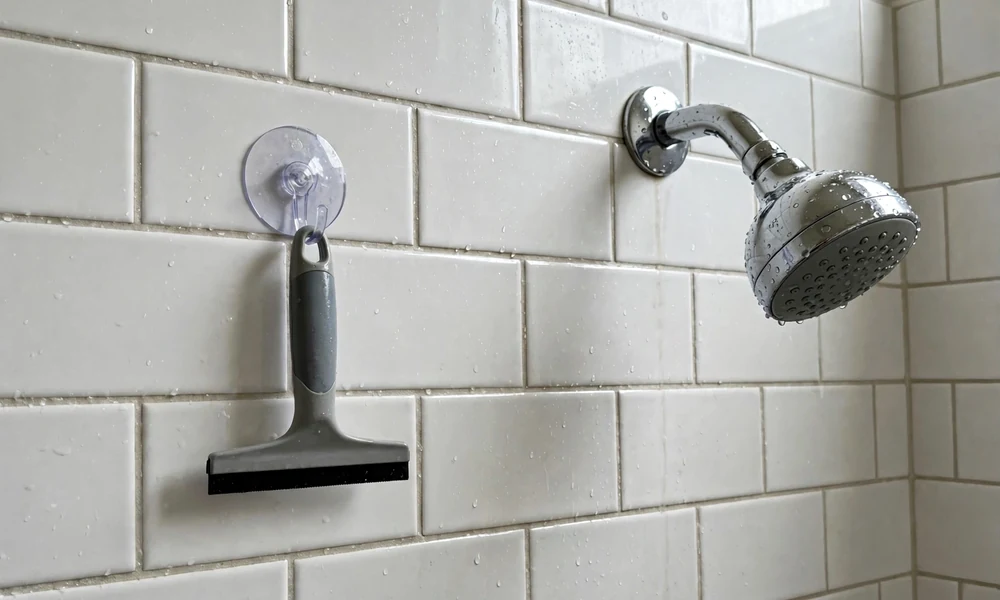
Where the squeegee lives decides whether it gets used and stays clean. The best spot is inside the shower, within reach of the door, hanging blade-up so water drains off. A suction-cup hook works on smooth glass and glossy tiles, holding for months if the surface is clean and dry when pressed on. Adhesive hooks suit textured tiles where suction fails, holding more weight but harder to move. Over-door hooks suit rented homes, and freestanding stands suit showers with no free wall space. Whatever you choose, the blade must hang free and dry between uses. One left lying blade-down in a soap dish will grow mould along the edge within weeks. If a hook keeps falling off, clean the tile with a degreaser, dry it fully, and press the cup on firmly. Our guide to the best bathroom cleaners of 2026 covers the sprays that cut through soap scum, the same cleaning that keeps a suction hook holding.
The Mistakes That Leave Streaks and Scum Behind
The first mistake is skipping days: two or three missed days in a hard-water home are enough for limescale to start bonding. The second is a wet blade, because each undried stroke draws a line. The third is pressing too hard, which bends the blade. The fourth is ignoring the edges and track, where water dries into the thickest limescale in the shower. The fifth is storing it badly, blade-down in a puddle or in a closed cupboard while wet. And the sixth is keeping a worn blade: a nicked, curled or hardened edge will never give a clean pass. A fresh squeegee is cheaper than a bottle of descaler.
Your Shower Squeegee Checklist
- Measure your widest glass panel first, then choose a blade width that fits it with room to turn at the edges.
- Pick silicone for daily damp use and hard water, or firm rubber for large flat frameless glass.
- Check the blade edge with your fingertip before buying: smooth, straight and free of nicks or curls.
- Choose a textured grip that stays secure in a wet hand, and a length that reaches your glass without bending.
- Plan storage inside the shower: a hook or stand that lets the blade hang free and dry.
- Replace the blade or the tool at the first nick, curl or hardened edge, before it starts leaving lines.
Frequently Asked Questions
How often should you use a shower squeegee?
After every shower. In a hard-water home even a day of missed wipes lets limescale start to bond, and the routine takes about thirty seconds on a standard door.
Are silicone or rubber blades better for showers?
Silicone suits most showers because it stays flexible in constant damp and resists mould. Rubber gives a crisper wipe on large flat glass but hardens and wears faster in a wet shower.
What size shower squeegee should I buy?
Eight to ten inches suits most shower doors. Go compact at five to seven inches for small cubicles, and wider at twelve inches only for large flat panels with room to turn.
Can a shower squeegee be used on tiles and mirrors?
Yes on smooth glossy tiles and mirrors. Rough or textured tiles catch a soft blade, so use a firmer edge there or finish with a cloth.
How do you stop a suction hook from falling off?
Clean the tile or glass with a degreaser first, dry it completely, then press the cup on firmly. Suction fails on textured, grouted or dirty surfaces, so use an adhesive hook there instead.
When should you replace a shower squeegee?
Replace it when the blade edge nicks, curls or hardens, or when it leaves lines no matter how carefully you wipe. With daily use and proper storage, a good silicone squeegee lasts one to two years.
The Bottom Line
The best shower squeegee lives inside your shower, fits your wet hand, and matches the width of your glass. For most homes that means a silicone-blade handheld of eight to ten inches on a suction hook by the door, wiped top to bottom for thirty seconds after every shower. Buy for the habit, not the shelf: a cheap squeegee used daily keeps glass clearer than an expensive one forgotten in a cupboard.