A paper shredder is the quiet workhorse of the home office, the machine that turns a pile of old bank statements, out-of-date bills and printed drafts into a bin full of confetti. It sounds simple, and it is, but a bad shredder jams on the third sheet, overheats halfway through a clear-out, or sounds like a coffee grinder full of gravel. A good shredder eats a stack of paper without complaint and leaves pieces so small that nobody could ever piece them back together. The best shredders of 2026 are the ones that make disposing of paper feel effortless, and this guide will help you find the one that fits your desk, your paperwork and your patience.

What Makes a Paper Shredder Good
The first thing to judge is how cleanly it cuts. A shredder is only useful if the cut it makes actually protects your information, and the best machines cut paper into particles or short cross-cut pieces rather than long strips that a determined person could reassemble. Cross-cut shredders are the standard for home offices because they turn each sheet into hundreds of small pieces, while micro-cut models go further still, reducing a page to specks that meet the strictest security standards. Strip-cut machines are cheaper and faster, but they only slice paper lengthways, and for anything with an account number or a signature on it, that is not really shredding at all.
The second thing is how much it can handle without stopping. A shredder that claims to take twelve sheets but jams on eight is a shredder that will waste your afternoon, and the best machines are honest about their capacity and built to reach it. Look for a shredder with a sturdy motor, a wide feed slot that takes a folded sheet or a stapled page, and a bin that holds a decent amount before it needs emptying. Capacity and bin size are worth paying for.
The third thing is the noise and the heat. A shredder lives on or beside a desk, often in a room where someone is working, so a machine that roars every time it runs will quickly be left unused. The best shredders of 2026 run at a low hum, and they can keep going for ten, twenty or even thirty minutes before they need a rest to cool down. A shredder that overheats after five minutes turns a one-hour job into an all-day one.
The Main Types of Paper Shredder
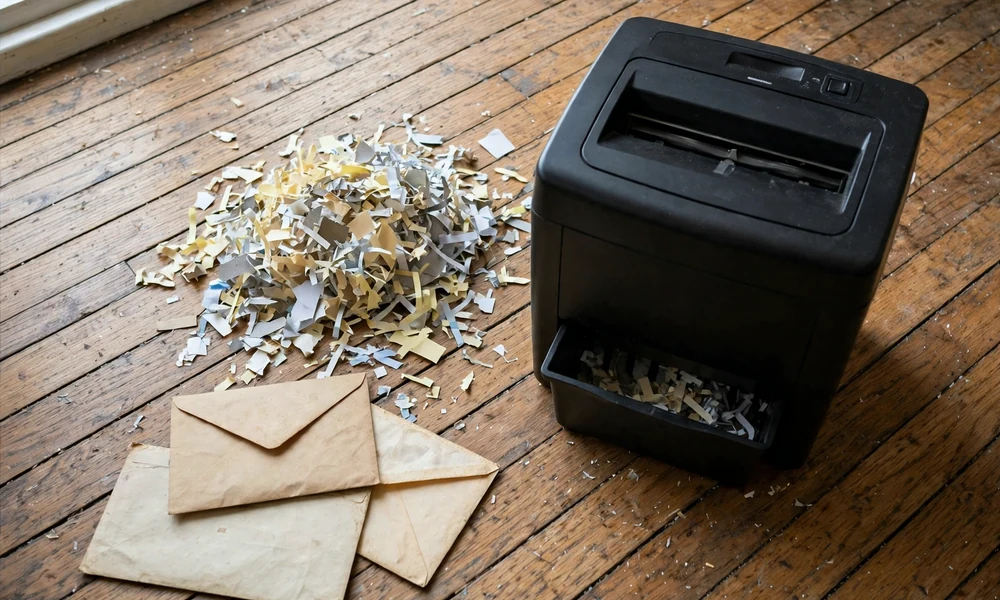
Strip-cut shredders are the simplest and cheapest choice. They slice each sheet into long thin ribbons, they are light and fast, and they are the best choice for someone who only shreds junk mail and old printouts with nothing sensitive on them. They suit a small desk, and there is very little to go wrong. The trade-off is the security: long strips can be reassembled, and a strip-cut bin fills up fast because ribbons do not pack down. For junk mail a strip-cut shredder is fine, but for anything with personal details on it, it is not enough.
Cross-cut shredders are the classic choice for the home office. They cut each sheet both ways, turning it into short pieces that are far harder to reassemble, and they are the best choice for most people, because they balance security, speed and price. They suit a household that shreds bank statements, tax papers and medical letters. The trade-off is the speed: a cross-cut machine works a little slower than a strip-cut one, and the cutters need a drop of oil now and then to keep them sharp. For most homes, a cross-cut shredder is the one to buy.
Micro-cut shredders are the most secure option. They reduce each sheet to tiny particles, they meet the highest security standards, and they are the best choice for someone who shreds highly sensitive documents, such as legal papers, business records or anything with identity details on it. They suit a home office that handles other people’s information. The downside is the pace and the price: a micro-cut shredder works slowly, it usually takes fewer sheets at a time, and it costs more than a cross-cut model. For anyone who needs real security, a micro-cut shredder is the one that works.
Heavy-duty and departmental shredders are the big machines. They take twenty sheets or more at a time, they run for an hour without stopping, and they are the best choice for a small business, a shared office or a household that is clearing out years of paperwork in one go. They are built to be used hard, day after day. The downside is the size and the weight: a heavy-duty shredder is a piece of furniture, not a desktop gadget, and it costs several times what a home model does.
How to Choose the Right Shredder
Start with how much paper you actually shred. If you shred a handful of letters a week, a small desktop machine with a ten-litre bin is plenty, and buying a bigger one would only waste desk space and money. If you shred a stack every weekend, or you are working through years of filed paperwork, you need a larger bin, a longer run time and a higher sheet capacity, or you will spend more time emptying and cooling down than shredding. Be honest about the volume: a shredder that matches your real workload is one you will actually use.
Then match the cut type to the paper. Junk mail and old magazines can go through a strip-cut machine without a second thought, but anything with your name, address, account number or signature on it deserves at least a cross-cut, and anything with identity documents or business records deserves a micro-cut. The security level is printed on the box: a higher level means smaller particles and better protection. Do not pay for micro-cut security if you only shred catalogues, but do not trust a strip-cut machine with your bank statements either.
Then check the practical details that make daily use pleasant. A shredder with an auto feed can take a whole stack and work through it while you do something else, which is a gift during a clear-out. A shredder that handles staples and paper clips saves you removing them, and one that takes credit cards and CDs is useful when clearing out old wallets and discs. A pull-out bin is easier to empty than a lift-off head, and a viewing window lets you see when the bin is full before paper starts backing up into the cutters.
Finally, think about where the shredder will live. A desktop model that sits beside your computer is handy for a few sheets at a time, but it will be in the way if your desk is small. A freestanding model that tucks under a desk or beside a filing cabinet is better for bigger jobs, and it keeps the noise a little further from your ears. Measure the space before you buy, and remember that a shredder needs room for the bin to slide out.
Using Your Shredder Well
The golden rule is to feed it less than its maximum. A shredder rated for twelve sheets will last far longer if you feed it eight or ten, and it will jam far less often. Count the sheets, fan them out so they do not stick together, and feed them in straight, without folding or crumpling. If the machine starts to labour, reverse it to clear the cutters and try again with fewer sheets.
The second rule is to oil the cutters. Cross-cut and micro-cut shredders need a little shredder oil every few uses, and the best way to apply it is to squeeze a zigzag of oil across a sheet of paper and feed it through, which spreads the oil evenly across the blades. A well-oiled shredder cuts cleanly and lasts for years, while a dry one grows noisy and wears its cutters out early. Keep a bottle of oil beside the shredder and use it often.
The third rule is to know what not to shred. Wet paper, sticky labels, plastic wallets, thick card and anything with glue on it can clog or damage the cutters, and they should go in the recycling or the bin instead. When in doubt, leave it out: a little care with what goes in will keep the machine running smoothly for years.
The fourth rule is to empty the bin before it overflows. When shredded paper piles up to the cutters, the machine has to push against a solid mass, which strains the motor and can cause a jam that is hard to clear. Most shredders have a window or a fill line so you can see when the bin is getting full, and the best habit is to empty it when it reaches about three quarters full, before paper starts backing up. Tip the contents into a paper bag or straight into the recycling, and give the bin a quick wipe if fine dust has settled on the sides. Shredded paper is accepted by most recycling collections, but check your local rules first, because some councils ask for it to be bagged separately so it does not blow around. A bin that is emptied on time keeps the shredder running freely, and it is a much nicer job when the paper is still loose rather than packed solid.
Shredders and the Rest of the Office
A shredder is only one part of a working office, and it works best alongside the other machines that handle paper. A good printer is what creates most of the paper in the first place, and choosing the right one matters just as much as choosing the right shredder, so it is worth reading our guide to the best printers of 2026 before you buy. A scanner is the other half of the paper cycle, because scanning a document before you shred it means you keep the information without keeping the paper, and our guide to the best scanners of 2026 will help you find one that fits your desk.
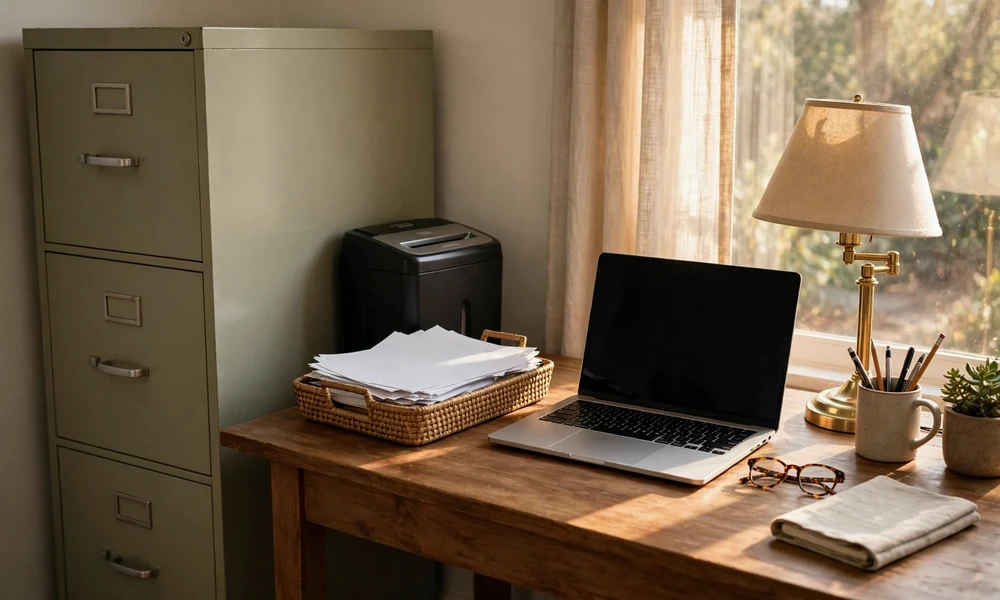
The desk itself matters too, because a shredder needs a sensible home. A tidy desk with a place for everything makes shredding a quick habit rather than a dreaded chore, and our guide to the best desk organizers of 2026 has ideas for keeping the paperwork, the shredder and everything else in its place. When the office is organised, shredding stops being a big clear-out event and becomes a five-minute job you do without thinking.
The Bottom Line
The best shredder is the one that matches your paper, your volume and your desk. For most homes, a cross-cut shredder with a decent bin and a ten-minute run time is the sweet spot: secure enough for bank statements, fast enough for a weekend clear-out, and quiet enough to use while you work. If you shred sensitive documents, step up to a micro-cut model and accept the slower pace in exchange for real peace of mind. If you only shred junk mail, a simple strip-cut machine will do the job cheaply. And if you run a small business or you are clearing out years of files, a heavy-duty machine is the only one that will keep up. Whichever type you choose, feed it gently, oil it often, and keep the wrong things out of it.