Speaker Stands That Make Music Sound Better in 2026
Speaker stands are the most overlooked upgrade in home audio. People spend serious money on bookshelf speakers, then perch them on a shelf or a sideboard and wonder why the music sounds muddy or distant. The best speaker stands of 2026 fix that without changing the speakers themselves: they lift the tweeters to ear level, hold the cabinets still, and keep vibrations out of the floor and furniture, so the same speakers sound clearer, tighter and more alive.
A stand is part of the speaker system, and a bad one can undo a good pair of speakers: a wobbly stand lets the cabinet rock with every bass note, a short one aims the treble at your knees, and a tall one aims it over your head. Get the height, weight and stability right, and the speakers disappear.
Key Takeaways
- Height comes first: the tweeter should sit at ear level in your usual seat, usually a 24 to 28 inch stand.
- Mass and rigidity matter more than looks: a heavy, rigid stand keeps the cabinet still, so bass stays tight and the stereo image stays put.
- Fillable hollow columns are the best value upgrade: sand or shot inside adds mass and kills resonance for almost no extra money.
- Spikes suit carpet, rubber feet suit hard floors, and a stand offering both works in any room.
- Measure your speakers first: the top plate should be close to the cabinet footprint, never much smaller.
Why a Speaker Stand Changes the Sound
Sound is vibration, and a speaker cabinet vibrates every time it plays. Left on a hollow shelf, it passes that energy into the furniture, which hums and rattles along. A rigid stand gives the cabinet a solid, quiet platform instead, so the energy goes into the air as music rather than into the furniture as noise. The difference shows most in the bass: boomy, indistinct notes become tight and separate.
Height is the second half of the story. A tweeter is directional, beaming sound in a fairly narrow cone, so sit above or below it and the treble falls away, making music sound dull even though nothing is wrong with the speakers. Most sofas put your ears around 36 to 38 inches from the floor, so a stand of about 24 inches plus a typical bookshelf speaker puts the tweeter right where it belongs.
Third is placement freedom. Speakers on stands can sit exactly where they sound best, usually a little away from the wall and angled slightly toward the listener, instead of wherever a shelf happens to be. That freedom lets a small room sound far bigger than it is, and it is why stands are a staple of home cinema, where the front speakers frame the screen at the same height, a point the best home theater systems demonstrate when the whole room is set up with care.
The Main Types of Speaker Stand
Most stands fall into four designs. A fixed-height steel stand is the classic choice: a heavy base, a single rigid column and a top plate, usually with spikes underneath. It is simple, strong and affordable, and for most bookshelf speakers it is all you will ever need. Its weakness is that the height is fixed, so measure your listening position before ordering.
A fillable column stand looks much the same, but the hollow column can be filled with sand or steel shot. Empty, it is light and easy to move; filled, it is one of the heaviest, most inert supports at the price. Choose it for large speakers or a lively, echoing room, since the extra mass damps resonance lighter stands cannot. Filling takes ten minutes and a funnel.
An adjustable-height stand suits listeners who move between seats, or rooms serving two purposes. A sliding column raises the tweeter for a tall chair and lowers it for a low sofa, and some designs tilt the top plate too. The trade-off is a little less rigidity, since anything that moves has a joint, so buy one that locks firmly rather than relying on friction alone.
A wooden stand is the choice when the room matters as much as the sound. Solid hardwood or well-made plywood stands look like furniture rather than hardware, suiting rooms where a black steel column would feel out of place. Good ones are as rigid as steel, but cheap ones can be hollow and resonant, so knock on the column before you buy: a dull thud is good, a hollow ring is not.
What to Look for Before You Buy
Start with the top plate. It should support the whole footprint of your speaker and have a way to hold it in place, whether a tacky pad, a small lip or a bolt-through fixing. A speaker overhanging its plate on every side is an accident waiting for a pet, a child or a clumsy elbow.
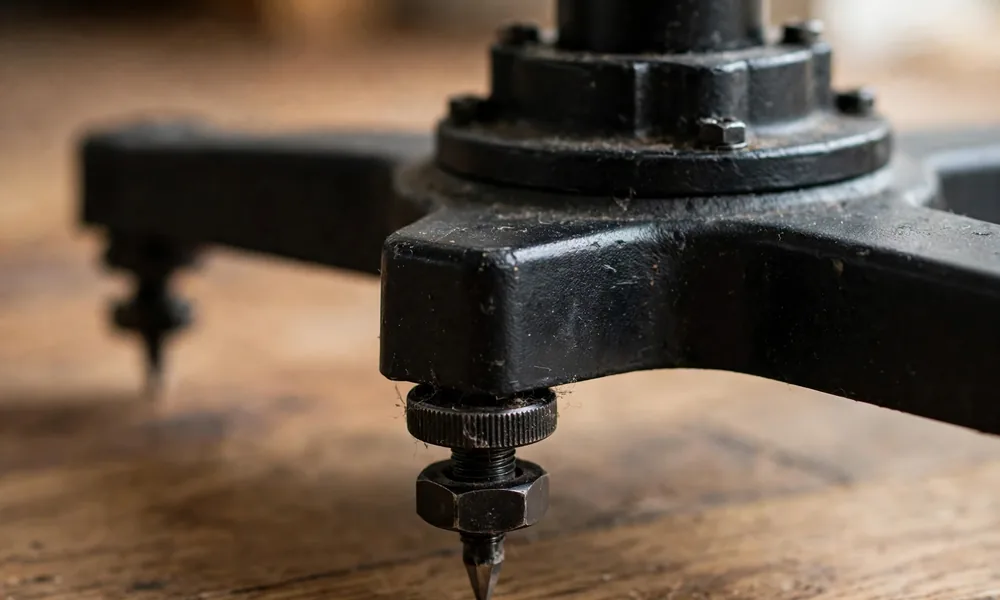
Next, check the base. A wide, heavy base keeps a tall stand from tipping, and matters more the heavier your speakers are. On carpet, spikes pierce the pile and grip the floor beneath, stopping the stand rocking. On wood, tile or laminate, spikes scratch, so use the rubber feet or discs most good stands include, and check the stand offers both options.
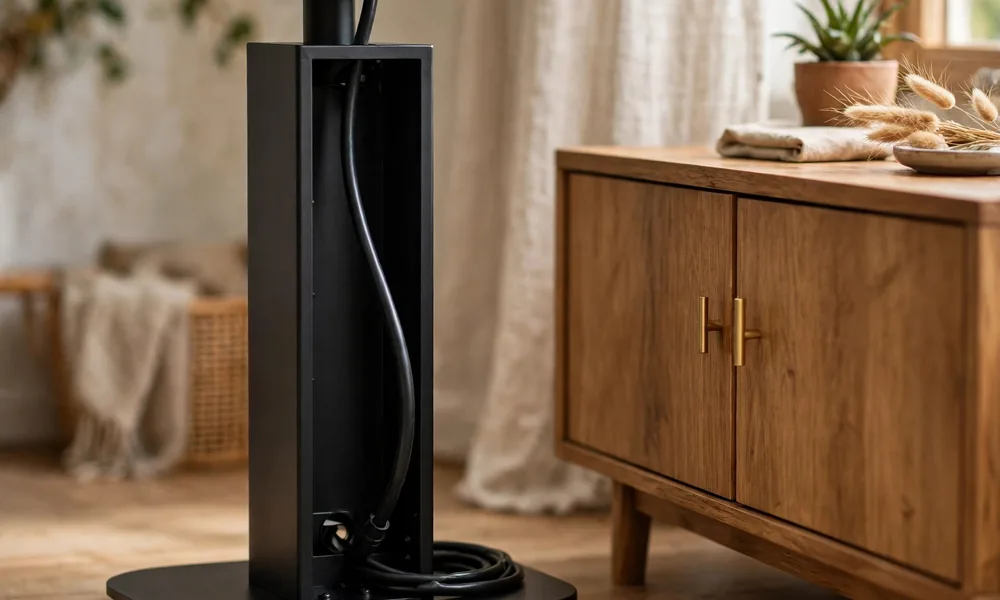
Cable management makes a daily difference: a hollow column lets the speaker cable run invisibly down the stand instead of dangling in the air, and a clip on the back does the same job if there is no route. Finally, think about the finish: matte black powder coating hides dust and scuffs, while wood finishes need to match the room. If the rest of your system is built around the best speakers you could afford, the stands should look as though they belong with them, not like an afterthought.
Setting Your Stands Up Properly
The most common setup mistake is pushing the speakers hard against the wall. Speakers with a rear port need breathing room, usually six inches to a foot, or the bass will boom and the midrange will sound boxed in. Pull them out and listen for a few days.
Angle matters too. Start with the speakers pointing straight ahead, then toe them in a few degrees at a time until the singer seems to stand in the middle, between the speakers. The change is subtle at first and then suddenly obvious, and it costs nothing. Keep the angle modest for films.
Level the stands before you judge the sound. A stand that leans even slightly will make one speaker sound louder than the other, and the stereo image will drift to one side. Set a spirit level on the top plate, adjust the spikes or feet until the bubble sits in the middle, and tighten the locking nuts.

Speaker Stands Compared
| Stand type | Best for | Stability | Height options | Typical price |
|---|---|---|---|---|
| Fixed steel stand | Most bookshelf speakers | Very good | Fixed, usually 24 in | Low to mid |
| Fillable column stand | Large or heavy speakers | Excellent when filled | Fixed, several heights | Mid |
| Adjustable-height stand | Multiple seating positions | Good | Adjustable, often 28 to 40 in | Mid to high |
| Solid wooden stand | Living rooms where looks matter | Good to very good | Fixed, usually 24 in | Mid to high |
| Compact desktop stand | Near-field desk listening | Good | Fixed, low | Low |
The trade-offs are plain: a fixed steel stand is the sensible default, a fillable column is the upgrade for serious listeners, and an adjustable stand is the answer when the room refuses to sit still. Wooden stands earn their place on looks and rigidity, while desktop stands are built for the short distances of a desk. If you mainly listen at a desk, the same principles apply, and a guide to choosing computer speakers will help you match the stand height to the short distance between the speaker and your ears.
Common Mistakes to Avoid
The most expensive mistake is buying stands before measuring the speakers. A top plate that is too small leaves the cabinet overhanging, and a column that is too tall or too short puts the tweeter at the wrong height. Measure the speaker footprint and your seated ear height before you look at prices.
The second mistake is ignoring the floor. Spikes on a hard floor scratch it and make the stand slide; rubber feet on deep carpet let the stand rock. Both are solved by the feet the stand ships with, but only if you fit the right ones, so keep the spare set in a drawer.
The third mistake is chasing height adjustment you will never use. An adjustable stand costs more and gives up a little rigidity, so if you always listen from the same sofa, a fixed stand of the right height will sound better for less money. The fourth is forgetting the cables: run them through the column while the stand is empty, before the speaker goes on top, and leave a little slack at both ends.
How to Choose in Six Steps
- Measure your seated ear height and speaker footprint before you shop.
- Pick a stand height that puts the tweeter at ear level, usually 24 inches for a standard sofa.
- Check the weight rating and top plate size against your actual speakers.
- Choose spikes for carpet, rubber feet for hard floors; prefer a stand that includes both.
- Fill hollow columns with sand or shot if allowed, and tighten every bolt and locking nut.
- Place the stands away from the wall, toe them in slightly, level them, and listen for a few days.
Frequently Asked Questions
Do speaker stands really make a difference?
Yes. A rigid stand at the right height stops the cabinet vibrating into the furniture, aims the tweeter at your ears, and lets the speakers sit where they sound best, giving tighter bass and a clearer stereo image.
What height should speaker stands be?
For most people, 24 inches is right: it puts the tweeter of a typical bookshelf speaker at the ear height of someone on a standard sofa. From a low chair, go shorter; from a tall chair, go taller. Measure your own seat rather than trusting a general rule.
Should I fill my speaker stands with sand?
If the column is designed to be filled, yes. Sand or steel shot adds mass, damps vibration and makes the stand far more stable. Fill it about two-thirds full, so the mass sits low, and seal the top. Never fill a stand not designed for it: the filler can leak through joints never meant to be sealed.
Are spikes or rubber feet better?
It depends on the floor. Spikes are better on carpet, because they pierce the pile and grip the floor underneath, stopping the stand from rocking. Rubber feet are better on wood, tile and laminate, because they grip without scratching. The best stands include both.
Can I use speaker stands on a wooden floor?
Yes, with rubber feet or small protective discs under the spikes. Never put bare spikes directly on wood or laminate, since they will dent and scratch the surface. A heavy stand on rubber feet is stable on a hard floor, and a rug under the listening area adds grip.
Do I need stands if my speakers are on a shelf?
A shelf works if it is solid, deep enough, and at the right height, but most fail on at least one count: too high or too low, too close to the wall, or thin board that resonates. Stands solve all three at once, and let you place the speakers independently of the furniture.
The Bottom Line
Speaker stands are the cheapest meaningful upgrade in home audio, and the one most people skip. Good stands will not change your speakers, but they will let you hear what they were always capable of: tighter bass, clearer voices and a stereo image that holds still. Buy the right height and enough mass, fit the right feet for your floor, and place and level them properly.